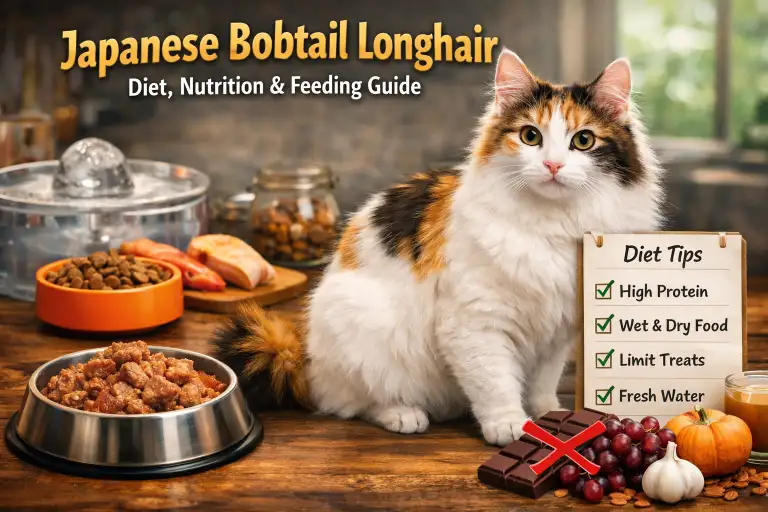
A healthy Japanese Bobtail Longhair diet is not about finding a special “breed-specific” formula — it’s about meeting the core nutritional needs that all cats share.
Recommended Dog Care Products
Based on your dog’s age, these products may help with comfort, health, grooming, and daily care.

Purina Pro Plan Veterinary Supplements
Daily probiotics for dogs to support digestive and gut health.
View on Amazon ↗
Earth Rated Poop Bags for Dogs
Leak-proof, extra thick waste bag refill rolls with lavender scent.
View on Amazon ↗
Greenies Pill Pockets for Dogs
Large dog treats for capsule medication, peanut butter flavor.
View on Amazon ↗
HONEY CARE All-Absorb Dog Wrap
Small male dog wraps, 50 count, useful for daily care support.
View on Amazon ↗
Seresto Flea & Tick Collar
Flea and tick treatment and prevention for dogs over 18 lbs.
View on Amazon ↗
Milk-Bone MaroSnacks
Small dog treats with real bone marrow in a 40 oz canister.
View on Amazon ↗
Vital Essentials Dog Treats
Freeze dried beef liver dog treats, grain free and single ingredient.
View on Amazon ↗
Stain & Odor Eliminator
Enzyme cleaner for pet stains, carpet messes, and strong odors.
View on Amazon ↗
Pur Luv Chicken Jerky Treats
Dog treats made with real chicken breast, high protein and chew-friendly.
View on Amazon ↗
Milk-Bone Flavor Snacks
Mini crunchy dog biscuits in a 36 oz canister for small rewards.
View on Amazon ↗As an Amazon Associate, we may earn from qualifying purchases.
Japanese Bobtail Longhairs are typically active, playful, and lean-bodied cats, so the right diet should support:
- Strong muscles
- Steady energy
- Healthy skin and coat
- Good digestion
- Long-term wellness
Most importantly, cats are obligate carnivores, meaning their bodies are designed to get nutrition primarily from animal-based foods, not plant-heavy diets.
Cats Need Animal-Based Nutrition First
Unlike humans or dogs, cats rely on nutrients found naturally in meat. Their bodies have limited ability to process carbohydrates, and they require specific amino acids that only animal tissues provide.
A balanced diet for your Japanese Bobtail Longhair should focus on:
- High-quality animal protein
- Moderate healthy fats
- Essential vitamins and minerals
- Taurine (absolutely essential)
- Adequate moisture intake
What “Complete and Balanced” Really Means
When choosing commercial cat food, look for diets labeled as complete and balanced, meaning they meet established nutritional standards such as those from AAFCO.
This helps ensure your cat is receiving the right levels of:
- Protein
- Fat
- Taurine
- Vitamins and minerals
rather than missing key nutrients over time.
Core Nutrients Cats Must Have
Here’s a simple overview of the most important nutrients in any healthy longhair cat diet:
| Nutrient | Why It Matters | Found In |
|---|---|---|
| Protein | Supports muscles, growth, energy | Meat-based cat foods |
| Fat | Provides calories, supports skin and coat | Animal fats, fish oils |
| Taurine | Essential for heart, vision, reproduction | Complete cat diets |
| Vitamins & Minerals | Support immunity, bones, metabolism | Balanced commercial foods |
| Moisture | Helps hydration and urinary health | Wet food, mixed feeding |
Longhair Coat Support Starts From the Inside
Japanese Bobtail Longhairs have soft, silky coats, and nutrition plays a role in maintaining coat condition.
Recommended Dog Care Products
Based on your dog’s age, these products may help with comfort, health, grooming, and daily care.
Purina Pro Plan Veterinary Supplements
Daily probiotics for dogs to support digestive and gut health.
View on Amazon ↗
Earth Rated Poop Bags for Dogs
Leak-proof, extra thick waste bag refill rolls with lavender scent.
View on Amazon ↗
Greenies Pill Pockets for Dogs
Large dog treats for capsule medication, peanut butter flavor.
View on Amazon ↗
HONEY CARE All-Absorb Dog Wrap
Small male dog wraps, 50 count, useful for daily care support.
View on Amazon ↗
Seresto Flea & Tick Collar
Flea and tick treatment and prevention for dogs over 18 lbs.
View on Amazon ↗
Milk-Bone MaroSnacks
Small dog treats with real bone marrow in a 40 oz canister.
View on Amazon ↗
Vital Essentials Dog Treats
Freeze dried beef liver dog treats, grain free and single ingredient.
View on Amazon ↗
Stain & Odor Eliminator
Enzyme cleaner for pet stains, carpet messes, and strong odors.
View on Amazon ↗
Pur Luv Chicken Jerky Treats
Dog treats made with real chicken breast, high protein and chew-friendly.
View on Amazon ↗
Milk-Bone Flavor Snacks
Mini crunchy dog biscuits in a 36 oz canister for small rewards.
View on Amazon ↗As an Amazon Associate, we may earn from qualifying purchases.
Diets with appropriate levels of:
- Protein
- Healthy fats (omega-3 and omega-6)
- Balanced micronutrients
can help support skin and fur health — though grooming and hydration remain just as important.
2. Best Food Choices: Wet vs Dry vs Mixed Feeding
Choosing the best food for your Japanese Bobtail Longhair can feel confusing at first. Many owners wonder:
- Should I feed wet food or dry food?
- Is one healthier than the other?
- Can I use both?
The good news is that most cats can do well on wet food, dry food, or a mix, as long as the diet is complete and balanced.
Wet Food Benefits
Wet food is often a great choice for many cats because it has a lot of moisture.
Wet food can help:
- Keep your cat hydrated
- Support urinary health
- Provide strong meat-based nutrition
- Be easier to chew for some cats
Many longhaired cats also enjoy wet food because it smells and tastes stronger.
Dry Food Benefits and Limits
Dry food is popular because it is easy to store and serve.
Dry food can be helpful because it:
- Is convenient for busy owners
- Costs less in many cases
- Works well for cats that like to snack
But dry food has less water, so cats eating only dry food may need extra help drinking enough.
Recommended Dog Care Products
Based on your dog’s age, these products may help with comfort, health, grooming, and daily care.
Purina Pro Plan Veterinary Supplements
Daily probiotics for dogs to support digestive and gut health.
View on Amazon ↗
Earth Rated Poop Bags for Dogs
Leak-proof, extra thick waste bag refill rolls with lavender scent.
View on Amazon ↗
Greenies Pill Pockets for Dogs
Large dog treats for capsule medication, peanut butter flavor.
View on Amazon ↗
HONEY CARE All-Absorb Dog Wrap
Small male dog wraps, 50 count, useful for daily care support.
View on Amazon ↗
Seresto Flea & Tick Collar
Flea and tick treatment and prevention for dogs over 18 lbs.
View on Amazon ↗
Milk-Bone MaroSnacks
Small dog treats with real bone marrow in a 40 oz canister.
View on Amazon ↗
Vital Essentials Dog Treats
Freeze dried beef liver dog treats, grain free and single ingredient.
View on Amazon ↗
Stain & Odor Eliminator
Enzyme cleaner for pet stains, carpet messes, and strong odors.
View on Amazon ↗
Pur Luv Chicken Jerky Treats
Dog treats made with real chicken breast, high protein and chew-friendly.
View on Amazon ↗
Milk-Bone Flavor Snacks
Mini crunchy dog biscuits in a 36 oz canister for small rewards.
View on Amazon ↗As an Amazon Associate, we may earn from qualifying purchases.
Mixed Feeding: A Practical Option
Many cat owners choose mixed feeding, which means giving both wet and dry food.
A mixed diet can:
- Provide hydration from wet food
- Offer convenience from dry food
- Keep meals interesting for picky cats
The key is to measure portions, because combining foods can add calories quickly.
Wet vs Dry vs Mixed Feeding Comparison
| Feeding Type | Pros | Cons | Best For |
|---|---|---|---|
| Wet Food | High moisture, very tasty | More expensive | Cats that don’t drink much |
| Dry Food | Easy to serve, budget-friendly | Low moisture | Cats that like small snacks |
| Mixed Feeding | Balance of both options | Needs portion control | Most households |
Simple Food Label Tip
When choosing food, look for:
- Real animal protein listed first
- A statement that it is “complete and balanced”
- No extreme claims or fad marketing
You don’t need the most expensive food, but you do want something made for cats, not people or dogs.
3. How Much and How Often to Feed a Japanese Bobtail Longhair
Many cat owners ask the same question:
“How much food does my Japanese Bobtail Longhair need each day?”
The answer depends on a few things, like your cat’s:
- Age
- Size
- Activity level
- Indoor or outdoor lifestyle
- Spay/neuter status
There is no one perfect amount for every cat, but healthy feeding habits are very important.
Meal Feeding Is Better Than Free-Feeding
Some people leave food out all day. This is called free-feeding.
Recommended Dog Care Products
Based on your dog’s age, these products may help with comfort, health, grooming, and daily care.
Purina Pro Plan Veterinary Supplements
Daily probiotics for dogs to support digestive and gut health.
View on Amazon ↗
Earth Rated Poop Bags for Dogs
Leak-proof, extra thick waste bag refill rolls with lavender scent.
View on Amazon ↗
Greenies Pill Pockets for Dogs
Large dog treats for capsule medication, peanut butter flavor.
View on Amazon ↗
HONEY CARE All-Absorb Dog Wrap
Small male dog wraps, 50 count, useful for daily care support.
View on Amazon ↗
Seresto Flea & Tick Collar
Flea and tick treatment and prevention for dogs over 18 lbs.
View on Amazon ↗
Milk-Bone MaroSnacks
Small dog treats with real bone marrow in a 40 oz canister.
View on Amazon ↗
Vital Essentials Dog Treats
Freeze dried beef liver dog treats, grain free and single ingredient.
View on Amazon ↗
Stain & Odor Eliminator
Enzyme cleaner for pet stains, carpet messes, and strong odors.
View on Amazon ↗
Pur Luv Chicken Jerky Treats
Dog treats made with real chicken breast, high protein and chew-friendly.
View on Amazon ↗
Milk-Bone Flavor Snacks
Mini crunchy dog biscuits in a 36 oz canister for small rewards.
View on Amazon ↗As an Amazon Associate, we may earn from qualifying purchases.
Free-feeding can lead to overeating, especially for indoor cats.
Most cats do better with measured meals, such as:
- Morning meal
- Evening meal
This helps you control portions and notice changes in appetite.
Feeding Frequency by Life Stage
Cats need different meal schedules at different ages.
| Life Stage | Meals Per Day | Notes |
|---|---|---|
| Kitten | 3–4 meals | Growing fast, needs more energy |
| Adult | 2 meals | Helps maintain healthy weight |
| Senior | 2–3 small meals | May eat less at one time |
Portion Control Matters
Even a healthy food can cause weight gain if your cat eats too much.
Tips for portion control:
- Follow the feeding guide on the food label
- Use a measuring cup or kitchen scale
- Adjust slowly based on your cat’s body condition
Indoor and Spayed/Neutered Cats Need Extra Care
Indoor cats often move less, so they may need fewer calories.
Spayed or neutered cats may also gain weight more easily because their metabolism slows down.
Watching portions helps prevent slow weight gain over time.
Signs Your Cat May Be Overfed or Underfed
Here are simple clues:
Overfeeding signs:
- Weight gain
- Belly getting round
- Less interest in playing
Underfeeding signs:
- Weight loss
- Ribs showing too much
- Constant hunger
If you notice sudden weight changes, it’s always a good idea to talk with a veterinarian.
4. Treats, Human Foods & Common Feeding Mistakes
Treats can be a fun part of life with your Japanese Bobtail Longhair. But it is important to give them in a safe and healthy way.
Many feeding problems come from too many treats or giving the wrong foods.
Treats Should Be a Small Part of the Diet
Treats should not replace regular cat food.
A good rule is:
- Treats should make up less than 10% of your cat’s daily food
Too many treats can lead to:
- Weight gain
- Picky eating
- Poor nutrition balance
Choose simple cat treats, not heavily flavored human snacks.
Safe vs Unsafe Human Foods
Some human foods are dangerous for cats.
Here is an easy guide:
| Safer Options (Small Amounts) | Never Feed Cats |
|---|---|
| Plain cooked chicken | Onions and garlic |
| Small bits of turkey | Chocolate |
| Plain pumpkin (tiny amount) | Grapes and raisins |
| Cooked eggs (plain) | Alcohol or caffeine |
Even safe foods should only be given rarely.
If you are unsure, it is best to skip human food completely.
Common Feeding Mistakes Owners Make
Many cat owners make these mistakes without realizing it:
- Giving too many treats
- Feeding table scraps often
- Switching foods too quickly
- Leaving dry food out all day
- Thinking grain-free always means healthier
- Feeding only fish-based foods every day
A balanced diet is about consistency, not trends.
Hairball Food Myths for Longhair Cats
Longhaired cats may get hairballs, but special “hairball diets” are not always needed.
Often, the best support comes from:
- Regular brushing
- Enough water
- Wet food or mixed feeding
- Healthy overall nutrition
5. Hydration, Special Situations & When to Call the Vet
Water is just as important as food for your Japanese Bobtail Longhair.
Many cats do not drink enough on their own, so owners need to help support good hydration.
Why Hydration Matters for Cats
Cats naturally have a low thirst drive. This means they may not drink much, even when they need water.
Good hydration helps with:
- Healthy kidneys
- Urinary tract support
- Digestion
- Overall wellness
Wet food can be a helpful way to add extra moisture to your cat’s diet.
Easy Ways to Help Your Cat Drink More
Simple tips include:
- Offer fresh water every day
- Use a clean, wide water bowl
- Try a cat water fountain
- Place water away from the litter box
- Feed some wet food if possible
Special Feeding Situations
Some cats need extra feeding care, such as:
Indoor cats:
- Often need fewer calories
- Benefit from measured meals
Multi-cat households:
- May need separate feeding areas
- Helps prevent food stealing
Picky eaters:
- Do best with slow food changes
- Too many switches can cause fussiness
When to Talk With a Veterinarian
This guide is for education, not medical advice.
You should contact a veterinarian if your cat has:
- Sudden weight loss or weight gain
- Vomiting or diarrhea that does not stop
- Refusing food for more than a day
- Trouble urinating or signs of dehydration
- Big changes in energy or behavior
A vet can help make sure your cat’s diet fits their health needs.
For more trusted information on balanced feline nutrition, you can visit the Cornell Feline Health Center’s guide on feeding cats: https://www.vet.cornell.edu/departments-centers-and-institutes/cornell-feline-health-center/health-information/feline-health-topics/feeding-your-cat

Ata Ur Rehman is the founder of Pet Age in Human Years Calculator, an educational platform that provides age conversion charts and lifespan guides for dogs, cats, birds, and other companion animals. His work focuses on helping pet owners understand how animal ages translate into human years using commonly accepted age conversion formulas and published lifespan averages.
The website compiles breed and species lifespan data from kennel clubs, breed organizations, and general animal lifespan studies to present simple and easy-to-understand guides for pet owners worldwide.
This website was created to centralize animal age conversion charts into one easy reference platform for pet owners.