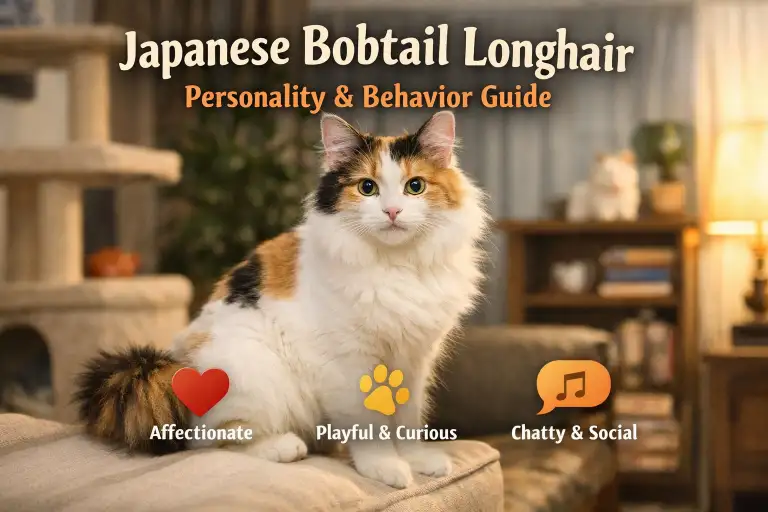
The Japanese Bobtail Longhair is often described as one of the most socially aware and emotionally “present” cat breeds. Their personality tends to feel bright, interactive, and deeply connected to the people around them — not because they’re needy, but because they genuinely enjoy being part of household life.
Recommended Dog Care Products
Based on your dog’s age, these products may help with comfort, health, grooming, and daily care.

Purina Pro Plan Veterinary Supplements
Daily probiotics for dogs to support digestive and gut health.
View on Amazon ↗
Earth Rated Poop Bags for Dogs
Leak-proof, extra thick waste bag refill rolls with lavender scent.
View on Amazon ↗
Greenies Pill Pockets for Dogs
Large dog treats for capsule medication, peanut butter flavor.
View on Amazon ↗
HONEY CARE All-Absorb Dog Wrap
Small male dog wraps, 50 count, useful for daily care support.
View on Amazon ↗
Seresto Flea & Tick Collar
Flea and tick treatment and prevention for dogs over 18 lbs.
View on Amazon ↗
Milk-Bone MaroSnacks
Small dog treats with real bone marrow in a 40 oz canister.
View on Amazon ↗
Vital Essentials Dog Treats
Freeze dried beef liver dog treats, grain free and single ingredient.
View on Amazon ↗
Stain & Odor Eliminator
Enzyme cleaner for pet stains, carpet messes, and strong odors.
View on Amazon ↗
Pur Luv Chicken Jerky Treats
Dog treats made with real chicken breast, high protein and chew-friendly.
View on Amazon ↗
Milk-Bone Flavor Snacks
Mini crunchy dog biscuits in a 36 oz canister for small rewards.
View on Amazon ↗As an Amazon Associate, we may earn from qualifying purchases.
This is a breed that often behaves like a companion in the truest sense: curious about what you’re doing, interested in routines, and quick to respond to attention. Many owners notice that Japanese Bobtail Longhairs don’t just exist in the same space — they participate in it.
That said, it’s important to understand that cat personality is never one-size-fits-all. Even within a breed known for friendliness, individual cats vary widely. Some Japanese Bobtail Longhairs are affectionate lap cats who happily settle into cuddles, while others are more “proximity cats” — choosing to sit beside you, follow you from room to room, or quietly supervise your day rather than staying in your arms.
This blend of social warmth and independence is part of what makes their temperament so appealing. They often form strong bonds with their humans, but they also maintain a confident sense of self. Instead of constant clinginess, their affection tends to show up as involvement: greeting you, staying nearby, and seeking interaction on their own terms.
Quick Personality Snapshot Table
| Trait | Typical Tendency in Japanese Bobtail Longhairs |
|---|---|
| Affection Level | High, often shown through closeness and companionship |
| Energy Level | Moderately high, playful and alert |
| Vocal Behavior | Social and expressive, often “chatty” |
| Independence | Balanced — connected but not overly demanding |
| Bonding Style | People-oriented, enjoys being included in daily life |
Overall, the Japanese Bobtail Longhair personality is best understood as lively but gentle, social but not overbearing, and emotionally tuned in without being fragile. For many cat lovers, they represent that rare combination of intelligence, playfulness, and affectionate companionship — all wrapped in a graceful, expressive feline presence.
Japanese Bobtail Longhairs are known for being active, curious, and playful cats. Their behavior often shows that they enjoy both movement and connection. They are not the kind of cat that sleeps all day without interest — many of them like to explore, watch, and join whatever is happening at home.
Here are some common behavior traits owners often notice:
- Playful energy
These cats often enjoy games, chasing toys, and short bursts of running. Many stay playful even as adults. - Love of climbing and high spaces
Japanese Bobtail Longhairs often like to jump onto shelves, cat trees, or window areas. Being up high helps them feel safe and aware of their space. - Curious “helper” behavior
They may follow you around the house, sit nearby, or watch closely when you are doing something. This is usually a sign of interest, not misbehavior. - Balanced independence
They enjoy attention, but they also like having their own time. Some will cuddle, while others prefer sitting close without being held. - Strong routine awareness
Many Bobtails notice daily patterns. They may greet you at the same time each day or show excitement when it’s playtime or feeding time.
Everyday Behaviors and What They Usually Mean
| Behavior | What Your Cat May Be Communicating |
|---|---|
| Following you from room to room | “I like being near you.” |
| Climbing furniture or shelves | “I want to explore or feel secure up high.” |
| Sudden playful running (zoomies) | “I have energy and feel excited.” |
| Sitting nearby but not on your lap | “I enjoy your company in my own way.” |
| Bringing toys to you | “Let’s play together.” |
These behaviors are usually normal for this breed and are part of their lively personality. Most Japanese Bobtail Longhairs enjoy a home where they can move, play, and feel included.
Recommended Dog Care Products
Based on your dog’s age, these products may help with comfort, health, grooming, and daily care.
Purina Pro Plan Veterinary Supplements
Daily probiotics for dogs to support digestive and gut health.
View on Amazon ↗
Earth Rated Poop Bags for Dogs
Leak-proof, extra thick waste bag refill rolls with lavender scent.
View on Amazon ↗
Greenies Pill Pockets for Dogs
Large dog treats for capsule medication, peanut butter flavor.
View on Amazon ↗
HONEY CARE All-Absorb Dog Wrap
Small male dog wraps, 50 count, useful for daily care support.
View on Amazon ↗
Seresto Flea & Tick Collar
Flea and tick treatment and prevention for dogs over 18 lbs.
View on Amazon ↗
Milk-Bone MaroSnacks
Small dog treats with real bone marrow in a 40 oz canister.
View on Amazon ↗
Vital Essentials Dog Treats
Freeze dried beef liver dog treats, grain free and single ingredient.
View on Amazon ↗
Stain & Odor Eliminator
Enzyme cleaner for pet stains, carpet messes, and strong odors.
View on Amazon ↗
Pur Luv Chicken Jerky Treats
Dog treats made with real chicken breast, high protein and chew-friendly.
View on Amazon ↗
Milk-Bone Flavor Snacks
Mini crunchy dog biscuits in a 36 oz canister for small rewards.
View on Amazon ↗As an Amazon Associate, we may earn from qualifying purchases.
Communication Style: Body Language and Vocal Behavior
Japanese Bobtail Longhairs are often very expressive cats. They communicate in many ways, not only with sounds, but also with body movements. Learning their signals can help you understand what they are feeling.
Many owners say this breed is more “talkative” than some other cats. Their meows and little sounds are usually friendly and social, not a sign of bad behavior.
Common Vocal Sounds
- Soft meows
Often used to greet you or get your attention. - Trills or chirps
These are happy, friendly sounds. Many Bobtails make them when they are excited. - Louder calling
Sometimes they call out when they want company or are looking for you.
Body Language Signals
Cats speak a lot with their body. Here are some easy signs to notice:
- Tail held up
This usually means your cat feels friendly and confident. - Slow blinking
A slow blink is like a cat “smile.” It shows trust and comfort. - Ears forward
Your cat is curious or interested. - Tail flicking fast
This can mean your cat is getting overstimulated or needs a break.
Comfort Signals vs Stress Signals Table
| Comfort Signals | Stress or Uncomfortable Signals |
|---|---|
| Slow blinking | Hiding suddenly |
| Relaxed body | Stiff or tense posture |
| Tail gently upright | Tail whipping quickly |
| Soft purring | Growling or hissing |
| Sitting in open areas | Staying low or crouched |
Japanese Bobtail Longhairs are usually good at showing what they want. Their sounds and body language are often part of how they stay connected with their humans.
Social Behavior With Humans, Cats, and Other Pets
Japanese Bobtail Longhairs are often very social cats. They usually enjoy being around people and may act like they want to be part of the family’s daily life.
Social Behavior With Humans
Many Japanese Bobtail Longhairs form strong bonds with their owners. They may show this in gentle and friendly ways, such as:
Recommended Dog Care Products
Based on your dog’s age, these products may help with comfort, health, grooming, and daily care.
Purina Pro Plan Veterinary Supplements
Daily probiotics for dogs to support digestive and gut health.
View on Amazon ↗
Earth Rated Poop Bags for Dogs
Leak-proof, extra thick waste bag refill rolls with lavender scent.
View on Amazon ↗
Greenies Pill Pockets for Dogs
Large dog treats for capsule medication, peanut butter flavor.
View on Amazon ↗
HONEY CARE All-Absorb Dog Wrap
Small male dog wraps, 50 count, useful for daily care support.
View on Amazon ↗
Seresto Flea & Tick Collar
Flea and tick treatment and prevention for dogs over 18 lbs.
View on Amazon ↗
Milk-Bone MaroSnacks
Small dog treats with real bone marrow in a 40 oz canister.
View on Amazon ↗
Vital Essentials Dog Treats
Freeze dried beef liver dog treats, grain free and single ingredient.
View on Amazon ↗
Stain & Odor Eliminator
Enzyme cleaner for pet stains, carpet messes, and strong odors.
View on Amazon ↗
Pur Luv Chicken Jerky Treats
Dog treats made with real chicken breast, high protein and chew-friendly.
View on Amazon ↗
Milk-Bone Flavor Snacks
Mini crunchy dog biscuits in a 36 oz canister for small rewards.
View on Amazon ↗As an Amazon Associate, we may earn from qualifying purchases.
- Greeting you when you come home
- Following you around the house
- Sitting close by while you relax
- Bringing toys to invite play
These cats often enjoy attention, but they also like respect. Some want cuddles, while others prefer simply being near you.
Social Behavior With Other Cats
Many Japanese Bobtail Longhairs can get along well with other cats, especially if they are introduced slowly and calmly.
You may see behaviors like:
- Playing together
- Resting in the same room
- Watching each other from nearby spots
Even friendly cats still need their own space sometimes. Sharing space works best when each cat has places to climb, hide, or rest alone.
Social Behavior With Dogs and Other Pets
Japanese Bobtail Longhairs often do well with gentle dogs or other calm pets. They are usually curious and brave, but they still need time to feel safe.
A respectful pet friendship often looks like:
- Calm sniffing
- Quiet sharing of space
- Play without chasing too hard
Social Style Summary
- People-friendly and often involved in family life
- Usually playful and curious with other pets
- Enjoys company but still values personal space
Commonly Misunderstood Behaviors and Personality Changes Over Time
Japanese Bobtail Longhairs have many normal behaviors that people sometimes misunderstand. Learning what these actions really mean can help owners feel more confident and calm.
Recommended Dog Care Products
Based on your dog’s age, these products may help with comfort, health, grooming, and daily care.
Purina Pro Plan Veterinary Supplements
Daily probiotics for dogs to support digestive and gut health.
View on Amazon ↗
Earth Rated Poop Bags for Dogs
Leak-proof, extra thick waste bag refill rolls with lavender scent.
View on Amazon ↗
Greenies Pill Pockets for Dogs
Large dog treats for capsule medication, peanut butter flavor.
View on Amazon ↗
HONEY CARE All-Absorb Dog Wrap
Small male dog wraps, 50 count, useful for daily care support.
View on Amazon ↗
Seresto Flea & Tick Collar
Flea and tick treatment and prevention for dogs over 18 lbs.
View on Amazon ↗
Milk-Bone MaroSnacks
Small dog treats with real bone marrow in a 40 oz canister.
View on Amazon ↗
Vital Essentials Dog Treats
Freeze dried beef liver dog treats, grain free and single ingredient.
View on Amazon ↗
Stain & Odor Eliminator
Enzyme cleaner for pet stains, carpet messes, and strong odors.
View on Amazon ↗
Pur Luv Chicken Jerky Treats
Dog treats made with real chicken breast, high protein and chew-friendly.
View on Amazon ↗
Milk-Bone Flavor Snacks
Mini crunchy dog biscuits in a 36 oz canister for small rewards.
View on Amazon ↗As an Amazon Associate, we may earn from qualifying purchases.
Myths vs Reality Table
| Common Misunderstanding | What It Usually Means |
|---|---|
| “My cat is too energetic” | Bobtails are naturally playful and active |
| “My cat meows too much” | This breed often uses sounds to communicate |
| “My cat won’t sit on my lap” | Many show love by staying nearby instead |
| “My cat runs around at night” | Cats often have bursts of energy in the evening |
| “My cat hides sometimes” | Hiding can be a normal way to rest or feel safe |
Personality Changes With Age
A Japanese Bobtail Longhair’s personality may stay similar, but behavior can change as they grow older.
- Kittens
Very playful, curious, and full of energy. - Adult Cats
Still active, but more balanced and settled into routines. - Senior Cats
Often calmer, may sleep more, and may enjoy quiet closeness.
Normal Behaviors Owners Should Not Worry About
Many everyday behaviors are part of being a cat, such as:
- Zoomies (sudden running)
- Climbing and perching
- Wanting attention sometimes and space at other times
- Talking with soft meows or chirps
Gentle Note About Unusual Changes
If a cat’s behavior changes suddenly or seems very different from normal, it may be worth checking in with a veterinarian, just to make sure everything is okay. Most of the time, though, small personality quirks are simply part of who your cat is.
For more expert-backed information on understanding normal cat behavior and communication, you can visit the American Association of Feline Practitioners’ behavior resources at https://catvets.com.

Ata Ur Rehman is the founder of Pet Age in Human Years Calculator, an educational platform that provides age conversion charts and lifespan guides for dogs, cats, birds, and other companion animals. His work focuses on helping pet owners understand how animal ages translate into human years using commonly accepted age conversion formulas and published lifespan averages.
The website compiles breed and species lifespan data from kennel clubs, breed organizations, and general animal lifespan studies to present simple and easy-to-understand guides for pet owners worldwide.
This website was created to centralize animal age conversion charts into one easy reference platform for pet owners.