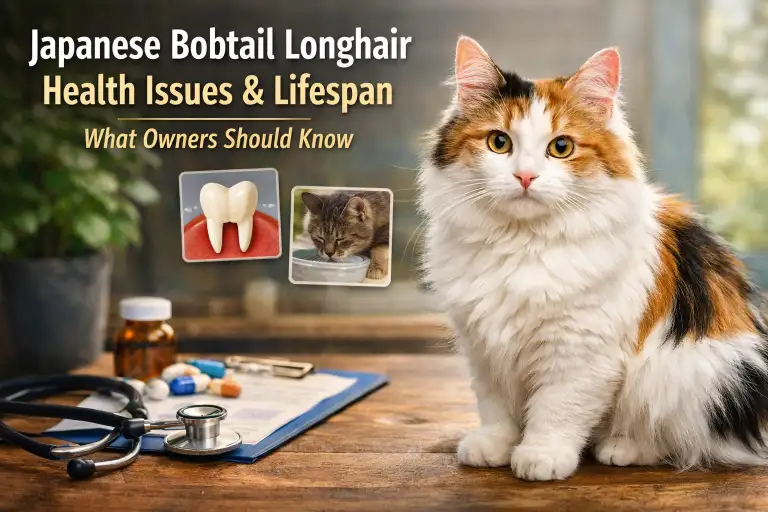
The Japanese Bobtail Longhair is known for its playful personality, elegant coat, and generally strong overall health. If you’re sharing your life with one (or thinking about adopting one), it’s completely normal to wonder how long they typically live and what health concerns owners should be aware of over time.
Recommended Dog Care Products
Based on your dog’s age, these products may help with comfort, health, grooming, and daily care.

Purina Pro Plan Veterinary Supplements
Daily probiotics for dogs to support digestive and gut health.
View on Amazon ↗
Earth Rated Poop Bags for Dogs
Leak-proof, extra thick waste bag refill rolls with lavender scent.
View on Amazon ↗
Greenies Pill Pockets for Dogs
Large dog treats for capsule medication, peanut butter flavor.
View on Amazon ↗
HONEY CARE All-Absorb Dog Wrap
Small male dog wraps, 50 count, useful for daily care support.
View on Amazon ↗
Seresto Flea & Tick Collar
Flea and tick treatment and prevention for dogs over 18 lbs.
View on Amazon ↗
Milk-Bone MaroSnacks
Small dog treats with real bone marrow in a 40 oz canister.
View on Amazon ↗
Vital Essentials Dog Treats
Freeze dried beef liver dog treats, grain free and single ingredient.
View on Amazon ↗
Stain & Odor Eliminator
Enzyme cleaner for pet stains, carpet messes, and strong odors.
View on Amazon ↗
Pur Luv Chicken Jerky Treats
Dog treats made with real chicken breast, high protein and chew-friendly.
View on Amazon ↗
Milk-Bone Flavor Snacks
Mini crunchy dog biscuits in a 36 oz canister for small rewards.
View on Amazon ↗As an Amazon Associate, we may earn from qualifying purchases.
This guide is designed to give you a calm, trustworthy overview of Japanese Bobtail Longhair health issues and lifespan expectations, without fear-based language or overwhelming medical detail.
It’s important to understand that every cat is an individual. While breed tendencies can offer helpful context, your cat’s long-term wellbeing is shaped far more by everyday care, preventive veterinary support, and early attention to subtle changes.
Quick Guide Snapshot
| Topic | What Owners Should Know |
|---|---|
| Average lifespan | Often a long-lived breed, especially indoors |
| Common health concerns | Dental disease, weight-related issues, kidney and urinary changes with age |
| Preventive focus | Routine vet checkups, dental care, healthy weight, parasite prevention |
| Grooming needs | Regular brushing helps coat comfort and skin health |
| When to call the vet | Sudden appetite, litter box, or behavior changes should always be discussed |
What This Article Covers
In the sections ahead, you’ll learn:
- The average lifespan range for Japanese Bobtail Longhairs
- Factors that influence longevity, including indoor lifestyle and preventive care
- Common cat health issues that may appear over the years
- Practical prevention habits that support long-term wellness
- Gentle guidance on when it’s time to consult a veterinarian
What This Guide Does Not Do
To keep this information safe and responsible, this article does not:
- Diagnose illnesses or predict specific conditions
- Provide treatment plans or medication advice
- Replace professional veterinary care
- Focus on rare, sensational, or breed-alarmist health claims
Instead, the goal is simple: to help you feel informed, prepared, and reassured as you support your Japanese Bobtail Longhair through every life stage.
Japanese Bobtail Longhair Lifespan: Average Years, Indoor vs Outdoor, and What Affects Longevity
Japanese Bobtail Longhair cats are often known as a healthy and long-living breed. With good care, many of these cats can enjoy a long life with their families.
Still, lifespan is never exactly the same for every cat. Some live longer, and some may face health challenges earlier. The good news is that many important factors are within an owner’s control.
Average Lifespan Range
Most Japanese Bobtail Longhair cats live around:
- 12 to 16 years on average
- Some may live into their late teens or even early 20s with excellent care
Many cats today are living longer than ever because of better food, indoor living, and regular vet visits.
Recommended Dog Care Products
Based on your dog’s age, these products may help with comfort, health, grooming, and daily care.
Purina Pro Plan Veterinary Supplements
Daily probiotics for dogs to support digestive and gut health.
View on Amazon ↗
Earth Rated Poop Bags for Dogs
Leak-proof, extra thick waste bag refill rolls with lavender scent.
View on Amazon ↗
Greenies Pill Pockets for Dogs
Large dog treats for capsule medication, peanut butter flavor.
View on Amazon ↗
HONEY CARE All-Absorb Dog Wrap
Small male dog wraps, 50 count, useful for daily care support.
View on Amazon ↗
Seresto Flea & Tick Collar
Flea and tick treatment and prevention for dogs over 18 lbs.
View on Amazon ↗
Milk-Bone MaroSnacks
Small dog treats with real bone marrow in a 40 oz canister.
View on Amazon ↗
Vital Essentials Dog Treats
Freeze dried beef liver dog treats, grain free and single ingredient.
View on Amazon ↗
Stain & Odor Eliminator
Enzyme cleaner for pet stains, carpet messes, and strong odors.
View on Amazon ↗
Pur Luv Chicken Jerky Treats
Dog treats made with real chicken breast, high protein and chew-friendly.
View on Amazon ↗
Milk-Bone Flavor Snacks
Mini crunchy dog biscuits in a 36 oz canister for small rewards.
View on Amazon ↗As an Amazon Associate, we may earn from qualifying purchases.
Indoor vs Outdoor Lifespan
Where a cat lives has a big effect on how long they may live.
| Lifestyle | Typical Lifespan Range | Why It Matters |
|---|---|---|
| Indoor cats | Often 12–18+ years | Safer from cars, predators, and disease |
| Outdoor cats | Often shorter lifespan | Higher risk of injury, parasites, and infections |
Indoor cats usually live longer because they are protected from many dangers outside.
What Affects a Cat’s Lifespan?
Several everyday factors can help your Japanese Bobtail Longhair stay healthy for many years.
Healthy Weight and Diet
Cats that stay at a healthy weight often have fewer problems as they age. Extra weight can put stress on the body over time.
Regular Vet Checkups
Yearly wellness visits help catch small problems early, before they become serious.
Dental Care
Dental disease is very common in cats. Keeping the mouth healthy can support overall wellness.
Activity and Play
Japanese Bobtails are active and smart cats. Daily play helps keep their body strong and their mind happy.
Low Stress and Safe Home Life
A calm home, routine, and plenty of comfort can help cats feel secure and thrive.
A Reassuring Note for Owners
Most Japanese Bobtail Longhairs do not have many serious breed-specific problems. Like all cats, they may develop common health issues over time, especially as they get older. Preventive care is the best way to support a long, comfortable life.
Common Japanese Bobtail Longhair Health Issues: Dental, Weight, Kidney, Urinary, Parasites, and Aging-Related Changes
Japanese Bobtail Longhair cats are usually healthy, but like all cats, they can still have some common health problems during their life.
Recommended Dog Care Products
Based on your dog’s age, these products may help with comfort, health, grooming, and daily care.
Purina Pro Plan Veterinary Supplements
Daily probiotics for dogs to support digestive and gut health.
View on Amazon ↗
Earth Rated Poop Bags for Dogs
Leak-proof, extra thick waste bag refill rolls with lavender scent.
View on Amazon ↗
Greenies Pill Pockets for Dogs
Large dog treats for capsule medication, peanut butter flavor.
View on Amazon ↗
HONEY CARE All-Absorb Dog Wrap
Small male dog wraps, 50 count, useful for daily care support.
View on Amazon ↗
Seresto Flea & Tick Collar
Flea and tick treatment and prevention for dogs over 18 lbs.
View on Amazon ↗
Milk-Bone MaroSnacks
Small dog treats with real bone marrow in a 40 oz canister.
View on Amazon ↗
Vital Essentials Dog Treats
Freeze dried beef liver dog treats, grain free and single ingredient.
View on Amazon ↗
Stain & Odor Eliminator
Enzyme cleaner for pet stains, carpet messes, and strong odors.
View on Amazon ↗
Pur Luv Chicken Jerky Treats
Dog treats made with real chicken breast, high protein and chew-friendly.
View on Amazon ↗
Milk-Bone Flavor Snacks
Mini crunchy dog biscuits in a 36 oz canister for small rewards.
View on Amazon ↗As an Amazon Associate, we may earn from qualifying purchases.
Most of these issues are not rare or scary. They are the same types of health concerns many cats may face, especially as they get older.
The best thing owners can do is learn what to watch for and focus on prevention.
Common Health Issues to Know About
Here are some of the most common health issues seen in cats, including Japanese Bobtail Longhairs.
| Health Issue | What It Means (Simple Explanation) | Why It Matters |
|---|---|---|
| Dental disease | Problems with teeth and gums | Can cause pain and affect eating |
| Obesity (overweight) | Gaining too much weight | Can lead to diabetes and joint stress |
| Kidney changes (senior cats) | Kidneys may weaken with age | Common in older cats, needs monitoring |
| Urinary tract issues | Bladder discomfort or trouble peeing | Litter box changes may be early signs |
| Parasites | Fleas, worms, ticks | Preventable with vet care |
| Aging-related changes | Slower movement, less energy | Normal as cats become seniors |
Dental Disease
Dental problems are one of the most common health issues in cats.
You may notice:
- Bad breath
- Drooling
- Trouble chewing
- Less interest in food
Dental health is important because mouth pain can affect the whole body.
Weight and Metabolic Problems
Some cats gain weight slowly over time, especially indoor cats.
Extra weight can lead to:
- Less energy
- Joint discomfort
- Higher risk of diabetes
Keeping a healthy weight is one of the best ways to support a long life.
Kidney Health in Older Cats
Kidney disease is common in many senior cats, not just this breed.
Recommended Dog Care Products
Based on your dog’s age, these products may help with comfort, health, grooming, and daily care.
Purina Pro Plan Veterinary Supplements
Daily probiotics for dogs to support digestive and gut health.
View on Amazon ↗
Earth Rated Poop Bags for Dogs
Leak-proof, extra thick waste bag refill rolls with lavender scent.
View on Amazon ↗
Greenies Pill Pockets for Dogs
Large dog treats for capsule medication, peanut butter flavor.
View on Amazon ↗
HONEY CARE All-Absorb Dog Wrap
Small male dog wraps, 50 count, useful for daily care support.
View on Amazon ↗
Seresto Flea & Tick Collar
Flea and tick treatment and prevention for dogs over 18 lbs.
View on Amazon ↗
Milk-Bone MaroSnacks
Small dog treats with real bone marrow in a 40 oz canister.
View on Amazon ↗
Vital Essentials Dog Treats
Freeze dried beef liver dog treats, grain free and single ingredient.
View on Amazon ↗
Stain & Odor Eliminator
Enzyme cleaner for pet stains, carpet messes, and strong odors.
View on Amazon ↗
Pur Luv Chicken Jerky Treats
Dog treats made with real chicken breast, high protein and chew-friendly.
View on Amazon ↗
Milk-Bone Flavor Snacks
Mini crunchy dog biscuits in a 36 oz canister for small rewards.
View on Amazon ↗As an Amazon Associate, we may earn from qualifying purchases.
Early signs can be very mild, such as:
- Drinking more water
- Peeing more often
- Weight loss
Regular vet checkups help spot changes early.
Urinary Tract Concerns
Urinary issues can happen in both male and female cats.
Owners should watch for:
- Frequent trips to the litter box
- Straining or discomfort
- Peeing outside the box
These signs should always be discussed with a veterinarian.
Parasites and Preventable Illnesses
Even indoor cats can get parasites like fleas or worms.
Vet-approved prevention helps protect your cat from:
- Skin irritation
- Digestive upset
- Spread of disease
Normal Aging Changes
As Japanese Bobtail Longhairs get older, you may notice:
- More sleeping
- Less jumping
- Slower movement
- Changes in appetite
Aging is normal, but regular vet care helps support comfort and quality of life.
Prevention & Early Detection: Vet Checkups, Vaccines, Dental Care, Grooming, Diet, and Healthy Weight
One of the best things about caring for a Japanese Bobtail Longhair is that many health problems can be prevented or noticed early.
You do not need to be a veterinary expert. Simple daily habits and regular vet visits can make a big difference in your cat’s long-term health and lifespan.
Why Prevention Matters
Cats are very good at hiding discomfort. By the time a cat looks clearly sick, the problem may already be serious.
That is why prevention and early detection are so important.
Routine Vet Checkups
Regular wellness exams help keep your cat healthy at every age.
Most vets recommend:
- Yearly checkups for adult cats
- Twice-yearly visits for senior cats
During visits, vets may check:
- Weight
- Teeth and gums
- Heart and lungs
- Skin and coat
- Signs of aging-related changes
Vaccines and Parasite Prevention
Vaccines protect cats from common preventable illnesses.
Parasite prevention helps stop problems like:
- Fleas
- Worms
- Ticks (in some areas)
Even indoor cats may need protection, depending on lifestyle.
Dental Care and Oral Health
Dental disease is very common, but it is often overlooked.
Helpful habits include:
- Vet dental cleanings when needed
- Dental-friendly food or treats (vet-approved)
- Starting tooth care early if possible
Healthy teeth can improve comfort and appetite.
Grooming for Longhair Cats
Japanese Bobtail Longhairs have soft, beautiful coats.
Regular grooming helps prevent:
- Mats and tangles
- Hairballs
- Skin irritation
Most cats do well with gentle brushing a few times per week.
Healthy Diet and Weight Support
A healthy weight helps cats live longer and feel better.
Good habits include:
- Feeding the right amount
- Avoiding too many treats
- Encouraging play and movement
Obesity is one of the most preventable health risks in indoor cats.
Simple Preventive Care Checklist
| Life Stage | Key Health Focus |
|---|---|
| Kitten | Vaccines, parasite control, early social habits |
| Adult | Healthy weight, dental care, yearly vet visits |
| Senior (7+) | More checkups, bloodwork monitoring, comfort support |
Calm Reminder for Owners
Most cats do not need perfect care to live well. Small, steady habits and good vet support are what matter most.
When to Call the Vet + FAQs: Warning Signs, Senior Care Questions, and Owner Reassurance
Even healthy cats can sometimes get sick or develop problems as they age. Knowing when to call the veterinarian can help you feel more confident as an owner.
You do not need to panic over every small change, but some signs should never be ignored.
Warning Signs Owners Should Not Ignore
Call your vet if you notice:
| Sign | Why It Matters |
|---|---|
| Not eating for a full day | Cats can become weak quickly without food |
| Drinking much more or less than usual | May be an early sign of illness |
| Trouble using the litter box | Could mean urinary discomfort or stress |
| Sudden weight loss | Often needs a vet check |
| Vomiting often or ongoing diarrhea | Not normal if it keeps happening |
| Hiding or acting very different | Behavior changes can be an early clue |
| Breathing problems or extreme tiredness | Needs urgent attention |
If something feels “not right,” it is always okay to call your vet and ask.
FAQs About Japanese Bobtail Longhair Health and Lifespan
Are Japanese Bobtail Longhair cats healthy?
Yes, they are generally considered a healthy breed. Most live long lives with good care.
How long do Japanese Bobtail Longhairs usually live?
Many live around 12 to 16 years, and some live even longer, especially as indoor cats.
Do they have special health problems?
They do not have many major breed-specific issues, but they can still develop common cat problems like dental disease or weight gain.
How can I help my cat live longer?
The best support includes:
- Regular vet visits
- Healthy food and weight
- Dental care
- Parasite prevention
- A safe indoor lifestyle
What changes happen as they become senior cats?
Older cats may sleep more, move slower, or need more vet checkups. Aging is normal, but monitoring helps.
Final Reassurance for Owners
Japanese Bobtail Longhair cats are loving, playful companions and often enjoy long, healthy lives. Most health issues can be managed best through prevention, early vet care, and paying attention to small changes over time.
For more trusted information on feline wellness and preventive care, you can visit the American Association of Feline Practitioners (AAFP) at https://catvets.com, a leading authority dedicated to improving the health and care of cats.

Ata Ur Rehman is the founder of Pet Age in Human Years Calculator, an educational platform that provides age conversion charts and lifespan guides for dogs, cats, birds, and other companion animals. His work focuses on helping pet owners understand how animal ages translate into human years using commonly accepted age conversion formulas and published lifespan averages.
The website compiles breed and species lifespan data from kennel clubs, breed organizations, and general animal lifespan studies to present simple and easy-to-understand guides for pet owners worldwide.
This website was created to centralize animal age conversion charts into one easy reference platform for pet owners.