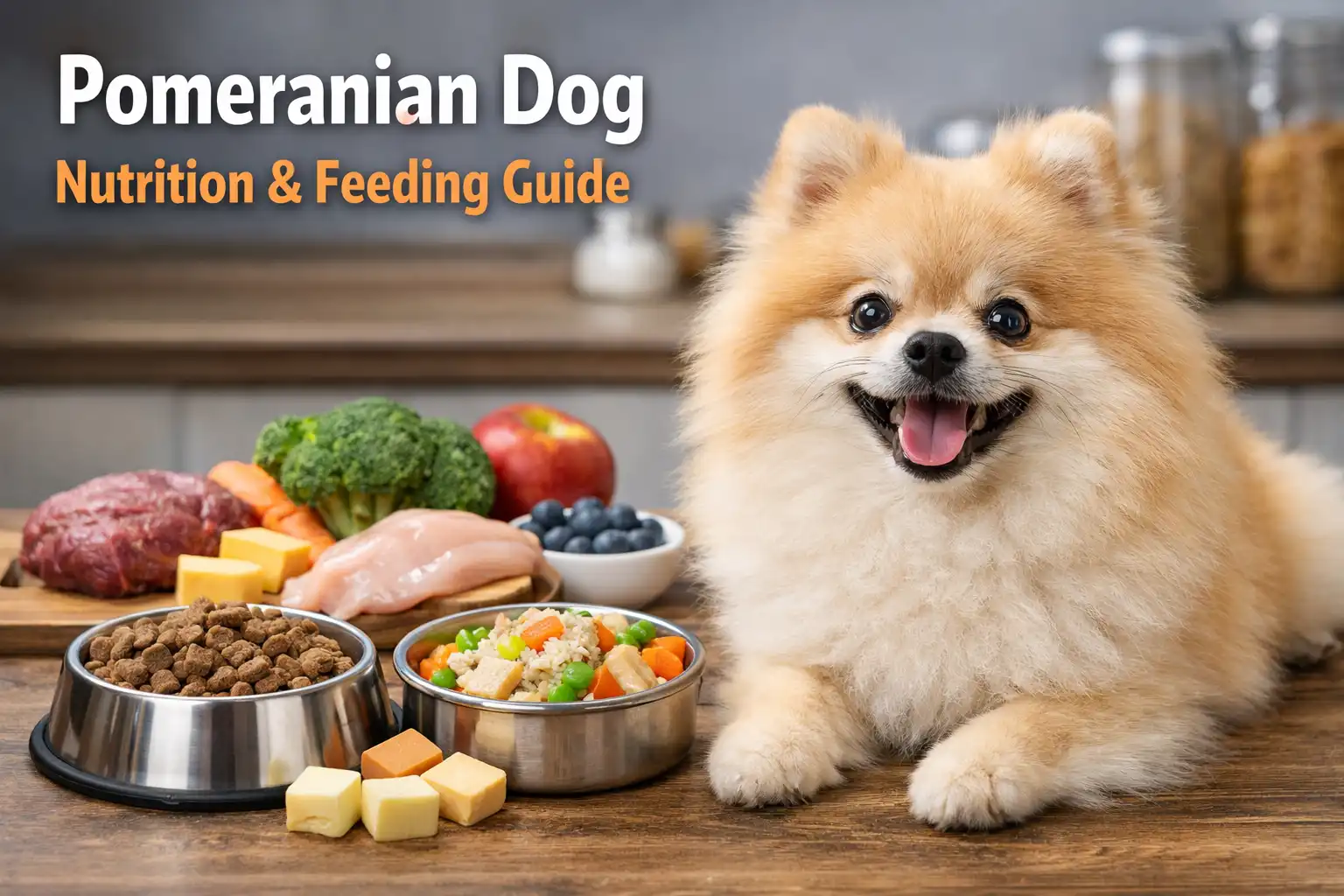
How much should a Pomeranian eat? Most adult Pomeranians need about 1/4 to 1 cup of food per day, split into two meals, depending on their age, weight, activity level, and food quality. Puppies usually need smaller meals more often, while senior Pomeranians may need fewer calories and easier-to-digest food.
Recommended Dog Care Products
Based on your dog’s age, these products may help with comfort, health, grooming, and daily care.

Purina Pro Plan Veterinary Supplements
Daily probiotics for dogs to support digestive and gut health.
View on Amazon ↗
Earth Rated Poop Bags for Dogs
Leak-proof, extra thick waste bag refill rolls with lavender scent.
View on Amazon ↗
Greenies Pill Pockets for Dogs
Large dog treats for capsule medication, peanut butter flavor.
View on Amazon ↗
HONEY CARE All-Absorb Dog Wrap
Small male dog wraps, 50 count, useful for daily care support.
View on Amazon ↗
Seresto Flea & Tick Collar
Flea and tick treatment and prevention for dogs over 18 lbs.
View on Amazon ↗
Milk-Bone MaroSnacks
Small dog treats with real bone marrow in a 40 oz canister.
View on Amazon ↗
Vital Essentials Dog Treats
Freeze dried beef liver dog treats, grain free and single ingredient.
View on Amazon ↗
Stain & Odor Eliminator
Enzyme cleaner for pet stains, carpet messes, and strong odors.
View on Amazon ↗
Pur Luv Chicken Jerky Treats
Dog treats made with real chicken breast, high protein and chew-friendly.
View on Amazon ↗
Milk-Bone Flavor Snacks
Mini crunchy dog biscuits in a 36 oz canister for small rewards.
View on Amazon ↗As an Amazon Associate, we may earn from qualifying purchases.
This Pomeranian feeding guide explains how much food your dog needs, what Pomeranians should eat, how feeding changes by age, and which foods should be avoided. Because Pomeranians are small dogs with fast metabolisms, their portions are small, but every meal needs to be nutrient-dense.
Use the feeding charts below as a starting point, then adjust based on your dog’s body condition, lifestyle, and vet guidance. A highly active Pomeranian may need slightly more food, while an indoor or overweight Pomeranian may need less.
If you want to understand your dog’s current life stage before adjusting meals, use the Pomeranian Dog Age Calculator. It can help you connect your dog’s age with puppy, adult, or senior feeding needs.
This guide will help you understand:
- how much a Pomeranian should eat per day
- how feeding changes for puppies, adults, and seniors
- what Pomeranians eat for a balanced diet
- which foods are safe and which foods to avoid
- how to prevent overfeeding, picky eating, and weight gain
By the end, you will have a clearer Pomeranian food chart and feeding routine that supports healthy weight, steady energy, digestion, and long-term wellbeing.
What Do Pomeranians Eat?
Pomeranians eat high-quality dog food made with real animal protein, healthy fats, digestible carbohydrates, vitamins, and minerals. Because they are toy-sized dogs, they do best with small portions of nutrient-rich food instead of large meals or low-quality fillers.
A healthy Pomeranian diet should support energy, coat health, digestion, teeth, bones, and immune function. The first ingredient in your dog’s food should ideally be a clear protein source such as chicken, turkey, fish, lamb, beef, or another named meat.
Here is a simple breakdown of what Pomeranians need in their daily diet:
| Nutrient | Why it matters for Pomeranians |
|---|---|
| Protein | Supports lean muscle, growth, repair, and coat strength |
| Healthy fats | Provide energy and help keep the skin and coat healthy |
| Digestible carbohydrates | Support steady energy and digestion when used in moderate amounts |
| Vitamins | Support immunity, skin, coat, eyes, and overall body function |
| Minerals | Support bones, teeth, nerves, muscles, and normal development |
| Water | Supports hydration, digestion, temperature control, and organ function |
Protein is especially important for Pomeranians because it helps maintain muscle and supports their thick double coat. Healthy fats are also important, but portions need to be controlled because too much fat can lead to weight gain quickly in a small dog.
Recommended Dog Care Products
Based on your dog’s age, these products may help with comfort, health, grooming, and daily care.
Purina Pro Plan Veterinary Supplements
Daily probiotics for dogs to support digestive and gut health.
View on Amazon ↗
Earth Rated Poop Bags for Dogs
Leak-proof, extra thick waste bag refill rolls with lavender scent.
View on Amazon ↗
Greenies Pill Pockets for Dogs
Large dog treats for capsule medication, peanut butter flavor.
View on Amazon ↗
HONEY CARE All-Absorb Dog Wrap
Small male dog wraps, 50 count, useful for daily care support.
View on Amazon ↗
Seresto Flea & Tick Collar
Flea and tick treatment and prevention for dogs over 18 lbs.
View on Amazon ↗
Milk-Bone MaroSnacks
Small dog treats with real bone marrow in a 40 oz canister.
View on Amazon ↗
Vital Essentials Dog Treats
Freeze dried beef liver dog treats, grain free and single ingredient.
View on Amazon ↗
Stain & Odor Eliminator
Enzyme cleaner for pet stains, carpet messes, and strong odors.
View on Amazon ↗
Pur Luv Chicken Jerky Treats
Dog treats made with real chicken breast, high protein and chew-friendly.
View on Amazon ↗
Milk-Bone Flavor Snacks
Mini crunchy dog biscuits in a 36 oz canister for small rewards.
View on Amazon ↗As an Amazon Associate, we may earn from qualifying purchases.
Carbohydrates should be easy to digest and given in controlled amounts. Ingredients such as rice, oats, pumpkin, carrots, and sweet potato may be used in some diets, but they should not replace high-quality protein as the main part of the meal.
Most healthy Pomeranians can get the vitamins and minerals they need from a complete and balanced dog food. Extra supplements are not usually needed unless recommended by a veterinarian.
When choosing food for a Pomeranian, check the label carefully. Look for named meat sources, small-breed formulas, clear ingredients, and feeding instructions based on weight. Avoid foods that rely heavily on vague meat by-products, artificial fillers, or excessive treats as a major calorie source.
How Much Should a Pomeranian Eat Per Day?
Most adult Pomeranians should eat about 1/4 to 1 cup of food per day, divided into two meals. The exact amount depends on your dog’s body weight, age, activity level, metabolism, and the calorie density of the food.
Because Pomeranians are small, even a small amount of extra food can cause weight gain over time. Feeding too little can also cause low energy, weakness, or poor growth in puppies. The best approach is to start with a feeding chart, then adjust based on your dog’s body condition.
Before changing portions, it helps to know your dog’s life stage. You can check this with the Pomeranian Dog Age Calculator and then use the chart below to choose a more suitable feeding routine.
The Pomeranian feeding chart below gives general daily calorie ranges based on weight. These are starting estimates, not strict rules.
| Pomeranian weight | Daily calories | Estimated daily food amount |
|---|---|---|
| 1–2 kg | 100–160 calories | About 1/4 to 1/3 cup per day |
| 2–3 kg | 160–220 calories | About 1/3 to 1/2 cup per day |
| 3–4 kg | 220–280 calories | About 1/2 to 3/4 cup per day |
| 4–5 kg | 280–350 calories | About 3/4 to 1 cup per day |
Food amounts can vary because every dog food has a different calorie count per cup. Always check the feeding instructions on your dog food label and use the chart above as a practical starting point.
Here is a simple Pomeranian feeding chart by age:
| Life stage | Age range | Meals per day | Feeding notes |
|---|---|---|---|
| Puppy | 8 weeks to 6 months | 3–4 small meals | Needs frequent meals for growth and steady energy |
| Young adult | 6 months to 1 year | 2–3 meals | Gradually transition from puppy portions to adult feeding |
| Adult | 1 to 7 years | 2 meals | Maintain a consistent routine and monitor weight |
| Senior | 7+ years | 2 smaller meals | May need fewer calories and easier-to-digest food |
Puppies need more frequent meals because their bodies are growing quickly and they have smaller stomachs. Adult Pomeranians usually do well with two meals per day. Senior Pomeranians often benefit from smaller meals that are easier to chew and digest.
Recommended Dog Care Products
Based on your dog’s age, these products may help with comfort, health, grooming, and daily care.
Purina Pro Plan Veterinary Supplements
Daily probiotics for dogs to support digestive and gut health.
View on Amazon ↗
Earth Rated Poop Bags for Dogs
Leak-proof, extra thick waste bag refill rolls with lavender scent.
View on Amazon ↗
Greenies Pill Pockets for Dogs
Large dog treats for capsule medication, peanut butter flavor.
View on Amazon ↗
HONEY CARE All-Absorb Dog Wrap
Small male dog wraps, 50 count, useful for daily care support.
View on Amazon ↗
Seresto Flea & Tick Collar
Flea and tick treatment and prevention for dogs over 18 lbs.
View on Amazon ↗
Milk-Bone MaroSnacks
Small dog treats with real bone marrow in a 40 oz canister.
View on Amazon ↗
Vital Essentials Dog Treats
Freeze dried beef liver dog treats, grain free and single ingredient.
View on Amazon ↗
Stain & Odor Eliminator
Enzyme cleaner for pet stains, carpet messes, and strong odors.
View on Amazon ↗
Pur Luv Chicken Jerky Treats
Dog treats made with real chicken breast, high protein and chew-friendly.
View on Amazon ↗
Milk-Bone Flavor Snacks
Mini crunchy dog biscuits in a 36 oz canister for small rewards.
View on Amazon ↗As an Amazon Associate, we may earn from qualifying purchases.
You can check if your Pomeranian is eating the right amount by looking at body condition. You should be able to feel the ribs with gentle pressure, but the ribs should not be sharply visible. If your dog feels round, gains weight quickly, or loses waist definition, reduce portions slightly. If your dog seems thin, tired, or is losing weight, speak with a veterinarian before increasing food significantly.
Avoid free feeding, where food is left out all day. Scheduled meals make it easier to control calories, monitor appetite, prevent overeating, and notice health changes early.
How Much Should a Pomeranian Puppy Eat?
A Pomeranian puppy usually needs 3 to 4 small meals per day because puppies have small stomachs and fast-growing bodies. Instead of giving one large meal, divide the daily food amount into smaller portions throughout the day.
Most Pomeranian puppies need puppy food made for small or toy breeds. Puppy food is usually higher in calories and nutrients than adult dog food, which helps support growth, energy, bones, muscles, and coat development.
Here is a simple Pomeranian puppy feeding guide:
| Puppy age | Meals per day | Feeding guidance |
|---|---|---|
| 8 to 12 weeks | 4 small meals | Use small portions of puppy food and keep meal times consistent |
| 3 to 6 months | 3 to 4 meals | Increase portions gradually as your puppy grows |
| 6 to 12 months | 2 to 3 meals | Begin moving toward an adult feeding routine |
Do not reduce meals too early for a young Pomeranian puppy. If a puppy goes too long without food, they may become weak, shaky, or low in energy. If this happens often, speak with a veterinarian.
How Much Should an Adult Pomeranian Eat?
An adult Pomeranian usually eats about 1/4 to 1 cup of food per day, split into 2 meals. The exact amount depends on body weight, activity level, metabolism, and the calories in the food.
A small, less active adult Pomeranian may only need the lower end of the feeding range. A larger or more active Pomeranian may need closer to the higher end. The goal is not to fill the bowl, but to feed the amount that keeps your dog at a healthy weight.
For most adult Pomeranians, two scheduled meals work better than free feeding. This helps control calories, reduce begging, support digestion, and make changes in appetite easier to notice.
If your adult Pomeranian is gaining weight, reduce treats first and measure meals more carefully. If your dog is losing weight, seems tired, or refuses food, do not simply increase portions without checking for health or dental problems.
Recommended Dog Care Products
Based on your dog’s age, these products may help with comfort, health, grooming, and daily care.
Purina Pro Plan Veterinary Supplements
Daily probiotics for dogs to support digestive and gut health.
View on Amazon ↗
Earth Rated Poop Bags for Dogs
Leak-proof, extra thick waste bag refill rolls with lavender scent.
View on Amazon ↗
Greenies Pill Pockets for Dogs
Large dog treats for capsule medication, peanut butter flavor.
View on Amazon ↗
HONEY CARE All-Absorb Dog Wrap
Small male dog wraps, 50 count, useful for daily care support.
View on Amazon ↗
Seresto Flea & Tick Collar
Flea and tick treatment and prevention for dogs over 18 lbs.
View on Amazon ↗
Milk-Bone MaroSnacks
Small dog treats with real bone marrow in a 40 oz canister.
View on Amazon ↗
Vital Essentials Dog Treats
Freeze dried beef liver dog treats, grain free and single ingredient.
View on Amazon ↗
Stain & Odor Eliminator
Enzyme cleaner for pet stains, carpet messes, and strong odors.
View on Amazon ↗
Pur Luv Chicken Jerky Treats
Dog treats made with real chicken breast, high protein and chew-friendly.
View on Amazon ↗
Milk-Bone Flavor Snacks
Mini crunchy dog biscuits in a 36 oz canister for small rewards.
View on Amazon ↗As an Amazon Associate, we may earn from qualifying purchases.
How Much Should a Senior Pomeranian Eat?
A senior Pomeranian often needs 2 smaller meals per day, with portions adjusted for lower activity, slower metabolism, dental health, and digestion. Some senior dogs need fewer calories than adults, while others may need softer or easier-to-chew food.
Senior Pomeranians can gain weight easily if they become less active but continue eating the same amount as before. Watch their body shape, waistline, and energy level. If they feel round or gain weight quickly, their daily food amount may need to be reduced slightly.
Some older Pomeranians may also eat less because of dental pain, stomach sensitivity, or age-related health issues. Wet food, softened kibble, or smaller meals may help, but sudden appetite changes should always be taken seriously.
Speak with a veterinarian if your senior Pomeranian suddenly eats much more, eats much less, loses weight, gains weight quickly, or has trouble chewing. Senior feeding should focus on maintaining a healthy weight, steady energy, and comfortable digestion.
Best Food Choices for Pomeranians
The best food for a Pomeranian is small-breed dog food that is easy to chew, easy to digest, and made with quality protein as the main ingredient. Pomeranians have small stomachs, so their meals should be nutrient-dense rather than large in volume.
When choosing food, look for a complete and balanced formula made for toy or small breeds. The kibble size should be small enough for your Pomeranian to chew comfortably, especially if your dog is a puppy, senior, or has dental sensitivity.
Here is a simple comparison of common Pomeranian food choices:
| Food type | Best for | Things to watch |
|---|---|---|
| Dry food / kibble | Daily feeding, easy storage, portion control | Choose small-breed kibble with quality protein |
| Wet food | Picky eaters, seniors, dogs with chewing difficulty | Can add extra calories quickly if overfed |
| Fresh food | Owners wanting simple, high-quality ingredients | Must be complete, balanced, and stored properly |
| Homemade food | Dogs with special needs under guidance | Can become unbalanced without a proper recipe |
| Raw food | Some owner-preferred diets | Higher safety risk if not handled correctly |
Dry food made for small or toy breeds is often the easiest daily option for Pomeranians. It helps with portion control, is simple to store, and usually comes in smaller pieces. Choose food where a named meat source, such as chicken, turkey, beef, lamb, or fish, appears near the top of the ingredient list.
Wet food can be useful for Pomeranians that are picky, older, or struggling with dry kibble. Some owners mix a small amount of wet food with kibble to improve taste, but the total daily calories should still stay within the right feeding amount.
Fresh and homemade food can work for some Pomeranians, but these diets need careful balance. A homemade diet that is mostly chicken, rice, or vegetables may seem healthy, but it can miss important nutrients if it is not properly planned.
Raw food should be approached carefully because small dogs can be more sensitive to digestive upset. If you are considering raw, homemade, or special diets, it is better to speak with a veterinarian before making it your dog’s main food.
Pomeranian Food List: Safe Foods and Foods to Avoid
Pomeranians can eat some plain human foods in small amounts, but these should only be used as occasional additions or treats. Human food should not replace a complete daily dog food.
| Safe foods for Pomeranians | Foods Pomeranians should avoid |
|---|---|
| Cooked chicken with no seasoning | Chocolate |
| Cooked turkey with no seasoning | Onions |
| Plain cooked rice | Garlic |
| Carrots | Grapes |
| Green beans | Raisins |
| Pumpkin | Xylitol |
| Apple slices without seeds | Cooked bones |
| Plain eggs in small amounts | High-fat table scraps |
Safe foods should still be given carefully. A small bite of plain chicken or carrot is very different from a full plate of table food. Too many extras can upset digestion, increase calories, and make your Pomeranian less interested in regular meals.
Treats should make up only a small part of your Pomeranian’s daily calories. If your dog gains weight easily, reduce treats first before cutting too much from the main meals.
Choosing the right food is also part of long-term ownership planning. High-quality food may cost more than low-quality options, so it helps to understand the full picture in this Pomeranian cost of ownership guide.
Common Pomeranian Feeding Problems and Practical Tips
Many Pomeranian owners deal with picky eating, weight gain, sensitive stomachs, or confusion about how much food to give. These problems are common because Pomeranians are small dogs, so small changes in portions or treats can affect them quickly.
If your Pomeranian is a picky eater, avoid constantly changing foods or adding too many table scraps. This can teach your dog to refuse regular meals. Instead, feed at the same times each day and remove the bowl after 15–20 minutes if the food is not eaten.
Weight gain is one of the biggest feeding problems in Pomeranians. Because they are small, just a few extra treats or oversized portions can add too many calories. Measure food carefully and use the feeding chart as a starting point, not a guess.
Some Pomeranians may have sensitive stomachs or food allergies. Common signs include loose stool, gas, itching, licking paws, ear problems, or repeated stomach upset. If symptoms continue, do not keep changing foods randomly. A vet-guided diet change is safer.
Here are common Pomeranian feeding problems and what usually helps:
| Feeding problem | Possible cause | What can help |
|---|---|---|
| Picky eating | Too many treats, table scraps, or frequent food changes | Use fixed meal times and limit extras |
| Weight gain | Oversized portions or too many snacks | Measure meals and reduce treats |
| Low energy | Too little food, poor diet, or health issue | Review calories and speak with a vet if it continues |
| Sensitive stomach | Fast food changes or hard-to-digest ingredients | Switch food slowly and use simpler meals |
| Food allergies | Reaction to certain ingredients | Use a vet-guided elimination approach |
| Begging for food | Habit from table feeding | Stop table scraps and keep a consistent routine |
When switching dog food, do it slowly over 7–10 days. Mix a small amount of the new food with the old food, then gradually increase the new food while reducing the old one. Switching too quickly can cause vomiting, loose stool, or stomach upset.
Fresh water should always be available. Pomeranians eating mostly dry food may need extra attention to hydration, especially during warm weather or after play.
You should talk to a veterinarian if:
- your Pomeranian refuses food for more than a day
- there is sudden weight loss or weight gain
- vomiting, diarrhea, itching, or stomach problems continue
- your puppy seems weak, shaky, or unusually tired
- you want to feed homemade, raw, or special diets
- your senior Pomeranian suddenly eats much more or much less than usual
Good feeding habits make a big difference. A clear meal schedule, measured portions, limited treats, and the right food type can help your Pomeranian maintain a healthy weight, steady energy, and better digestion.

Ata Ur Rehman is the founder of Pet Age in Human Years Calculator, an educational platform that provides age conversion charts and lifespan guides for dogs, cats, birds, and other companion animals. His work focuses on helping pet owners understand how animal ages translate into human years using commonly accepted age conversion formulas and published lifespan averages.
The website compiles breed and species lifespan data from kennel clubs, breed organizations, and general animal lifespan studies to present simple and easy-to-understand guides for pet owners worldwide.
This website was created to centralize animal age conversion charts into one easy reference platform for pet owners.