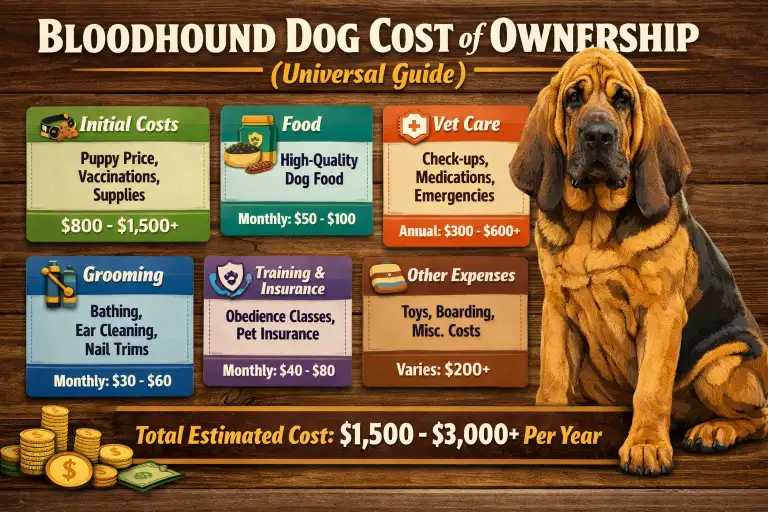
Owning a Bloodhound is a long-term financial commitment that goes well beyond the initial purchase or adoption fee. While Bloodhounds are not the most expensive dog breed to buy, they are one of the more costly large breeds to own over time due to their size, feeding needs, veterinary risk factors, and lifestyle requirements.
Recommended Dog Care Products
Based on your dog’s age, these products may help with comfort, health, grooming, and daily care.

Purina Pro Plan Veterinary Supplements
Daily probiotics for dogs to support digestive and gut health.
View on Amazon ↗
Earth Rated Poop Bags for Dogs
Leak-proof, extra thick waste bag refill rolls with lavender scent.
View on Amazon ↗
Greenies Pill Pockets for Dogs
Large dog treats for capsule medication, peanut butter flavor.
View on Amazon ↗
HONEY CARE All-Absorb Dog Wrap
Small male dog wraps, 50 count, useful for daily care support.
View on Amazon ↗
Seresto Flea & Tick Collar
Flea and tick treatment and prevention for dogs over 18 lbs.
View on Amazon ↗
Milk-Bone MaroSnacks
Small dog treats with real bone marrow in a 40 oz canister.
View on Amazon ↗
Vital Essentials Dog Treats
Freeze dried beef liver dog treats, grain free and single ingredient.
View on Amazon ↗
Stain & Odor Eliminator
Enzyme cleaner for pet stains, carpet messes, and strong odors.
View on Amazon ↗
Pur Luv Chicken Jerky Treats
Dog treats made with real chicken breast, high protein and chew-friendly.
View on Amazon ↗
Milk-Bone Flavor Snacks
Mini crunchy dog biscuits in a 36 oz canister for small rewards.
View on Amazon ↗As an Amazon Associate, we may earn from qualifying purchases.
On average, most owners should expect to spend several hundred dollars per month and several thousand dollars per year to properly care for a Bloodhound. The first year is always the most expensive, but ongoing costs remain higher than many people anticipate, especially for owners who have never lived with a large scent hound before.
This guide is designed for:
- Prospective Bloodhound owners trying to decide if the breed fits their budget
- New owners who want realistic monthly and annual cost expectations
- Families comparing Bloodhounds to other large dog breeds
- Anyone planning for long-term, responsible dog ownership
One reason Bloodhounds cost more than many large breeds is how they are built and how they live. A mature Bloodhound typically weighs 80–110 pounds, eats a substantial amount of food year-round, and requires consistent veterinary monitoring for ear, skin, joint, and digestive issues. Their powerful noses and independent temperament also mean owners often spend more on training, containment, and enrichment than they would with easier-to-manage breeds.
Another common surprise is that Bloodhound expenses are not evenly distributed. Costs spike during:
- The first year of ownership
- Periods of illness or injury
- Travel, boarding, or life changes
- Aging years, when veterinary care becomes more frequent
Many first-time owners underestimate how quickly “small” recurring expenses add up. Monthly food, preventatives, ear care products, and routine vet visits can quietly rival rent or car payments over time. Skipping or underfunding these areas often leads to larger emergency bills later, which is one of the biggest financial traps Bloodhound owners encounter.
By the end of this guide, you’ll have a clear understanding of:
- What Bloodhound ownership really costs in the first year
- What ongoing monthly and annual expenses look like
- Why costs vary so widely between households
- Whether a Bloodhound realistically fits your financial situation
Bloodhound First-Year Costs (Puppy vs Adult Dog)
The first year of owning a Bloodhound is the most expensive year. This is when you pay for buying or adopting the dog, early vet care, basic supplies, and training. Many new owners are surprised by how fast these costs add up.
Whether you bring home a puppy or an adult Bloodhound makes a big difference in first-year spending.
Typical Bloodhound Purchase or Adoption Cost
Recommended Dog Care Products
Based on your dog’s age, these products may help with comfort, health, grooming, and daily care.
Purina Pro Plan Veterinary Supplements
Daily probiotics for dogs to support digestive and gut health.
View on Amazon ↗
Earth Rated Poop Bags for Dogs
Leak-proof, extra thick waste bag refill rolls with lavender scent.
View on Amazon ↗
Greenies Pill Pockets for Dogs
Large dog treats for capsule medication, peanut butter flavor.
View on Amazon ↗
HONEY CARE All-Absorb Dog Wrap
Small male dog wraps, 50 count, useful for daily care support.
View on Amazon ↗
Seresto Flea & Tick Collar
Flea and tick treatment and prevention for dogs over 18 lbs.
View on Amazon ↗
Milk-Bone MaroSnacks
Small dog treats with real bone marrow in a 40 oz canister.
View on Amazon ↗
Vital Essentials Dog Treats
Freeze dried beef liver dog treats, grain free and single ingredient.
View on Amazon ↗
Stain & Odor Eliminator
Enzyme cleaner for pet stains, carpet messes, and strong odors.
View on Amazon ↗
Pur Luv Chicken Jerky Treats
Dog treats made with real chicken breast, high protein and chew-friendly.
View on Amazon ↗
Milk-Bone Flavor Snacks
Mini crunchy dog biscuits in a 36 oz canister for small rewards.
View on Amazon ↗As an Amazon Associate, we may earn from qualifying purchases.
- Reputable breeder puppy: higher upfront cost
- Rescue or adoption: lower upfront cost, but medical needs can still apply
Initial Veterinary and Setup Costs
In the first year, most Bloodhounds need:
- Vaccinations and vet exams
- Spay or neuter surgery
- Microchipping
- Parasite prevention
- Basic health tests
You also need to buy large-dog supplies right away.
One-Time and First-Year Bloodhound Costs
| Expense Category | Typical Cost Range (USD) |
|---|---|
| Purchase or adoption | $300 – $2,500 |
| Initial vet care (vaccines, exams) | $300 – $700 |
| Spay / neuter | $300 – $600 |
| Crate, bed, bowls, leash, toys | $250 – $600 |
| Training classes (basic) | $150 – $400 |
| Total first-year startup costs | $1,300 – $4,800 |
These are average ranges. Costs may be higher in cities or if medical issues appear early.
Puppy vs Adult Bloodhound: First-Year Cost Difference
Puppies usually cost more in the first year because they need:
- More vet visits
- More training
- More supplies as they grow
Adult Bloodhounds often skip some early costs but may need extra medical care if they come from unknown backgrounds.
Puppy vs Adult Bloodhound First-Year Costs
| Cost Area | Puppy | Adult Dog |
|---|---|---|
| Purchase / adoption | Higher | Lower |
| Vet visits | Very frequent | Moderate |
| Training needs | High | Medium |
| Supplies | Replaced as puppy grows | Mostly one-time |
| First-year total | Higher overall | Slightly lower overall |
Why the First Year Feels So Expensive
Recommended Dog Care Products
Based on your dog’s age, these products may help with comfort, health, grooming, and daily care.
Purina Pro Plan Veterinary Supplements
Daily probiotics for dogs to support digestive and gut health.
View on Amazon ↗
Earth Rated Poop Bags for Dogs
Leak-proof, extra thick waste bag refill rolls with lavender scent.
View on Amazon ↗
Greenies Pill Pockets for Dogs
Large dog treats for capsule medication, peanut butter flavor.
View on Amazon ↗
HONEY CARE All-Absorb Dog Wrap
Small male dog wraps, 50 count, useful for daily care support.
View on Amazon ↗
Seresto Flea & Tick Collar
Flea and tick treatment and prevention for dogs over 18 lbs.
View on Amazon ↗
Milk-Bone MaroSnacks
Small dog treats with real bone marrow in a 40 oz canister.
View on Amazon ↗
Vital Essentials Dog Treats
Freeze dried beef liver dog treats, grain free and single ingredient.
View on Amazon ↗
Stain & Odor Eliminator
Enzyme cleaner for pet stains, carpet messes, and strong odors.
View on Amazon ↗
Pur Luv Chicken Jerky Treats
Dog treats made with real chicken breast, high protein and chew-friendly.
View on Amazon ↗
Milk-Bone Flavor Snacks
Mini crunchy dog biscuits in a 36 oz canister for small rewards.
View on Amazon ↗As an Amazon Associate, we may earn from qualifying purchases.
Many costs happen close together:
- Vet bills come early
- Supplies are bought all at once
- Training starts quickly
This can make Bloodhound ownership feel overwhelming at first, even if later years are more stable.
Planning for these costs before bringing a Bloodhound home helps avoid stress and financial surprises.
Monthly and Annual Bloodhound Expenses
After the first year, Bloodhound costs become more regular, but they are still higher than many people expect. These are the everyday expenses you pay to keep your dog healthy, fed, and comfortable all year long.
Most owners spend money each month, plus a few larger bills once or twice a year.
Monthly Bloodhound Costs Explained
Every month, a Bloodhound needs:
- Quality food for a large dog
- Flea, tick, and heartworm prevention
- Basic grooming and ear care supplies
- Training or enrichment items
Average Monthly Bloodhound Expenses
| Monthly Expense | Typical Cost Range (USD) |
|---|---|
| Food | $70 – $120 |
| Preventatives (flea, tick, heartworm) | $30 – $60 |
| Grooming and ear care supplies | $15 – $30 |
| Training or enrichment | $20 – $50 |
| Average monthly total | $135 – $260 |
Food is usually the biggest monthly cost. Bloodhounds eat more than most dogs because of their size and slow, steady metabolism.
Annual Bloodhound Costs Explained
Recommended Dog Care Products
Based on your dog’s age, these products may help with comfort, health, grooming, and daily care.
Purina Pro Plan Veterinary Supplements
Daily probiotics for dogs to support digestive and gut health.
View on Amazon ↗
Earth Rated Poop Bags for Dogs
Leak-proof, extra thick waste bag refill rolls with lavender scent.
View on Amazon ↗
Greenies Pill Pockets for Dogs
Large dog treats for capsule medication, peanut butter flavor.
View on Amazon ↗
HONEY CARE All-Absorb Dog Wrap
Small male dog wraps, 50 count, useful for daily care support.
View on Amazon ↗
Seresto Flea & Tick Collar
Flea and tick treatment and prevention for dogs over 18 lbs.
View on Amazon ↗
Milk-Bone MaroSnacks
Small dog treats with real bone marrow in a 40 oz canister.
View on Amazon ↗
Vital Essentials Dog Treats
Freeze dried beef liver dog treats, grain free and single ingredient.
View on Amazon ↗
Stain & Odor Eliminator
Enzyme cleaner for pet stains, carpet messes, and strong odors.
View on Amazon ↗
Pur Luv Chicken Jerky Treats
Dog treats made with real chicken breast, high protein and chew-friendly.
View on Amazon ↗
Milk-Bone Flavor Snacks
Mini crunchy dog biscuits in a 36 oz canister for small rewards.
View on Amazon ↗As an Amazon Associate, we may earn from qualifying purchases.
Some expenses are paid once a year instead of monthly. These costs are easy to forget but very important.
Common yearly costs include:
- Annual vet exam
- Booster vaccines
- License and registration fees
- Dental checks or cleanings
Average Annual Bloodhound Expenses
| Annual Expense | Typical Cost Range (USD) |
|---|---|
| Annual vet exam and vaccines | $200 – $500 |
| License and registration | $10 – $30 |
| Dental care (basic) | $150 – $400 |
| Total annual costs | $360 – $930 |
What Makes These Costs Change
Your real costs may be higher or lower depending on:
- Where you live
- Your dog’s health
- Food quality
- Vet prices in your area
Skipping routine care may look cheaper at first, but it often leads to bigger medical bills later.
Major Cost Drivers That Make Bloodhounds Expensive
Bloodhounds are not costly because of one single thing. They become expensive because many small factors add up over time. Some of these costs are easy to miss when choosing the breed.
Understanding these cost drivers helps owners plan better and avoid money stress later.
Large Body and High Food Needs
Bloodhounds are big dogs. Most adults weigh between 80 and 110 pounds. Bigger dogs eat more food every day, which raises monthly costs for their entire life.
Cheap food may look like a good way to save money, but it often causes stomach issues, skin problems, and more vet visits.
Ear, Skin, and Health Risks
Bloodhounds have long ears and loose skin. This makes them more likely to get:
- Ear infections
- Skin infections
- Hot spots
- Allergies
These problems do not always need emergency care, but they need regular treatment, which adds to yearly costs.
Emergency Vet Bills
Like all large dogs, Bloodhounds can get injured easily. Jumping, running, or rough play can lead to joint injuries or stomach problems.
Emergency vet care is one of the biggest cost shocks for owners.
Housing and Lifestyle Costs
Bloodhounds need:
- Strong leashes
- Secure fencing
- Extra supervision outdoors
Their strong nose can lead them into trouble, which sometimes means damaged items, chewed furniture, or broken fences.
Main Cost Drivers for Bloodhound Owners
| Cost Driver | Why It Increases Cost |
|---|---|
| Large size | Higher food and medication doses |
| Long ears | Frequent ear cleaning and vet visits |
| Loose skin | Skin care and infection treatment |
| High curiosity | Risk of injury and damage |
| Emergency vet care | Sudden high medical bills |
| Secure housing | Fencing and containment needs |
Does Pet Insurance Help?
Many Bloodhound owners choose pet insurance to help with surprise vet bills. Insurance adds a monthly cost, but it can reduce large emergency expenses later.
Insurance is most helpful when:
- The dog is insured young
- The owner wants protection from big vet bills
Bloodhound Lifetime Cost, Hidden Expenses, and Smart Budgeting
Owning a Bloodhound is a long-term cost, not just a monthly or yearly one. Most Bloodhounds live 10 to 12 years, and costs slowly increase as they get older.
Many owners plan for food and vet bills but forget about the hidden costs that show up over time.
Estimated Bloodhound Lifetime Cost
When all expenses are added together, Bloodhound ownership can cost tens of thousands of dollars over a lifetime.
Estimated Bloodhound Lifetime Cost
| Cost Period | Estimated Total Cost (USD) |
|---|---|
| First year | $3,000 – $6,000 |
| Each adult year | $2,000 – $4,000 |
| Lifetime total (10–12 years) | $25,000 – $45,000 |
These numbers depend on health, location, and lifestyle. Dogs with allergies or joint issues may cost more.
Hidden and Often Forgotten Costs
Some expenses are easy to overlook but happen often.
Common hidden costs include:
- Emergency vet visits
- Dental cleanings
- Boarding or pet sitting during travel
- Replacing chewed beds, toys, or furniture
- Senior dog medications
Common Hidden Bloodhound Expenses
| Hidden Expense | Typical Cost Range |
|---|---|
| Emergency vet visit | $500 – $3,000 |
| Dental cleaning | $300 – $800 |
| Boarding or pet sitting | $30 – $75 per day |
| Home or item damage | $100 – $1,000+ |
| Senior medications | $30 – $100 per month |
Smart Budgeting Tips for Bloodhound Owners
Good planning makes Bloodhound ownership less stressful.
Helpful budgeting tips:
- Set aside an emergency vet fund
- Buy quality food to avoid health problems
- Keep up with ear and skin care
- Consider pet insurance early
- Track monthly costs
Smart Savings vs Risky Cost Cutting
| Smart Savings | Risky Shortcuts |
|---|---|
| Preventive vet care | Skipping vet visits |
| Quality food | Very cheap dog food |
| Training early | Ignoring behavior issues |
| Emergency savings | No backup funds |
Skipping care may save money short term, but it often leads to much bigger bills later.
Final Reality Check
Bloodhounds are loving, loyal dogs, but they are not low-cost pets. They need steady care, time, and money throughout their life.
If you can plan for regular expenses and surprise costs, Bloodhound ownership can be very rewarding.
For expert guidance on dog nutrition and health, visit the American Kennel Club’s Bloodhound breed page AKC Bloodhound Guide.

Ata Ur Rehman is the founder of Pet Age in Human Years Calculator, an educational platform that provides age conversion charts and lifespan guides for dogs, cats, birds, and other companion animals. His work focuses on helping pet owners understand how animal ages translate into human years using commonly accepted age conversion formulas and published lifespan averages.
The website compiles breed and species lifespan data from kennel clubs, breed organizations, and general animal lifespan studies to present simple and easy-to-understand guides for pet owners worldwide.
This website was created to centralize animal age conversion charts into one easy reference platform for pet owners.