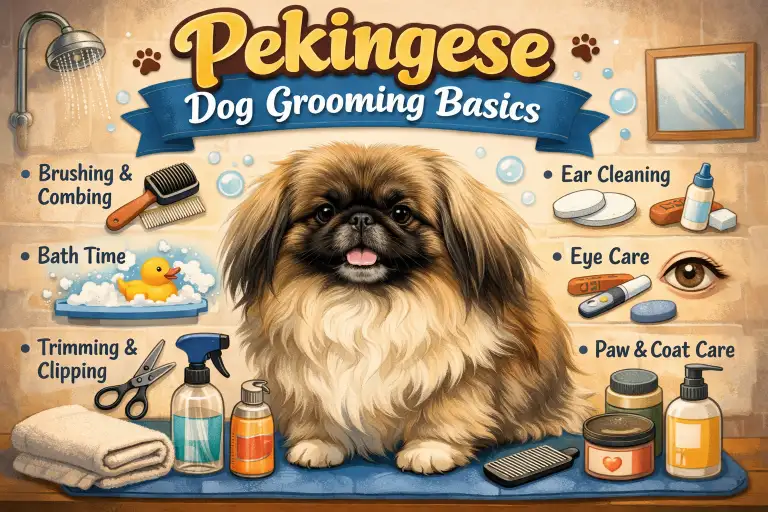
Pekingese dogs are not a “low-maintenance” breed when it comes to grooming, and understanding this from the start is key to keeping them healthy and comfortable. Their long, flowing double coat, flat facial structure, and compact body create grooming needs that go far beyond basic brushing or the occasional bath.
Recommended Dog Care Products
Based on your dog’s age, these products may help with comfort, health, grooming, and daily care.

Purina Pro Plan Veterinary Supplements
Daily probiotics for dogs to support digestive and gut health.
View on Amazon ↗
Earth Rated Poop Bags for Dogs
Leak-proof, extra thick waste bag refill rolls with lavender scent.
View on Amazon ↗
Greenies Pill Pockets for Dogs
Large dog treats for capsule medication, peanut butter flavor.
View on Amazon ↗
HONEY CARE All-Absorb Dog Wrap
Small male dog wraps, 50 count, useful for daily care support.
View on Amazon ↗
Seresto Flea & Tick Collar
Flea and tick treatment and prevention for dogs over 18 lbs.
View on Amazon ↗
Milk-Bone MaroSnacks
Small dog treats with real bone marrow in a 40 oz canister.
View on Amazon ↗
Vital Essentials Dog Treats
Freeze dried beef liver dog treats, grain free and single ingredient.
View on Amazon ↗
Stain & Odor Eliminator
Enzyme cleaner for pet stains, carpet messes, and strong odors.
View on Amazon ↗
Pur Luv Chicken Jerky Treats
Dog treats made with real chicken breast, high protein and chew-friendly.
View on Amazon ↗
Milk-Bone Flavor Snacks
Mini crunchy dog biscuits in a 36 oz canister for small rewards.
View on Amazon ↗As an Amazon Associate, we may earn from qualifying purchases.
This guide is designed to help Pekingese owners build a safe, realistic grooming routine that protects the coat, skin, eyes, and overall well-being of the dog—whether grooming is done at home, professionally, or a combination of both.
Proper grooming for a Pekingese is not just about appearance. It directly affects skin health, temperature regulation, mobility, and even behavior. Mats can pull painfully at the skin, restrict movement, and trap moisture that leads to infections. Poor facial and eye hygiene can contribute to chronic irritation and tear staining. Overgrown nails and compact body structure can alter posture and cause joint discomfort over time.
Because Pekingese are brachycephalic (flat-faced), grooming also plays a role in safety. These dogs are more sensitive to heat, stress, and restricted airflow, which means grooming routines must be gentle, well-timed, and never rushed. A poorly managed bath or drying session can be more than uncomfortable—it can be dangerous.
Consistent grooming helps owners:
- Prevent painful matting and skin infections
- Reduce excessive shedding inside the home
- Spot skin, eye, or ear issues early
- Keep the dog cooler and more comfortable
- Make professional grooming visits less stressful
When grooming is done correctly and regularly, most Pekingese tolerate — and often enjoy — the process. When it’s neglected, grooming sessions quickly become stressful for both the dog and the owner. Starting with the right knowledge makes all the difference.
Understanding the Pekingese Coat and Grooming Needs
Pekingese dogs have a long, thick double coat. This means they have two layers of fur: a soft undercoat close to the skin and a longer outer coat on top. This coat is beautiful, but it needs regular care to stay healthy.
Because of this coat type, Pekingese dogs shed, tangle, and mat easily if grooming is skipped. Their fur can trap dirt, moisture, and loose hair, especially in hard-to-reach areas. Grooming is not optional for this breed—it is part of basic care.
Some areas of a Pekingese body mat faster than others. These spots need extra attention during brushing.
Common problem areas include:
Recommended Dog Care Products
Based on your dog’s age, these products may help with comfort, health, grooming, and daily care.
Purina Pro Plan Veterinary Supplements
Daily probiotics for dogs to support digestive and gut health.
View on Amazon ↗
Earth Rated Poop Bags for Dogs
Leak-proof, extra thick waste bag refill rolls with lavender scent.
View on Amazon ↗
Greenies Pill Pockets for Dogs
Large dog treats for capsule medication, peanut butter flavor.
View on Amazon ↗
HONEY CARE All-Absorb Dog Wrap
Small male dog wraps, 50 count, useful for daily care support.
View on Amazon ↗
Seresto Flea & Tick Collar
Flea and tick treatment and prevention for dogs over 18 lbs.
View on Amazon ↗
Milk-Bone MaroSnacks
Small dog treats with real bone marrow in a 40 oz canister.
View on Amazon ↗
Vital Essentials Dog Treats
Freeze dried beef liver dog treats, grain free and single ingredient.
View on Amazon ↗
Stain & Odor Eliminator
Enzyme cleaner for pet stains, carpet messes, and strong odors.
View on Amazon ↗
Pur Luv Chicken Jerky Treats
Dog treats made with real chicken breast, high protein and chew-friendly.
View on Amazon ↗
Milk-Bone Flavor Snacks
Mini crunchy dog biscuits in a 36 oz canister for small rewards.
View on Amazon ↗As an Amazon Associate, we may earn from qualifying purchases.
- Behind and under the ears
- Under the front legs (armpits)
- Chest and belly
- Around the tail
- Where collars or harnesses sit
If mats are left alone, they tighten over time. This can pull on the skin, cause pain, block airflow, and lead to skin infections.
Pekingese Coat Facts and What They Mean for Grooming
| Coat Feature | What It Means for Owners |
|---|---|
| Long outer coat | Needs frequent brushing to prevent tangles |
| Thick undercoat | Sheds heavily and holds loose hair |
| Double coat | Should not be shaved completely |
| Feathering on legs and tail | Mats easily without regular care |
| Dense coat near skin | Can trap moisture and cause skin issues |
Many owners think shaving a Pekingese will make grooming easier or help them stay cool. This is a common mistake. Shaving a double coat can damage how the coat grows back and may make it harder for the dog to control body temperature. In some cases, the coat may never return to its original condition.
How Often a Pekingese Needs Grooming
| Grooming Task | How Often It’s Needed |
|---|---|
| Light brushing | Daily or every other day |
| Full brushing | 3–4 times per week |
| Bathing | Every 3–6 weeks |
| Professional grooming | Every 6–8 weeks |
| Mat checks | Daily |
Regular grooming keeps the coat soft, reduces shedding around the home, and makes each session easier over time. Short, frequent grooming sessions work much better than long, stressful ones.
At-Home Pekingese Grooming Routine (Step-by-Step)
Grooming a Pekingese at home does not have to be hard or scary. The key is to follow a simple routine and do a little grooming often. This keeps the coat healthy and stops painful mats from forming.
You do not need many tools, but you do need the right ones. Using the wrong brush or skipping steps can damage the coat or hurt your dog.
Basic Grooming Tools for a Pekingese
| Tool | What It’s Used For |
|---|---|
| Slicker brush | Removes loose hair and small tangles |
| Metal comb | Finds hidden mats close to the skin |
| Detangling spray | Makes brushing easier and safer |
| Dog shampoo (gentle) | Cleans the coat without drying skin |
| Towel | Removes water after a bath |
| Low-heat dryer | Dries coat safely (optional but helpful) |
Brushing Your Pekingese
Brushing is the most important part of grooming for this breed. A Pekingese should be brushed often, even if they do not look dirty.
How to brush safely:
Recommended Dog Care Products
Based on your dog’s age, these products may help with comfort, health, grooming, and daily care.
Purina Pro Plan Veterinary Supplements
Daily probiotics for dogs to support digestive and gut health.
View on Amazon ↗
Earth Rated Poop Bags for Dogs
Leak-proof, extra thick waste bag refill rolls with lavender scent.
View on Amazon ↗
Greenies Pill Pockets for Dogs
Large dog treats for capsule medication, peanut butter flavor.
View on Amazon ↗
HONEY CARE All-Absorb Dog Wrap
Small male dog wraps, 50 count, useful for daily care support.
View on Amazon ↗
Seresto Flea & Tick Collar
Flea and tick treatment and prevention for dogs over 18 lbs.
View on Amazon ↗
Milk-Bone MaroSnacks
Small dog treats with real bone marrow in a 40 oz canister.
View on Amazon ↗
Vital Essentials Dog Treats
Freeze dried beef liver dog treats, grain free and single ingredient.
View on Amazon ↗
Stain & Odor Eliminator
Enzyme cleaner for pet stains, carpet messes, and strong odors.
View on Amazon ↗
Pur Luv Chicken Jerky Treats
Dog treats made with real chicken breast, high protein and chew-friendly.
View on Amazon ↗
Milk-Bone Flavor Snacks
Mini crunchy dog biscuits in a 36 oz canister for small rewards.
View on Amazon ↗As an Amazon Associate, we may earn from qualifying purchases.
- Always brush dry or slightly damp fur
- Start at the ends of the hair, not the skin
- Brush small sections at a time
- Use a comb after brushing to check for mats
- Stop if your dog seems uncomfortable
Never pull hard on tangles. This hurts the skin and makes dogs hate grooming.
Bathing a Pekingese
Pekingese do not need frequent baths, but regular bathing helps keep the coat clean and soft.
| Bathing Task | Safe Practice |
|---|---|
| How often | Every 3–6 weeks |
| Water temperature | Warm, not hot |
| Shampoo type | Mild, dog-only shampoo |
| Face washing | Use a damp cloth, not shampoo |
| Drying | Towel first, then low heat if needed |
Always dry the coat fully after a bath. A damp coat can cause skin problems, bad smell, and matting.
Mat Prevention Tips
Most mats can be prevented with daily care.
Simple mat prevention habits:
- Brush problem areas every day
- Remove collars at home when safe
- Keep grooming sessions short and calm
- Schedule professional grooming if mats worsen
Do not cut mats with scissors near the skin. This can easily cause serious injury.
Face, Eyes, Ears, Nails, and Skin Care for Pekingese
Pekingese dogs need extra care in certain body areas. Their flat face, long coat, and small size mean dirt and moisture can build up quickly if these areas are ignored. Regular care keeps your dog comfortable and helps prevent infections.
Face and eye care is very important for Pekingese. Their eyes are large and sit forward, which makes them easy to irritate. Tear stains are common and should be cleaned often.
Simple face and eye care tips:
- Use a soft, damp cloth to clean the face daily
- Wipe away tear stains gently, never scrub
- Keep the hair around the eyes trimmed by a professional
- Watch for redness, swelling, or thick discharge
Ear care is also important. Pekingese ears are covered in long hair, which can trap moisture and dirt. Dirty ears can lead to infections and bad smells.
Recommended Dog Care Products
Based on your dog’s age, these products may help with comfort, health, grooming, and daily care.
Purina Pro Plan Veterinary Supplements
Daily probiotics for dogs to support digestive and gut health.
View on Amazon ↗
Earth Rated Poop Bags for Dogs
Leak-proof, extra thick waste bag refill rolls with lavender scent.
View on Amazon ↗
Greenies Pill Pockets for Dogs
Large dog treats for capsule medication, peanut butter flavor.
View on Amazon ↗
HONEY CARE All-Absorb Dog Wrap
Small male dog wraps, 50 count, useful for daily care support.
View on Amazon ↗
Seresto Flea & Tick Collar
Flea and tick treatment and prevention for dogs over 18 lbs.
View on Amazon ↗
Milk-Bone MaroSnacks
Small dog treats with real bone marrow in a 40 oz canister.
View on Amazon ↗
Vital Essentials Dog Treats
Freeze dried beef liver dog treats, grain free and single ingredient.
View on Amazon ↗
Stain & Odor Eliminator
Enzyme cleaner for pet stains, carpet messes, and strong odors.
View on Amazon ↗
Pur Luv Chicken Jerky Treats
Dog treats made with real chicken breast, high protein and chew-friendly.
View on Amazon ↗
Milk-Bone Flavor Snacks
Mini crunchy dog biscuits in a 36 oz canister for small rewards.
View on Amazon ↗As an Amazon Associate, we may earn from qualifying purchases.
Nail care is often missed but matters a lot. Long nails can cause pain, slipping, and joint stress. Small dogs like Pekingese still need regular nail trims.
Skin care ties everything together. Mats, moisture, or poor grooming can cause itching, hot spots, or infections. Catching problems early makes treatment easier.
Care Areas and How Often to Clean Them
| Care Area | How Often | Safe Method |
|---|---|---|
| Face folds | Daily | Damp cloth, dry after |
| Eyes | Daily | Soft cloth, gentle wipe |
| Ears | Every 1–2 weeks | Dog ear cleaner, cotton pad |
| Nails | Every 3–4 weeks | Small dog nail trimmer |
| Skin check | Weekly | Hands-on check during brushing |
Warning Signs to Watch For
| Sign | What It May Mean |
|---|---|
| Red or smelly ears | Ear infection |
| Thick eye discharge | Eye irritation or infection |
| Constant scratching | Allergies or skin issues |
| Red, wet skin spots | Hot spots |
| Limping or clicking nails | Nails too long |
Never put water deep into the ears, and never use human products on your dog’s skin. If you see bleeding, swelling, or strong odor, contact a groomer or veterinarian.
Grooming Safety, Professional Help, and Pekingese Grooming Schedule
Grooming a Pekingese should always be calm, gentle, and safe. These dogs are small, flat-faced, and sensitive to heat and stress. Rushing grooming or using the wrong tools can cause fear, injury, or health problems.
Always groom your Pekingese in a cool, quiet space. Take breaks if your dog seems tired or upset. Short grooming sessions done often are much safer than long sessions done rarely.
Some grooming tasks are safe to do at home, but others are better left to a professional groomer. Knowing the difference helps protect your dog.
Home Grooming vs Professional Grooming
| Grooming Task | Safe at Home | Best for a Groomer |
|---|---|---|
| Brushing | Yes | — |
| Bathing | Yes | — |
| Face wiping | Yes | — |
| Nail trimming | Sometimes | Yes (if unsure) |
| Mat removal | Small mats only | Yes |
| Full haircut | No | Yes |
| Sanitary trimming | No | Yes |
Never shave a Pekingese unless a veterinarian recommends it for medical reasons. Shaving can damage the coat and make it harder for your dog to control body temperature.
Pekingese shed more in spring and fall. During these times:
- Brush more often
- Expect more loose hair
- Schedule grooming visits closer together
In hot weather:
- Keep the coat brushed, not shaved
- Avoid grooming during the hottest part of the day
- Watch for heavy breathing or weakness
Common Grooming Mistakes to Avoid
- Skipping brushing until mats form
- Using human shampoo
- Pulling hard on tangles
- Cutting mats with scissors near the skin
- Letting nails grow too long
- Forcing grooming when the dog is stressed
Simple Pekingese Grooming Schedule
| Grooming Task | How Often |
|---|---|
| Light brushing | Daily |
| Full brushing | 3–4 times a week |
| Face and eye cleaning | Daily |
| Ear cleaning | Every 1–2 weeks |
| Nail trimming | Every 3–4 weeks |
| Bathing | Every 3–6 weeks |
| Professional grooming | Every 6–8 weeks |
When to See a Vet or Groomer
| Sign You Notice | What It Means |
|---|---|
| Fear or aggression during grooming | Grooming is stressful or painful |
| Severe matting close to the skin | Risk of skin injury or infection |
| Red, wet, or smelly skin | Possible skin infection or hot spots |
| Eye swelling or thick discharge | Eye irritation or infection |
| Constant scratching or pain | Allergies, skin problems, or discomfort |
“For more detailed information about this breed, visit the American Kennel Club’s official breed page.”

Ata Ur Rehman is the founder of Pet Age in Human Years Calculator, an educational platform that provides age conversion charts and lifespan guides for dogs, cats, birds, and other companion animals. His work focuses on helping pet owners understand how animal ages translate into human years using commonly accepted age conversion formulas and published lifespan averages.
The website compiles breed and species lifespan data from kennel clubs, breed organizations, and general animal lifespan studies to present simple and easy-to-understand guides for pet owners worldwide.
This website was created to centralize animal age conversion charts into one easy reference platform for pet owners.