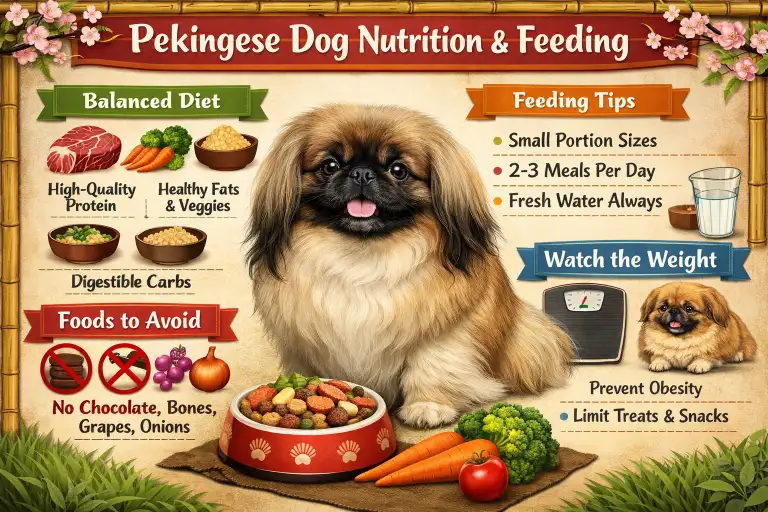
Pekingese dogs may be small, but their nutritional needs are anything but simple. As a toy breed with a brachycephalic (flat-faced) structure, a compact body, and a tendency toward low activity, the Pekingese requires a carefully balanced diet to stay healthy, comfortable, and at a healthy weight. Feeding mistakes that might be minor in larger or more active dogs can quickly lead to obesity, breathing strain, joint stress, and digestive issues in this breed.
Recommended Dog Care Products
Based on your dog’s age, these products may help with comfort, health, grooming, and daily care.

Purina Pro Plan Veterinary Supplements
Daily probiotics for dogs to support digestive and gut health.
View on Amazon ↗
Earth Rated Poop Bags for Dogs
Leak-proof, extra thick waste bag refill rolls with lavender scent.
View on Amazon ↗
Greenies Pill Pockets for Dogs
Large dog treats for capsule medication, peanut butter flavor.
View on Amazon ↗
HONEY CARE All-Absorb Dog Wrap
Small male dog wraps, 50 count, useful for daily care support.
View on Amazon ↗
Seresto Flea & Tick Collar
Flea and tick treatment and prevention for dogs over 18 lbs.
View on Amazon ↗
Milk-Bone MaroSnacks
Small dog treats with real bone marrow in a 40 oz canister.
View on Amazon ↗
Vital Essentials Dog Treats
Freeze dried beef liver dog treats, grain free and single ingredient.
View on Amazon ↗
Stain & Odor Eliminator
Enzyme cleaner for pet stains, carpet messes, and strong odors.
View on Amazon ↗
Pur Luv Chicken Jerky Treats
Dog treats made with real chicken breast, high protein and chew-friendly.
View on Amazon ↗
Milk-Bone Flavor Snacks
Mini crunchy dog biscuits in a 36 oz canister for small rewards.
View on Amazon ↗As an Amazon Associate, we may earn from qualifying purchases.
Proper Pekingese dog nutrition directly affects lifespan, mobility, coat quality, digestion, dental health, and even breathing efficiency. Because Pekingese dogs burn fewer calories than many other breeds and are prone to weight gain, “free feeding” or oversized portions are especially risky. Just a small excess of calories each day can add up to significant weight gain over time.
This breed also has unique physical considerations that influence feeding. Their short muzzles can make it harder to chew large or hard kibble, while their dense coats and compact frames mean nutritional imbalances often show up quickly as dull fur, itchy skin, or lethargy. Many Pekingese are also selective eaters, which leads owners to overuse treats or table scraps—further complicating balanced feeding.
A well-designed Pekingese feeding plan focuses on:
- Controlled calories without sacrificing essential nutrients
- High-quality protein to maintain muscle without excess weight
- Healthy fats for skin and coat, in moderation
- Easily digestible ingredients to support gut health
- Appropriate food textures and sizes for flat-faced dogs
Whether you’re feeding a Pekingese puppy, adult, or senior, nutrition should evolve with age, activity level, and health status. This guide is designed to help you understand not just what to feed your Pekingese, but why those choices matter—so you can make confident, informed decisions that support long-term health rather than reacting to problems after they appear.
What to Feed a Pekingese: Nutritional Needs and Best Food Choices
Choosing the right food for a Pekingese is not about trends or fancy labels. It is about giving the right nutrients in the right amounts for a small, low-energy dog that gains weight easily.
Pekingese dogs need food that is nutrient-dense but calorie-controlled. Because they eat small portions, every bite must count.
Key nutrients a Pekingese needs
A healthy Pekingese diet should always include:
- Protein for muscle strength, immune health, and aging well
- Fats for energy, skin, and coat health (but not too much)
- Carbohydrates and fiber for digestion and steady energy
- Vitamins and minerals for bones, joints, heart, and overall balance
Recommended nutrient ranges for Pekingese dogs
Recommended Dog Care Products
Based on your dog’s age, these products may help with comfort, health, grooming, and daily care.
Purina Pro Plan Veterinary Supplements
Daily probiotics for dogs to support digestive and gut health.
View on Amazon ↗
Earth Rated Poop Bags for Dogs
Leak-proof, extra thick waste bag refill rolls with lavender scent.
View on Amazon ↗
Greenies Pill Pockets for Dogs
Large dog treats for capsule medication, peanut butter flavor.
View on Amazon ↗
HONEY CARE All-Absorb Dog Wrap
Small male dog wraps, 50 count, useful for daily care support.
View on Amazon ↗
Seresto Flea & Tick Collar
Flea and tick treatment and prevention for dogs over 18 lbs.
View on Amazon ↗
Milk-Bone MaroSnacks
Small dog treats with real bone marrow in a 40 oz canister.
View on Amazon ↗
Vital Essentials Dog Treats
Freeze dried beef liver dog treats, grain free and single ingredient.
View on Amazon ↗
Stain & Odor Eliminator
Enzyme cleaner for pet stains, carpet messes, and strong odors.
View on Amazon ↗
Pur Luv Chicken Jerky Treats
Dog treats made with real chicken breast, high protein and chew-friendly.
View on Amazon ↗
Milk-Bone Flavor Snacks
Mini crunchy dog biscuits in a 36 oz canister for small rewards.
View on Amazon ↗As an Amazon Associate, we may earn from qualifying purchases.
| Nutrient | Ideal Range | Why It Matters for Pekingese |
|---|---|---|
| Protein | 22–28% | Maintains muscle without excess calories |
| Fat | 10–15% | Supports coat and skin without weight gain |
| Fiber | 3–6% | Helps digestion and stool quality |
| Calcium | Balanced (not high) | Protects bones and joints |
| Omega-3 & 6 | Present but moderate | Reduces skin dryness and shedding |
These ranges align with AAFCO and veterinary nutrition standards for small-breed adult dogs.
Best types of dog food for Pekinges
| Food Type | Good for Pekingese? | Pros | Cons |
|---|---|---|---|
| Dry kibble (small-breed) | Yes | Helps teeth, easy to measure | Must be small-sized kibble |
| Wet / canned food | Yes (in moderation) | High moisture, tasty | Can be high in calories |
| Fresh cooked food | Yes (balanced only) | Highly digestible | Needs proper formulation |
| Freeze-dried food | Sometimes | Nutrient-rich | Very calorie-dense |
| Raw food | Caution | Some dogs like it | Safety and balance risks |
| Homemade food | Only with vet guidance | Full control | Easy to unbalance |
What ingredients to look for on the label
When reading a dog food label, look for:
- Named animal protein (chicken, turkey, fish, lamb)
- Moderate fat levels
- Limited fillers
- AAFCO statement saying the food is “complete and balanced”
Avoid foods that rely heavily on:
- Excessive fat
- Sugary ingredients
- Artificial colors and flavors
Kibble size and chewing comfort
Because Pekingese dogs have short muzzles and small jaws, food shape matters. Choose:
- Small or toy-breed kibble
- Soft or moistened food if chewing is difficult
- Avoid very hard or oversized pieces
This helps prevent choking, dental stress, and food frustration.
How Much and How Often to Feed a Pekingese
Knowing how much to feed a Pekingese is just as important as choosing the right food. This breed gains weight very easily, so small portion mistakes can cause big health problems over time.
Pekingese dogs are small, calm, and low-energy compared to many breeds. This means they need fewer calories, even if they act hungry.
Recommended Dog Care Products
Based on your dog’s age, these products may help with comfort, health, grooming, and daily care.
Purina Pro Plan Veterinary Supplements
Daily probiotics for dogs to support digestive and gut health.
View on Amazon ↗
Earth Rated Poop Bags for Dogs
Leak-proof, extra thick waste bag refill rolls with lavender scent.
View on Amazon ↗
Greenies Pill Pockets for Dogs
Large dog treats for capsule medication, peanut butter flavor.
View on Amazon ↗
HONEY CARE All-Absorb Dog Wrap
Small male dog wraps, 50 count, useful for daily care support.
View on Amazon ↗
Seresto Flea & Tick Collar
Flea and tick treatment and prevention for dogs over 18 lbs.
View on Amazon ↗
Milk-Bone MaroSnacks
Small dog treats with real bone marrow in a 40 oz canister.
View on Amazon ↗
Vital Essentials Dog Treats
Freeze dried beef liver dog treats, grain free and single ingredient.
View on Amazon ↗
Stain & Odor Eliminator
Enzyme cleaner for pet stains, carpet messes, and strong odors.
View on Amazon ↗
Pur Luv Chicken Jerky Treats
Dog treats made with real chicken breast, high protein and chew-friendly.
View on Amazon ↗
Milk-Bone Flavor Snacks
Mini crunchy dog biscuits in a 36 oz canister for small rewards.
View on Amazon ↗As an Amazon Associate, we may earn from qualifying purchases.
Daily calorie needs for a Pekingese
| Pekingese Weight | Low Activity | Normal Activity |
|---|---|---|
| 7–9 lbs | 200–250 calories/day | 250–300 calories/day |
| 10–12 lbs | 250–300 calories/day | 300–350 calories/day |
| 13–14 lbs | 300–350 calories/day | 350–400 calories/day |
These numbers include all food and treats combined.
How much food this usually means
Because dog foods have different calorie levels, always check the label. For most small-breed kibbles, this usually equals:
- ¼ to ½ cup of dry food per day
- Split into meals, not given all at once
Wet or fresh food will need smaller portions because it is often higher in calories.
Feeding frequency by age
| Life Stage | Meals Per Day | Why |
|---|---|---|
| Puppy (up to 6 months) | 3–4 meals | Supports growth and steady energy |
| Adult (1–7 years) | 2 meals | Helps weight control |
| Senior (8+ years) | 2 small meals | Easier digestion |
Avoid free-feeding. Leaving food out all day makes weight gain very likely.
Using body condition instead of guessing
A healthy Pekingese should:
- Have a waist when viewed from above
- Not have ribs sticking out
- Not feel hard and round when touched
If your dog feels heavy or looks round, reduce food slightly and limit treats.
Recommended Dog Care Products
Based on your dog’s age, these products may help with comfort, health, grooming, and daily care.
Purina Pro Plan Veterinary Supplements
Daily probiotics for dogs to support digestive and gut health.
View on Amazon ↗
Earth Rated Poop Bags for Dogs
Leak-proof, extra thick waste bag refill rolls with lavender scent.
View on Amazon ↗
Greenies Pill Pockets for Dogs
Large dog treats for capsule medication, peanut butter flavor.
View on Amazon ↗
HONEY CARE All-Absorb Dog Wrap
Small male dog wraps, 50 count, useful for daily care support.
View on Amazon ↗
Seresto Flea & Tick Collar
Flea and tick treatment and prevention for dogs over 18 lbs.
View on Amazon ↗
Milk-Bone MaroSnacks
Small dog treats with real bone marrow in a 40 oz canister.
View on Amazon ↗
Vital Essentials Dog Treats
Freeze dried beef liver dog treats, grain free and single ingredient.
View on Amazon ↗
Stain & Odor Eliminator
Enzyme cleaner for pet stains, carpet messes, and strong odors.
View on Amazon ↗
Pur Luv Chicken Jerky Treats
Dog treats made with real chicken breast, high protein and chew-friendly.
View on Amazon ↗
Milk-Bone Flavor Snacks
Mini crunchy dog biscuits in a 36 oz canister for small rewards.
View on Amazon ↗As an Amazon Associate, we may earn from qualifying purchases.
Treats add up fast
Because Pekingese are small:
- Treats should be no more than 10% of daily calories
- Choose small, soft treats
- Break treats into tiny pieces
Even one large treat can equal a full meal for this breed.
Foods, Treats, and Feeding Mistakes Pekingese Owners Should Avoid
Pekingese dogs have sensitive bodies and small stomachs, so some foods that seem harmless can cause real problems. Knowing what is safe and what is dangerous helps protect your dog from sickness, weight gain, and long-term health issues.
Safe foods vs unsafe foods for Pekingese
| Safe in Small Amounts | Never Feed |
|---|---|
| Cooked chicken (plain) | Chocolate |
| Cooked turkey | Grapes and raisins |
| Plain rice | Onions and garlic |
| Cooked eggs | Xylitol (sugar-free gum) |
| Plain pumpkin | Alcohol |
| Carrots (cooked or raw) | Cooked bones |
| Apples (no seeds) | Fatty table scraps |
Safe foods should never replace dog food. They are treats only.
Treat mistakes many owners make
Because Pekingese are cute and good at begging, owners often give too many treats. Common mistakes include:
- Giving treats many times a day
- Using large treats made for big dogs
- Feeding from the table during meals
These habits quickly lead to obesity and picky eating.
Human food risks for Pekingese
Even safe human foods can cause problems if fed too often. Rich or fatty foods may lead to:
- Upset stomach
- Loose stool
- Pancreatitis
- Refusal to eat regular dog food
Common feeding mistakes
| Mistake | Why It’s a Problem |
|---|---|
| Free-feeding all day | Causes overeating |
| Guessing portion sizes | Leads to weight gain |
| Too many treats | Adds hidden calories |
| Switching food too fast | Causes diarrhea |
| Feeding only wet food | Can affect teeth |
Special Diets, Common Feeding Problems, and When to See a Vet
Some Pekingese dogs need more than a basic feeding plan. Age, health, and daily habits can change what kind of food works best. Knowing when to adjust the diet — and when to ask for help — can prevent bigger health problems later.
Pekingese puppies need steady growth, not fast growth. Overfeeding can harm their joints and bones.
| Puppy Age | Meals Per Day | Feeding Tip |
|---|---|---|
| 8–12 weeks | 3–4 | Small, soft meals |
| 3–6 months | 3 | Watch weight closely |
| 6–12 months | 2 | Avoid overfeeding |
Choose puppy food made for small breeds only.
As Pekingese get older, they burn fewer calories and digest food more slowly.
| Senior Need | Diet Focus |
|---|---|
| Lower energy | Fewer calories |
| Joint stiffness | Omega-3 fats |
| Slower digestion | Easy-to-digest food |
| Dental issues | Softer food or soaked kibble |
Weight gain and weight loss
If your Pekingese is overweight:
- Reduce food slowly
- Cut treats first
- Increase gentle activity
If your Pekingese is underweight:
- Check for dental pain
- Feed smaller meals more often
- See a vet if weight does not improve
Food sensitivities and allergies
Some Pekingese react badly to certain foods. Signs include:
- Itchy skin
- Red ears
- Loose stool
- Gas or vomiting
A limited-ingredient or vet-recommended diet may help.
Common feeding problems and simple fixes
| Problem | What Usually Helps |
|---|---|
| Picky eating | Fixed meal times |
| Refusing kibble | Mix with warm water |
| Loose stool | Slower food changes |
| Eating too fast | Slow-feeder bowl |
“For more detailed information about this breed, visit the American Kennel Club’s official breed page.”

Ata Ur Rehman is the founder of Pet Age in Human Years Calculator, an educational platform that provides age conversion charts and lifespan guides for dogs, cats, birds, and other companion animals. His work focuses on helping pet owners understand how animal ages translate into human years using commonly accepted age conversion formulas and published lifespan averages.
The website compiles breed and species lifespan data from kennel clubs, breed organizations, and general animal lifespan studies to present simple and easy-to-understand guides for pet owners worldwide.
This website was created to centralize animal age conversion charts into one easy reference platform for pet owners.