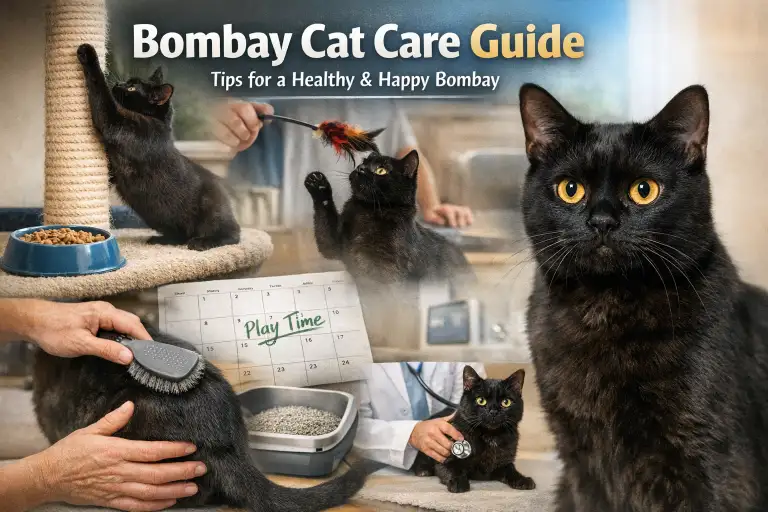
Bombay Cat Care Guide for Daily Needs and Healthy Living
Bombay cats are small to medium-sized cats with a sleek black coat and striking copper or gold eyes. They are very social and love being around people. Unlike some cats that are more independent, Bombays need attention, playtime, and interaction every day. Ignoring this can lead to stress or unwanted behaviors like constant meowing, scratching furniture, or overeating.
Recommended Dog Care Products
Based on your dog’s age, these products may help with comfort, health, grooming, and daily care.

Purina Pro Plan Veterinary Supplements
Daily probiotics for dogs to support digestive and gut health.
View on Amazon ↗
Earth Rated Poop Bags for Dogs
Leak-proof, extra thick waste bag refill rolls with lavender scent.
View on Amazon ↗
Greenies Pill Pockets for Dogs
Large dog treats for capsule medication, peanut butter flavor.
View on Amazon ↗
HONEY CARE All-Absorb Dog Wrap
Small male dog wraps, 50 count, useful for daily care support.
View on Amazon ↗
Seresto Flea & Tick Collar
Flea and tick treatment and prevention for dogs over 18 lbs.
View on Amazon ↗
Milk-Bone MaroSnacks
Small dog treats with real bone marrow in a 40 oz canister.
View on Amazon ↗
Vital Essentials Dog Treats
Freeze dried beef liver dog treats, grain free and single ingredient.
View on Amazon ↗
Stain & Odor Eliminator
Enzyme cleaner for pet stains, carpet messes, and strong odors.
View on Amazon ↗
Pur Luv Chicken Jerky Treats
Dog treats made with real chicken breast, high protein and chew-friendly.
View on Amazon ↗
Milk-Bone Flavor Snacks
Mini crunchy dog biscuits in a 36 oz canister for small rewards.
View on Amazon ↗As an Amazon Associate, we may earn from qualifying purchases.
These cats do best indoors because their trusting and curious nature can put them at risk outside. Inside, they need space to explore, climb, and play safely. Mental stimulation, such as puzzle toys or interactive games, is important to keep them happy and healthy.
Physically, Bombays have strong, muscular bodies. They eat eagerly, so owners need to watch portion sizes and activity levels to prevent weight gain. Daily play helps maintain their fitness and prevent boredom-related problems.
Bombays are also sensitive to changes in routine or their environment. Moving homes, new pets, or schedule changes can make them anxious. Recognizing these changes helps owners adjust care to keep their cats calm and content.
Bombay Cat Traits & Care Implications
| Trait | What It Means for Daily Care | Owner Tip |
|---|---|---|
| Social & affectionate | Needs human interaction daily | Schedule play sessions & cuddle time |
| Indoor preference | Avoid outdoor risks | Provide climbing spaces & window perches |
| High food drive | Prone to weight gain | Measure meals & monitor treats |
| Sensitive to change | Can get stressed easily | Keep routines consistent |
Daily & Weekly Bombay Cat Care Routine
To keep a Bombay healthy and happy, consistent daily and weekly routines are essential. Play, feeding, and litter box care are all part of daily responsibilities, while grooming and health checks are done weekly or occasionally.
Daily Tasks:
- Spend at least 20–30 minutes in interactive play using toys like feather wands or laser pointers.
- Feed measured portions to maintain healthy weight.
- Refresh the litter box and check for unusual clumps or odors.
- Give attention through petting or lap time to prevent loneliness.
Weekly Tasks:
- Brush the coat to remove loose hair and check for skin issues.
- Trim nails if needed to prevent scratching injuries.
- Inspect ears, eyes, and teeth for signs of infection or irritation.
- Rotate toys and introduce new activities for mental stimulation.
Daily vs Weekly Bombay Cat Care Checklist
| Task | Daily | Weekly |
|---|---|---|
| Interactive play | ✔ | |
| Feeding & portion control | ✔ | |
| Litter box maintenance | ✔ | |
| Coat brushing | ✔ | |
| Nail trimming | ✔ | |
| Ear, eye, teeth check | ✔ | |
| Toy rotation | ✔ |
Grooming, Coat Care & Physical Maintenance
Even though Bombays have short coats, they still need proper grooming. Brushing helps keep the coat shiny and allows owners to spot skin problems early. Nail care, ear cleaning, and teeth monitoring are also important for overall health.
Recommended Dog Care Products
Based on your dog’s age, these products may help with comfort, health, grooming, and daily care.
Purina Pro Plan Veterinary Supplements
Daily probiotics for dogs to support digestive and gut health.
View on Amazon ↗
Earth Rated Poop Bags for Dogs
Leak-proof, extra thick waste bag refill rolls with lavender scent.
View on Amazon ↗
Greenies Pill Pockets for Dogs
Large dog treats for capsule medication, peanut butter flavor.
View on Amazon ↗
HONEY CARE All-Absorb Dog Wrap
Small male dog wraps, 50 count, useful for daily care support.
View on Amazon ↗
Seresto Flea & Tick Collar
Flea and tick treatment and prevention for dogs over 18 lbs.
View on Amazon ↗
Milk-Bone MaroSnacks
Small dog treats with real bone marrow in a 40 oz canister.
View on Amazon ↗
Vital Essentials Dog Treats
Freeze dried beef liver dog treats, grain free and single ingredient.
View on Amazon ↗
Stain & Odor Eliminator
Enzyme cleaner for pet stains, carpet messes, and strong odors.
View on Amazon ↗
Pur Luv Chicken Jerky Treats
Dog treats made with real chicken breast, high protein and chew-friendly.
View on Amazon ↗
Milk-Bone Flavor Snacks
Mini crunchy dog biscuits in a 36 oz canister for small rewards.
View on Amazon ↗As an Amazon Associate, we may earn from qualifying purchases.
Owners often think short hair means no grooming, but Bombays benefit from weekly brushing to reduce shedding and hairballs. Nails should be trimmed every couple of weeks, and ears checked for wax or infection. Teeth brushing or dental treats help prevent oral health issues.
Bombay Grooming Needs at a Glance
| Grooming Task | Frequency | Notes |
|---|---|---|
| Coat brushing | 1–2 times/week | Removes loose hair & shines coat |
| Nail trimming | Every 2 weeks | Prevents scratching injuries |
| Ear check/clean | Weekly | Look for wax or redness |
| Teeth care | 2–3 times/week | Use dental treats or brush |
Common Bombay Cat Care Mistakes & Health Risks
Many owners make mistakes that can affect their Bombay’s health and happiness. These include underestimating their need for attention, overfeeding, and ignoring boredom. Stress, weight gain, and behavioral problems often come from these simple oversights.
Common Owner Mistakes & Safer Alternatives
| Mistake | Why It’s a Problem | Safer Approach |
|---|---|---|
| Leaving cat alone too long | Leads to stress & misbehavior | Schedule daily play & interaction |
| Overfeeding or free-feeding | Obesity risk | Measure meals & track treats |
| Not providing mental stimulation | Boredom behaviors | Use puzzle feeders & rotating toys |
| Ignoring small behavior changes | May signal illness | Observe cat daily & consult vet if needed |
Warning Signs That Need Vet Attention
| Sign | What It Could Mean | Action |
|---|---|---|
| Sudden weight gain or loss | Overeating, illness, thyroid issues | Schedule vet visit |
| Excessive vocalization | Stress, anxiety, pain | Assess environment & consult vet |
| Changes in litter box habits | Urinary issues, illness | Monitor & seek veterinary care |
| Coat dullness or hair loss | Skin or nutritional problem | Check diet & consult vet |
FAQs & Final Owner Advice
- Are Bombay cats high maintenance? Yes, they need daily attention and play, but short grooming makes them manageable.
- Do Bombays get lonely? Very much so; they thrive on human interaction and engagement.
- How much playtime do they need daily? At least 20–30 minutes of active, interactive play.
- Are Bombays good indoor cats? Yes, indoor living is safest and supports their social needs.
- Do they do well with children or other pets? Usually yes, if introduced gradually and monitored.
Final tip: Bombay cats are affectionate, intelligent, and playful companions. Meeting their social and activity needs consistently keeps them healthy and happy, while neglect can quickly lead to stress, boredom, or weight issues. By following these routines, owners can enjoy a loving, interactive bond with their Bombay cat.
For additional guidance on feline health and behavior, visit the International Cat Care website, a trusted source for expert cat care advice.

Ata Ur Rehman is the founder of Pet Age in Human Years Calculator, an educational platform that provides age conversion charts and lifespan guides for dogs, cats, birds, and other companion animals. His work focuses on helping pet owners understand how animal ages translate into human years using commonly accepted age conversion formulas and published lifespan averages.
The website compiles breed and species lifespan data from kennel clubs, breed organizations, and general animal lifespan studies to present simple and easy-to-understand guides for pet owners worldwide.
This website was created to centralize animal age conversion charts into one easy reference platform for pet owners.
Recommended Dog Care Products
Based on your dog’s age, these products may help with comfort, health, grooming, and daily care.
Purina Pro Plan Veterinary Supplements
Daily probiotics for dogs to support digestive and gut health.
View on Amazon ↗
Earth Rated Poop Bags for Dogs
Leak-proof, extra thick waste bag refill rolls with lavender scent.
View on Amazon ↗
Greenies Pill Pockets for Dogs
Large dog treats for capsule medication, peanut butter flavor.
View on Amazon ↗
HONEY CARE All-Absorb Dog Wrap
Small male dog wraps, 50 count, useful for daily care support.
View on Amazon ↗
Seresto Flea & Tick Collar
Flea and tick treatment and prevention for dogs over 18 lbs.
View on Amazon ↗
Milk-Bone MaroSnacks
Small dog treats with real bone marrow in a 40 oz canister.
View on Amazon ↗
Vital Essentials Dog Treats
Freeze dried beef liver dog treats, grain free and single ingredient.
View on Amazon ↗
Stain & Odor Eliminator
Enzyme cleaner for pet stains, carpet messes, and strong odors.
View on Amazon ↗
Pur Luv Chicken Jerky Treats
Dog treats made with real chicken breast, high protein and chew-friendly.
View on Amazon ↗
Milk-Bone Flavor Snacks
Mini crunchy dog biscuits in a 36 oz canister for small rewards.
View on Amazon ↗As an Amazon Associate, we may earn from qualifying purchases.