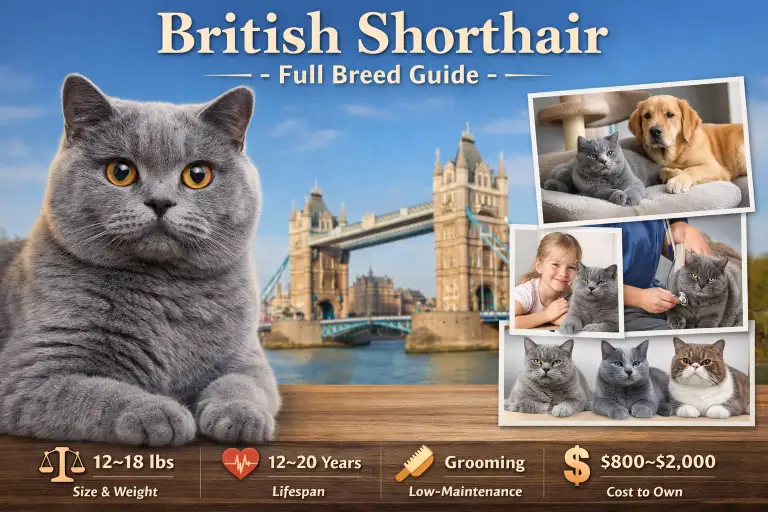
The British Shorthair cat is famous for its calm and gentle personality. Unlike some breeds that demand constant attention, British Shorthairs are steady companions. They enjoy being near you but do not insist on being held or carried. Many owners describe them as “close but not clingy,” making them perfect for busy households or people who want a low-maintenance pet.
Recommended Dog Care Products
Based on your dog’s age, these products may help with comfort, health, grooming, and daily care.

Purina Pro Plan Veterinary Supplements
Daily probiotics for dogs to support digestive and gut health.
View on Amazon ↗
Earth Rated Poop Bags for Dogs
Leak-proof, extra thick waste bag refill rolls with lavender scent.
View on Amazon ↗
Greenies Pill Pockets for Dogs
Large dog treats for capsule medication, peanut butter flavor.
View on Amazon ↗
HONEY CARE All-Absorb Dog Wrap
Small male dog wraps, 50 count, useful for daily care support.
View on Amazon ↗
Seresto Flea & Tick Collar
Flea and tick treatment and prevention for dogs over 18 lbs.
View on Amazon ↗
Milk-Bone MaroSnacks
Small dog treats with real bone marrow in a 40 oz canister.
View on Amazon ↗
Vital Essentials Dog Treats
Freeze dried beef liver dog treats, grain free and single ingredient.
View on Amazon ↗
Stain & Odor Eliminator
Enzyme cleaner for pet stains, carpet messes, and strong odors.
View on Amazon ↗
Pur Luv Chicken Jerky Treats
Dog treats made with real chicken breast, high protein and chew-friendly.
View on Amazon ↗
Milk-Bone Flavor Snacks
Mini crunchy dog biscuits in a 36 oz canister for small rewards.
View on Amazon ↗As an Amazon Associate, we may earn from qualifying purchases.
These cats have a dignified and soft-spoken nature. They are friendly but not overly active, preferring to observe their surroundings and interact on their own terms. British Shorthairs are known for forming deep bonds with their families, following you from room to room, or sitting quietly beside you on the sofa without being demanding.
Visually, British Shorthairs are striking. They have round heads, full cheeks, large eyes, and a broad, muscular body. Their dense, plush coat gives them a soft “teddy bear” look. They are heavier and sturdier than they appear, making them feel solid and comforting when you pet them.
The breed comes in many colors and patterns. While the blue (gray) coat is the most recognized, you can find them in black, white, cream, tabby, bicolor, and colorpoint. Their coats are thick and plush, standing away from the body rather than lying flat, which makes grooming simple and easy.
| Trait | British Shorthair Characteristics |
|---|---|
| Temperament | Calm, steady, and friendly |
| Affection Style | Loyal, likes proximity but not clingy |
| Energy Level | Moderate, enjoys short play sessions |
| Vocalization | Quiet and soft-spoken |
| Intelligence | Observant, routine-oriented |
| Appearance | Round face, muscular build, plush coat |
| Grooming | Low to moderate |
| Best For | Families, first-time owners, apartments |
British Shorthairs are steady, reliable, and low-maintenance. They thrive in homes with routines, gentle interactions, and people who appreciate calm companionship.
British Shorthair Size, Weight, Activity Level, and Daily Needs
British Shorthairs grow slowly and reach full size around 3–5 years of age. Adult males usually weigh between 12–18 pounds, while females weigh slightly less, around 9–15 pounds. They have strong, muscular bodies and thick legs, giving them a sturdy appearance. Even as kittens, they appear round and chunky, which adds to their teddy-bear charm.
In terms of activity, British Shorthairs are moderately playful. They enjoy short bursts of chasing toys or interactive play but do not require constant exercise. Mature cats prefer calm play at ground level and are not natural climbers or leapers. Mental stimulation, like puzzle toys or treat-dispensing games, is important to keep them engaged.
These cats are very adaptable to indoor living. They can be comfortable in apartments or houses as long as they have space to explore and some vertical or horizontal play areas. They are generally quiet and do not make loud noises, so neighbors and roommates rarely find them disruptive.
| Size/Activity | Male | Female |
|---|---|---|
| Adult Weight | 12–18 lbs | 9–15 lbs |
| Full Maturity | 3–5 years | 3–5 years |
| Energy Level | Moderate | Moderate |
| Play Style | Short bursts, ground-level play | Short bursts, ground-level play |
Overall, British Shorthairs enjoy a relaxed lifestyle but still need daily interaction, short play sessions, and mental enrichment to stay healthy and happy.
British Shorthair Temperament With Families, Children, and Other Pets
British Shorthairs are well-suited to families. They are patient with children who understand how to treat cats gently. Rough play can upset them, but they usually tolerate calm, respectful kids very well. They are not overly demanding but will enjoy attention from people who approach them kindly.
Recommended Dog Care Products
Based on your dog’s age, these products may help with comfort, health, grooming, and daily care.
Purina Pro Plan Veterinary Supplements
Daily probiotics for dogs to support digestive and gut health.
View on Amazon ↗
Earth Rated Poop Bags for Dogs
Leak-proof, extra thick waste bag refill rolls with lavender scent.
View on Amazon ↗
Greenies Pill Pockets for Dogs
Large dog treats for capsule medication, peanut butter flavor.
View on Amazon ↗
HONEY CARE All-Absorb Dog Wrap
Small male dog wraps, 50 count, useful for daily care support.
View on Amazon ↗
Seresto Flea & Tick Collar
Flea and tick treatment and prevention for dogs over 18 lbs.
View on Amazon ↗
Milk-Bone MaroSnacks
Small dog treats with real bone marrow in a 40 oz canister.
View on Amazon ↗
Vital Essentials Dog Treats
Freeze dried beef liver dog treats, grain free and single ingredient.
View on Amazon ↗
Stain & Odor Eliminator
Enzyme cleaner for pet stains, carpet messes, and strong odors.
View on Amazon ↗
Pur Luv Chicken Jerky Treats
Dog treats made with real chicken breast, high protein and chew-friendly.
View on Amazon ↗
Milk-Bone Flavor Snacks
Mini crunchy dog biscuits in a 36 oz canister for small rewards.
View on Amazon ↗As an Amazon Associate, we may earn from qualifying purchases.
They also do well with other cats and can adapt to multi-cat homes if proper introductions are made. They are territorial at first but usually settle in with time and consistency. With dogs, they are compatible with calm, cat-aware breeds. Supervision during initial meetings is important to ensure harmony.
British Shorthairs are ideal for first-time owners or people with moderate activity levels. They are independent enough to handle being alone during work hours but still enjoy companionship and routine. Apartment living works well for them because they do not need constant running or climbing space, although they do enjoy toys and occasional exploration areas.
| Household Compatibility | Rating |
|---|---|
| Children | High (gentle kids) |
| Other Cats | Moderate-High (requires proper introduction) |
| Dogs | Moderate (calm, cat-aware dogs) |
| Apartments | High |
| First-Time Owners | High |
| Alone During Day | Moderate-High |
In general, British Shorthairs fit homes where interactions are calm and respectful, making them one of the most versatile and adaptable breeds for families, singles, and seniors alike.
British Shorthair Health, Lifespan, Grooming, and Ongoing Care
British Shorthairs are generally healthy, but they can be prone to some breed-specific issues. Common health concerns include hypertrophic cardiomyopathy (HCM), polycystic kidney disease (PKD), and obesity due to low activity levels. Regular vet checkups, weight monitoring, and preventive care are important to keep them in good health.
Their lifespan ranges between 12 and 20 years. Genetics, diet, and lifestyle all influence longevity. Selecting a reputable breeder who screens for genetic conditions is critical for long-term health.
Grooming is easy compared to long-haired breeds. Weekly brushing helps remove loose hairs, especially during seasonal shedding. Their dense coat is resilient, and bathing is rarely needed unless they get dirty. Nails, ears, and dental care should be maintained regularly.
| Health/Grooming | Details |
|---|---|
| Lifespan | 12–20 years |
| Common Health Issues | HCM, PKD, obesity |
| Vet Screening | Heart checks, genetic testing |
| Grooming | Weekly brushing, minimal bathing |
| Dental Care | Regular brushing recommended |
| Climate Care | Sensitive to heat due to thick coat |
Overall, British Shorthairs are low-maintenance for grooming and general care but do benefit from routine monitoring and preventive health measures to ensure a long, happy life.
British Shorthair Cost, Pros and Cons, and Breed Comparisons
Buying a British Shorthair kitten can cost between $800 and $2,000 depending on breeder reputation, color, and pedigree. Ongoing costs include food, vet care, vaccinations, preventive medications, toys, and occasional grooming supplies.
The breed has many advantages but also some considerations. They are calm, loyal, low-maintenance, and adaptable, but can gain weight if not properly exercised and may be independent rather than constantly affectionate.
| Pros | Cons |
|---|---|
| Calm and steady personality | Can be overweight if inactive |
| Low-maintenance grooming | Independent, not always lap cats |
| Good with families and children | Not highly athletic |
| Long lifespan | Moderate territorial tendencies |
British Shorthairs are often compared to Scottish Folds, Russian Blues, and Exotic Shorthairs. They share calm personalities with some of these breeds but are generally sturdier and more plush-looking.
Recommended Dog Care Products
Based on your dog’s age, these products may help with comfort, health, grooming, and daily care.
Purina Pro Plan Veterinary Supplements
Daily probiotics for dogs to support digestive and gut health.
View on Amazon ↗
Earth Rated Poop Bags for Dogs
Leak-proof, extra thick waste bag refill rolls with lavender scent.
View on Amazon ↗
Greenies Pill Pockets for Dogs
Large dog treats for capsule medication, peanut butter flavor.
View on Amazon ↗
HONEY CARE All-Absorb Dog Wrap
Small male dog wraps, 50 count, useful for daily care support.
View on Amazon ↗
Seresto Flea & Tick Collar
Flea and tick treatment and prevention for dogs over 18 lbs.
View on Amazon ↗
Milk-Bone MaroSnacks
Small dog treats with real bone marrow in a 40 oz canister.
View on Amazon ↗
Vital Essentials Dog Treats
Freeze dried beef liver dog treats, grain free and single ingredient.
View on Amazon ↗
Stain & Odor Eliminator
Enzyme cleaner for pet stains, carpet messes, and strong odors.
View on Amazon ↗
Pur Luv Chicken Jerky Treats
Dog treats made with real chicken breast, high protein and chew-friendly.
View on Amazon ↗
Milk-Bone Flavor Snacks
Mini crunchy dog biscuits in a 36 oz canister for small rewards.
View on Amazon ↗As an Amazon Associate, we may earn from qualifying purchases.
| Breed | Size | Temperament | Grooming | Energy |
|---|---|---|---|---|
| British Shorthair | Medium-Large | Calm, dignified | Low-Moderate | Moderate |
| Scottish Fold | Medium | Gentle, quiet | Moderate | Low-Moderate |
| Russian Blue | Medium | Shy, loyal | Low | Moderate |
| Exotic Shorthair | Medium | Calm, affectionate | Moderate-High | Moderate |
For prospective owners, the British Shorthair is ideal for families, first-time cat owners, and apartment dwellers who want a steady, affectionate, and visually striking companion.
For more details on British Shorthair breed standards and health guidelines, readers can visit the American Cat Fanciers Association page: https://www.acfacats.com

Ata Ur Rehman is the founder of Pet Age in Human Years Calculator, an educational platform that provides age conversion charts and lifespan guides for dogs, cats, birds, and other companion animals. His work focuses on helping pet owners understand how animal ages translate into human years using commonly accepted age conversion formulas and published lifespan averages.
The website compiles breed and species lifespan data from kennel clubs, breed organizations, and general animal lifespan studies to present simple and easy-to-understand guides for pet owners worldwide.
This website was created to centralize animal age conversion charts into one easy reference platform for pet owners.