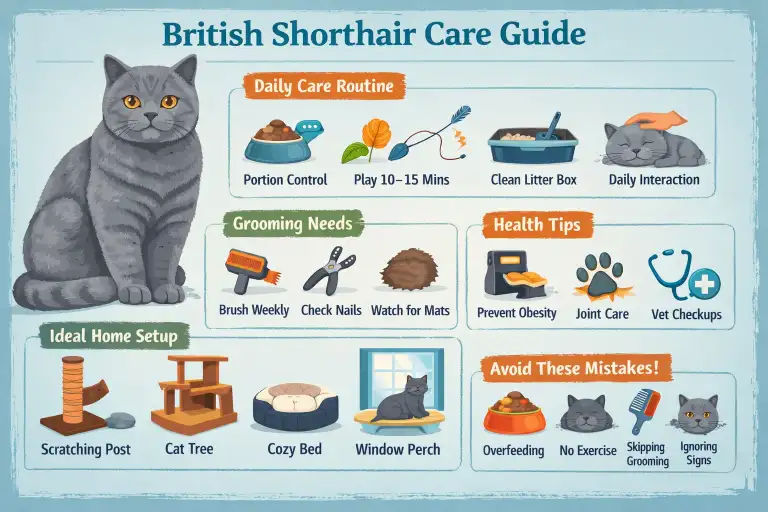
British Shorthairs are calm, friendly, and easygoing cats, but that doesn’t mean they need no care. They are solid, muscular cats with a dense, plush coat. Their body type makes them prone to weight gain if they don’t get enough exercise or if portion sizes aren’t monitored. Even though they seem low-maintenance, British Shorthairs require careful attention to keep them healthy and happy.
Recommended Dog Care Products
Based on your dog’s age, these products may help with comfort, health, grooming, and daily care.

Purina Pro Plan Veterinary Supplements
Daily probiotics for dogs to support digestive and gut health.
View on Amazon ↗
Earth Rated Poop Bags for Dogs
Leak-proof, extra thick waste bag refill rolls with lavender scent.
View on Amazon ↗
Greenies Pill Pockets for Dogs
Large dog treats for capsule medication, peanut butter flavor.
View on Amazon ↗
HONEY CARE All-Absorb Dog Wrap
Small male dog wraps, 50 count, useful for daily care support.
View on Amazon ↗
Seresto Flea & Tick Collar
Flea and tick treatment and prevention for dogs over 18 lbs.
View on Amazon ↗
Milk-Bone MaroSnacks
Small dog treats with real bone marrow in a 40 oz canister.
View on Amazon ↗
Vital Essentials Dog Treats
Freeze dried beef liver dog treats, grain free and single ingredient.
View on Amazon ↗
Stain & Odor Eliminator
Enzyme cleaner for pet stains, carpet messes, and strong odors.
View on Amazon ↗
Pur Luv Chicken Jerky Treats
Dog treats made with real chicken breast, high protein and chew-friendly.
View on Amazon ↗
Milk-Bone Flavor Snacks
Mini crunchy dog biscuits in a 36 oz canister for small rewards.
View on Amazon ↗As an Amazon Associate, we may earn from qualifying purchases.
These cats are independent but still enjoy gentle interaction with their owners. They may not demand attention like some active breeds, so it’s easy to miss early signs of stress, boredom, or discomfort. Spending a little time each day playing or simply sitting together strengthens your bond and keeps your cat mentally engaged.
Coat care is important, even though their hair is short. British Shorthairs have thick undercoats that shed more than many owners expect. Regular brushing helps remove loose hair, keeps the coat soft, and reduces hairballs. It also gives you a chance to check for skin problems, lumps, or injuries.
Finally, British Shorthairs adapt well to indoor life, but indoor cats need extra enrichment. Without toys, climbing areas, and routine playtime, they can become overweight or lose muscle tone. Understanding their needs helps you give them the care they truly need, beyond the “easy cat” myth.
Daily and Weekly British Shorthair Care Routine
Taking care of a British Shorthair is easier when you follow a clear daily and weekly routine. These cats need structure, including feeding times, play sessions, and grooming checks. Daily care keeps them healthy, and weekly tasks prevent small issues from becoming big problems.
Daily Care: Feed your cat measured portions to avoid overeating. Spend 10–15 minutes playing with them each day to help maintain healthy weight and energy levels. Check their litter box daily and keep it clean, as these cats are particular about hygiene. Spend some time petting or interacting, even if they seem independent.
Weekly Care: Brush their coat once or twice a week to remove loose hair and prevent mats. Check nails and trim them if needed. Look for signs of skin irritation, ear wax, or dental issues. Rotate toys and refresh enrichment items so your cat stays interested and active.
Daily vs Weekly Care Checklist
| Task | Daily | Weekly |
|---|---|---|
| Feeding | ✔ | |
| Playtime | ✔ | |
| Litter box cleaning | ✔ | |
| Brushing coat | ✔ | |
| Nail check | ✔ | |
| Health check (skin, eyes, ears) | ✔ | |
| Toy rotation | ✔ |
Home Setup and Lifestyle Considerations
British Shorthairs feel safe and happy in a well-organized home. They like stable, quiet spaces with comfy beds, scratching posts, and vertical areas like shelves or cat trees. Even though they are calm, they enjoy watching outside from windows or perches.
Indoor cats need enrichment to stay active. Rotate toys, provide climbing options, and hide treats around the house to encourage natural hunting instincts. For multi-cat homes, make sure each cat has its own food, water, and litter space to prevent stress.
Recommended Dog Care Products
Based on your dog’s age, these products may help with comfort, health, grooming, and daily care.
Purina Pro Plan Veterinary Supplements
Daily probiotics for dogs to support digestive and gut health.
View on Amazon ↗
Earth Rated Poop Bags for Dogs
Leak-proof, extra thick waste bag refill rolls with lavender scent.
View on Amazon ↗
Greenies Pill Pockets for Dogs
Large dog treats for capsule medication, peanut butter flavor.
View on Amazon ↗
HONEY CARE All-Absorb Dog Wrap
Small male dog wraps, 50 count, useful for daily care support.
View on Amazon ↗
Seresto Flea & Tick Collar
Flea and tick treatment and prevention for dogs over 18 lbs.
View on Amazon ↗
Milk-Bone MaroSnacks
Small dog treats with real bone marrow in a 40 oz canister.
View on Amazon ↗
Vital Essentials Dog Treats
Freeze dried beef liver dog treats, grain free and single ingredient.
View on Amazon ↗
Stain & Odor Eliminator
Enzyme cleaner for pet stains, carpet messes, and strong odors.
View on Amazon ↗
Pur Luv Chicken Jerky Treats
Dog treats made with real chicken breast, high protein and chew-friendly.
View on Amazon ↗
Milk-Bone Flavor Snacks
Mini crunchy dog biscuits in a 36 oz canister for small rewards.
View on Amazon ↗As an Amazon Associate, we may earn from qualifying purchases.
Temperature and comfort are also important. British Shorthairs do well in moderate climates. Make sure they have a warm place in winter and a cool spot in summer. A proper environment helps maintain their overall health and prevents boredom or anxiety.
Ideal Home Setup for British Shorthair Cats
| Item | Purpose |
|---|---|
| Scratching post | Protect furniture, exercise |
| Cat tree or shelves | Climbing, vertical space |
| Comfy beds | Rest and sleep |
| Window perch | Visual stimulation, sunlight |
| Toy rotation | Mental engagement |
| Separate resources in multi-cat home | Reduce stress and conflict |
Common British Shorthair Care Mistakes to Avoid
Owners often make simple mistakes thinking British Shorthairs are very easy to care for. One common mistake is overfeeding because the cat is calm. These cats do not burn as many calories as active breeds, so extra food quickly leads to obesity.
Another mistake is skipping grooming. Even short hair needs weekly brushing. Ignoring coat care can cause hairballs, mats, and skin problems. Some owners also underestimate exercise needs, assuming calm behavior means no activity is necessary.
Misreading their behavior is also common. British Shorthairs may seem aloof, but they still need interaction. Ignoring signs of stress, boredom, or weight gain can lead to hidden health problems. Observing subtle behavior changes helps you act early.
Common Mistakes vs Better Choices
| Mistake | Better Choice |
|---|---|
| Overfeeding | Measure meals and control portions |
| Skipping grooming | Brush weekly, check skin and coat |
| No exercise | Play 10–15 minutes daily, provide toys |
| Misreading behavior | Observe subtle signs, interact regularly |
Health, Safety, and When to See a Vet
British Shorthairs can be healthy cats if monitored properly, but they are prone to weight gain, joint strain, and heart issues. Watch for gradual weight increase, reduced activity, or changes in appetite. Early detection is key.
Kittens, adults, and senior cats have different needs. Kittens require more play and socialization. Adults benefit from routine checks and consistent play. Seniors may need joint support, softer beds, and adjusted activity levels.
Some warning signs need veterinary attention: sudden lethargy, persistent vomiting, difficulty jumping, breathing changes, or unusual lumps. Don’t wait until a problem worsens; preventive check-ups keep British Shorthairs healthier longer.
Warning Signs & Recommended Action
Recommended Dog Care Products
Based on your dog’s age, these products may help with comfort, health, grooming, and daily care.
Purina Pro Plan Veterinary Supplements
Daily probiotics for dogs to support digestive and gut health.
View on Amazon ↗
Earth Rated Poop Bags for Dogs
Leak-proof, extra thick waste bag refill rolls with lavender scent.
View on Amazon ↗
Greenies Pill Pockets for Dogs
Large dog treats for capsule medication, peanut butter flavor.
View on Amazon ↗
HONEY CARE All-Absorb Dog Wrap
Small male dog wraps, 50 count, useful for daily care support.
View on Amazon ↗
Seresto Flea & Tick Collar
Flea and tick treatment and prevention for dogs over 18 lbs.
View on Amazon ↗
Milk-Bone MaroSnacks
Small dog treats with real bone marrow in a 40 oz canister.
View on Amazon ↗
Vital Essentials Dog Treats
Freeze dried beef liver dog treats, grain free and single ingredient.
View on Amazon ↗
Stain & Odor Eliminator
Enzyme cleaner for pet stains, carpet messes, and strong odors.
View on Amazon ↗
Pur Luv Chicken Jerky Treats
Dog treats made with real chicken breast, high protein and chew-friendly.
View on Amazon ↗
Milk-Bone Flavor Snacks
Mini crunchy dog biscuits in a 36 oz canister for small rewards.
View on Amazon ↗As an Amazon Associate, we may earn from qualifying purchases.
| Warning Sign | Action |
|---|---|
| Rapid weight gain | Adjust diet, schedule vet check |
| Reduced activity | Increase play, check for pain or illness |
| Vomiting or diarrhea | Monitor, consult vet if persistent |
| Joint stiffness | Vet assessment, possible supplements |
| Coat dullness or hair loss | Check grooming, consult vet if needed |
For more detailed, vet-reviewed guidance on British Shorthair health and care, you can visit the International Cat Care website: https://icatcare.org/advice/british-shorthair

Ata Ur Rehman is the founder of Pet Age in Human Years Calculator, an educational platform that provides age conversion charts and lifespan guides for dogs, cats, birds, and other companion animals. His work focuses on helping pet owners understand how animal ages translate into human years using commonly accepted age conversion formulas and published lifespan averages.
The website compiles breed and species lifespan data from kennel clubs, breed organizations, and general animal lifespan studies to present simple and easy-to-understand guides for pet owners worldwide.
This website was created to centralize animal age conversion charts into one easy reference platform for pet owners.