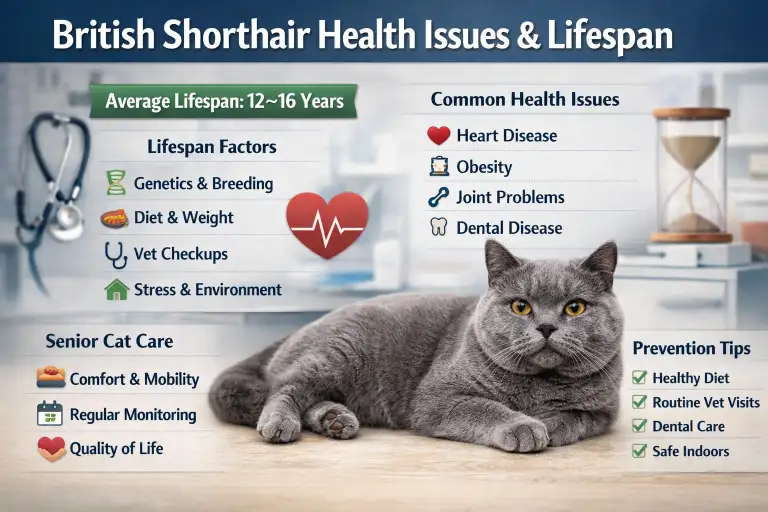
British Shorthair cats are known for their calm, gentle personalities and sturdy builds. They are generally considered a long-lived breed, with an average lifespan of 12 to 16 years. Some cats live even longer when they receive proper care, a safe environment, and regular veterinary check-ups. It’s important to remember that these numbers are averages, so each cat is unique.
Recommended Dog Care Products
Based on your dog’s age, these products may help with comfort, health, grooming, and daily care.

Purina Pro Plan Veterinary Supplements
Daily probiotics for dogs to support digestive and gut health.
View on Amazon ↗
Earth Rated Poop Bags for Dogs
Leak-proof, extra thick waste bag refill rolls with lavender scent.
View on Amazon ↗
Greenies Pill Pockets for Dogs
Large dog treats for capsule medication, peanut butter flavor.
View on Amazon ↗
HONEY CARE All-Absorb Dog Wrap
Small male dog wraps, 50 count, useful for daily care support.
View on Amazon ↗
Seresto Flea & Tick Collar
Flea and tick treatment and prevention for dogs over 18 lbs.
View on Amazon ↗
Milk-Bone MaroSnacks
Small dog treats with real bone marrow in a 40 oz canister.
View on Amazon ↗
Vital Essentials Dog Treats
Freeze dried beef liver dog treats, grain free and single ingredient.
View on Amazon ↗
Stain & Odor Eliminator
Enzyme cleaner for pet stains, carpet messes, and strong odors.
View on Amazon ↗
Pur Luv Chicken Jerky Treats
Dog treats made with real chicken breast, high protein and chew-friendly.
View on Amazon ↗
Milk-Bone Flavor Snacks
Mini crunchy dog biscuits in a 36 oz canister for small rewards.
View on Amazon ↗As an Amazon Associate, we may earn from qualifying purchases.
Indoor British Shorthairs often live longer than cats that spend time outdoors. Keeping your cat indoors reduces the risk of accidents, fights with other animals, and exposure to diseases. Cats that have outdoor access can still live long lives, but the risks are higher, which may shorten their lifespan.
Lifespan is influenced by several factors, including genetics, early-life care, diet, and daily exercise. A cat with healthy weight, good nutrition, and a stress-free environment usually has a better chance of living a long, healthy life. Regular vet visits can also catch problems early before they become serious.
British Shorthairs mature slowly compared to some other breeds. This slower growth means they may stay playful and calm for longer, and many remain active and affectionate well into their senior years. Owners who pay attention to their cat’s needs and adjust care as they age help ensure both longevity and quality of life.
Factors That Affect a British Shorthair’s Health and Longevity
Several factors influence how long a British Shorthair may live. Genetics play a key role, so choosing a kitten from a responsible breeder who tests for common health issues can make a big difference. Even so, lifestyle and daily care are just as important in shaping overall health.
Diet and weight management are critical. British Shorthairs can gain weight easily, and obesity increases the risk of heart disease, joint problems, and diabetes. Feeding a balanced diet and monitoring portion sizes can help maintain a healthy body condition.
Environment and stress levels also affect lifespan. A calm home, plenty of cozy resting spots, and safe indoor spaces help reduce stress. Cats that are exposed to loud noises, sudden changes, or conflicts with other pets may develop stress-related health issues over time.
Preventive care is another major factor. Regular vet check-ups, dental care, and vaccinations help catch small problems before they become serious. Owners who monitor their cat’s behavior, appetite, and activity levels are more likely to notice early signs of illness.
Factors Affecting British Shorthair Longevity
| Factor | Why It Matters | Owner Tip |
|---|---|---|
| Genetics | Determines risk for inherited conditions | Choose kittens from responsible breeders |
| Diet & Weight | Obesity increases health risks | Feed balanced meals, monitor portion sizes |
| Environment & Stress | Calm environments support overall health | Provide safe spaces, minimize sudden changes |
| Preventive Care | Early detection prevents serious illness | Schedule regular vet visits, dental care |
Common British Shorthair Health Issues (Overview)
British Shorthairs are generally healthy cats, but they can be prone to some health concerns. Heart problems, such as hypertrophic cardiomyopathy, are sometimes seen in this breed. While not every cat will develop heart disease, it’s something owners should be aware of.
Recommended Dog Care Products
Based on your dog’s age, these products may help with comfort, health, grooming, and daily care.
Purina Pro Plan Veterinary Supplements
Daily probiotics for dogs to support digestive and gut health.
View on Amazon ↗
Earth Rated Poop Bags for Dogs
Leak-proof, extra thick waste bag refill rolls with lavender scent.
View on Amazon ↗
Greenies Pill Pockets for Dogs
Large dog treats for capsule medication, peanut butter flavor.
View on Amazon ↗
HONEY CARE All-Absorb Dog Wrap
Small male dog wraps, 50 count, useful for daily care support.
View on Amazon ↗
Seresto Flea & Tick Collar
Flea and tick treatment and prevention for dogs over 18 lbs.
View on Amazon ↗
Milk-Bone MaroSnacks
Small dog treats with real bone marrow in a 40 oz canister.
View on Amazon ↗
Vital Essentials Dog Treats
Freeze dried beef liver dog treats, grain free and single ingredient.
View on Amazon ↗
Stain & Odor Eliminator
Enzyme cleaner for pet stains, carpet messes, and strong odors.
View on Amazon ↗
Pur Luv Chicken Jerky Treats
Dog treats made with real chicken breast, high protein and chew-friendly.
View on Amazon ↗
Milk-Bone Flavor Snacks
Mini crunchy dog biscuits in a 36 oz canister for small rewards.
View on Amazon ↗As an Amazon Associate, we may earn from qualifying purchases.
Weight and metabolism issues are common. British Shorthairs can easily gain excess weight, which may lead to joint stress, diabetes, or other metabolic problems. Maintaining a healthy diet and encouraging daily play are important steps.
Joint and mobility issues can appear as cats age. British Shorthairs have solid, stocky builds, which can put pressure on their joints over time. Watching for stiffness or reluctance to jump is key for early intervention.
Dental health is another consideration. Plaque and tartar buildup can lead to gum disease, discomfort, and even systemic issues. Regular brushing or vet dental check-ups help prevent serious problems.
Common Health Issues in British Shorthairs
| Health Issue | How It Shows | Preventive Advice |
|---|---|---|
| Heart Disease | Lethargy, rapid breathing, fainting (rare) | Regular vet cardiac checks |
| Obesity | Weight gain, less activity | Monitor diet, encourage daily play |
| Joint Problems | Stiffness, difficulty jumping | Maintain healthy weight, provide gentle exercise |
| Dental Disease | Bad breath, red gums, difficulty eating | Brush teeth, regular vet dental care |
| Skin & Coat Issues | Dryness, shedding changes | Groom regularly, monitor for skin changes |
Preventive Care and Early Health Monitoring
Preventive care is the foundation of a British Shorthair’s long-term health. Routine veterinary visits allow early detection of conditions before they become serious. Even a seemingly healthy cat benefits from regular check-ups.
Monitoring weight and body condition is essential. A sudden increase or decrease in weight can indicate underlying issues. Keeping a record of your cat’s weight and activity can help you spot trends early.
Dental care should not be overlooked. Plaque and tartar buildup can lead to painful gum disease and tooth loss. Brushing at home or professional cleaning by a vet supports overall health.
Owner observation is equally important. Subtle changes in appetite, energy, or behavior often appear before noticeable symptoms. Early detection of any changes increases the chances of positive outcomes.
Preventive Care Checklist for British Shorthairs
| Task | Recommended Frequency | Owner Tip |
|---|---|---|
| Vet Checkup | Every 6–12 months | Schedule consistent appointments |
| Vaccinations | As recommended by vet | Keep records up-to-date |
| Weight & Body Condition | Monthly | Note trends and adjust diet if needed |
| Dental Care | Weekly brushing or vet cleaning | Use cat-safe toothpaste |
| Behavior & Activity | Daily observation | Track changes in energy, appetite, grooming |
Aging, Senior Health, and Quality of Life
British Shorthairs are considered senior cats around 10 years of age, although some may show changes earlier or later. Aging brings normal changes, such as reduced activity, slower metabolism, and occasional stiffness in joints.
Recommended Dog Care Products
Based on your dog’s age, these products may help with comfort, health, grooming, and daily care.
Purina Pro Plan Veterinary Supplements
Daily probiotics for dogs to support digestive and gut health.
View on Amazon ↗
Earth Rated Poop Bags for Dogs
Leak-proof, extra thick waste bag refill rolls with lavender scent.
View on Amazon ↗
Greenies Pill Pockets for Dogs
Large dog treats for capsule medication, peanut butter flavor.
View on Amazon ↗
HONEY CARE All-Absorb Dog Wrap
Small male dog wraps, 50 count, useful for daily care support.
View on Amazon ↗
Seresto Flea & Tick Collar
Flea and tick treatment and prevention for dogs over 18 lbs.
View on Amazon ↗
Milk-Bone MaroSnacks
Small dog treats with real bone marrow in a 40 oz canister.
View on Amazon ↗
Vital Essentials Dog Treats
Freeze dried beef liver dog treats, grain free and single ingredient.
View on Amazon ↗
Stain & Odor Eliminator
Enzyme cleaner for pet stains, carpet messes, and strong odors.
View on Amazon ↗
Pur Luv Chicken Jerky Treats
Dog treats made with real chicken breast, high protein and chew-friendly.
View on Amazon ↗
Milk-Bone Flavor Snacks
Mini crunchy dog biscuits in a 36 oz canister for small rewards.
View on Amazon ↗As an Amazon Associate, we may earn from qualifying purchases.
Supporting comfort is important. Soft bedding, ramps, or pet stairs can help older cats move around safely. Adjusting feeding routines and monitoring water intake also supports aging health.
Mental engagement and social interaction help maintain quality of life. Even senior cats benefit from gentle play, puzzle feeders, and affection. Maintaining routine and familiar surroundings reduces stress in older cats.
Owners should watch for changes that may need veterinary attention, such as sudden weight loss, frequent vomiting, or noticeable pain. While some changes are normal with aging, early consultation ensures the best possible care.
Normal Aging vs Signs to Discuss with Vet
| Aspect | Normal Aging | Concerning Signs |
|---|---|---|
| Activity Level | Slightly less playful | Refusal to jump, lethargy |
| Weight | Slow metabolism may lead to minor gain | Rapid weight loss or gain |
| Mobility | Mild stiffness | Limping, reluctance to move |
| Appetite & Drinking | Stable but may eat smaller portions | Loss of appetite, increased thirst |
| Grooming | Slightly slower grooming | Matted fur, greasy coat, bald patches |
For more detailed guidance on British Shorthair health and preventive care, you can visit the International Cat Care website, a trusted authority in feline health and welfare: https://icatcare.org/advice/british-shorthair/

Ata Ur Rehman is the founder of Pet Age in Human Years Calculator, an educational platform that provides age conversion charts and lifespan guides for dogs, cats, birds, and other companion animals. His work focuses on helping pet owners understand how animal ages translate into human years using commonly accepted age conversion formulas and published lifespan averages.
The website compiles breed and species lifespan data from kennel clubs, breed organizations, and general animal lifespan studies to present simple and easy-to-understand guides for pet owners worldwide.
This website was created to centralize animal age conversion charts into one easy reference platform for pet owners.