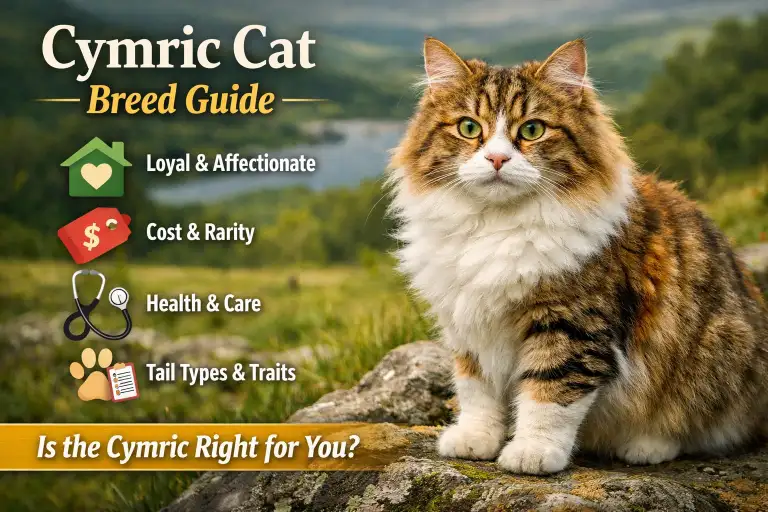
The Cymric cat is best described as a long-haired Manx, but that simple definition barely scratches the surface. To experienced breeders and long-time owners, the Cymric is a distinctive, carefully managed breed shaped by genetics, geography, and responsible breeding choices rather than by appearance alone.
Recommended Dog Care Products
Based on your dog’s age, these products may help with comfort, health, grooming, and daily care.

Purina Pro Plan Veterinary Supplements
Daily probiotics for dogs to support digestive and gut health.
View on Amazon ↗
Earth Rated Poop Bags for Dogs
Leak-proof, extra thick waste bag refill rolls with lavender scent.
View on Amazon ↗
Greenies Pill Pockets for Dogs
Large dog treats for capsule medication, peanut butter flavor.
View on Amazon ↗
HONEY CARE All-Absorb Dog Wrap
Small male dog wraps, 50 count, useful for daily care support.
View on Amazon ↗
Seresto Flea & Tick Collar
Flea and tick treatment and prevention for dogs over 18 lbs.
View on Amazon ↗
Milk-Bone MaroSnacks
Small dog treats with real bone marrow in a 40 oz canister.
View on Amazon ↗
Vital Essentials Dog Treats
Freeze dried beef liver dog treats, grain free and single ingredient.
View on Amazon ↗
Stain & Odor Eliminator
Enzyme cleaner for pet stains, carpet messes, and strong odors.
View on Amazon ↗
Pur Luv Chicken Jerky Treats
Dog treats made with real chicken breast, high protein and chew-friendly.
View on Amazon ↗
Milk-Bone Flavor Snacks
Mini crunchy dog biscuits in a 36 oz canister for small rewards.
View on Amazon ↗As an Amazon Associate, we may earn from qualifying purchases.
The breed traces its roots to the Isle of Man, where a natural genetic mutation produced cats born without tails. Over time, some of these tailless cats developed longer coats, especially in colder environments. These long-haired kittens were once considered “non-standard,” but selective breeding eventually established what we now recognize as the Cymric. In some cat registries, the Cymric is still classified as a long-haired variety of the Manx rather than a fully separate breed, which adds to the confusion for new owners.
What truly defines the Cymric is not just the lack of a tail, but how that tailless gene affects the entire body. The same mutation that shortens or removes the tail also influences spinal structure, hind-leg length, movement, and even internal development. This is why ethical Cymric breeding is critical and why reputable breeders never mate two completely tailless cats together. When bred responsibly, Cymrics can live healthy, comfortable lives, but careless breeding dramatically increases the risk of serious spinal and neurological problems.
Another misconception is that all Cymric cats are completely tailless. In reality, the breed includes several tail types, ranging from completely tailless to partially tailed individuals. These variations are normal, expected, and important for maintaining genetic health within breeding programs.
Despite their sturdy, rounded appearance, Cymric cats are considered rare worldwide. Their limited gene pool, strict breeding requirements, and smaller number of ethical breeders mean they are far less common than many other long-haired cat breeds. This rarity contributes to their higher price and explains why well-bred Cymric kittens are often reserved long before they are ready to go home.
Below is a quick snapshot to ground the breed before diving deeper into appearance, personality, health, and cost.
Cymric Cat Quick Facts
| Trait | Details |
|---|---|
| Origin | Isle of Man |
| Breed Type | Long-haired Manx |
| Tail Types | Rumpy, rumpy riser, stumpy, longy |
| Coat | Semi-long to long, double coat |
| Rarity | Rare |
| Key Consideration | Requires ethical breeding due to spinal genetics |
Understanding these foundations is essential. The Cymric is not a novelty “tailless cat,” but a breed that demands informed ownership, careful breeding practices, and realistic expectations about health, care, and lifestyle compatibility.
Cymric Cat Appearance: Size, Coat, Colors, and Physical Traits
At first glance, the Cymric cat looks soft, round, and sturdy. Many people are surprised when they pick one up, because this breed feels much heavier than it looks. Owners often describe the Cymric as a “bowling ball wrapped in fur.”
Size and weight
The Cymric is a medium-sized cat, but it has a solid, muscular body.
- Adult males usually weigh 10 to 13 pounds
- Adult females are slightly smaller at 8 to 11 pounds
Their back legs are longer than their front legs, which gives them a gentle rise at the back and a hopping or rabbit-like walk when they move.
Recommended Dog Care Products
Based on your dog’s age, these products may help with comfort, health, grooming, and daily care.
Purina Pro Plan Veterinary Supplements
Daily probiotics for dogs to support digestive and gut health.
View on Amazon ↗
Earth Rated Poop Bags for Dogs
Leak-proof, extra thick waste bag refill rolls with lavender scent.
View on Amazon ↗
Greenies Pill Pockets for Dogs
Large dog treats for capsule medication, peanut butter flavor.
View on Amazon ↗
HONEY CARE All-Absorb Dog Wrap
Small male dog wraps, 50 count, useful for daily care support.
View on Amazon ↗
Seresto Flea & Tick Collar
Flea and tick treatment and prevention for dogs over 18 lbs.
View on Amazon ↗
Milk-Bone MaroSnacks
Small dog treats with real bone marrow in a 40 oz canister.
View on Amazon ↗
Vital Essentials Dog Treats
Freeze dried beef liver dog treats, grain free and single ingredient.
View on Amazon ↗
Stain & Odor Eliminator
Enzyme cleaner for pet stains, carpet messes, and strong odors.
View on Amazon ↗
Pur Luv Chicken Jerky Treats
Dog treats made with real chicken breast, high protein and chew-friendly.
View on Amazon ↗
Milk-Bone Flavor Snacks
Mini crunchy dog biscuits in a 36 oz canister for small rewards.
View on Amazon ↗As an Amazon Associate, we may earn from qualifying purchases.
Body shape and build
Cymric cats have a round and compact body. Their chest is broad, their shoulders are strong, and their bones are thick. This strong build comes from the same genetics that affect their tail.
Because of this body structure:
- They are powerful jumpers at low heights
- They prefer climbing ramps or steps instead of high jumps
- They move with balance, not speed
Coat type and texture
The Cymric has a long, double coat. This means there is a soft undercoat and a longer top coat that protects the body.
- The fur feels thick and plush
- The coat becomes heavier in winter
- Shedding increases in spring and fall
Even though the coat is long, it does not usually tangle easily if brushed regularly.
Colors and patterns
Cymric cats come in many colors and patterns, including solid, tabby, tortoiseshell, and bi-color coats. Eye color often matches the coat and can range from gold to green and even blue in some cats.
Tail types
Not all Cymric cats look the same at the back.
- Some have no tail at all
- Others have a small rise of bone or a short tail
- A few may have a longer tail
These tail types are normal and healthy when bred correctly.
Key physical traits at a glance
| Feature | What to Expect |
|---|---|
| Body | Round, compact, muscular |
| Weight | Medium but heavy-feeling |
| Legs | Back legs longer than front |
| Coat | Long, thick, double coat |
| Tail | None to short, varies by cat |
The Cymric’s look is part of its charm, but it also explains why this breed needs careful handling and thoughtful home setup.
Cymric Cat Personality & Daily Life: Temperament, Behavior, and Compatibility
The Cymric cat is known for having a calm, friendly, and loyal personality. Many owners say this breed acts more like a dog than a cat. Cymrics often follow their favorite person from room to room and like to stay close, but they are not overly needy.
Temperament and behavior
Cymric cats are gentle and thoughtful. They like routine and feel most comfortable in a quiet, steady home.
Recommended Dog Care Products
Based on your dog’s age, these products may help with comfort, health, grooming, and daily care.
Purina Pro Plan Veterinary Supplements
Daily probiotics for dogs to support digestive and gut health.
View on Amazon ↗
Earth Rated Poop Bags for Dogs
Leak-proof, extra thick waste bag refill rolls with lavender scent.
View on Amazon ↗
Greenies Pill Pockets for Dogs
Large dog treats for capsule medication, peanut butter flavor.
View on Amazon ↗
HONEY CARE All-Absorb Dog Wrap
Small male dog wraps, 50 count, useful for daily care support.
View on Amazon ↗
Seresto Flea & Tick Collar
Flea and tick treatment and prevention for dogs over 18 lbs.
View on Amazon ↗
Milk-Bone MaroSnacks
Small dog treats with real bone marrow in a 40 oz canister.
View on Amazon ↗
Vital Essentials Dog Treats
Freeze dried beef liver dog treats, grain free and single ingredient.
View on Amazon ↗
Stain & Odor Eliminator
Enzyme cleaner for pet stains, carpet messes, and strong odors.
View on Amazon ↗
Pur Luv Chicken Jerky Treats
Dog treats made with real chicken breast, high protein and chew-friendly.
View on Amazon ↗
Milk-Bone Flavor Snacks
Mini crunchy dog biscuits in a 36 oz canister for small rewards.
View on Amazon ↗As an Amazon Associate, we may earn from qualifying purchases.
- Affectionate but not clingy
- Enjoy human company
- Curious and observant
- Calm rather than hyper
They usually show love by sitting nearby, watching, or resting close instead of demanding constant attention.
Intelligence and communication
This breed is very smart. Cymrics learn daily routines quickly and remember where things are kept.
- They solve simple problems
- They enjoy puzzle toys
- They learn house rules fast
Cymric cats are not very loud. Instead of loud meows, they often use soft chirps or body language to communicate.
Living with children
Cymric cats do best with calm and respectful children.
- Good with older kids
- Do not like rough handling
- Prefer gentle play
Because of their sensitive spine, they should not be picked up roughly or squeezed.
Living with other cats and dogs
Most Cymric cats adjust well to other pets if introductions are slow and calm.
- Can live with other friendly cats
- Often do well with gentle dogs
- Like clear personal space
They are confident but not aggressive.
Apartment life and daily routine
Cymric cats are great for apartment living.
- Moderate energy level
- Enjoy short play times
- Like window watching and quiet spaces
They are happiest indoors, where they are safe from injuries and traffic.
Is the Cymric right for you?
This breed may be a good match if you:
Recommended Dog Care Products
Based on your dog’s age, these products may help with comfort, health, grooming, and daily care.
Purina Pro Plan Veterinary Supplements
Daily probiotics for dogs to support digestive and gut health.
View on Amazon ↗
Earth Rated Poop Bags for Dogs
Leak-proof, extra thick waste bag refill rolls with lavender scent.
View on Amazon ↗
Greenies Pill Pockets for Dogs
Large dog treats for capsule medication, peanut butter flavor.
View on Amazon ↗
HONEY CARE All-Absorb Dog Wrap
Small male dog wraps, 50 count, useful for daily care support.
View on Amazon ↗
Seresto Flea & Tick Collar
Flea and tick treatment and prevention for dogs over 18 lbs.
View on Amazon ↗
Milk-Bone MaroSnacks
Small dog treats with real bone marrow in a 40 oz canister.
View on Amazon ↗
Vital Essentials Dog Treats
Freeze dried beef liver dog treats, grain free and single ingredient.
View on Amazon ↗
Stain & Odor Eliminator
Enzyme cleaner for pet stains, carpet messes, and strong odors.
View on Amazon ↗
Pur Luv Chicken Jerky Treats
Dog treats made with real chicken breast, high protein and chew-friendly.
View on Amazon ↗
Milk-Bone Flavor Snacks
Mini crunchy dog biscuits in a 36 oz canister for small rewards.
View on Amazon ↗As an Amazon Associate, we may earn from qualifying purchases.
- Want a calm, loving cat
- Live in an apartment or small home
- Prefer a quiet companion
- Can offer daily attention and routine
Cymric Cat Care, Health, and Lifespan: What Owners Must Know
Caring for a Cymric cat is not hard, but it does require attention and responsibility. This breed needs gentle handling, regular grooming, and careful health checks because of its special body structure.
Grooming and daily care
The Cymric has a long, thick coat that needs regular brushing.
- Brush 2 to 3 times a week
- Brush more often during heavy shedding seasons
- Use a soft brush to avoid pulling the skin
Other basic care includes:
- Trimming nails every few weeks
- Cleaning ears when dirty
- Brushing teeth if the cat allows it
Good grooming keeps the coat healthy and helps reduce hairballs.
Activity and play needs
Cymric cats have moderate energy levels.
- Enjoy short play sessions
- Prefer toys on the floor
- Like climbing steps or low furniture
They do not need constant running or jumping. Gentle play and mental games are better for their bodies.
Lifespan
A healthy, well-bred Cymric cat usually lives 13 to 15 years, and some live even longer with good care.
Health concerns to understand
The Cymric shares health risks with the Manx because of the tailless gene. Not all Cymrics have problems, but owners should be aware.
- Spinal issues
- Nerve problems
- Digestive or bathroom troubles in severe cases
These problems are more common when breeding is done without care.
Why breeder choice matters
Good breeders:
- Do not breed two fully tailless cats together
- Check kittens early for health problems
- Delay adoption until kittens are strong
Regular vet visits help catch issues early and keep the cat comfortable.
Health overview table
| Health Area | What to Know |
|---|---|
| Spine | Can be sensitive, needs gentle care |
| Nerves | Some cats may have weakness |
| Digestion | Rare but possible issues |
| Vet Care | Regular checkups are important |
With proper breeding and care, many Cymric cats live full, happy lives without serious problems.
Cymric Cat Cost, Pros & Cons, and Final Verdict
Before choosing a Cymric cat, it is important to understand the cost, benefits, and challenges of owning this breed. This helps you decide if the Cymric truly fits your home and lifestyle.
Cost to own a Cymric cat
Cymric cats are rare, and ethical breeding is careful and limited. This makes them more expensive than many other cats.
- Cymric kitten price is usually high
- Ongoing costs are moderate but steady
- Vet care may cost more because of special health checks
Here is a simple cost snapshot:
| Expense Type | What to Expect |
|---|---|
| Kitten price | High due to rarity |
| Grooming | Moderate |
| Vet visits | Regular and important |
| Insurance | Strongly recommended |
Pet insurance is a smart choice for Cymric cats because it can help with unexpected health costs.
Pros of owning a Cymric cat
Cymric cats are loved for many good reasons.
| Pros |
|---|
| Calm and gentle nature |
| Very loyal and people-focused |
| Quiet and not noisy |
| Good for apartments |
| Unique and rare appearance |
Cons to consider
This breed is not right for everyone.
| Cons |
|---|
| Can be expensive |
| Needs regular grooming |
| Sensitive spine requires gentle handling |
| Health risks if poorly bred |
| Not ideal for rough play |
Final verdict
The Cymric cat is best for people who want a quiet, loving, and loyal companion. This breed does well in calm homes, apartments, and with owners who enjoy gentle interaction. Families with older children, seniors, and first-time owners who are willing to learn can all do well with a Cymric.
However, if you want a very active cat, dislike grooming, or are not ready for higher costs, this breed may not be the right choice.
For more detailed official information on the Cymric breed and related standards, see the Cat Fanciers’ Association (CFA) breed profile here: https://cfa.org/cymric/.

Ata Ur Rehman is the founder of Pet Age in Human Years Calculator, an educational platform that provides age conversion charts and lifespan guides for dogs, cats, birds, and other companion animals. His work focuses on helping pet owners understand how animal ages translate into human years using commonly accepted age conversion formulas and published lifespan averages.
The website compiles breed and species lifespan data from kennel clubs, breed organizations, and general animal lifespan studies to present simple and easy-to-understand guides for pet owners worldwide.
This website was created to centralize animal age conversion charts into one easy reference platform for pet owners.