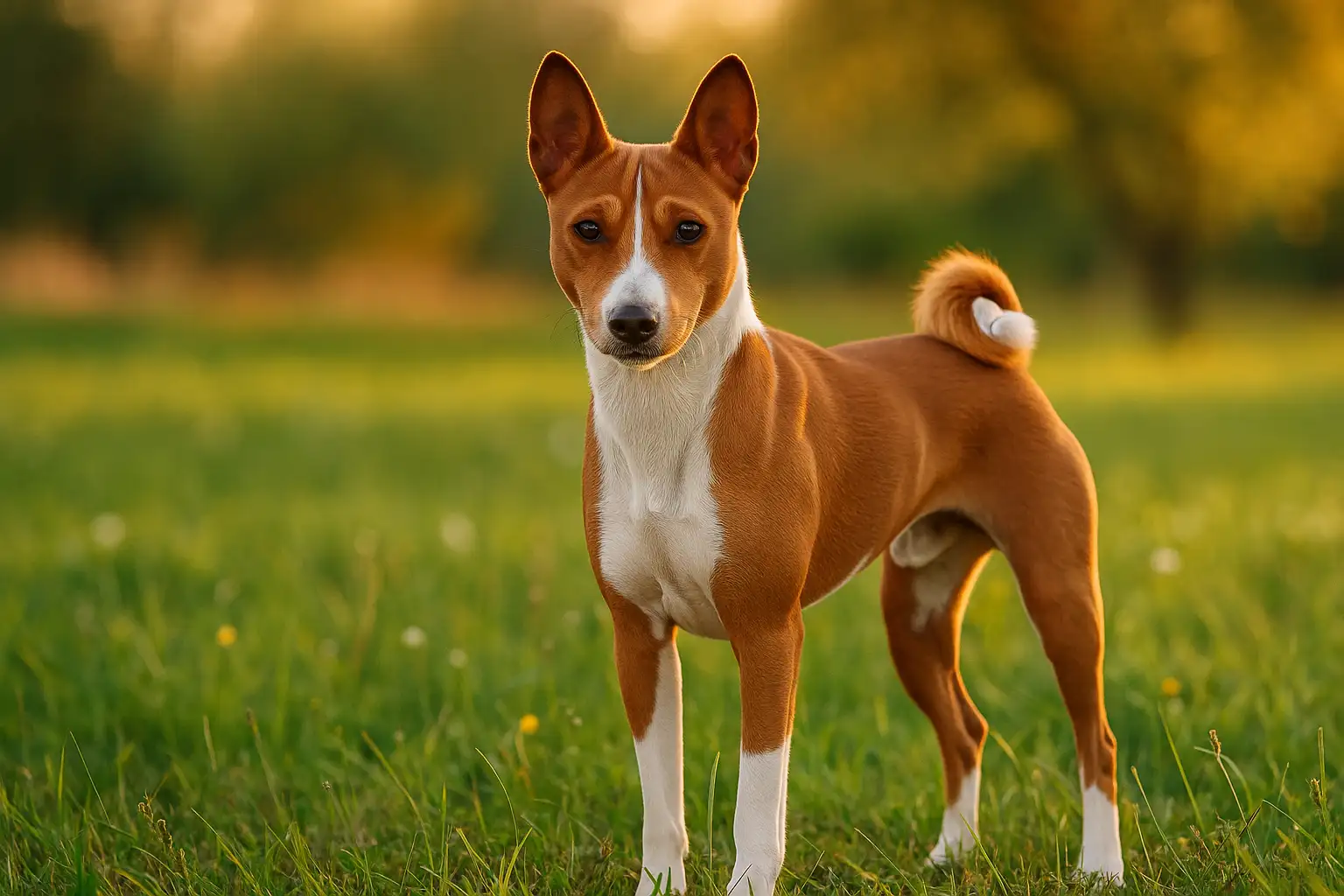
Understanding how Basenjis age helps owners make better decisions about health care, nutrition, exercise, and long-term planning. Because Basenjis mature quickly in their early months and then transition into slower, steady aging as adults, their human-age equivalent is not linear. This guide provides a clear explanation of how Basenji aging works, how to estimate their human-age equivalent, and what to expect at different life stages. It also includes a Basenji-specific age chart and a link to the Basenji Age Calculator for quick conversions.
Learn more about Basenji Dog Breed here.
Why Dog Aging Is Different
Dogs age at a different biological pace than humans because their growth, metabolism, and life stages progress more rapidly—especially in the first two years. Basenjis reach physical and reproductive maturity far earlier than humans, which means the first year of a Basenji’s life represents a much larger jump in “human-equivalent” aging. After maturity, the rate of aging slows, but it does not follow a simple linear pattern. Breed size also influences longevity; as a small–medium breed, Basenjis generally age more slowly than large or giant breeds in adulthood. These differences make traditional models like “1 dog year = 7 human years” inaccurate, requiring a more refined approach based on growth rate and biological markers.
The Science Behind Dog Aging
Dog aging follows a non-linear pattern driven by rapid early development and slower aging during adulthood. Studies show that puppies experience accelerated physiological changes—from bone growth to reproductive maturity—within their first year, making this stage equivalent to several human developmental years. Size also plays a role; smaller breeds like Basenjis typically have longer lifespans and slower mid-life aging compared to larger dogs.
The 2019 canine epigenetic methylation study introduced a logarithmic aging model that aligns dog aging with changes in DNA methylation over time. This model demonstrates that dogs age very quickly in the beginning, then transition into a steadier, slower aging pace. For Basenjis, this means the first year corresponds to a large human-age jump, while later years convert more gradually. Understanding these patterns helps create more accurate age calculations and expectations for each life stage.
How Dog-to-Human-Year Conversion Works
Dog-to-human age conversion uses a non-linear model because early canine development is extremely fast compared to humans. The outdated “7-year rule” does not reflect real biology and fails to account for rapid puppy growth, breed size, or adult aging patterns. Modern conversion methods follow a logarithmic curve, based on epigenetic research, which aligns dog aging with changes in DNA methylation over time.
For Basenjis, the first year represents a large human-age jump, with slower aging afterward. The following examples show typical conversions using the modern model:
| Basenji Age | Approx. Human-Equivalent Age | Notes |
|---|---|---|
| 1 year | ~30 human years | Rapid early development completed |
| 5 years | ~45 human years | Prime adulthood with steady aging |
| 10 years | ~65–70 human years | Senior stage with higher health monitoring needs |
This model provides a more accurate picture of Basenji aging and helps owners understand the changes expected at each stage.
Basenji Age to Human Years Chart
Basenjis fall into the small–medium breed range, which means they age rapidly in the first two years and then transition into a slower, steadier aging pattern. The chart below uses the modern logarithmic aging model and aligns it with typical Basenji lifespan expectations.
You can also try our Basenji age-to-human-years calculator to see how old your Basenji is in human years.
| Basenji Age (Years) | Human-Equivalent Age | Life Stage Notes |
|---|---|---|
| 0.5 years | ~18 human years | Late puppyhood, rapid physical + behavioral development |
| 1 year | ~30 human years | Young adult maturity reached |
| 2 years | ~35 human years | Fully matured adult |
| 3 years | ~40 human years | Stable adult stage |
| 4 years | ~42 human years | Prime adult period |
| 5 years | ~45 human years | Early mature stage |
| 6 years | ~50 human years | Mid-life for most Basenjis |
| 7 years | ~55 human years | Transition toward senior status |
| 8 years | ~60 human years | Early senior, increased monitoring recommended |
| 9 years | ~63 human years | Senior stage begins for many |
| 10 years | ~65–70 human years | Established senior stage |
| 11 years | ~72–75 human years | Senior with potential health decline |
| 12 years | ~78–82 human years | Advanced senior |
| 13 years | ~84–88 human years | Typical upper lifespan range |
| 14 years | ~90–95 human years | Longevity outlier |
Puppy Age & Development Stages
Basenji puppies progress through clearly defined developmental stages, with rapid physical and behavioral changes during their first year. The timeline below outlines typical milestones for this breed.
| Age Range | Development Stage | Key Characteristics |
|---|---|---|
| Birth to 8 weeks | Neonatal & early socialization | Rapid growth, sensory development, reliance on mother, beginning social bonding |
| 2–6 months | Early puppyhood | Fast physical development, teething, early training, high curiosity, critical socialization window |
| 6–12 months | Adolescence | Increased independence, higher energy, maturing behavior, early hormonal changes, continued learning. |
Basenji puppies benefit from structured socialization and early training during these stages to establish stable behavior and confidence.
Adult Life Stages
Basenjis transition through several adult phases, each marked by changes in activity level, behavior, and health needs. The table below outlines these stages clearly.
| Age Range | Life Stage | Key Characteristics |
|---|---|---|
| 1–3 years | Young adult | High energy, strong agility, continued behavioral maturation, stable growth |
| 3–7 years | Prime adult | Peak physical condition, consistent behavior, optimal performance and stamina |
| 7–10 years | Mature adult | Gradual decrease in activity, early signs of aging may appear, increased need for routine health monitoring |
These stages help owners understand when adjustments in exercise, diet, and veterinary care become necessary.
Senior Dog Life Stages
Basenjis enter their senior years gradually, with aging patterns that vary by genetics, health history, and lifestyle. The table below outlines the typical senior and geriatric stages for this breed.
| Age Range | Life Stage | Key Characteristics |
|---|---|---|
| 10–12 years | Senior | Reduced stamina, slower recovery, possible joint stiffness, increased need for health screenings |
| 12+ years | Geriatric | Noticeable decline in mobility, sensory changes, higher risk of chronic conditions, benefit from modified exercise and supportive care |
Understanding these stages helps owners adjust routines, monitor changes early, and provide appropriate support as the Basenji ages.
Signs of Aging
Basenjis may show aging signs gradually, and recognizing them early helps guide appropriate care. The table below summarizes the most common physical, behavioral, and cognitive changes seen as they enter their senior years.
| Category | Common Signs | What It Indicates |
|---|---|---|
| Physical | Stiffness, slower movement, weight changes, reduced muscle tone, duller coat | Early joint wear, metabolic changes, decreased activity tolerance |
| Behavioral | More rest, lower play interest, increased sensitivity to cold, reluctance on long walks | Declining stamina and comfort needs typical of senior dogs |
| Cognitive | Disorientation, disrupted sleep, pacing, increased vocalization, slower response to cues | Possible early cognitive decline or age-related confusion |
Tracking these changes helps owners adapt exercise, diet, and veterinary care to support healthy aging.
How to Help Your Basenji Age Healthily
Supporting a Basenji through each life stage requires consistent care that adapts to changing physical and behavioral needs. The table below outlines key areas that influence healthy aging.
| Care Area | Recommendations | Purpose |
|---|---|---|
| Nutrition | Use age-appropriate diets, maintain ideal weight, adjust calories as activity declines | Supports joint health, digestion, and overall longevity |
| Exercise | Shorter, moderate activities; avoid overexertion; include gentle mobility exercises | Maintains muscle tone and prevents stiffness |
| Veterinary visits | Biannual checkups for seniors, routine bloodwork, screenings for Fanconi syndrome and thyroid issues | Detects conditions early and manages age-related diseases |
| Supplements | Joint support (e.g., omega-3s), cognitive-support supplements if recommended by a vet | Helps manage aging-related mobility or cognitive concerns |
| Home environment | Provide warm bedding, traction mats, ramps, stable routines, and reduced physical strain | Improves daily comfort and reduces injury risk |
These adjustments help Basenjis stay comfortable, active, and healthy throughout their senior years.
Breed-Specific Lifespan Considerations
Basenjis typically live 13–14 years, with some reaching beyond this range depending on genetics, health history, and lifestyle. As a small–medium, athletic breed, they generally maintain good mobility into their senior years but may develop age-related issues tied to breed-specific conditions. The table below outlines key factors that influence Basenji longevity.
| Factor | Impact on Lifespan | Notes |
|---|---|---|
| Genetics | Strong influence on overall longevity | Lines with fewer hereditary issues often produce longer-lived dogs |
| Common health risks | Can affect aging rate and comfort | Fanconi syndrome, PRA, and thyroid disorders may appear with age |
| Activity level | Supports healthy weight and joint strength | Regular, moderate exercise helps maintain mobility into senior years |
| Preventive care | Extends healthy lifespan when consistent | Routine screenings catch age-related diseases early |
| Weight management | Critical for joint and metabolic health | Lean Basenjis typically age more comfortably and remain active longer |
Understanding these factors helps owners anticipate needs and support their Basenji through each life stage.
FAQs
Below are the most relevant Basenji aging questions based on real owner search behavior and common concerns.
| Question | Short Answer |
|---|---|
| How long do Basenjis live? | Most live 13–14 years, with some reaching 15 or older depending on health and genetics. |
| What is the lifespan of a Basenji? | Typically 13–14 years, considered long for a small–medium breed. |
| How old is a Basenji in human years? | A 1-year-old Basenji is roughly 30 human years; aging slows afterward. Use the Basenji Age Calculator for precise conversions. |
| What age is considered senior for a Basenji? | Around 10 years old, though changes vary by the individual dog. |
| Do Basenjis age slower or faster than other breeds? | They age more slowly than large breeds but follow a similar pattern to small–medium breeds. |
| How can I help my Basenji live longer? | Maintain a healthy weight, provide consistent exercise, schedule regular vet visits, and monitor age-related changes. |
| Do Basenjis have age-related health issues? | Senior Basenjis may face Fanconi syndrome, PRA, and thyroid disorders, which benefit from early detection and testing. |
This section addresses the most common lifespan and aging questions owners ask about Basenjis.
Final Thoughts
Understanding how Basenjis age helps owners adjust care, exercise, and veterinary routines to support each stage of life. Because this breed matures quickly but enjoys a relatively long adulthood, accurate age conversion and regular monitoring make a meaningful difference in long-term health. Using tools like the Basenji Age Calculator, along with recognizing developmental milestones and senior changes, allows owners to anticipate needs early and promote a healthier, more comfortable lifespan.
One thought on “Basenji Dog Age Calculator & Basenji Age-to-Human-Years Guide”