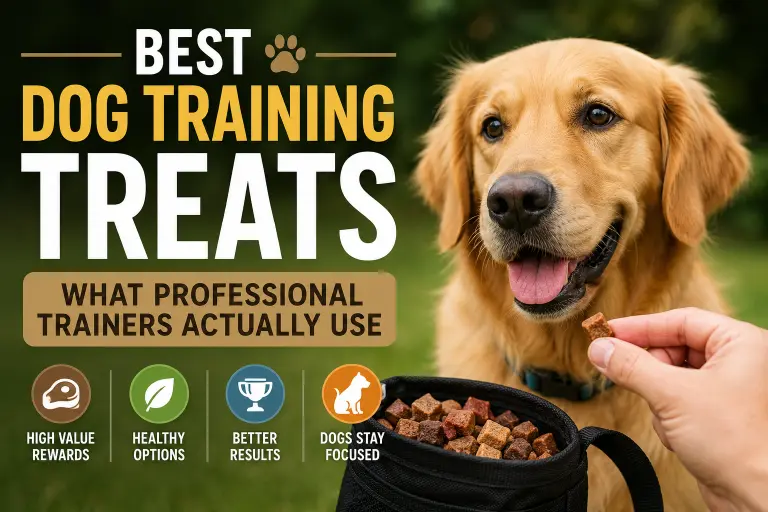
Best Dog Training Treats: What Professional Trainers Actually Use
Walk into a professional dog training class, and you’ll notice something interesting: trainers aren’t pulling random dog biscuits out of their pockets.
Recommended Dog Care Products
Based on your dog’s age, these products may help with comfort, health, grooming, and daily care.

Purina Pro Plan Veterinary Supplements
Daily probiotics for dogs to support digestive and gut health.
View on Amazon ↗
Earth Rated Poop Bags for Dogs
Leak-proof, extra thick waste bag refill rolls with lavender scent.
View on Amazon ↗
Greenies Pill Pockets for Dogs
Large dog treats for capsule medication, peanut butter flavor.
View on Amazon ↗
HONEY CARE All-Absorb Dog Wrap
Small male dog wraps, 50 count, useful for daily care support.
View on Amazon ↗
Seresto Flea & Tick Collar
Flea and tick treatment and prevention for dogs over 18 lbs.
View on Amazon ↗
Milk-Bone MaroSnacks
Small dog treats with real bone marrow in a 40 oz canister.
View on Amazon ↗
Vital Essentials Dog Treats
Freeze dried beef liver dog treats, grain free and single ingredient.
View on Amazon ↗
Stain & Odor Eliminator
Enzyme cleaner for pet stains, carpet messes, and strong odors.
View on Amazon ↗
Pur Luv Chicken Jerky Treats
Dog treats made with real chicken breast, high protein and chew-friendly.
View on Amazon ↗
Milk-Bone Flavor Snacks
Mini crunchy dog biscuits in a 36 oz canister for small rewards.
View on Amazon ↗As an Amazon Associate, we may earn from qualifying purchases.
The best dog training treats are chosen for a specific purpose. They need to be motivating enough to keep a dog’s attention, small enough to use repeatedly, and practical enough for dozens of rewards during a single session.
Professional trainers often rely on a mix of high value training treats, soft commercial training treats, freeze-dried meat, and even simple human foods like cooked chicken. The right choice depends on the dog, the training goal, and the level of distraction in the environment.
In this guide, you’ll learn what professional trainers actually use, why certain treats work better than others, and how to choose the best option for your own training sessions.
What Professional Dog Trainers Look for in a Training Treat
A treat doesn’t have to be expensive to be effective. What matters is whether your dog finds it rewarding enough to work for consistently.
Professional trainers typically evaluate treats based on four factors:
- Value to the dog
- Ease of delivery
- Size
- Calorie content
A dog that ignores a reward after a few repetitions isn’t likely to stay engaged in training. On the other hand, a highly motivating treat can help maintain focus even when distractions are present.
Why High Value Training Treats Get Better Results
Not all treats have the same motivational value.
Many dogs view dry biscuits as an average reward. They’ll take them when nothing else is happening, but they may lose interest when training becomes challenging.
High value training treats are different. These are treats dogs find especially exciting because they are usually:
Recommended Dog Care Products
Based on your dog’s age, these products may help with comfort, health, grooming, and daily care.
Purina Pro Plan Veterinary Supplements
Daily probiotics for dogs to support digestive and gut health.
View on Amazon ↗
Earth Rated Poop Bags for Dogs
Leak-proof, extra thick waste bag refill rolls with lavender scent.
View on Amazon ↗
Greenies Pill Pockets for Dogs
Large dog treats for capsule medication, peanut butter flavor.
View on Amazon ↗
HONEY CARE All-Absorb Dog Wrap
Small male dog wraps, 50 count, useful for daily care support.
View on Amazon ↗
Seresto Flea & Tick Collar
Flea and tick treatment and prevention for dogs over 18 lbs.
View on Amazon ↗
Milk-Bone MaroSnacks
Small dog treats with real bone marrow in a 40 oz canister.
View on Amazon ↗
Vital Essentials Dog Treats
Freeze dried beef liver dog treats, grain free and single ingredient.
View on Amazon ↗
Stain & Odor Eliminator
Enzyme cleaner for pet stains, carpet messes, and strong odors.
View on Amazon ↗
Pur Luv Chicken Jerky Treats
Dog treats made with real chicken breast, high protein and chew-friendly.
View on Amazon ↗
Milk-Bone Flavor Snacks
Mini crunchy dog biscuits in a 36 oz canister for small rewards.
View on Amazon ↗As an Amazon Associate, we may earn from qualifying purchases.
- Meat-based
- Highly aromatic
- Soft and easy to eat
- Rich in flavor
Professional trainers often reserve these rewards for situations where they need maximum attention, such as:
- Recall training
- Working around distractions
- Reactivity training
- Teaching difficult new behaviors
A dog that ignores a standard biscuit may work enthusiastically for freeze-dried liver or small pieces of chicken.
The key is matching the reward value to the difficulty of the task.
The Ideal Size, Texture, and Smell for Training
One common mistake owners make is using treats that are too large.
Training often involves dozens of repetitions. If each reward takes several seconds to chew, momentum slows down and the session becomes less productive.
Professional trainers generally prefer treats that are:
Small
- About pea-sized or smaller
- Easy to deliver quickly
- Suitable for frequent rewards
Soft
- Faster to eat than crunchy treats
- Keeps training moving smoothly
- Easier for puppies and senior dogs
Smelly
- Strong scent increases motivation
- Helps maintain focus outdoors
- More effective around distractions
A perfect training treat is one your dog can eat in a second or two and immediately return attention to you.
Recommended Dog Care Products
Based on your dog’s age, these products may help with comfort, health, grooming, and daily care.
Purina Pro Plan Veterinary Supplements
Daily probiotics for dogs to support digestive and gut health.
View on Amazon ↗
Earth Rated Poop Bags for Dogs
Leak-proof, extra thick waste bag refill rolls with lavender scent.
View on Amazon ↗
Greenies Pill Pockets for Dogs
Large dog treats for capsule medication, peanut butter flavor.
View on Amazon ↗
HONEY CARE All-Absorb Dog Wrap
Small male dog wraps, 50 count, useful for daily care support.
View on Amazon ↗
Seresto Flea & Tick Collar
Flea and tick treatment and prevention for dogs over 18 lbs.
View on Amazon ↗
Milk-Bone MaroSnacks
Small dog treats with real bone marrow in a 40 oz canister.
View on Amazon ↗
Vital Essentials Dog Treats
Freeze dried beef liver dog treats, grain free and single ingredient.
View on Amazon ↗
Stain & Odor Eliminator
Enzyme cleaner for pet stains, carpet messes, and strong odors.
View on Amazon ↗
Pur Luv Chicken Jerky Treats
Dog treats made with real chicken breast, high protein and chew-friendly.
View on Amazon ↗
Milk-Bone Flavor Snacks
Mini crunchy dog biscuits in a 36 oz canister for small rewards.
View on Amazon ↗As an Amazon Associate, we may earn from qualifying purchases.
The Best Dog Training Treats Professional Trainers Use Most Often
While every trainer has personal preferences, most rely on a handful of proven treat categories rather than chasing the latest marketing trend.
Freeze-Dried Meat Treats
Freeze-dried treats are among the most popular rewards used by professional trainers.
Because they contain mostly meat and retain a strong aroma, they tend to be highly motivating for many dogs.
Popular options include:
- Freeze-dried liver
- Freeze-dried chicken
- Freeze-dried beef
- Freeze-dried salmon
These treats work particularly well for:
- Recall training
- High-distraction environments
- Advanced obedience work
The downside is cost. Freeze-dried treats are often more expensive than traditional training treats, so many trainers reserve them for important training moments.
Soft Training Treats
Soft commercial training treats are a staple in group classes and daily obedience training.
Their biggest advantage is convenience. They are usually:
- Small and ready to use
- Easy to break into smaller pieces
- Quick for dogs to eat
- Available in low-calorie formulas
For routine training sessions, many professionals prefer soft treats because they allow frequent rewards without significantly increasing calorie intake.
They’re often the default choice for:
Recommended Dog Care Products
Based on your dog’s age, these products may help with comfort, health, grooming, and daily care.
Purina Pro Plan Veterinary Supplements
Daily probiotics for dogs to support digestive and gut health.
View on Amazon ↗
Earth Rated Poop Bags for Dogs
Leak-proof, extra thick waste bag refill rolls with lavender scent.
View on Amazon ↗
Greenies Pill Pockets for Dogs
Large dog treats for capsule medication, peanut butter flavor.
View on Amazon ↗
HONEY CARE All-Absorb Dog Wrap
Small male dog wraps, 50 count, useful for daily care support.
View on Amazon ↗
Seresto Flea & Tick Collar
Flea and tick treatment and prevention for dogs over 18 lbs.
View on Amazon ↗
Milk-Bone MaroSnacks
Small dog treats with real bone marrow in a 40 oz canister.
View on Amazon ↗
Vital Essentials Dog Treats
Freeze dried beef liver dog treats, grain free and single ingredient.
View on Amazon ↗
Stain & Odor Eliminator
Enzyme cleaner for pet stains, carpet messes, and strong odors.
View on Amazon ↗
Pur Luv Chicken Jerky Treats
Dog treats made with real chicken breast, high protein and chew-friendly.
View on Amazon ↗
Milk-Bone Flavor Snacks
Mini crunchy dog biscuits in a 36 oz canister for small rewards.
View on Amazon ↗As an Amazon Associate, we may earn from qualifying purchases.
- Sit, down, stay, and leash training
- Puppy classes
- Everyday reinforcement
Real Food Rewards (Chicken, Cheese, and Hot Dogs)
Many professional trainers use real food regularly.
Cooked chicken is especially common because it combines strong reward value with relatively simple preparation.
Other frequently used options include:
- Small cubes of low-fat cheese
- Tiny pieces of hot dog
- Cooked turkey
- Lean beef
These rewards can be extremely effective when a dog needs extra motivation.
However, trainers usually use them strategically rather than for every session. Rich foods can add calories quickly, and some dogs may experience digestive upset if introduced too aggressively.
Low-Calorie Training Treats for Frequent Repetition
Some training exercises require hundreds of rewards each week.
In these cases, trainers often prioritize lower-calorie options that allow frequent reinforcement without overfeeding.
Common choices include:
- Small commercial training treats
- Single-ingredient meat treats broken into tiny pieces
- Air-dried treats cut into smaller portions
- Portions of the dog’s regular kibble for easy behaviors
The goal isn’t necessarily to find the most exciting reward. It’s to create a reward system that can be used consistently over time.
Many professionals use a reward hierarchy, saving high value training treats for difficult situations while using lower-calorie rewards for routine practice. This approach keeps treats effective without relying on premium rewards for every behavior.
Best Dog Training Treats by Training Situation
The same treat won’t be the best choice for every training goal.
Professional trainers adjust reward value based on how difficult the task is and how many distractions the dog is facing. Using the right treat in the right situation often improves results more than simply using more treats.
Basic Obedience Training
For everyday commands such as sit, down, stay, and loose-leash walking, most dogs don’t need the highest-value rewards available.
Soft commercial training treats, small pieces of freeze-dried meat, or even kibble can work well when:
- The environment is familiar
- The dog already understands the behavior
- Distractions are limited
The goal is consistency. Since these exercises often involve many repetitions, trainers typically choose treats that are affordable, easy to carry, and low in calories.
Recall and Off-Leash Training
Recall training is one area where professional trainers rarely cut corners on rewards.
When you call your dog away from a squirrel, another dog, or an exciting smell, you’re competing against powerful distractions. The reward must feel worth it.
High value training treats commonly used for recall include:
- Cooked chicken
- Freeze-dried liver
- Small pieces of cheese
- High-quality meat treats
Many trainers recommend using your dog’s favorite reward exclusively for recall practice. This helps build a stronger association between coming when called and receiving something valuable.
Puppy Training
Puppies learn quickly, but they also need frequent reinforcement.
The best treats for puppies are:
- Soft and easy to chew
- Small enough for repeated rewards
- Gentle on developing digestive systems
Many trainers prefer soft training treats or tiny pieces of cooked chicken during early puppy training. Since puppies often earn dozens of rewards in a single session, portion control becomes especially important.
Treats that require extended chewing can interrupt the learning process and reduce engagement.
Distracting Environments and Behavior Work
Training around distractions is where treat quality matters most.
Whether you’re working on leash reactivity, focus around other dogs, or calm behavior in busy places, average rewards often lose their effectiveness.
Professional trainers commonly increase reward value when:
- Training outdoors
- Working around other dogs
- Addressing behavioral challenges
- Teaching difficult new skills
A simple rule many trainers follow is:
The harder the task, the better the reward.
If your dog struggles to focus in a particular environment, upgrading the reward is often one of the first adjustments to make.
Healthy Dog Treats That Still Keep Dogs Motivated
Many owners worry that training treats will lead to weight gain. Professional trainers manage this by focusing on quality, portion size, and strategic use rather than eliminating treats altogether.
A healthy dog treat should support training without adding unnecessary calories or ingredients.
High-Protein Options
Protein-rich treats tend to be highly motivating while keeping ingredient lists simple.
Popular trainer-approved options include:
- Freeze-dried chicken
- Freeze-dried beef liver
- Freeze-dried salmon
- Air-dried meat treats
Because these treats are concentrated and flavorful, very small pieces are often enough to maintain motivation.
Limited-Ingredient Choices
Some dogs have food sensitivities or digestive issues that make treat selection more challenging.
In these cases, trainers often recommend limited-ingredient treats that contain:
- One protein source
- Minimal additives
- No unnecessary fillers
Single-ingredient meat treats are frequently used because they’re easy to evaluate and less likely to trigger food-related problems.
If you’re introducing a new treat, start with a small amount and monitor your dog’s response before using it extensively during training.
Managing Calories During Training
One of the most effective strategies trainers use is reducing treat size rather than reducing rewards.
Many dog owners give treats that are far larger than necessary.
A reward doesn’t need to be big to be valuable. For most dogs, the opportunity to earn the reward matters more than its size.
To keep calories under control:
- Break treats into smaller pieces
- Use part of your dog’s daily food allowance for training
- Reserve high-calorie rewards for difficult tasks
- Adjust meal portions when training heavily
This approach allows you to continue using positive reinforcement without significantly increasing your dog’s daily calorie intake.
How to Use Training Treats Like a Professional Trainer
Choosing the best dog training treats is important, but how you use them often has an even greater impact on training success.
Professional trainers focus on timing, consistency, and reward strategy rather than simply handing out treats whenever a dog performs a behavior.
Reward Timing Matters More Than Treat Value
The dog must clearly understand which behavior earned the reward.
That’s why trainers deliver treats immediately after the correct action whenever possible.
For example:
- Dog sits → reward immediately
- Dog comes when called → reward immediately
- Dog makes eye contact on cue → reward immediately
Waiting too long can create confusion because the dog may associate the reward with a different behavior.
Even the highest-value treat loses effectiveness if it’s delivered at the wrong moment.
When to Upgrade to Higher-Value Rewards
Many owners use the same reward regardless of difficulty.
Professional trainers rarely do.
Instead, they match reward value to the challenge.
A simple obedience exercise in the living room may only require a basic training treat.
A recall away from another dog may require something much more exciting.
Consider upgrading rewards when:
- Your dog is distracted
- You’re introducing a new behavior
- Progress has stalled
- The environment becomes more challenging
Increasing reward value often improves engagement without changing the training method itself.
How Often to Treat Without Creating Dependence
A common concern is whether dogs become dependent on treats.
Professional trainers avoid this by gradually changing how rewards are delivered after a behavior becomes reliable.
Initially, rewards are frequent because the dog is learning.
As the behavior strengthens, trainers often begin to vary reinforcement by:
- Rewarding some repetitions with treats
- Using praise alongside food rewards
- Incorporating toys or play
- Maintaining occasional high-value rewards
This keeps behaviors strong while preventing the dog from expecting a treat every single time.
The goal isn’t to eliminate rewards completely. It’s to create a reliable behavior that remains worthwhile for the dog even when food isn’t always immediately available.
Quick Recommendations: Best Dog Training Treats for Different Needs
If you want a fast answer, these are the categories professional trainers most commonly rely on for specific situations.
Best Overall
Soft training treats
For most dogs and most training sessions, soft training treats offer the best balance of convenience, motivation, portion control, and affordability. They’re easy to carry, quick to deliver, and suitable for high-repetition training.
Best High Value Training Treat
Freeze-dried liver or cooked chicken
When maximum motivation is needed, these rewards consistently rank among the most effective options. They’re especially useful for recall training, behavior modification, and distracting environments.
Best Healthy Dog Treat
Single-ingredient freeze-dried meat treats
These treats are typically high in protein, contain minimal ingredients, and provide strong reward value without unnecessary fillers.
Best for Puppies
Small, soft puppy training treats
Puppies benefit from rewards that are easy to chew and digest. Soft treats also allow rapid reinforcement during short training sessions.
Best Budget-Friendly Option
Portion-controlled kibble or basic soft training treats
For dogs that are food-motivated, using part of their daily kibble allowance can be an economical solution for routine obedience practice.
The best dog training treats ultimately depend on your dog’s preferences. Even professional trainers often test several options before identifying the rewards that generate the strongest response.
Frequently Asked Questions
What are high value training treats for dogs?
High value training treats are rewards that your dog finds especially motivating. They are typically meat-based, highly aromatic, and more exciting than everyday treats. Common examples include freeze-dried liver, cooked chicken, turkey, and small pieces of cheese.
Do professional dog trainers use store-bought treats?
Yes. Many professional trainers use commercial training treats because they’re convenient, portion-controlled, and designed for repeated rewards. Trainers often combine store-bought treats with real food rewards depending on the training situation.
What is the best treat for puppy training?
The best puppy training treats are small, soft, easy to chew, and low in calories. Soft training treats and tiny pieces of cooked chicken are popular choices because they allow frequent reinforcement without slowing down training sessions.
Can you use regular dog treats for training?
You can, but regular treats are not always ideal. Many are too large, too hard, or not motivating enough for active training. Training-specific treats are usually easier to deliver quickly and keep dogs engaged longer.
How many training treats should a dog get per day?
There is no universal number because it depends on your dog’s size, activity level, and overall diet. Professional trainers typically use very small rewards and adjust meal portions when training frequently to avoid excessive calorie intake.
Conclusion
Professional dog trainers don’t choose treats based on packaging claims. They choose rewards that help dogs learn efficiently and stay motivated.
For everyday training, soft training treats are often the most practical choice. For challenging situations such as recall training or working around distractions, high value training treats like freeze-dried liver or cooked chicken are frequently the preferred option.
The most effective approach is to match the reward to the difficulty of the task. A simple behavior may only require a basic treat, while a difficult training challenge may require something far more motivating.
If you’re unsure where to start, test a few trainer-approved options and pay attention to your dog’s enthusiasm. The best dog training treats are ultimately the ones your dog is eager to work for, session after session.

Ata Ur Rehman is the founder of Pet Age in Human Years Calculator, an educational platform that provides age conversion charts and lifespan guides for dogs, cats, birds, and other companion animals. His work focuses on helping pet owners understand how animal ages translate into human years using commonly accepted age conversion formulas and published lifespan averages.
The website compiles breed and species lifespan data from kennel clubs, breed organizations, and general animal lifespan studies to present simple and easy-to-understand guides for pet owners worldwide.
This website was created to centralize animal age conversion charts into one easy reference platform for pet owners.