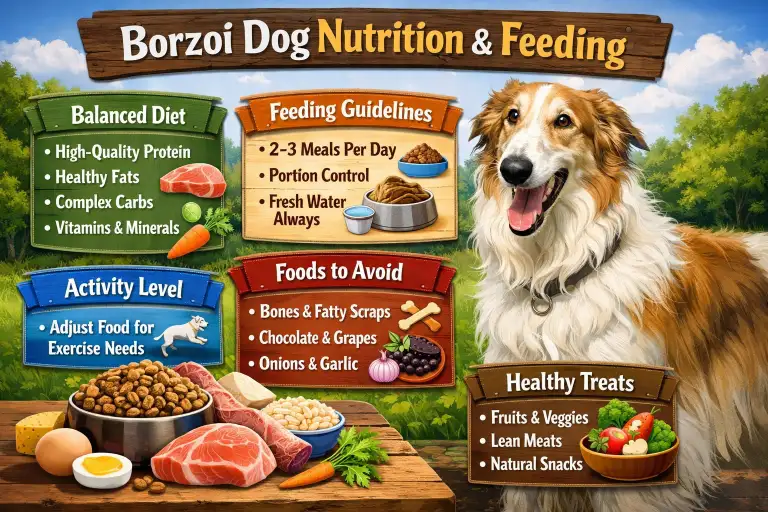
Borzoi are not just large dogs with long legs—they are sighthounds with a very specific physiology, metabolism, and feeding profile. Understanding how their bodies work is the foundation of feeding them well and avoiding common nutrition mistakes that lead to weight loss, digestive upset, or chronic low energy.
Recommended Dog Care Products
Based on your dog’s age, these products may help with comfort, health, grooming, and daily care.

Purina Pro Plan Veterinary Supplements
Daily probiotics for dogs to support digestive and gut health.
View on Amazon ↗
Earth Rated Poop Bags for Dogs
Leak-proof, extra thick waste bag refill rolls with lavender scent.
View on Amazon ↗
Greenies Pill Pockets for Dogs
Large dog treats for capsule medication, peanut butter flavor.
View on Amazon ↗
HONEY CARE All-Absorb Dog Wrap
Small male dog wraps, 50 count, useful for daily care support.
View on Amazon ↗
Seresto Flea & Tick Collar
Flea and tick treatment and prevention for dogs over 18 lbs.
View on Amazon ↗
Milk-Bone MaroSnacks
Small dog treats with real bone marrow in a 40 oz canister.
View on Amazon ↗
Vital Essentials Dog Treats
Freeze dried beef liver dog treats, grain free and single ingredient.
View on Amazon ↗
Stain & Odor Eliminator
Enzyme cleaner for pet stains, carpet messes, and strong odors.
View on Amazon ↗
Pur Luv Chicken Jerky Treats
Dog treats made with real chicken breast, high protein and chew-friendly.
View on Amazon ↗
Milk-Bone Flavor Snacks
Mini crunchy dog biscuits in a 36 oz canister for small rewards.
View on Amazon ↗As an Amazon Associate, we may earn from qualifying purchases.
Borzoi Are Built Differently (and That Affects Nutrition)
Borzoi have a lean, narrow frame, deep chest, and light bone structure compared to other large breeds. A healthy Borzoi A healthy Borzoi body condition includes a visible waist when viewed from above, ribs that can be easily felt with light pressure without sharply protruding, and a clearly tucked-up abdomen when seen from the side. Trying to “fill them out” by overfeeding is one of the most common nutrition mistakes with this breed and often leads to digestive stress rather than healthy weight gain.
Despite their racing ancestry, most modern Borzoi are moderate-energy dogs rather than constant calorie burners. They are typically calm indoors, engage in short bursts of intense activity like sprinting, and spend much of their non-exercise time resting or sleeping. Because of this, Borzoi usually require fewer calories than other large breeds of similar size, particularly when they are companion dogs rather than involved in coursing or performance work.
Their diet should focus on supporting lean muscle maintenance, joint and connective tissue health, and providing steady energy without promoting excess fat. Many Borzoi also have sensitive digestive systems, which may show up as loose stools, gas, inconsistent appetite, or weight that fluctuates easily. For this reason, diet quality, simple ingredient lists, and consistent feeding routines are especially important. Sudden food changes or overly rich, high-fat diets often cause problems.
In terms of macronutrients, Borzoi generally do best on diets that provide moderate to high-quality animal protein, moderate fat levels, and easily digestible carbohydrates or fiber sources. They tend not to thrive on extremely high-fat performance formulas, overly complex or rich ingredient combinations, or poor-quality fillers that add calories without real nutritional value.
Borzoi are also known for being polite, self-regulating eaters. Many will occasionally skip meals, eat less during hot weather, and increase intake during colder seasons. This behavior is often normal. As long as a Borzoi maintains healthy weight, good energy levels, and consistent stool quality, their appetite patterns are usually not a cause for concern.
What to Feed a Borzoi: Best Foods, Ingredients, and Diet Types
Choosing the right food for a Borzoi is not about trends or fancy labels. It is about simple, clean nutrition that supports a lean body, gentle digestion, and steady energy.
Best Ingredients for a Healthy Borzoi Diet
A good Borzoi diet should be built around animal-based protein, balanced fat, and gentle carbohydrates.
Recommended Dog Care Products
Based on your dog’s age, these products may help with comfort, health, grooming, and daily care.
Purina Pro Plan Veterinary Supplements
Daily probiotics for dogs to support digestive and gut health.
View on Amazon ↗
Earth Rated Poop Bags for Dogs
Leak-proof, extra thick waste bag refill rolls with lavender scent.
View on Amazon ↗
Greenies Pill Pockets for Dogs
Large dog treats for capsule medication, peanut butter flavor.
View on Amazon ↗
HONEY CARE All-Absorb Dog Wrap
Small male dog wraps, 50 count, useful for daily care support.
View on Amazon ↗
Seresto Flea & Tick Collar
Flea and tick treatment and prevention for dogs over 18 lbs.
View on Amazon ↗
Milk-Bone MaroSnacks
Small dog treats with real bone marrow in a 40 oz canister.
View on Amazon ↗
Vital Essentials Dog Treats
Freeze dried beef liver dog treats, grain free and single ingredient.
View on Amazon ↗
Stain & Odor Eliminator
Enzyme cleaner for pet stains, carpet messes, and strong odors.
View on Amazon ↗
Pur Luv Chicken Jerky Treats
Dog treats made with real chicken breast, high protein and chew-friendly.
View on Amazon ↗
Milk-Bone Flavor Snacks
Mini crunchy dog biscuits in a 36 oz canister for small rewards.
View on Amazon ↗As an Amazon Associate, we may earn from qualifying purchases.
Look for foods that include:
- Real meat as the first ingredient
- Animal protein meals
- Healthy fats
- Simple carbs like rice, oats, or sweet potato
- Fiber sources such as pumpkin or beet pulp
Avoid foods that rely heavily on:
- Corn, wheat, or soy as main ingredients
- Artificial colors, flavors, or preservatives
- Very long ingredient lists
- Extremely high fat levels
Ingredient Quick Guide for Borzoi
| Good Ingredients | Ingredients to Limit or Avoid |
|---|---|
| Chicken, turkey, lamb | Meat by-products |
| Fish and fish oil | Artificial flavors |
| Rice, oats, sweet potato | Excess corn or wheat |
| Pumpkin, beet pulp | Added sugars |
| Named animal fats | Chemical preservatives |
Types of Dog Food for Borzoi
| Food Type | Pros | Cons |
|---|---|---|
| Dry Kibble | Easy to store, affordable | Lower moisture |
| Canned Food | High moisture | More expensive |
| Fresh Cooked | Very digestible | Higher cost |
| Raw Diet | Natural texture | Risky if unbalanced |
| Freeze-Dried | Convenient | Expensive |
Human Foods: What Borzoi Can and Cannot Eat
| Safe Human Foods | Toxic or Unsafe Foods |
|---|---|
| Cooked chicken | Chocolate |
| Plain rice | Grapes and raisins |
| Pumpkin | Onions and garlic |
| Carrots | Xylitol |
| Plain yogurt | Alcohol |
Treat Rules for Borzoi
- Treats should be no more than 10% of daily calories
- Use small treats
- Choose single-ingredient treats
- Break treats into smaller pieces
Water Is Part of Nutrition
Adult Borzoi drink about 1 ounce of water per pound of body weight per day.
How Much and How Often to Feed a Borzoi (By Age, Size, and Activity)
Borzoi do not need huge meals. Feeding the right amount is about calories, age, and daily activity.
Daily Calorie Needs for Borzoi
Recommended Dog Care Products
Based on your dog’s age, these products may help with comfort, health, grooming, and daily care.
Purina Pro Plan Veterinary Supplements
Daily probiotics for dogs to support digestive and gut health.
View on Amazon ↗
Earth Rated Poop Bags for Dogs
Leak-proof, extra thick waste bag refill rolls with lavender scent.
View on Amazon ↗
Greenies Pill Pockets for Dogs
Large dog treats for capsule medication, peanut butter flavor.
View on Amazon ↗
HONEY CARE All-Absorb Dog Wrap
Small male dog wraps, 50 count, useful for daily care support.
View on Amazon ↗
Seresto Flea & Tick Collar
Flea and tick treatment and prevention for dogs over 18 lbs.
View on Amazon ↗
Milk-Bone MaroSnacks
Small dog treats with real bone marrow in a 40 oz canister.
View on Amazon ↗
Vital Essentials Dog Treats
Freeze dried beef liver dog treats, grain free and single ingredient.
View on Amazon ↗
Stain & Odor Eliminator
Enzyme cleaner for pet stains, carpet messes, and strong odors.
View on Amazon ↗
Pur Luv Chicken Jerky Treats
Dog treats made with real chicken breast, high protein and chew-friendly.
View on Amazon ↗
Milk-Bone Flavor Snacks
Mini crunchy dog biscuits in a 36 oz canister for small rewards.
View on Amazon ↗As an Amazon Associate, we may earn from qualifying purchases.
| Borzoi Weight | Low Activity | Moderate Activity | High Activity |
|---|---|---|---|
| 60 lbs | 1,200 kcal | 1,400 kcal | 1,600 kcal |
| 70 lbs | 1,300 kcal | 1,550 kcal | 1,800 kcal |
| 80 lbs | 1,450 kcal | 1,700 kcal | 2,000 kcal |
| 90 lbs | 1,600 kcal | 1,900 kcal | 2,200 kcal |
Feeding Frequency by Age
| Age Stage | Meals Per Day |
|---|---|
| Puppy 2–6 months | 3 |
| Puppy 6–12 months | 2–3 |
| Adult | 2 |
| Senior | 2 |
Feeding by Activity Level
| Lifestyle | Feeding Adjustment |
|---|---|
| Couch companion | Reduce portions |
| Daily walks | Moderate range |
| Sport dog | Increase slowly |
| Resting | Reduce food |
Common Borzoi Feeding Problems and Special Diet Needs
Many Borzoi eat well, but some have feeding problems.
Picky Eating in Borzoi
Tips:
- Feed at the same time every day
- Pick up food after 20 minutes
- Avoid adding toppings often
- Limit treats
Sensitive Stomach and Loose Stool
| Common Cause | What Helps |
|---|---|
| Sudden food change | Slow switch |
| Too much fat | Moderate-fat food |
| Too many treats | Reduce treats |
| Poor ingredients | Simple foods |
Weight Loss or Weight Gain
| Problem | Possible Reason | What to Do |
|---|---|---|
| Weight loss | Low calories | Increase food |
| Weight gain | Too many treats | Cut treats |
| Muscle loss | Low protein | Better protein |
| Belly fat | Overfeeding | Measure food |
Food Allergies and Intolerances
Signs include itchy skin, ear infections, soft stool, vomiting.
Switching Foods Safely
Recommended Dog Care Products
Based on your dog’s age, these products may help with comfort, health, grooming, and daily care.
Purina Pro Plan Veterinary Supplements
Daily probiotics for dogs to support digestive and gut health.
View on Amazon ↗
Earth Rated Poop Bags for Dogs
Leak-proof, extra thick waste bag refill rolls with lavender scent.
View on Amazon ↗
Greenies Pill Pockets for Dogs
Large dog treats for capsule medication, peanut butter flavor.
View on Amazon ↗
HONEY CARE All-Absorb Dog Wrap
Small male dog wraps, 50 count, useful for daily care support.
View on Amazon ↗
Seresto Flea & Tick Collar
Flea and tick treatment and prevention for dogs over 18 lbs.
View on Amazon ↗
Milk-Bone MaroSnacks
Small dog treats with real bone marrow in a 40 oz canister.
View on Amazon ↗
Vital Essentials Dog Treats
Freeze dried beef liver dog treats, grain free and single ingredient.
View on Amazon ↗
Stain & Odor Eliminator
Enzyme cleaner for pet stains, carpet messes, and strong odors.
View on Amazon ↗
Pur Luv Chicken Jerky Treats
Dog treats made with real chicken breast, high protein and chew-friendly.
View on Amazon ↗
Milk-Bone Flavor Snacks
Mini crunchy dog biscuits in a 36 oz canister for small rewards.
View on Amazon ↗As an Amazon Associate, we may earn from qualifying purchases.
| Day | Old Food | New Food |
|---|---|---|
| 1–2 | 75% | 25% |
| 3–4 | 50% | 50% |
| 5–6 | 25% | 75% |
| 7 | 0% | 100% |
Practical Feeding Tools, FAQs, and When to See a Vet
Quick Feeding Checklists
- Measure food
- Feed on schedule
- Watch body shape
- Limit treats
- Change food slowly
- Provide fresh water
Safe Treat and Snack Guide
| Treat Type | How Often |
|---|---|
| Single-ingredient treats | Daily small |
| Cooked chicken | Few times weekly |
| Store-bought treats | Limited |
| Table scraps | Rare |
Water Intake Guide
| Weight | Daily Water |
|---|---|
| 60 lbs | 60 oz |
| 70 lbs | 70 oz |
| 80 lbs | 80 oz |
| 90 lbs | 90 oz |
Common Borzoi Feeding Questions
| Question | Answer |
|---|---|
| Too skinny? | Lean is normal |
| Skip meals? | Yes sometimes |
| Free-feed? | No |
| Grain-free? | Not always |
| Mix foods? | Yes in small amounts |
When to See a Vet
- Refuses food over 2 days
- Rapid weight loss
- Ongoing vomiting or diarrhea
- Skin or ear problems
Final Feeding Tips
Feeding a Borzoi is about balance and routine. If your Borzoi looks healthy and has good energy, you are doing it right.
“For more detailed information about this breed, visit the American Kennel Club’s official breed page.”

Ata Ur Rehman is the founder of Pet Age in Human Years Calculator, an educational platform that provides age conversion charts and lifespan guides for dogs, cats, birds, and other companion animals. His work focuses on helping pet owners understand how animal ages translate into human years using commonly accepted age conversion formulas and published lifespan averages.
The website compiles breed and species lifespan data from kennel clubs, breed organizations, and general animal lifespan studies to present simple and easy-to-understand guides for pet owners worldwide.
This website was created to centralize animal age conversion charts into one easy reference platform for pet owners.