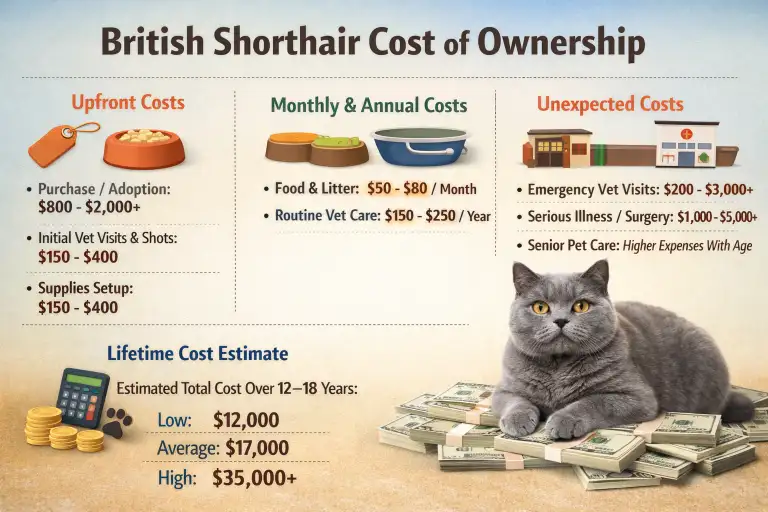
Bringing a British Shorthair into your home comes with several one-time costs that are easy to underestimate. The first and most obvious expense is the purchase or adoption fee. British Shorthairs are a popular purebred, so breeders often charge more than for average cats. Adoption fees from shelters may be lower, but you might not get a specific breed. Either way, you should expect to pay for this initial cost before anything else.
Recommended Dog Care Products
Based on your dog’s age, these products may help with comfort, health, grooming, and daily care.

Purina Pro Plan Veterinary Supplements
Daily probiotics for dogs to support digestive and gut health.
View on Amazon ↗
Earth Rated Poop Bags for Dogs
Leak-proof, extra thick waste bag refill rolls with lavender scent.
View on Amazon ↗
Greenies Pill Pockets for Dogs
Large dog treats for capsule medication, peanut butter flavor.
View on Amazon ↗
HONEY CARE All-Absorb Dog Wrap
Small male dog wraps, 50 count, useful for daily care support.
View on Amazon ↗
Seresto Flea & Tick Collar
Flea and tick treatment and prevention for dogs over 18 lbs.
View on Amazon ↗
Milk-Bone MaroSnacks
Small dog treats with real bone marrow in a 40 oz canister.
View on Amazon ↗
Vital Essentials Dog Treats
Freeze dried beef liver dog treats, grain free and single ingredient.
View on Amazon ↗
Stain & Odor Eliminator
Enzyme cleaner for pet stains, carpet messes, and strong odors.
View on Amazon ↗
Pur Luv Chicken Jerky Treats
Dog treats made with real chicken breast, high protein and chew-friendly.
View on Amazon ↗
Milk-Bone Flavor Snacks
Mini crunchy dog biscuits in a 36 oz canister for small rewards.
View on Amazon ↗As an Amazon Associate, we may earn from qualifying purchases.
The next major upfront cost is veterinary care. When you first get your cat, it will need a full health check, vaccinations, and, if not already done, spaying or neutering. Even healthy kittens can have hidden health issues, so budgeting for these first vet visits is important. You may also want to include basic parasite prevention and microchipping in this initial stage.
Supplies are another category of one-time costs. You will need food and water bowls, a litter box, a scratching post, a bed, toys, and a carrier. While some items can last for years, you still need enough to set up a comfortable, safe environment from day one. Choosing quality products upfront can reduce replacement costs later.
It is easy to think of these costs separately, but adding them together gives a clearer picture of what you need to prepare before bringing your British Shorthair home. Planning for these expenses can help avoid financial surprises and ensure your new cat has everything it needs to thrive.
One-Time Costs for a British Shorthair (Estimated Ranges)
| Expense | Low Estimate | Average Estimate | High Estimate |
|---|---|---|---|
| Purchase / Adoption | $200 | $800 | $2,000+ |
| First Vet Check & Vaccinations | $100 | $200 | $400 |
| Spay / Neuter | $100 | $150 | $300 |
| Microchipping & Initial Parasite Prevention | $50 | $100 | $150 |
| Essential Supplies (Bowl, Bed, Litter Box, Toys) | $150 | $250 | $400 |
| Total One-Time Costs | $600 | $1,500 | $3,250+ |
Monthly and Annual Costs of Owning a British Shorthair
Once your British Shorthair is home, you will have recurring monthly and yearly expenses. Food is usually the largest monthly cost. British Shorthairs have a medium appetite but can gain weight easily, so feeding high-quality food in the correct portions is important. Choosing between budget, mid-range, or premium food will affect your monthly spend.
Litter is another ongoing cost. Indoor cats use litter daily, and British Shorthairs produce average amounts of waste. Clumping litter is convenient but may be more expensive, while non-clumping types last longer but require more frequent cleaning. Most owners will need at least one box per cat, with an extra box recommended in multi-cat homes.
Routine grooming is minimal since British Shorthairs have short hair, but regular brushing, nail trimming, and occasional bathing can help reduce hairballs and keep the coat healthy. Grooming can be done at home, but some owners pay for occasional professional grooming services.
Annual veterinary care also falls under recurring expenses. Regular checkups, booster vaccinations, and parasite prevention ensure your cat remains healthy. While monthly budgeting covers everyday care, annual costs can be higher if preventive treatments or lab work are needed.
Monthly and Annual Costs for a British Shorthair
Recommended Dog Care Products
Based on your dog’s age, these products may help with comfort, health, grooming, and daily care.
Purina Pro Plan Veterinary Supplements
Daily probiotics for dogs to support digestive and gut health.
View on Amazon ↗
Earth Rated Poop Bags for Dogs
Leak-proof, extra thick waste bag refill rolls with lavender scent.
View on Amazon ↗
Greenies Pill Pockets for Dogs
Large dog treats for capsule medication, peanut butter flavor.
View on Amazon ↗
HONEY CARE All-Absorb Dog Wrap
Small male dog wraps, 50 count, useful for daily care support.
View on Amazon ↗
Seresto Flea & Tick Collar
Flea and tick treatment and prevention for dogs over 18 lbs.
View on Amazon ↗
Milk-Bone MaroSnacks
Small dog treats with real bone marrow in a 40 oz canister.
View on Amazon ↗
Vital Essentials Dog Treats
Freeze dried beef liver dog treats, grain free and single ingredient.
View on Amazon ↗
Stain & Odor Eliminator
Enzyme cleaner for pet stains, carpet messes, and strong odors.
View on Amazon ↗
Pur Luv Chicken Jerky Treats
Dog treats made with real chicken breast, high protein and chew-friendly.
View on Amazon ↗
Milk-Bone Flavor Snacks
Mini crunchy dog biscuits in a 36 oz canister for small rewards.
View on Amazon ↗As an Amazon Associate, we may earn from qualifying purchases.
| Expense | Monthly Cost | Annual Cost |
|---|---|---|
| Food | $30 | $360 |
| Litter | $15 | $180 |
| Grooming & Supplies | $5 | $60 |
| Routine Vet Care (averaged monthly) | $15 | $180 |
| Toys & Replacement Supplies | $5 | $60 |
| Total | $70 | $840 |
Unexpected, Emergency, and Long-Term Costs
Even the healthiest British Shorthair may need unexpected medical care. Illnesses or injuries can occur at any time, and emergency veterinary visits are often more expensive than routine checkups. Planning for these costs in advance reduces stress and keeps your cat safe.
Diagnostic tests, specialist visits, or treatments for sudden illness can vary widely in cost. Some issues are minor, while others, like infections or digestive problems, may require multiple vet visits or medication. Budgeting for a financial buffer is critical for responsible ownership.
As your cat ages, additional costs may appear. Senior cats often need more frequent veterinary care, special diets, or supplements. Being aware of aging-related expenses helps you plan for the next stage of your cat’s life without surprises.
End-of-life considerations are also part of long-term planning. While it is emotional, budgeting for palliative care or humane euthanasia ensures you can make compassionate decisions without financial pressure.
Unexpected and Emergency Costs (Estimated Ranges)
| Scenario | Low Estimate | Average Estimate | High Estimate |
|---|---|---|---|
| Minor Illness / Vet Visit | $50 | $150 | $300 |
| Moderate Emergency (Lab work, X-ray) | $200 | $500 | $1,000 |
| Serious Emergency or Surgery | $1,000 | $2,500 | $5,000+ |
| Senior Care Supplements / Special Diets | $100 | $200 | $400 |
| End-of-Life / Euthanasia | $100 | $200 | $400 |
Total Lifetime Cost of Owning a British Shorthair (Is It Worth It?)
British Shorthairs have a long lifespan, typically 12 to 18 years. Over that time, even moderate monthly expenses add up significantly. Adding one-time costs, ongoing monthly costs, and occasional emergency expenses gives a realistic lifetime estimate.
Lifestyle factors can affect these numbers. Indoor cats may have fewer injuries and lower parasite costs, while multi-cat households require more litter, food, and supplies. Choosing premium food or more frequent veterinary care also increases total costs.
By understanding lifetime costs in ranges, prospective owners can evaluate whether they can consistently provide a comfortable, healthy life for their British Shorthair. This planning ensures the cat is not only brought home responsibly but cared for throughout its life.
Estimated Lifetime Cost of a British Shorthair
| Category | Low Estimate | Average Estimate | High Estimate |
|---|---|---|---|
| One-Time Costs | $600 | $1,500 | $3,250+ |
| Monthly / Annual Costs | $840/year | $840/year | $840/year |
| Unexpected / Emergency Costs | $500 | $1,000 | $5,000+ |
| Total Lifetime Cost (12–18 years) | $12,000 | $17,000 | $35,000+ |
Practical Ways to Manage British Shorthair Costs Responsibly
Planning ahead is the most effective way to manage costs. Setting aside a monthly budget for food, litter, and preventive care ensures everyday expenses are covered. Creating a separate emergency fund allows you to handle unexpected vet visits without stress.
Recommended Dog Care Products
Based on your dog’s age, these products may help with comfort, health, grooming, and daily care.
Purina Pro Plan Veterinary Supplements
Daily probiotics for dogs to support digestive and gut health.
View on Amazon ↗
Earth Rated Poop Bags for Dogs
Leak-proof, extra thick waste bag refill rolls with lavender scent.
View on Amazon ↗
Greenies Pill Pockets for Dogs
Large dog treats for capsule medication, peanut butter flavor.
View on Amazon ↗
HONEY CARE All-Absorb Dog Wrap
Small male dog wraps, 50 count, useful for daily care support.
View on Amazon ↗
Seresto Flea & Tick Collar
Flea and tick treatment and prevention for dogs over 18 lbs.
View on Amazon ↗
Milk-Bone MaroSnacks
Small dog treats with real bone marrow in a 40 oz canister.
View on Amazon ↗
Vital Essentials Dog Treats
Freeze dried beef liver dog treats, grain free and single ingredient.
View on Amazon ↗
Stain & Odor Eliminator
Enzyme cleaner for pet stains, carpet messes, and strong odors.
View on Amazon ↗
Pur Luv Chicken Jerky Treats
Dog treats made with real chicken breast, high protein and chew-friendly.
View on Amazon ↗
Milk-Bone Flavor Snacks
Mini crunchy dog biscuits in a 36 oz canister for small rewards.
View on Amazon ↗As an Amazon Associate, we may earn from qualifying purchases.
Regular preventive care reduces the likelihood of costly emergencies. Keeping up with vaccinations, parasite prevention, dental hygiene, and weight management helps your cat stay healthy.
Choosing durable supplies and toys can reduce replacement frequency. A sturdy scratching post or high-quality litter box may cost more upfront but saves money over time.
Understanding lifestyle factors—such as whether your cat will be indoor-only or part of a multi-cat household—also helps in realistic budgeting. Making informed choices prevents overspending and ensures a happy, healthy life for your British Shorthair.
For additional, vet-reviewed guidance on caring for British Shorthairs, readers can explore the breed profile on the American Kennel Club, a trusted source on cat health and ownership: American Kennel Club British Shorthair.

Ata Ur Rehman is the founder of Pet Age in Human Years Calculator, an educational platform that provides age conversion charts and lifespan guides for dogs, cats, birds, and other companion animals. His work focuses on helping pet owners understand how animal ages translate into human years using commonly accepted age conversion formulas and published lifespan averages.
The website compiles breed and species lifespan data from kennel clubs, breed organizations, and general animal lifespan studies to present simple and easy-to-understand guides for pet owners worldwide.
This website was created to centralize animal age conversion charts into one easy reference platform for pet owners.