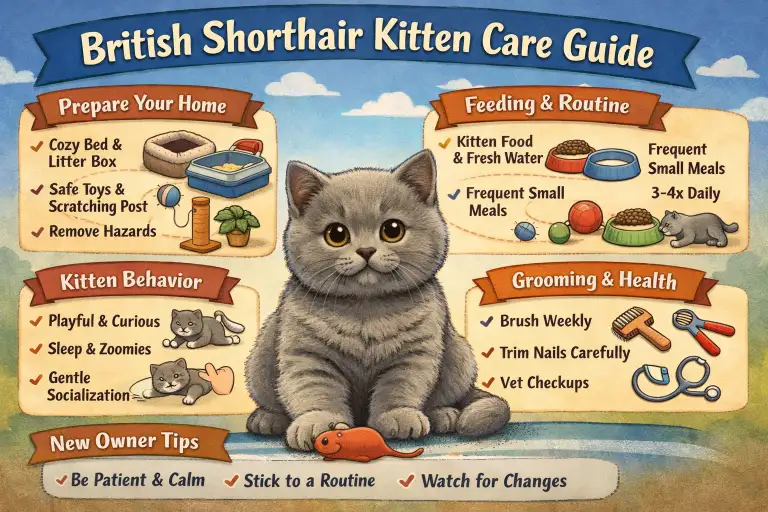
Bringing home a British Shorthair kitten is an exciting experience, but it can also feel overwhelming at first. These kittens are known for their calm and friendly nature, but remember, they are still very small and learning about the world around them. Understanding their basic needs will help you create a safe and happy home for your new furry friend.
Recommended Dog Care Products
Based on your dog’s age, these products may help with comfort, health, grooming, and daily care.

Purina Pro Plan Veterinary Supplements
Daily probiotics for dogs to support digestive and gut health.
View on Amazon ↗
Earth Rated Poop Bags for Dogs
Leak-proof, extra thick waste bag refill rolls with lavender scent.
View on Amazon ↗
Greenies Pill Pockets for Dogs
Large dog treats for capsule medication, peanut butter flavor.
View on Amazon ↗
HONEY CARE All-Absorb Dog Wrap
Small male dog wraps, 50 count, useful for daily care support.
View on Amazon ↗
Seresto Flea & Tick Collar
Flea and tick treatment and prevention for dogs over 18 lbs.
View on Amazon ↗
Milk-Bone MaroSnacks
Small dog treats with real bone marrow in a 40 oz canister.
View on Amazon ↗
Vital Essentials Dog Treats
Freeze dried beef liver dog treats, grain free and single ingredient.
View on Amazon ↗
Stain & Odor Eliminator
Enzyme cleaner for pet stains, carpet messes, and strong odors.
View on Amazon ↗
Pur Luv Chicken Jerky Treats
Dog treats made with real chicken breast, high protein and chew-friendly.
View on Amazon ↗
Milk-Bone Flavor Snacks
Mini crunchy dog biscuits in a 36 oz canister for small rewards.
View on Amazon ↗As an Amazon Associate, we may earn from qualifying purchases.
In the first few days, your kitten will be exploring and adjusting to a new environment. They may hide, sleep a lot, or seem cautious. This is completely normal. British Shorthair kittens are often slower to warm up than some other breeds, so giving them time and space to feel safe is important.
Kittens need a stable routine to feel secure. Simple things like regular feeding times, a clean litter box in the same spot, and a quiet sleeping area can help your kitten settle in faster. Predictable routines help your kitten learn where to eat, sleep, and play, making both your life and theirs easier.
It’s also important to remember that kittens grow and change quickly. Their appetite, energy levels, and curiosity will increase over time. A sleepy kitten in the morning may zoom around the house in the evening. These changes are normal and show healthy development. Being patient and observing your kitten helps you understand their needs and personality as they grow.
Preparing Your Home for a British Shorthair Kitten
Before bringing your kitten home, make sure your house is safe and ready. Kittens are curious and can get into trouble if they find things that are dangerous. Start by creating a small, quiet space where your kitten can feel safe, with a bed, litter box, food, and water bowls all close together.
British Shorthair kittens are short-haired but very dense, so grooming is easier than long-haired cats. Still, you should have a soft brush and nail clippers ready. Keep toys, scratching posts, and cozy hiding spots available to help your kitten play and relax safely.
It is also important to remove hazards. This includes cords, small objects they can swallow, toxic plants, and open windows without screens. Indoor-only kittens are safer and tend to live longer, healthier lives. Set up areas where your kitten can climb safely and explore without risk.
Here is a simple table to help you prepare your home:
| Item | Purpose | Tips |
|---|---|---|
| Bed | Sleeping and feeling safe | Place in a quiet corner, away from drafts |
| Litter box | Bathroom needs | Keep it in the same spot, easy access |
| Food & water bowls | Nutrition and hydration | Use shallow bowls and fresh water daily |
| Toys & scratching posts | Play and exercise | Rotate toys to keep them interesting |
| Safe hiding spots | Comfort and security | Cardboard boxes or small tents work well |
Feeding, Growth, and Daily Routine for British Shorthair Kittens
Feeding your kitten the right way is important for healthy growth. British Shorthair kittens need food that is specially made for kittens because it has more protein and calories than adult cat food. They usually eat small meals 3–4 times a day until they are about six months old.
Kittens also need plenty of fresh water. Keep water bowls clean and full at all times. Avoid giving cow’s milk as many kittens cannot digest it properly. Wet food can help with hydration, and dry food can help keep their teeth clean.
Recommended Dog Care Products
Based on your dog’s age, these products may help with comfort, health, grooming, and daily care.
Purina Pro Plan Veterinary Supplements
Daily probiotics for dogs to support digestive and gut health.
View on Amazon ↗
Earth Rated Poop Bags for Dogs
Leak-proof, extra thick waste bag refill rolls with lavender scent.
View on Amazon ↗
Greenies Pill Pockets for Dogs
Large dog treats for capsule medication, peanut butter flavor.
View on Amazon ↗
HONEY CARE All-Absorb Dog Wrap
Small male dog wraps, 50 count, useful for daily care support.
View on Amazon ↗
Seresto Flea & Tick Collar
Flea and tick treatment and prevention for dogs over 18 lbs.
View on Amazon ↗
Milk-Bone MaroSnacks
Small dog treats with real bone marrow in a 40 oz canister.
View on Amazon ↗
Vital Essentials Dog Treats
Freeze dried beef liver dog treats, grain free and single ingredient.
View on Amazon ↗
Stain & Odor Eliminator
Enzyme cleaner for pet stains, carpet messes, and strong odors.
View on Amazon ↗
Pur Luv Chicken Jerky Treats
Dog treats made with real chicken breast, high protein and chew-friendly.
View on Amazon ↗
Milk-Bone Flavor Snacks
Mini crunchy dog biscuits in a 36 oz canister for small rewards.
View on Amazon ↗As an Amazon Associate, we may earn from qualifying purchases.
Keeping a daily routine helps your kitten feel safe. Kittens need sleep, play, and eating in a predictable pattern. A simple schedule might include breakfast, a short play session, a nap, lunch, another play session, and dinner. This helps your kitten learn what to expect and reduces stress.
Here is a table for feeding frequency and a sample daily routine:
| Age | Meals per Day | Example Daily Routine |
|---|---|---|
| 8–12 weeks | 4 | Breakfast → Play → Nap → Lunch → Play → Nap → Dinner → Play → Sleep |
| 3–6 months | 3 | Breakfast → Play → Nap → Lunch → Play → Nap → Dinner → Short Play → Sleep |
| 6–12 months | 2–3 | Breakfast → Play → Nap → Dinner → Play → Sleep |
Behavior, Play, and Social Development
British Shorthair kittens are usually gentle but playful. They learn how to play without hurting you by practicing with their littermates before coming home. Play biting and scratching are normal, but it is important to redirect them to toys instead of your hands.
Kittens need socialization to grow into friendly adults. Handle your kitten gently for short periods several times a day. Let them explore new people slowly, and always let them retreat if they feel scared. Praise calm behavior to help them feel safe and confident.
Playtime is also very important. Kittens have lots of energy, and short sessions with toys help them exercise and learn coordination. Scratching posts are essential to keep their claws healthy and protect your furniture.
Here is a table showing normal behaviors and what they mean:
| Behavior | Meaning | How to Respond |
|---|---|---|
| Sleeping a lot | Normal growth and rest | Let them rest undisturbed |
| Sudden bursts of energy (zoomies) | Healthy play and exercise | Encourage safe play with toys |
| Play biting | Learning to hunt and bite | Redirect to toys, never hands |
| Hiding | Feeling safe or shy | Give space, don’t force interaction |
| Purring and kneading | Contentment | Gentle petting and reassurance |
Grooming, Health Basics, and Common New Owner Mistakes
Even though British Shorthairs have short, dense fur, grooming is still important. Brushing once or twice a week helps reduce loose hair and keeps their coat shiny. Start grooming sessions gently, making it a positive experience from the beginning.
Nail trimming is another important routine. Use kitten-safe clippers and trim only the sharp tips. Handling nails early helps them get used to the process and reduces stress in the future. Check their eyes and ears regularly for cleanliness.
First vet visits are crucial, even if your kitten seems healthy. The vet will check growth, nutrition, and overall health. Discuss vaccinations, spaying or neutering, and general advice. Always follow the vet’s guidance, and don’t panic if your kitten has minor sniffles or mild behavioral changes; these are often normal.
Many new owners make simple mistakes. Overfeeding, letting kittens free-feed, or not establishing a routine can cause stress or weight issues. Ignoring play and socialization needs can make kittens shy or anxious. The table below helps highlight common mistakes and better alternatives:
Recommended Dog Care Products
Based on your dog’s age, these products may help with comfort, health, grooming, and daily care.
Purina Pro Plan Veterinary Supplements
Daily probiotics for dogs to support digestive and gut health.
View on Amazon ↗
Earth Rated Poop Bags for Dogs
Leak-proof, extra thick waste bag refill rolls with lavender scent.
View on Amazon ↗
Greenies Pill Pockets for Dogs
Large dog treats for capsule medication, peanut butter flavor.
View on Amazon ↗
HONEY CARE All-Absorb Dog Wrap
Small male dog wraps, 50 count, useful for daily care support.
View on Amazon ↗
Seresto Flea & Tick Collar
Flea and tick treatment and prevention for dogs over 18 lbs.
View on Amazon ↗
Milk-Bone MaroSnacks
Small dog treats with real bone marrow in a 40 oz canister.
View on Amazon ↗
Vital Essentials Dog Treats
Freeze dried beef liver dog treats, grain free and single ingredient.
View on Amazon ↗
Stain & Odor Eliminator
Enzyme cleaner for pet stains, carpet messes, and strong odors.
View on Amazon ↗
Pur Luv Chicken Jerky Treats
Dog treats made with real chicken breast, high protein and chew-friendly.
View on Amazon ↗
Milk-Bone Flavor Snacks
Mini crunchy dog biscuits in a 36 oz canister for small rewards.
View on Amazon ↗As an Amazon Associate, we may earn from qualifying purchases.
| Common Mistake | Better Alternative |
|---|---|
| Free-feeding all day | Scheduled meals 3–4 times/day |
| Handling too much too soon | Short, gentle sessions multiple times/day |
| Ignoring play | Short interactive play sessions daily |
| Skipping grooming | Weekly brushing and nail care |
| Panicking over minor issues | Observe, note changes, consult vet if needed |
For additional, trusted guidance on British Shorthair kittens and general feline health, you can visit the International Cat Care kitten care page.

Ata Ur Rehman is the founder of Pet Age in Human Years Calculator, an educational platform that provides age conversion charts and lifespan guides for dogs, cats, birds, and other companion animals. His work focuses on helping pet owners understand how animal ages translate into human years using commonly accepted age conversion formulas and published lifespan averages.
The website compiles breed and species lifespan data from kennel clubs, breed organizations, and general animal lifespan studies to present simple and easy-to-understand guides for pet owners worldwide.
This website was created to centralize animal age conversion charts into one easy reference platform for pet owners.