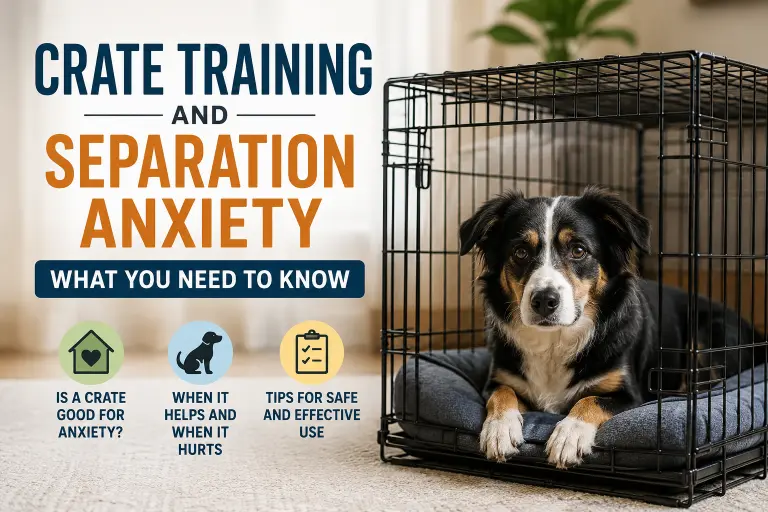
For some dogs, a crate provides security. For others, it intensifies feelings of panic and frustration.
Recommended Dog Care Products
Based on your dog’s age, these products may help with comfort, health, grooming, and daily care.

Purina Pro Plan Veterinary Supplements
Daily probiotics for dogs to support digestive and gut health.
View on Amazon ↗
Earth Rated Poop Bags for Dogs
Leak-proof, extra thick waste bag refill rolls with lavender scent.
View on Amazon ↗
Greenies Pill Pockets for Dogs
Large dog treats for capsule medication, peanut butter flavor.
View on Amazon ↗
HONEY CARE All-Absorb Dog Wrap
Small male dog wraps, 50 count, useful for daily care support.
View on Amazon ↗
Seresto Flea & Tick Collar
Flea and tick treatment and prevention for dogs over 18 lbs.
View on Amazon ↗
Milk-Bone MaroSnacks
Small dog treats with real bone marrow in a 40 oz canister.
View on Amazon ↗
Vital Essentials Dog Treats
Freeze dried beef liver dog treats, grain free and single ingredient.
View on Amazon ↗
Stain & Odor Eliminator
Enzyme cleaner for pet stains, carpet messes, and strong odors.
View on Amazon ↗
Pur Luv Chicken Jerky Treats
Dog treats made with real chicken breast, high protein and chew-friendly.
View on Amazon ↗
Milk-Bone Flavor Snacks
Mini crunchy dog biscuits in a 36 oz canister for small rewards.
View on Amazon ↗As an Amazon Associate, we may earn from qualifying purchases.
This often happens when owners assume that confinement will teach a dog to “calm down” on its own. Unfortunately, dogs experiencing separation anxiety are not choosing to misbehave. They are reacting to genuine distress. When that distress is combined with physical confinement, anxiety can escalate quickly.
A crate is more likely to make separation anxiety worse when:
- The dog has never been properly crate trained
- The crate is only used when the owner leaves
- The dog already shows signs of panic when confined
- The dog has a history of attempting to escape
- The crate is being used as the primary solution instead of part of a broader training plan
In these situations, forcing longer periods of crating can create stronger negative associations with both the crate and the owner’s departure.
Signs Your Dog Is Panicking in the Crate
Many owners mistake panic behaviors for stubbornness or a lack of training. The difference is important.
A dog that dislikes being crated may complain briefly and then settle. A dog experiencing panic often becomes increasingly distressed.
Watch for signs such as:
- Continuous barking or howling
- Intense scratching or biting at the crate
- Attempting to bend crate bars or force doors open
- Excessive drooling
- Heavy panting despite normal temperatures
- Refusing food or treats inside the crate
- Injuries to paws, nose, or teeth from escape attempts
These behaviors suggest the crate is not helping the dog feel secure.
If your dog repeatedly reaches this level of distress, continuing the same approach is unlikely to improve the situation. Instead, it may strengthen the dog’s negative emotional response to both the crate and being left alone.
Why Severe Separation Anxiety Requires More Than Crating
Severe separation anxiety is a behavioral issue that typically requires training focused on the dog’s emotional response to being alone.
Recommended Dog Care Products
Based on your dog’s age, these products may help with comfort, health, grooming, and daily care.
Purina Pro Plan Veterinary Supplements
Daily probiotics for dogs to support digestive and gut health.
View on Amazon ↗
Earth Rated Poop Bags for Dogs
Leak-proof, extra thick waste bag refill rolls with lavender scent.
View on Amazon ↗
Greenies Pill Pockets for Dogs
Large dog treats for capsule medication, peanut butter flavor.
View on Amazon ↗
HONEY CARE All-Absorb Dog Wrap
Small male dog wraps, 50 count, useful for daily care support.
View on Amazon ↗
Seresto Flea & Tick Collar
Flea and tick treatment and prevention for dogs over 18 lbs.
View on Amazon ↗
Milk-Bone MaroSnacks
Small dog treats with real bone marrow in a 40 oz canister.
View on Amazon ↗
Vital Essentials Dog Treats
Freeze dried beef liver dog treats, grain free and single ingredient.
View on Amazon ↗
Stain & Odor Eliminator
Enzyme cleaner for pet stains, carpet messes, and strong odors.
View on Amazon ↗
Pur Luv Chicken Jerky Treats
Dog treats made with real chicken breast, high protein and chew-friendly.
View on Amazon ↗
Milk-Bone Flavor Snacks
Mini crunchy dog biscuits in a 36 oz canister for small rewards.
View on Amazon ↗As an Amazon Associate, we may earn from qualifying purchases.
A crate cannot teach a dog that separation is safe.
What helps is gradually building the dog’s confidence through structured alone-time training, predictable routines, and, in some cases, guidance from a qualified trainer or veterinary behavior professional.
Think of the crate as a tool, not a treatment.
If your dog becomes calmer inside the crate, it can support the training process. If your dog becomes more distressed, the focus should shift toward addressing the anxiety itself rather than increasing confinement.
How to Use a Crate Safely if Your Dog Has Separation Anxiety
If your dog is comfortable in a crate, the goal is to preserve that positive association while working on the underlying anxiety.
The crate should never become a place associated with fear, punishment, or isolation. Instead, it should remain one of the safest and most predictable spaces in your dog’s environment.
Build Positive Crate Associations
A dog is more likely to relax in a crate when positive experiences consistently happen there.
You can strengthen positive associations by:
- Feeding meals in the crate
- Offering high-value treats inside
- Providing favorite toys or chews
- Encouraging voluntary entry
- Allowing the dog to rest there even when you’re home
The crate should feel rewarding, not restrictive.
If your dog only enters the crate when you are leaving, they may start associating it with separation rather than comfort.
Recommended Dog Care Products
Based on your dog’s age, these products may help with comfort, health, grooming, and daily care.
Purina Pro Plan Veterinary Supplements
Daily probiotics for dogs to support digestive and gut health.
View on Amazon ↗
Earth Rated Poop Bags for Dogs
Leak-proof, extra thick waste bag refill rolls with lavender scent.
View on Amazon ↗
Greenies Pill Pockets for Dogs
Large dog treats for capsule medication, peanut butter flavor.
View on Amazon ↗
HONEY CARE All-Absorb Dog Wrap
Small male dog wraps, 50 count, useful for daily care support.
View on Amazon ↗
Seresto Flea & Tick Collar
Flea and tick treatment and prevention for dogs over 18 lbs.
View on Amazon ↗
Milk-Bone MaroSnacks
Small dog treats with real bone marrow in a 40 oz canister.
View on Amazon ↗
Vital Essentials Dog Treats
Freeze dried beef liver dog treats, grain free and single ingredient.
View on Amazon ↗
Stain & Odor Eliminator
Enzyme cleaner for pet stains, carpet messes, and strong odors.
View on Amazon ↗
Pur Luv Chicken Jerky Treats
Dog treats made with real chicken breast, high protein and chew-friendly.
View on Amazon ↗
Milk-Bone Flavor Snacks
Mini crunchy dog biscuits in a 36 oz canister for small rewards.
View on Amazon ↗As an Amazon Associate, we may earn from qualifying purchases.
Avoid Using the Crate as Punishment
Using a crate after unwanted behavior can damage the trust you’ve built around it.
When a dog begins viewing the crate as a consequence, it becomes much harder for the crate to function as a safe space during periods of separation.
The crate should never communicate:
- “You’re in trouble.”
- “Go away.”
- “You’re being isolated.”
Instead, it should consistently represent rest, comfort, and security.
Practice Short Absences First
One of the most common mistakes is expecting a dog to handle long periods alone before they are ready.
Start with brief departures that your dog can successfully manage. This may be as simple as:
- Stepping outside for a minute
- Walking to the mailbox
- Leaving the room for a short period
Gradually increase duration only when your dog remains relaxed.
Pay attention to your dog’s emotional state rather than the clock. A calm five-minute absence is more productive than a stressful thirty-minute absence.
Over time, successful repetitions help teach the dog that your departures are temporary and predictable.
When combined with positive crate experiences, this gradual approach gives the crate the best chance of supporting your dog’s progress instead of becoming another source of anxiety.
Recommended Dog Care Products
Based on your dog’s age, these products may help with comfort, health, grooming, and daily care.
Purina Pro Plan Veterinary Supplements
Daily probiotics for dogs to support digestive and gut health.
View on Amazon ↗
Earth Rated Poop Bags for Dogs
Leak-proof, extra thick waste bag refill rolls with lavender scent.
View on Amazon ↗
Greenies Pill Pockets for Dogs
Large dog treats for capsule medication, peanut butter flavor.
View on Amazon ↗
HONEY CARE All-Absorb Dog Wrap
Small male dog wraps, 50 count, useful for daily care support.
View on Amazon ↗
Seresto Flea & Tick Collar
Flea and tick treatment and prevention for dogs over 18 lbs.
View on Amazon ↗
Milk-Bone MaroSnacks
Small dog treats with real bone marrow in a 40 oz canister.
View on Amazon ↗
Vital Essentials Dog Treats
Freeze dried beef liver dog treats, grain free and single ingredient.
View on Amazon ↗
Stain & Odor Eliminator
Enzyme cleaner for pet stains, carpet messes, and strong odors.
View on Amazon ↗
Pur Luv Chicken Jerky Treats
Dog treats made with real chicken breast, high protein and chew-friendly.
View on Amazon ↗
Milk-Bone Flavor Snacks
Mini crunchy dog biscuits in a 36 oz canister for small rewards.
View on Amazon ↗As an Amazon Associate, we may earn from qualifying purchases.
Alternatives if a Crate Isn’t Helping
Not every dog benefits from being crated during separation training. If your dog becomes noticeably more anxious when confined, forcing the issue can slow progress rather than improve it.
The good news is that a crate is only one management option. Many dogs do better with a setup that provides security without making them feel trapped.
Exercise Pens and Gated Rooms
Some dogs are calmer when they have a slightly larger area to move around in.
Options include:
- An exercise pen
- A gated kitchen or laundry room
- A dog-proofed spare room
- A sectioned-off area of the house
These spaces still limit access to the home while allowing the dog more freedom than a crate.
For dogs that panic when confined but remain relatively calm in a larger area, this can be a more effective solution.
However, the goal isn’t simply to provide more space. The goal is to create an environment where the dog feels safe enough to relax while you’re away.
Separation Anxiety Training Plans
If separation anxiety is the root problem, management alone won’t fully solve it.
Most successful treatment plans focus on helping the dog become comfortable with being alone through gradual exposure.
This often involves:
- Teaching the dog that departures are temporary
- Practicing short, successful absences
- Avoiding situations that trigger panic whenever possible
- Building independence during everyday activities
- Creating predictable departure and return routines
Progress is usually measured by the dog’s emotional response rather than how long they can be left alone.
A dog that remains calm for ten minutes is making more meaningful progress than a dog that endures an hour of panic.
When to Seek Professional Help
Some cases of separation anxiety are difficult to manage without professional guidance.
Consider reaching out to a qualified trainer, behavior consultant, or veterinary behaviorist if:
- Your dog injures themselves trying to escape
- Anxiety is becoming more severe over time
- Training progress has stalled
- Your dog cannot remain calm even during very short absences
- The behavior is significantly affecting daily life
Professional support can help identify triggers, create a structured training plan, and ensure you’re addressing the actual cause of the anxiety rather than only managing the symptoms.
How to Decide Whether a Crate Is Right for Your Dog
There is no universal answer to whether a crate for anxiety is the right choice.
The best indicator is your dog’s behavior.
A crate may be a good option if your dog:
- Enters willingly
- Rests comfortably inside
- Settles quickly when left alone
- Shows relaxed body language in the crate
- Uses the crate voluntarily throughout the day
A crate may not be the right option if your dog:
- Panics when confined
- Repeatedly attempts to escape
- Shows escalating distress in the crate
- Injures themselves trying to get out
- Appears calmer in a larger enclosed space
Instead of asking, “Does crate help anxiety?” ask a more useful question:
“How does my dog respond to the crate?”
That answer will tell you far more than any general advice.
For some dogs, crate training and separation anxiety management work well together because the crate provides security and routine. For others, the crate becomes an additional stressor that makes the problem harder to solve.
The goal is not to make every dog fit the crate. The goal is to choose the environment that helps your dog feel safe while you work on the underlying separation anxiety.
Frequently Asked Questions
Can a crate cure separation anxiety in dogs?
No. A crate is not a cure for separation anxiety. While some dogs feel safer in a crate, the underlying anxiety usually requires training that helps the dog become comfortable being alone. A crate may support that process, but it does not replace it.
How do I know if my dog’s crate is making anxiety worse?
Look for signs of panic rather than simple frustration. Excessive barking, heavy panting, drooling, escape attempts, refusal of treats, and self-injury are all warning signs that the crate may be increasing stress rather than reducing it.
Should I crate a dog with severe separation anxiety?
Not necessarily. Dogs with severe separation anxiety often struggle with confinement because it can intensify their panic. In these cases, a larger safe space, structured separation training, and professional guidance may be more effective than relying on a crate alone.
Is it better to use a crate or leave an anxious dog in a room?
It depends on the individual dog. Some dogs relax best in a crate because it feels secure and predictable. Others become calmer when given access to a dog-proofed room or exercise pen. The better option is the one that results in less stress and more relaxed behavior.
Can crate training and separation anxiety training be done together?
Yes. If your dog already has a positive relationship with the crate, it can be part of a broader separation anxiety plan. The key is ensuring the crate remains a safe, comfortable place while gradually teaching the dog that being alone is not something to fear.
Conclusion
Crate training and separation anxiety are closely connected, but they are not the same thing.
A crate can be helpful when a dog sees it as a safe and familiar space. In those cases, it may provide comfort, structure, and security during periods of separation.
However, a crate is not a treatment for separation anxiety. Dogs experiencing genuine panic when left alone need training that addresses their emotional response to separation. For some dogs, confinement may even increase distress.
The most important factor is your dog’s reaction to the crate. If they relax, rest, and remain comfortable, the crate may be a valuable part of their routine. If they panic, attempt to escape, or become more anxious, it’s worth exploring other management options and focusing on separation anxiety training itself.
Rather than asking whether crates are good or bad for anxious dogs, focus on what helps your individual dog feel safe. That approach will lead to better decisions and, ultimately, better progress.