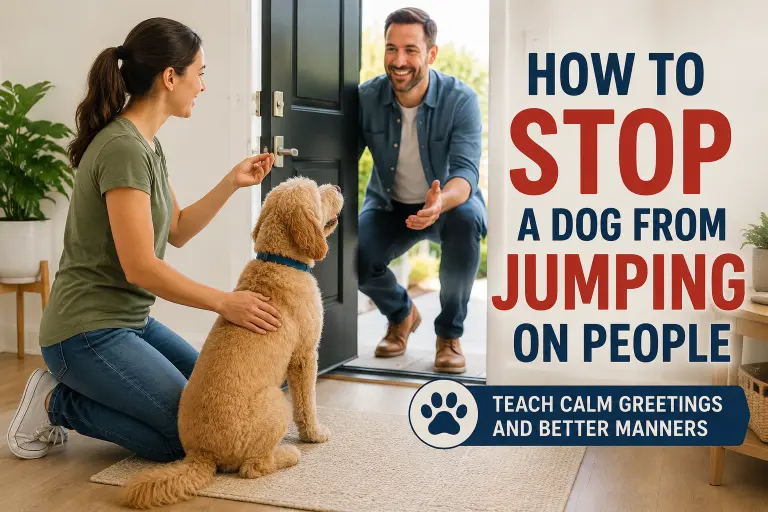
If your dog jumps on guests, family members, or strangers the moment they walk through the door, you’re not alone. While it may seem friendly, jumping can quickly become frustrating, especially when it knocks over children, scares visitors, or leaves muddy paw prints on clothes.
Recommended Dog Care Products
Based on your dog’s age, these products may help with comfort, health, grooming, and daily care.

Purina Pro Plan Veterinary Supplements
Daily probiotics for dogs to support digestive and gut health.
View on Amazon ↗
Earth Rated Poop Bags for Dogs
Leak-proof, extra thick waste bag refill rolls with lavender scent.
View on Amazon ↗
Greenies Pill Pockets for Dogs
Large dog treats for capsule medication, peanut butter flavor.
View on Amazon ↗
HONEY CARE All-Absorb Dog Wrap
Small male dog wraps, 50 count, useful for daily care support.
View on Amazon ↗
Seresto Flea & Tick Collar
Flea and tick treatment and prevention for dogs over 18 lbs.
View on Amazon ↗
Milk-Bone MaroSnacks
Small dog treats with real bone marrow in a 40 oz canister.
View on Amazon ↗
Vital Essentials Dog Treats
Freeze dried beef liver dog treats, grain free and single ingredient.
View on Amazon ↗
Stain & Odor Eliminator
Enzyme cleaner for pet stains, carpet messes, and strong odors.
View on Amazon ↗
Pur Luv Chicken Jerky Treats
Dog treats made with real chicken breast, high protein and chew-friendly.
View on Amazon ↗
Milk-Bone Flavor Snacks
Mini crunchy dog biscuits in a 36 oz canister for small rewards.
View on Amazon ↗As an Amazon Associate, we may earn from qualifying purchases.
The good news is that this behavior can be changed. The key is not to focus on stopping the jump itself, but on teaching your dog a different way to greet people. When dogs learn that calm behavior gets attention and jumping does not, they begin making better choices on their own.
In this guide, you’ll learn how to stop dog jumping using a simple training method, how to reward the behavior you want, and how to build better greeting manners that hold up in real-life situations.
Why Dogs Jump on People in the First Place
Most dogs jump because they want attention. When a dog greets another dog, face-to-face interaction is normal. Jumping helps them get closer to your face, voice, and hands.
The problem is that many dogs accidentally learn that jumping works.
For example, if your dog jumps and someone responds by:
- Talking to the dog
- Petting the dog
- Laughing
- Pushing the dog away
- Making eye contact
The dog often sees that as attention and a reward.
From the dog’s perspective, the behavior achieved its goal.
Excitement also plays a role. Many dogs become overstimulated when visitors arrive or when they meet someone new. In that excited state, self-control becomes harder, especially if the dog has never been taught appropriate greeting manners.
Understanding this is important because it changes how you approach dog jumping training. Instead of punishing the behavior, you’ll focus on removing rewards for jumping and rewarding calm alternatives.
Recommended Dog Care Products
Based on your dog’s age, these products may help with comfort, health, grooming, and daily care.
Purina Pro Plan Veterinary Supplements
Daily probiotics for dogs to support digestive and gut health.
View on Amazon ↗
Earth Rated Poop Bags for Dogs
Leak-proof, extra thick waste bag refill rolls with lavender scent.
View on Amazon ↗
Greenies Pill Pockets for Dogs
Large dog treats for capsule medication, peanut butter flavor.
View on Amazon ↗
HONEY CARE All-Absorb Dog Wrap
Small male dog wraps, 50 count, useful for daily care support.
View on Amazon ↗
Seresto Flea & Tick Collar
Flea and tick treatment and prevention for dogs over 18 lbs.
View on Amazon ↗
Milk-Bone MaroSnacks
Small dog treats with real bone marrow in a 40 oz canister.
View on Amazon ↗
Vital Essentials Dog Treats
Freeze dried beef liver dog treats, grain free and single ingredient.
View on Amazon ↗
Stain & Odor Eliminator
Enzyme cleaner for pet stains, carpet messes, and strong odors.
View on Amazon ↗
Pur Luv Chicken Jerky Treats
Dog treats made with real chicken breast, high protein and chew-friendly.
View on Amazon ↗
Milk-Bone Flavor Snacks
Mini crunchy dog biscuits in a 36 oz canister for small rewards.
View on Amazon ↗As an Amazon Associate, we may earn from qualifying purchases.
How to Stop Dog From Jumping: The Core Training Method
The most effective way to stop a dog from jumping on people is simple:
Make jumping unrewarding and make calm behavior rewarding.
This approach requires consistency, but it works because it teaches the dog exactly what behavior earns attention.
Remove Attention When Your Dog Jumps
The moment your dog jumps, avoid giving any form of attention.
That means:
- Do not pet the dog
- Do not talk to the dog
- Do not make eye contact
- Do not push the dog away
Instead, calmly turn your body away and wait.
The instant all four paws return to the floor, you can acknowledge the dog again.
Many owners accidentally create mixed signals. They ignore the dog for a second but then pet it while it’s still bouncing around. From the dog’s perspective, jumping still led to attention.
Consistency matters more than intensity. A calm, predictable response is usually more effective than scolding.
Reward Four Paws on the Floor
Dogs repeat behaviors that bring good outcomes.
Recommended Dog Care Products
Based on your dog’s age, these products may help with comfort, health, grooming, and daily care.
Purina Pro Plan Veterinary Supplements
Daily probiotics for dogs to support digestive and gut health.
View on Amazon ↗
Earth Rated Poop Bags for Dogs
Leak-proof, extra thick waste bag refill rolls with lavender scent.
View on Amazon ↗
Greenies Pill Pockets for Dogs
Large dog treats for capsule medication, peanut butter flavor.
View on Amazon ↗
HONEY CARE All-Absorb Dog Wrap
Small male dog wraps, 50 count, useful for daily care support.
View on Amazon ↗
Seresto Flea & Tick Collar
Flea and tick treatment and prevention for dogs over 18 lbs.
View on Amazon ↗
Milk-Bone MaroSnacks
Small dog treats with real bone marrow in a 40 oz canister.
View on Amazon ↗
Vital Essentials Dog Treats
Freeze dried beef liver dog treats, grain free and single ingredient.
View on Amazon ↗
Stain & Odor Eliminator
Enzyme cleaner for pet stains, carpet messes, and strong odors.
View on Amazon ↗
Pur Luv Chicken Jerky Treats
Dog treats made with real chicken breast, high protein and chew-friendly.
View on Amazon ↗
Milk-Bone Flavor Snacks
Mini crunchy dog biscuits in a 36 oz canister for small rewards.
View on Amazon ↗As an Amazon Associate, we may earn from qualifying purchases.
As soon as your dog stands calmly with all four paws on the ground, reward that choice immediately.
Depending on your dog, rewards may include:
- Praise
- Petting
- Treats
- A favorite toy
- Being allowed to greet the person
The timing matters. If you wait too long, your dog may not connect the reward with the calm behavior.
A helpful strategy is to reward several times while the dog remains calm. This reinforces the idea that staying on the ground is more rewarding than jumping.
For example:
- A guest enters.
- The dog jumps.
- The guest turns away.
- The dog puts all four paws on the floor.
- The guest immediately gives attention.
- The dog remains calm and receives additional praise.
Over time, the dog begins to understand that calm greetings produce better results.
Repeat the Same Response Every Time
This is where most dog jumping training succeeds or fails.
If your family follows the rules but visitors allow jumping, progress slows down significantly. Dogs learn from patterns, and inconsistent responses make the lesson unclear.
Try to ensure that everyone interacting with your dog responds the same way:
- Ignore jumping.
- Reward calm behavior.
- Stay consistent.
At first, your dog may actually jump more. This is normal. The dog is testing a behavior that worked in the past.
Recommended Dog Care Products
Based on your dog’s age, these products may help with comfort, health, grooming, and daily care.
Purina Pro Plan Veterinary Supplements
Daily probiotics for dogs to support digestive and gut health.
View on Amazon ↗
Earth Rated Poop Bags for Dogs
Leak-proof, extra thick waste bag refill rolls with lavender scent.
View on Amazon ↗
Greenies Pill Pockets for Dogs
Large dog treats for capsule medication, peanut butter flavor.
View on Amazon ↗
HONEY CARE All-Absorb Dog Wrap
Small male dog wraps, 50 count, useful for daily care support.
View on Amazon ↗
Seresto Flea & Tick Collar
Flea and tick treatment and prevention for dogs over 18 lbs.
View on Amazon ↗
Milk-Bone MaroSnacks
Small dog treats with real bone marrow in a 40 oz canister.
View on Amazon ↗
Vital Essentials Dog Treats
Freeze dried beef liver dog treats, grain free and single ingredient.
View on Amazon ↗
Stain & Odor Eliminator
Enzyme cleaner for pet stains, carpet messes, and strong odors.
View on Amazon ↗
Pur Luv Chicken Jerky Treats
Dog treats made with real chicken breast, high protein and chew-friendly.
View on Amazon ↗
Milk-Bone Flavor Snacks
Mini crunchy dog biscuits in a 36 oz canister for small rewards.
View on Amazon ↗As an Amazon Associate, we may earn from qualifying purchases.
If you remain consistent, the behavior usually starts losing value because it no longer gets the desired reward.
The goal is not simply to stop jumping. The goal is to teach your dog that calm greetings are the fastest and most reliable way to get attention from people.
Teaching a No Jump Command for Greetings
Once your dog understands that keeping all four paws on the floor earns rewards, you can add a verbal cue. A no jump command doesn’t replace training—it simply gives your dog a clear reminder of what behavior is expected.
The command works best after your dog has already practiced calm greetings. If you introduce a cue before the dog understands the desired behavior, the words won’t have much meaning.
Choose a Simple Cue
Use a short, consistent cue that everyone in the household can remember.
Examples include:
- “Off”
- “No jump”
- “Feet down”
- “Four on the floor”
Choose one phrase and stick with it. Switching between different commands can confuse your dog.
When your dog approaches someone calmly or starts to think about jumping, give the cue once in a calm voice. If the dog keeps all four paws on the ground, immediately reward the behavior.
The reward teaches your dog what the cue means.
Avoid repeating the command over and over. Saying “No jump, no jump, no jump” teaches the dog to ignore the words rather than respond to them.
Practice Before Real-Life Greetings
Many owners only use the command when guests arrive. Unfortunately, that’s often the hardest situation because excitement levels are already high.
Instead, practice in low-distraction settings first.
For example:
- Walk toward your dog and give the cue.
- Reward calm behavior.
- Step away and repeat.
- Practice with different family members.
As your dog improves, gradually increase the difficulty by adding more exciting situations.
You can then begin practicing:
- At the front door
- During walks
- Around familiar visitors
- Around new people
This gradual approach helps your dog succeed before facing the situations that normally trigger jumping.
Remember that the no jump command is a reminder, not a magic fix. The command becomes effective because it has been paired with consistent training and rewards over time.
Training Your Dog to Greet Guests Politely
Many dogs behave well around family members but lose control when visitors arrive. That’s because guests create a much higher level of excitement.
To build reliable greeting manners, your dog needs structured practice rather than random opportunities.
Set Up Controlled Greeting Practice
Instead of waiting for real visitors, create training sessions where you can control the situation.
Start by asking a friend or family member to help.
A simple practice session might look like this:
- Put your dog on a leash if needed.
- Have the helper approach the door.
- If the dog remains calm, reward immediately.
- If the dog jumps, the helper turns away or steps back.
- When the dog settles, the helper approaches again.
- Allow greeting only when the dog is calm.
This teaches the dog a clear lesson:
Calm behavior makes people come closer. Jumping makes people move away.
The more repetitions your dog gets, the faster the lesson becomes clear.
Keep sessions short. Five minutes of focused practice is usually more productive than a long session where the dog becomes overly excited.
Give Guests Clear Instructions
Even excellent training can be undone if visitors accidentally reward jumping.
Before guests interact with your dog, briefly explain what you’re working on.
Ask them to:
- Ignore jumping completely.
- Turn away if the dog jumps.
- Give attention only when the dog is calm.
- Avoid excited greetings that increase arousal.
Most people want to help, but they need simple instructions.
If your dog becomes extremely excited around visitors, consider managing the environment while training is still in progress.
You might:
- Keep the dog on a leash during greetings.
- Ask for a sit before greeting.
- Use a baby gate temporarily.
- Give the dog a few minutes to settle before allowing interaction.
Management isn’t a substitute for training, but it prevents your dog from practicing unwanted behavior while new habits are developing.
The goal is to create successful greetings over and over again. Every calm interaction strengthens the behavior you want, while every rewarded jump makes the training process take longer.
What to Do if Your Dog Keeps Jumping
If you’ve been working on training and your dog still jumps on people, it doesn’t necessarily mean the method isn’t working. In most cases, there is a gap in consistency, timing, or practice.
Before changing your approach, look at the situations where the jumping is still happening.
Check for Inconsistent Reinforcement
The most common reason dogs continue jumping is that the behavior is still being rewarded sometimes.
For example:
- Family members follow the training plan, but visitors don’t.
- The dog is ignored at home but receives attention from strangers during walks.
- Jumping is corrected sometimes and tolerated at other times.
Dogs learn from results, not intentions. If jumping occasionally gets attention, many dogs will continue trying it.
Make sure everyone who interacts with your dog follows the same rules:
- No attention for jumping.
- Immediate rewards for calm behavior.
- Consistent responses every time.
Make Sure You’re Rewarding the Right Moment
Timing matters.
If you wait too long to reward your dog after all four paws hit the ground, the dog may not understand what earned the reward.
Try to mark and reward calm behavior immediately.
For example:
- Dog stops jumping.
- Paws touch the floor.
- Praise or reward follows right away.
This helps your dog clearly connect the reward with the behavior you want repeated.
Reduce the Difficulty
Many owners expect perfect greetings in highly exciting situations too early.
If your dog can stay calm around family members but loses control when guests arrive, the training challenge may simply be too difficult right now.
Go back a step and practice in easier situations first.
Examples include:
- One calm person instead of a group.
- Short greetings instead of long interactions.
- Familiar people before strangers.
- Quiet environments before busy ones.
Success builds confidence and understanding. Once your dog performs reliably in easier situations, gradually increase the challenge.
Manage Excess Excitement
Some dogs become so excited that they struggle to think clearly.
In these cases, management can help while training continues.
You can:
- Exercise your dog before guests arrive.
- Use a leash during greetings.
- Create a brief settling period before allowing interaction.
- Ask for a simple behavior such as a sit before greeting.
These strategies don’t teach the behavior by themselves, but they reduce opportunities for jumping while your dog learns better greeting manners.
Be Patient With Extinction Bursts
Sometimes jumping gets worse before it gets better.
Behavior experts often refer to this as an extinction burst.
Imagine a dog that has successfully gained attention by jumping for months or years. When that attention suddenly disappears, the dog may initially try harder.
You might see:
- More frequent jumping
- Higher jumping
- Increased excitement
This doesn’t mean training is failing.
It often means the dog is testing whether the old behavior still works.
Stay consistent. If you continue rewarding calm behavior and withholding attention for jumping, most dogs begin shifting toward the new behavior.
How Long Does It Take to Stop a Dog From Jumping?
There isn’t a single timeline that applies to every dog.
Some dogs show noticeable improvement within a few days of consistent training. Others may require several weeks of practice, especially if the behavior has been reinforced for a long time.
Several factors influence how quickly progress happens:
- The dog’s age
- How long the jumping behavior has existed
- Consistency among family members
- Frequency of training opportunities
- The dog’s excitement level around people
Rather than focusing on a specific deadline, look for signs that the training is moving in the right direction.
Positive signs include:
- Shorter jumping episodes
- Faster recovery after excitement
- More frequent calm greetings
- Responding to the no jump command
- Choosing to keep all four paws on the floor without being prompted
These changes often appear before the behavior disappears completely.
The most successful owners focus on consistency rather than speed. Every calm greeting reinforces the habit you want, and every training session helps your dog understand what earns attention.
With a clear training plan, realistic expectations, and consistent follow-through, most dogs can learn that calm greetings are far more rewarding than jumping on people.
Frequently Asked Questions
Should I push my dog down when it jumps on people?
It’s usually better not to. Many dogs interpret pushing as attention or even as part of a game, which can accidentally reinforce the behavior. Instead, calmly remove attention by turning away and rewarding your dog when all four paws are back on the floor.
Can I teach a no jump command without using treats?
Yes. Treats can speed up learning, but they’re not required. Praise, petting, toys, or the opportunity to greet someone can also serve as rewards. The important thing is that your dog finds the reward valuable and receives it immediately after displaying the desired behavior.
How do I stop my dog from jumping on guests but not family members?
The training process is the same, but you’ll need to practice specifically around visitors. Dogs don’t automatically apply lessons learned with family members to guests. Controlled greeting sessions and consistent responses from visitors help bridge that gap.
Why does my dog stop jumping during training but start again later?
This usually happens when the behavior is still being rewarded occasionally or when training hasn’t been practiced in enough real-world situations. Dogs need consistency and repetition across different environments, people, and excitement levels before the new behavior becomes reliable.
How long does dog jumping training usually take to work?
Many owners see improvement within a few days to a few weeks. However, lasting results depend on how consistently the training is applied. Dogs that have practiced jumping for years may take longer than dogs learning proper greeting manners for the first time.
Conclusion
Learning how to stop a dog from jumping on people is less about correcting the jump and more about teaching a better way to greet.
When you consistently remove attention for jumping and reward calm behavior, your dog learns which choice gets the result they want. Adding a no jump command, practicing controlled greetings, and making sure everyone follows the same rules will speed up the process.
The key is consistency. Every interaction teaches your dog something. If calm greetings always lead to attention and jumping never does, most dogs eventually choose the behavior that works best for them.
Stay patient, practice regularly, and focus on rewarding the behavior you want to see. Over time, those polite greeting manners can become your dog’s new normal.