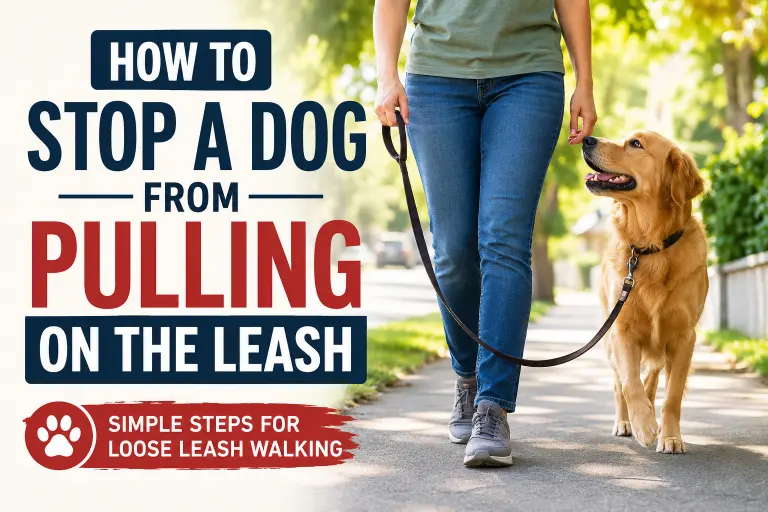
If your dog drags you down the sidewalk, lunges toward distractions, or turns every walk into a struggle, you’re not alone. Leash pulling is one of the most common challenges dog owners face.
Recommended Dog Care Products
Based on your dog’s age, these products may help with comfort, health, grooming, and daily care.

Purina Pro Plan Veterinary Supplements
Daily probiotics for dogs to support digestive and gut health.
View on Amazon ↗
Earth Rated Poop Bags for Dogs
Leak-proof, extra thick waste bag refill rolls with lavender scent.
View on Amazon ↗
Greenies Pill Pockets for Dogs
Large dog treats for capsule medication, peanut butter flavor.
View on Amazon ↗
HONEY CARE All-Absorb Dog Wrap
Small male dog wraps, 50 count, useful for daily care support.
View on Amazon ↗
Seresto Flea & Tick Collar
Flea and tick treatment and prevention for dogs over 18 lbs.
View on Amazon ↗
Milk-Bone MaroSnacks
Small dog treats with real bone marrow in a 40 oz canister.
View on Amazon ↗
Vital Essentials Dog Treats
Freeze dried beef liver dog treats, grain free and single ingredient.
View on Amazon ↗
Stain & Odor Eliminator
Enzyme cleaner for pet stains, carpet messes, and strong odors.
View on Amazon ↗
Pur Luv Chicken Jerky Treats
Dog treats made with real chicken breast, high protein and chew-friendly.
View on Amazon ↗
Milk-Bone Flavor Snacks
Mini crunchy dog biscuits in a 36 oz canister for small rewards.
View on Amazon ↗As an Amazon Associate, we may earn from qualifying purchases.
The good news is that most dogs can learn better leash manners with a clear and consistent training approach. You don’t need harsh corrections or complicated techniques. In most cases, teaching loose leash walking comes down to showing your dog that pulling doesn’t get them where they want to go, while walking calmly beside you does.
In this guide, you’ll learn why dogs pull and the most effective way to stop dog pulling on the leash through practical, reward-based training.
Why Dogs Pull on the Leash in the First Place
Before you can fix leash pulling, it helps to understand why it happens.
Most dogs aren’t trying to be stubborn or dominant. They pull because it works.
Dogs naturally move faster than humans. When they’re excited to reach a smell, another dog, a person, or simply explore the environment, they move forward. If pulling gets them closer to what they want, the behavior is rewarded automatically.
For example, imagine your dog spots a tree they want to sniff. They pull, you keep walking, and they reach the tree. From your dog’s perspective, pulling successfully achieved the goal.
Over time, this creates a habit:
- Dog pulls.
- Dog moves forward.
- Dog gets rewarded with access to something interesting.
The more this cycle repeats, the stronger the behavior becomes.
Excitement can make the problem worse. Many dogs become highly stimulated as soon as the leash comes out because they associate walks with fun, freedom, and exploration. When excitement takes over, leash manners often disappear.
Recommended Dog Care Products
Based on your dog’s age, these products may help with comfort, health, grooming, and daily care.
Purina Pro Plan Veterinary Supplements
Daily probiotics for dogs to support digestive and gut health.
View on Amazon ↗
Earth Rated Poop Bags for Dogs
Leak-proof, extra thick waste bag refill rolls with lavender scent.
View on Amazon ↗
Greenies Pill Pockets for Dogs
Large dog treats for capsule medication, peanut butter flavor.
View on Amazon ↗
HONEY CARE All-Absorb Dog Wrap
Small male dog wraps, 50 count, useful for daily care support.
View on Amazon ↗
Seresto Flea & Tick Collar
Flea and tick treatment and prevention for dogs over 18 lbs.
View on Amazon ↗
Milk-Bone MaroSnacks
Small dog treats with real bone marrow in a 40 oz canister.
View on Amazon ↗
Vital Essentials Dog Treats
Freeze dried beef liver dog treats, grain free and single ingredient.
View on Amazon ↗
Stain & Odor Eliminator
Enzyme cleaner for pet stains, carpet messes, and strong odors.
View on Amazon ↗
Pur Luv Chicken Jerky Treats
Dog treats made with real chicken breast, high protein and chew-friendly.
View on Amazon ↗
Milk-Bone Flavor Snacks
Mini crunchy dog biscuits in a 36 oz canister for small rewards.
View on Amazon ↗As an Amazon Associate, we may earn from qualifying purchases.
This is why punishment alone rarely solves the problem. Even if a correction temporarily stops pulling, the dog still hasn’t learned what you want them to do instead. Effective no-pull training focuses on teaching the desired behavior: walking on a loose leash.
The Fastest Way to Stop Dog Pulling on the Leash
The fastest way to stop dog pulling on the leash is simple:
Never allow pulling to move your dog forward, and consistently reward loose leash walking.
This teaches your dog two clear rules:
- Pulling makes progress stop.
- Walking calmly keeps the walk going.
When applied consistently, dogs begin to understand that staying near you is the quickest way to reach what they want.
Stop Moving When the Leash Becomes Tight
The moment your dog pulls hard enough to tighten the leash, stop walking.
Don’t yank the leash. Don’t drag your dog back. Simply become still.
Wait quietly until your dog releases tension on the leash. Some dogs will naturally turn around and look at you. Others may take a step back. The exact behavior matters less than the leash becoming loose again.
Once the leash relaxes, immediately continue walking.
This teaches an important lesson: pulling stops the adventure, while a loose leash makes the walk continue.
Recommended Dog Care Products
Based on your dog’s age, these products may help with comfort, health, grooming, and daily care.
Purina Pro Plan Veterinary Supplements
Daily probiotics for dogs to support digestive and gut health.
View on Amazon ↗
Earth Rated Poop Bags for Dogs
Leak-proof, extra thick waste bag refill rolls with lavender scent.
View on Amazon ↗
Greenies Pill Pockets for Dogs
Large dog treats for capsule medication, peanut butter flavor.
View on Amazon ↗
HONEY CARE All-Absorb Dog Wrap
Small male dog wraps, 50 count, useful for daily care support.
View on Amazon ↗
Seresto Flea & Tick Collar
Flea and tick treatment and prevention for dogs over 18 lbs.
View on Amazon ↗
Milk-Bone MaroSnacks
Small dog treats with real bone marrow in a 40 oz canister.
View on Amazon ↗
Vital Essentials Dog Treats
Freeze dried beef liver dog treats, grain free and single ingredient.
View on Amazon ↗
Stain & Odor Eliminator
Enzyme cleaner for pet stains, carpet messes, and strong odors.
View on Amazon ↗
Pur Luv Chicken Jerky Treats
Dog treats made with real chicken breast, high protein and chew-friendly.
View on Amazon ↗
Milk-Bone Flavor Snacks
Mini crunchy dog biscuits in a 36 oz canister for small rewards.
View on Amazon ↗As an Amazon Associate, we may earn from qualifying purchases.
Many owners struggle because they stop only sometimes. If your dog can pull successfully on five occasions and gets stopped on the sixth, the lesson becomes confusing. Consistency is what creates results.
Reward the Dog for Walking Beside You
Many people focus entirely on correcting pulling and forget to reward the behavior they want.
Whenever your dog walks beside you or keeps the leash loose, provide positive feedback.
Depending on your dog, this might include:
- Small training treats
- Verbal praise
- Petting
- Access to something they want to explore
At the beginning of training, reward frequently. You want your dog to clearly understand that staying close to you is worthwhile.
For example, if your dog walks next to you for several steps without pulling, mark the behavior with praise and reward them before they make a mistake.
This helps build loose leash walking as a habit rather than constantly reacting to pulling after it happens.
Repeat Every Time the Dog Pulls
This is the part most owners underestimate.
Stopping once or twice during a walk won’t change behavior. Dogs learn through repetition. Every time the leash tightens, the same response should happen.
- Leash tightens.
- You stop.
- Leash loosens.
- Walking resumes.
The pattern should be predictable.
Recommended Dog Care Products
Based on your dog’s age, these products may help with comfort, health, grooming, and daily care.
Purina Pro Plan Veterinary Supplements
Daily probiotics for dogs to support digestive and gut health.
View on Amazon ↗
Earth Rated Poop Bags for Dogs
Leak-proof, extra thick waste bag refill rolls with lavender scent.
View on Amazon ↗
Greenies Pill Pockets for Dogs
Large dog treats for capsule medication, peanut butter flavor.
View on Amazon ↗
HONEY CARE All-Absorb Dog Wrap
Small male dog wraps, 50 count, useful for daily care support.
View on Amazon ↗
Seresto Flea & Tick Collar
Flea and tick treatment and prevention for dogs over 18 lbs.
View on Amazon ↗
Milk-Bone MaroSnacks
Small dog treats with real bone marrow in a 40 oz canister.
View on Amazon ↗
Vital Essentials Dog Treats
Freeze dried beef liver dog treats, grain free and single ingredient.
View on Amazon ↗
Stain & Odor Eliminator
Enzyme cleaner for pet stains, carpet messes, and strong odors.
View on Amazon ↗
Pur Luv Chicken Jerky Treats
Dog treats made with real chicken breast, high protein and chew-friendly.
View on Amazon ↗
Milk-Bone Flavor Snacks
Mini crunchy dog biscuits in a 36 oz canister for small rewards.
View on Amazon ↗As an Amazon Associate, we may earn from qualifying purchases.
At first, progress may feel slow. Some walks may involve frequent stopping. That’s normal. Your dog is learning a completely new rule.
As training continues, most dogs begin checking in more often, staying closer, and pulling less because they’ve learned that pulling no longer helps them reach their destination.
The goal isn’t perfect walking overnight. The goal is creating a consistent system that makes loose leash walking more rewarding than pulling.
Step-by-Step Loose Leash Walking Training Plan
Understanding the technique is one thing. Teaching your dog to use it consistently is another.
The biggest mistake many owners make is expecting perfect leash behavior in the most challenging environments. If your dog pulls constantly on neighborhood walks, a busy park is not the best place to begin training.
Instead, build the skill gradually.
Start Indoors or in a Quiet Area
Loose leash walking is easier to teach when there are fewer distractions.
Begin in a place where your dog can focus on you, such as:
- Inside your home
- In your backyard
- On a quiet driveway
- In a calm outdoor area with little foot traffic
Attach the leash and walk a few steps. Reward your dog whenever they stay near you with a loose leash.
The goal isn’t covering distance. The goal is teaching your dog what position earns rewards.
If your dog struggles even in a quiet environment, shorten the training session and increase the reward frequency. Success should come easily at this stage.
Add Distance Before Adding Distractions
Once your dog can walk calmly for short stretches in a quiet area, start increasing the distance.
For example:
- Walk 10 steps with a loose leash.
- Then 20 steps.
- Then half a block.
- Then a full block.
Only after your dog can reliably maintain leash manners over longer distances should you increase the difficulty of the environment.
Many training setbacks happen because owners move too quickly from a quiet backyard to a crowded sidewalk. Your dog may know the skill, but the distractions are overwhelming.
Think of loose leash walking as a progression:
- Low distractions.
- Longer duration.
- Moderate distractions.
- High-distraction environments.
Advancing through these stages gradually creates more reliable results.
Practice Short Sessions Daily
Consistency matters more than session length.
A focused five- to ten-minute training session every day is usually more effective than one long session each week.
Short sessions help your dog stay engaged and prevent frustration for both of you.
During practice:
- End on a positive note.
- Reward success generously.
- Keep expectations realistic.
- Stop before your dog becomes mentally tired.
Daily repetition allows the behavior to become automatic. Over time, your dog starts choosing loose leash walking because it has consistently been rewarded.
What to Do When Your Dog Pulls During Real Walks
Training sessions are controlled environments. Real walks are different.
Squirrels appear unexpectedly. Other dogs pass by. Interesting smells seem to exist everywhere.
Even a dog that performs well during practice may pull when faced with real-world distractions.
When this happens, avoid viewing it as failure. Instead, treat it as an opportunity to reinforce the training.
Use Direction Changes to Regain Attention
If your dog becomes intensely focused on something ahead and starts pulling, changing direction can help break that fixation.
Instead of pulling back against your dog, calmly turn and walk the other way.
When your dog follows and catches up, reward them.
This technique encourages your dog to pay attention to your movement rather than charging toward every distraction they notice.
Direction changes work especially well for dogs that tend to move on autopilot during walks.
A few quick turns can remind them that walking is a shared activity, not a race to the next interesting object.
Create Distance From Major Distractions
Sometimes your dog isn’t being disobedient—they’re simply overwhelmed.
If your dog starts pulling toward another dog, a group of people, wildlife, or a highly exciting stimulus, moving farther away can help them regain focus.
Distance often reduces excitement enough for your dog to think and respond to training again.
For example, if your dog can’t stop pulling toward another dog across the street:
- Increase the distance.
- Ask for attention.
- Reward calm behavior.
- Continue walking once they relax.
Trying to force loose leash walking when your dog is overexcited often leads to frustration and poor results.
Good no-pull training isn’t just about correcting behavior. It’s also about managing the environment so your dog can make successful choices.
The more often your dog succeeds at staying calm around distractions, the faster those good leash manners become reliable in everyday situations.
Common Training Mistakes That Keep Dogs Pulling
Many dogs continue pulling not because they can’t learn, but because the training process unintentionally rewards the behavior.
Avoiding these common mistakes can significantly speed up progress.
Being Inconsistent About Pulling
This is the most common issue.
If you stop when your dog pulls on some walks but allow pulling on others, your dog receives mixed messages. They learn that pulling sometimes works, which makes the habit harder to break.
The rule should always be the same: a tight leash stops forward movement.
Consistency from every family member who walks the dog is equally important.
Moving Too Fast Through Training
Many owners see a few successful sessions and immediately expect perfect behavior in busy environments.
A dog that walks calmly in the backyard may not be ready for a crowded park, a busy sidewalk, or a pet-friendly store.
If pulling suddenly returns, it often means the environment became too difficult too quickly.
Go back to an easier setting, rebuild success, and increase difficulty gradually.
Rewarding Pulling Without Realizing It
Sometimes owners accidentally reward the very behavior they’re trying to eliminate.
Examples include:
- Continuing to walk while the dog pulls.
- Allowing the dog to reach a person, dog, or smell by pulling.
- Speeding up to keep pace with a pulling dog.
From the dog’s perspective, pulling worked.
The more often this happens, the stronger the habit becomes.
Expecting Immediate Results
Leash pulling is usually a learned behavior that developed over weeks, months, or even years.
It’s unrealistic to expect permanent change after one or two training sessions.
Progress often looks like this:
- Less pulling than before.
- Faster recovery after pulling.
- More frequent check-ins with you.
- Longer periods of loose leash walking.
These are signs the training is working, even if the behavior isn’t perfect yet.
How Long Does It Take to Stop Leash Pulling?
There is no single timeline because every dog is different.
Factors that influence progress include:
- Your dog’s age.
- How long they’ve been pulling.
- Their excitement level outdoors.
- Training consistency.
- The environments where you practice.
Some dogs show noticeable improvement within a week or two of consistent training. Others may need several weeks or longer before loose leash walking becomes reliable.
Rather than focusing on a specific deadline, look for steady improvement.
Signs you’re moving in the right direction include:
- Your dog checks in with you more often.
- The leash stays loose for longer stretches.
- Recovery after distractions becomes quicker.
- Walks feel calmer and more manageable.
Remember that the goal isn’t perfection. Even well-trained dogs occasionally get excited.
Success means your dog understands the expectation, responds to your guidance, and spends most of the walk maintaining good leash manners.
Frequently Asked Questions
How do I stop my dog from pulling on the leash immediately?
You can reduce pulling right away by stopping whenever the leash becomes tight and only moving forward again when the leash is loose. While this won’t permanently solve the problem in a single walk, it prevents pulling from being rewarded and starts teaching better habits immediately.
Why does my dog pull harder as the walk goes on?
Many dogs become more excited as they encounter new smells, people, dogs, and other distractions. Mental stimulation can increase arousal levels, making it harder for them to maintain focus and loose leash walking.
Is loose leash walking the same as heel training?
No. Loose leash walking means your dog can move freely within the leash length as long as the leash remains slack. Heel training requires your dog to stay in a specific position beside you, usually with much greater precision.
Can an older dog learn not to pull on the leash?
Yes. Older dogs can learn new leash manners just as younger dogs can. Training may require patience and consistency, but age alone does not prevent a dog from learning loose leash walking.
How often should I practice no-pull training?
Daily practice is ideal. Even five to ten minutes of focused training each day can produce better results than occasional long sessions. Consistent repetition helps turn the behavior into a habit.