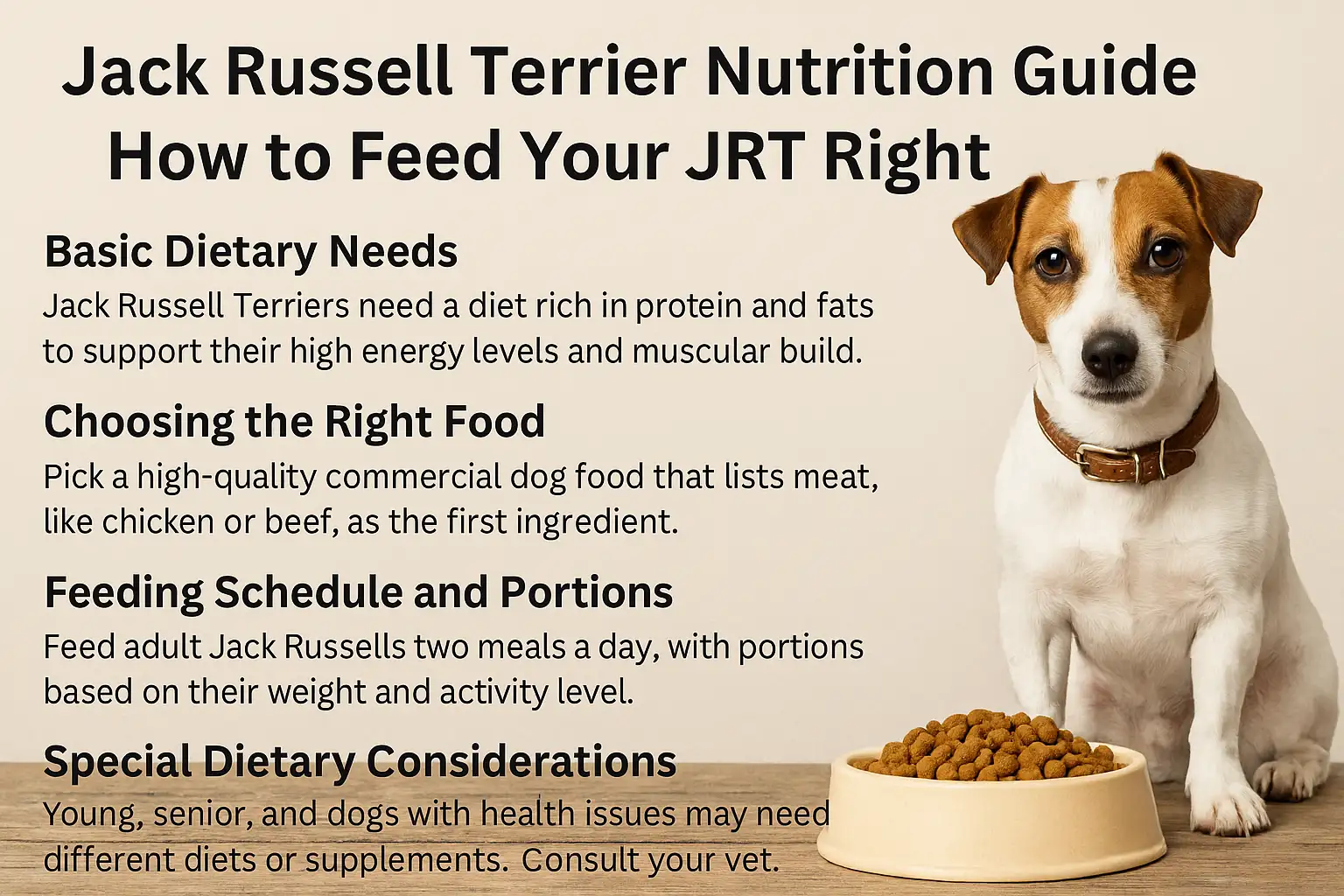
Jack Russell Terriers are small, athletic, high-energy dogs that burn calories faster than many other breeds their size. Because of their active nature, sharp intelligence, and working-dog background, the food you choose—and how much you feed—directly affects their behavior, weight, health, and lifespan. This guide is designed to help you understand exactly what a Jack Russell needs nutritionally at every life stage, whether you’re caring for an energetic puppy, a hard-working adult, or a slowing senior.
Many Jack Russell owners struggle with common feeding questions:
“How much should my Jack Russell Terrier eat?”
“What is the best diet for their energy level?”
“What foods are safe or unsafe?”
“How can diet improve their lifespan?”
This guide answers all of those questions clearly and practically. You’ll find tables, real-world examples, safe food lists, and feeding schedules that make caring for your Jack Russell Terrier straightforward and stress-free.
The goal is simple: help your Jack Russell stay lean, energized, mentally sharp, and healthy for as many years as possible. With the right nutrition choices, Jack Russells are known to live long, active lives—and the information in this guide will help you give your dog the best chance at that.
Jack Russell Terrier Basics: Size, Weight, Temperament & Lifespan
Jack Russell Terriers are small but powerful dogs. They were originally bred for hunting, which means they have a lot of energy, quick reactions, and sharp thinking. Understanding their size, weight, personality, and lifespan helps you make better feeding and nutrition choices.
Size and Weight Basics
Most Jack Russell Terriers are small, compact, and built for speed.
Here is a simple look at their normal size and weight:
Jack Russell Size & Weight Chart
| Type of Jack Russell | Height | Healthy Weight |
|---|---|---|
| Standard Jack Russell Terrier | 10–15 inches | 13–17 lbs |
| Shorty Jack / Puddin’ Type | 10–12 inches | 14–18 lbs |
| Tall/Long-Legged Type | 14–15 inches | 15–20 lbs |
If your Jack Russell weighs more than the range above, they may be overweight. This can shorten their lifespan and affect their joints and energy levels.
Body Condition: Is Your Jack Russell at a Healthy Weight?
A quick way to check your dog’s condition is by using a simple body test:
- You should feel the ribs but not see them clearly.
- Your dog should have a visible waist when viewed from above.
- The stomach should tuck up slightly when viewed from the side.
If ribs are hard to feel → your dog is overweight.
If ribs are too easy to see → your dog may be underweight.
Temperament and Energy Levels
Jack Russells are famous for being:
- Fast
- Smart
- Very active
- Playful
- Easily bored if not exercised
Because of this, they burn a lot of energy. A calm walk is rarely enough for them. They often need playtime, running, or mental games. Their high activity means they need food that supports strong muscles and steady energy.
Lifespan of a Jack Russell Terrier
Jack Russells are one of the longest-living dog breeds. Many live well into their teens, and some reach 17–20 years with good care and a healthy diet.
Jack Russell Lifespan Table
| Condition | Average Lifespan |
|---|---|
| Healthy weight, active lifestyle | 14–17 years |
| Slightly overweight | 12–14 years |
| Obese or chronic health problems | 10–12 years |
Feeding your dog a balanced diet and keeping them at a healthy weight can add years to their life.
During this section, you can also explore more about the breed in the Jack Russell Terrier Dog Full Guide, and if you’re curious about your dog’s age in human years, try the Jack Russell Terrier Dog Age In Human Years Calculator.
Core Nutrition Needs of a Jack Russell Terrier (Puppy, Adult, Senior)
Jack Russell Terriers are active dogs, so their bodies need the right mix of nutrients to stay strong, fast, and healthy. Their food must support their muscles, energy levels, digestion, and long-term health. The right nutrition also helps prevent weight problems, skin issues, and early aging.
Why Protein Matters
Protein is the most important nutrient for Jack Russells. It helps build muscles, supports healthy skin and fur, and keeps their energy steady throughout the day.
Good protein comes from chicken, turkey, fish, beef, lamb, and eggs.
Why Fat Is Important
Fat sounds scary, but healthy fats are actually great for this breed. Fat gives them slow, steady energy. It also keeps their skin soft and their coat shiny. Omega-3 fats help with brain health and reduce joint pain.
Carbs, Fiber, and Easy Digestion
Carbohydrates give quick energy. Fiber helps with digestion and firm stools.
Good carb sources are sweet potatoes, brown rice, oats, and vegetables.
Avoid foods with too many fillers like corn gluten or soy protein.
Vitamins and Minerals
Jack Russells need vitamins and minerals for strong bones, a healthy immune system, and good eyesight. Most good-quality dog foods already include the right mix. You don’t need extra supplements unless a vet recommends them.
Nutrition Needs by Life Stage
Puppies, adults, and seniors all have different needs. This simple table helps you understand the main differences:
Life Stage Nutrition Table
| Life Stage | Protein Needs | Fat Needs | Key Notes |
|---|---|---|---|
| Puppy | High protein for growth | Medium–high fat for energy | Needs 3–4 meals per day |
| Adult | Balanced protein | Medium fat | Good for maintaining muscle and energy |
| Senior | Moderate protein | Lower fat | Easier to digest, supports joints and weight control |
Health Conditions and Helpful Nutrients
Some Jack Russells may have sensitive stomachs, itchy skin, or joint pain as they age. The right nutrients can help:
Health Support Nutrition Table
| Condition | Helpful Nutrients |
|---|---|
| Itchy skin or allergies | Omega-3s, fish oil, limited-ingredient diets |
| Joint pain or aging | Glucosamine, chondroitin, omega-3s |
| Sensitive stomach | Easily digestible proteins, pumpkin, probiotics |
| Weight gain | High-fiber foods, lean proteins, fewer treats |
Feeding your Jack Russell the right nutrients at the right life stage helps them stay healthy, happy, and full of energy every day.
How Much to Feed a Jack Russell Terrier: Portions, Calories & Feeding Schedule
Feeding the right amount is one of the most important parts of caring for a Jack Russell Terrier. Because this breed is small but very active, they burn calories fast. Feeding too little can make them weak or underweight, while feeding too much can cause quick weight gain and health problems.
This section helps you understand calories, portion sizes, and how often to feed your dog at different ages.
Daily Calorie Needs
A simple way to understand feeding is by looking at your dog’s weight and activity level. Jack Russells who run, play, or train often need more calories than dogs who spend most of the day resting.
Daily Calorie Needs by Weight & Activity
| Weight | Low Activity | Normal Activity | High Activity |
|---|---|---|---|
| 10 lbs | 280–320 cal/day | 330–380 cal/day | 400–450 cal/day |
| 13 lbs | 320–360 cal/day | 380–430 cal/day | 450–500 cal/day |
| 15 lbs | 350–400 cal/day | 420–480 cal/day | 500–560 cal/day |
| 17 lbs | 380–430 cal/day | 460–520 cal/day | 550–620 cal/day |
Low activity = indoor dog, short walks
Normal activity = daily walks + play
High activity = running, training, agility, hunting background
Portion Size Examples
Portion sizes vary based on the food you use, but here are simple examples to help you understand how much to start with:
Portion Examples Table
| Dog Type | Example Amount |
|---|---|
| Puppy | ½–1 cup per day, split into 3–4 meals |
| Normal adult | 1–1.5 cups per day, split into 2 meals |
| Very active adult | 1.5–2 cups per day, split into 2 meals |
| Senior | ¾–1 cup per day, split into 2 meals |
Always adjust based on your dog’s weight and hunger levels. If your dog is gaining weight, reduce portions slightly. If they seem hungry and are losing weight, increase portions carefully.
Feeding Schedule for Jack Russells
This breed does best with a stable routine. Feeding at the same times daily helps digestion and keeps their energy steady.
Feeding Schedule Table
| Life Stage | Meals Per Day | Notes |
|---|---|---|
| Puppy | 3–4 meals | Small stomach, needs steady energy |
| Adult | 2 meals | Best for digestion and behavior |
| Senior | 2 small meals | Helps prevent weight gain and upset stomach |
Use Body Condition, Not Just the Bag
Feeding guides on dog food bags are general and often suggest more food than needed. Instead, check your dog’s body:
- Ribs should be easy to feel
- Waist should curve in
- Stomach should tuck up
If your Jack Russell looks round or loses their waistline, it’s time to reduce food a little. If ribs stick out too much, increase portions.
Good feeding habits help your Jack Russell stay active, lean, and healthy for many years.
What to Feed a Jack Russell Terrier: Best Foods, Treats & Safe Human Foods
Choosing the right food for a Jack Russell Terrier can feel confusing, but it doesn’t have to be. This breed needs food that supports strong muscles, steady energy, healthy digestion, and a shiny coat. The goal is simple: give them food that keeps them active and feeling good every day.
Best Types of Food for Jack Russells
Each type of dog food has its benefits. The right choice depends on your dog’s needs, your budget, and how much time you have.
Food Type Comparison Table
| Food Type | Pros | Cons |
|---|---|---|
| Dry kibble | Easy, affordable, good for teeth | Quality varies, some fillers |
| Wet food | Tasty, soft for seniors | More expensive, messy |
| Fresh food | Very healthy, easy to digest | Higher cost |
| Raw diet | Natural, high protein | Safety risks, needs careful handling |
| Freeze-dried | Lightweight, nutritious | Pricey, needs water added |
| Home-cooked | Custom control | Must be balanced by a vet/nutritionist |
No matter what you choose, look for foods with real meat as the first ingredient and avoid too many fillers like corn and soy.
Safe Human Foods Your Jack Russell Can Eat
Some human foods are safe and even healthy for dogs in small amounts.
Here are safe options:
- Cooked chicken or turkey
- Salmon or sardines (boneless)
- Eggs
- Carrots
- Blueberries
- Pumpkin
- Green beans
- Apple slices (no seeds)
- Plain rice or oats
These foods can be used as treats or mixed into meals.
Foods You Should Never Give Your Jack Russell
Some foods people enjoy are dangerous for dogs. These can cause serious health issues.
Safe vs Unsafe Foods Table
| Safe Foods | Unsafe Foods |
|---|---|
| Cooked chicken | Chocolate |
| Plain pumpkin | Grapes & raisins |
| Blueberries | Onions & garlic |
| Carrots | Avocado |
| Plain rice | Xylitol (in sugar-free gum) |
| Green beans | Alcohol |
| Eggs | Cooked bones |
If your dog ever eats something dangerous, call your vet right away.
Treat Guidelines for Jack Russells
Treats are great for training, but too many can cause weight gain. A good rule is:
Treats should be no more than 10% of daily calories.
Here’s a simple look at treat calories:
Treat Calorie Table
| Treat Type | Calories |
|---|---|
| Small biscuit treat | 5–15 calories |
| Training soft treat | 2–5 calories |
| Apple slice | 2–3 calories |
| Carrot piece | 3–4 calories |
Use tiny pieces during training. Jack Russells learn fast, so they don’t need big treats to stay focused.
Switching Foods Safely
Never change your dog’s diet all at once. Sudden changes can cause upset stomach or loose stools.
Use a slow 7-day switch:
- Days 1–2: 75% old food + 25% new food
- Days 3–4: 50% old + 50% new
- Days 5–6: 25% old + 75% new
- Day 7: 100% new food
A slow change helps your dog adjust smoothly with no tummy problems.
The right food keeps your Jack Russell Terrier healthy, strong, and full of energy. Choosing wisely today helps support a long, active life.
Special Diets, Health Issues & Common Feeding Problems in Jack Russells
Jack Russell Terriers are tough and active dogs, but they can still face health issues that relate to diet. The right food can help with allergies, stomach problems, joint pain, weight gain, and even behavior changes. This section gives you simple, clear guidance on what to feed in different situations and how to solve common feeding problems.
Diets for Common Health Problems
Some Jack Russells need special diets to stay comfortable and healthy.
Here is a quick and easy guide:
Condition → Diet Recommendation Table
| Health Issue | Best Diet Type |
|---|---|
| Food allergies or itchy skin | Limited-ingredient diet, fish-based food |
| Sensitive stomach | Easily digested proteins, pumpkin, probiotics |
| Joint pain or senior dogs | Foods with glucosamine, chondroitin, omega-3s |
| Weight gain | Lean protein, high-fiber diet, fewer treats |
| Low energy | Higher protein and healthy fats |
If you see your dog scratching a lot, throwing up often, or having soft stool, their food may be the cause. Try switching to a gentle formula or ask your vet for help.
Feeding Problems and Easy Solutions
Jack Russells are smart and strong-willed, so feeding problems can happen. Here are some common issues and simple fixes:
Feeding Problem → Solution Table
| Problem | Simple Fix |
|---|---|
| Picky eater | Warm the food, add a spoon of wet food, feed on a schedule |
| Always hungry | Add veggies for fiber, use slow-feeder bowl |
| Hyper after meals | Feed smaller meals, avoid sugar-filled treats |
| Loose stool after new food | Switch food slowly over 7 days |
| Eats too fast | Use puzzle feeders or slow bowls |
| Overweight | Reduce treats, increase play and walks |
Senior Jack Russells and Diet
Older dogs often need easier-to-digest food. Senior diets usually include:
- Lower fat
- Moderate protein
- Joint support ingredients
- More fiber for digestion
Seniors can also have sensitive teeth, so softer food or adding warm water to kibble can help.
Working or Very Active Jack Russells
Some Jack Russells run, jump, and train daily. These high-energy dogs need more calories and more protein. Their diets should include:
- Meat-first ingredients
- Healthy fats for long-lasting energy
- Omega-3s for joints and recovery
These dogs should not be on low-calorie diets unless a vet recommends it.
When to Ask Your Vet for Help
Talk to your vet if your Jack Russell:
- Loses weight suddenly
- Gains weight fast
- Has diarrhea that lasts more than 2 days
- Keeps scratching or licking paws
- Stops eating
- Seems tired all the time
Quick action helps prevent small issues from becoming big health problems. With the right diet and attention, most Jack Russells can enjoy a long, happy, and active life.
Jack Russell Terrier Nutrition FAQs
This final section answers the most common questions Jack Russell owners ask about feeding, diet, weight, and daily care. The goal is to give you quick, clear answers that are easy to follow and understand.
What is the best food for a Jack Russell Terrier?
The best food is one that lists real meat as the first ingredient, has balanced protein and fat, and does not contain too many fillers. Many Jack Russells do well on high-quality kibble, fresh food, or a mix of both. Always choose food that matches your dog’s age and activity level.
How much should a Jack Russell Terrier eat per day?
Most adult Jack Russells eat 1 to 1.5 cups of food per day, split into two meals. Puppies need 3–4 smaller meals, and seniors may need slightly less depending on activity level. Always check your dog’s weight and body condition to know if you should adjust the portions.
What is a healthy weight for a Jack Russell Terrier?
A healthy Jack Russell usually weighs 13–17 pounds, depending on their height, build, and activity level. If ribs are hard to feel or your dog loses their waistline, they may be overweight. If ribs are too easy to see, they may be underweight.
Can diet help my Jack Russell live longer?
Yes. Good nutrition plays a big role in lifespan. Jack Russells at a healthy weight often live 2–3 years longer than overweight dogs. Feeding high-quality food, limiting treats, and keeping your dog active can support a long, healthy life.
If you want to learn more about your dog’s overall breed traits, you can explore the Jack Russell Terrier Dog Full Guide, and if you’re curious about converting your dog’s age into human years, try the Jack Russell Terrier Dog Age In Human Years Calculator.
Can Jack Russells be allergic to certain foods?
Yes. Common triggers include chicken, beef, dairy, and wheat. Signs of allergies include scratching, red skin, ear infections, or stomach problems. Switching to a limited-ingredient diet or a fish-based formula often helps.
Are Jack Russells picky eaters?
Some are. If your dog refuses food, try warming the meal, adding a spoon of wet food, or keeping a strict feeding schedule. Avoid feeding too many treats, because this can make dogs ignore their main meals.
How do I switch my Jack Russell to a new food?
Switch slowly over 7 days to avoid stomach problems:
- Days 1–2: 75% old food + 25% new food
- Days 3–4: 50% + 50%
- Days 5–6: 25% old + 75% new
- Day 7: 100% new food
Should Jack Russells eat twice a day?
Yes. Two meals per day help keep energy levels steady and reduce the chance of stomach upset. Puppies should eat 3–4 meals per day, while seniors do best with 2 smaller meals.
What treats are safe for Jack Russells?
Safe options include small pieces of chicken, carrots, blueberries, or tiny training treats. Avoid chocolate, grapes, onions, or anything with xylitol. Treats should be no more than 10% of daily calories.
When should I talk to a vet about my dog’s diet?
See your vet if your Jack Russell:
- Stops eating
- Has diarrhea for more than 2 days
- Gains or loses weight suddenly
- Has itchy skin or ear infections
- Seems low-energy or unusually tired
A vet can guide you to the right diet and rule out any health problems.
For more detailed nutrition standards and feeding guidelines for dogs of all breeds, you can explore the official recommendations provided by the Association of American Feed Control Officials (AAFCO) at https://www.aafco.org.
One thought on “Jack Russell Terrier Nutrition & Feeding Guide: How to Feed a Healthy, Happy JRT”