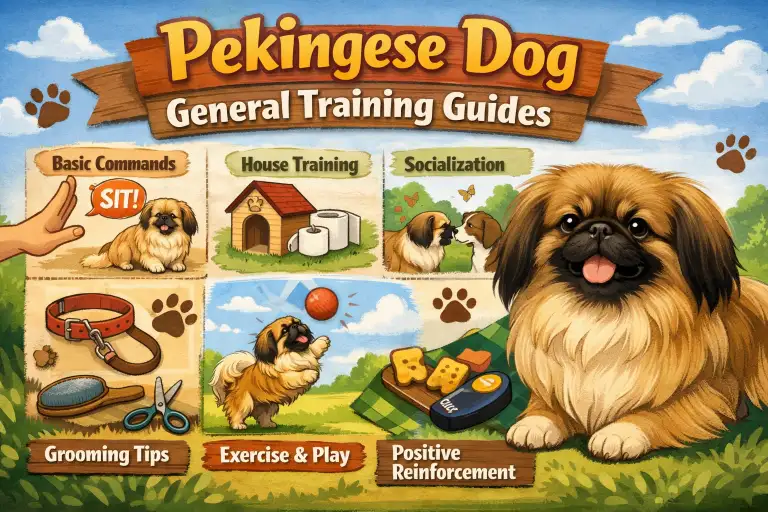
Training a Pekingese is less about control and more about cooperation. This ancient toy breed was developed to be a companion, not a working dog, and that history shows up clearly in modern training. Pekingese are intelligent, observant, and independent thinkers—but they’re rarely eager to perform just to please a handler. Understanding this from the start prevents frustration and sets realistic expectations.
Recommended Dog Care Products
Based on your dog’s age, these products may help with comfort, health, grooming, and daily care.

Purina Pro Plan Veterinary Supplements
Daily probiotics for dogs to support digestive and gut health.
View on Amazon ↗
Earth Rated Poop Bags for Dogs
Leak-proof, extra thick waste bag refill rolls with lavender scent.
View on Amazon ↗
Greenies Pill Pockets for Dogs
Large dog treats for capsule medication, peanut butter flavor.
View on Amazon ↗
HONEY CARE All-Absorb Dog Wrap
Small male dog wraps, 50 count, useful for daily care support.
View on Amazon ↗
Seresto Flea & Tick Collar
Flea and tick treatment and prevention for dogs over 18 lbs.
View on Amazon ↗
Milk-Bone MaroSnacks
Small dog treats with real bone marrow in a 40 oz canister.
View on Amazon ↗
Vital Essentials Dog Treats
Freeze dried beef liver dog treats, grain free and single ingredient.
View on Amazon ↗
Stain & Odor Eliminator
Enzyme cleaner for pet stains, carpet messes, and strong odors.
View on Amazon ↗
Pur Luv Chicken Jerky Treats
Dog treats made with real chicken breast, high protein and chew-friendly.
View on Amazon ↗
Milk-Bone Flavor Snacks
Mini crunchy dog biscuits in a 36 oz canister for small rewards.
View on Amazon ↗As an Amazon Associate, we may earn from qualifying purchases.
Many owners ask, “Are Pekingese hard to train?” The honest answer is: they’re not difficult, but they are different. Pekingese don’t respond well to force, repetition-heavy drills, or rushed timelines. They learn best through calm structure, consistency, and rewards that matter to them. When training fails, it’s usually because the method doesn’t match the breed—not because the dog “won’t learn.”
This guide is designed for:
- First-time Pekingese owners
- Owners transitioning from larger or more biddable breeds
- People raising Pekingese puppies
- Owners working with adult or rescued Pekingese who missed early training
You’ll learn how to:
- Build focus and cooperation without pressure
- Train within the physical and emotional limits of the breed
- Avoid common small-dog training mistakes
- Create habits that last into adulthood
Pekingese puppies typically learn faster but have short attention spans, while adult Pekingese may learn more slowly but retain lessons well once they trust the process. Both can be successfully trained when expectations are realistic and sessions are kept short, calm, and purposeful.
Most importantly, this guide treats Pekingese as dogs first, not decorations or lap-only pets. Proper training improves safety, reduces stress, strengthens bonding, and allows your Pekingese to confidently navigate everyday life—at home and in public.
Understanding Pekingese Temperament and Behavior
Before training can work, you need to understand how a Pekingese thinks and feels. Many training problems happen because owners expect this breed to act like a Labrador or a Border Collie. Pekingese are not built for that kind of work—or mindset.
Pekingese were bred to live closely with people, make their own choices, and stay calm indoors. This affects how they learn, how fast they learn, and what motivates them.
Here’s what matters most:
- Pekingese are independent, not disobedient
- They notice tone, mood, and pressure very quickly
- They dislike being rushed or forced
- Trust matters more than commands
- Comfort and routine are strong motivators
Because of their flat faces and short legs, Pekingese also tire easily. Long or intense training sessions can make them shut down, ignore you, or avoid training altogether.
Recommended Dog Care Products
Based on your dog’s age, these products may help with comfort, health, grooming, and daily care.
Purina Pro Plan Veterinary Supplements
Daily probiotics for dogs to support digestive and gut health.
View on Amazon ↗
Earth Rated Poop Bags for Dogs
Leak-proof, extra thick waste bag refill rolls with lavender scent.
View on Amazon ↗
Greenies Pill Pockets for Dogs
Large dog treats for capsule medication, peanut butter flavor.
View on Amazon ↗
HONEY CARE All-Absorb Dog Wrap
Small male dog wraps, 50 count, useful for daily care support.
View on Amazon ↗
Seresto Flea & Tick Collar
Flea and tick treatment and prevention for dogs over 18 lbs.
View on Amazon ↗
Milk-Bone MaroSnacks
Small dog treats with real bone marrow in a 40 oz canister.
View on Amazon ↗
Vital Essentials Dog Treats
Freeze dried beef liver dog treats, grain free and single ingredient.
View on Amazon ↗
Stain & Odor Eliminator
Enzyme cleaner for pet stains, carpet messes, and strong odors.
View on Amazon ↗
Pur Luv Chicken Jerky Treats
Dog treats made with real chicken breast, high protein and chew-friendly.
View on Amazon ↗
Milk-Bone Flavor Snacks
Mini crunchy dog biscuits in a 36 oz canister for small rewards.
View on Amazon ↗As an Amazon Associate, we may earn from qualifying purchases.
Key Pekingese Traits and How They Affect Training
| Pekingese Trait | What Owners Often See | What This Means for Training |
|---|---|---|
| Independent nature | Dog ignores commands | Use rewards, not force |
| Low tolerance for pressure | Freezing or walking away | Keep sessions calm and short |
| Strong bonding | Follows owner everywhere | Teach independence slowly |
| Sensitive to tone | Shuts down when scolded | Use quiet, positive voices |
| Low energy level | Loses interest quickly | Train in short bursts |
Many owners label Pekingese as “stubborn,” but in reality, they are selective learners. They ask one question before doing anything:
“Is this worth my effort?”
That’s why food rewards, comfort, praise, and routine work better than repeated commands or corrections.
Another important point is handling sensitivity. Pekingese often dislike sudden touching of their face, paws, or back end. This can lead to growling or snapping during grooming if not trained gently from an early age.
Understanding these traits helps you:
- Pick the right rewards
- Avoid power struggles
- Build trust instead of resistance
- Prevent fear-based behavior
Once you understand how your Pekingese sees the world, training becomes much easier.
Step-by-Step Pekingese Training Method
Training a Pekingese works best when it is simple, short, and calm. This breed does not learn faster with long sessions. In fact, too much training at once often makes them stop listening.
The goal is to build good habits little by little.
Here is the right way to start.
First, choose a quiet place. Turn off the TV. Put your phone away. Less noise helps your Pekingese focus.
Recommended Dog Care Products
Based on your dog’s age, these products may help with comfort, health, grooming, and daily care.
Purina Pro Plan Veterinary Supplements
Daily probiotics for dogs to support digestive and gut health.
View on Amazon ↗
Earth Rated Poop Bags for Dogs
Leak-proof, extra thick waste bag refill rolls with lavender scent.
View on Amazon ↗
Greenies Pill Pockets for Dogs
Large dog treats for capsule medication, peanut butter flavor.
View on Amazon ↗
HONEY CARE All-Absorb Dog Wrap
Small male dog wraps, 50 count, useful for daily care support.
View on Amazon ↗
Seresto Flea & Tick Collar
Flea and tick treatment and prevention for dogs over 18 lbs.
View on Amazon ↗
Milk-Bone MaroSnacks
Small dog treats with real bone marrow in a 40 oz canister.
View on Amazon ↗
Vital Essentials Dog Treats
Freeze dried beef liver dog treats, grain free and single ingredient.
View on Amazon ↗
Stain & Odor Eliminator
Enzyme cleaner for pet stains, carpet messes, and strong odors.
View on Amazon ↗
Pur Luv Chicken Jerky Treats
Dog treats made with real chicken breast, high protein and chew-friendly.
View on Amazon ↗
Milk-Bone Flavor Snacks
Mini crunchy dog biscuits in a 36 oz canister for small rewards.
View on Amazon ↗As an Amazon Associate, we may earn from qualifying purchases.
Keep training sessions short:
- 3 to 5 minutes for puppies
- 5 to 8 minutes for adult Pekingese
- 2 to 4 sessions per day is enough
Always stop before your dog gets bored.
Rewards matter a lot for this breed. Pekingese are not big on toys or excitement. Most respond best to food, calm praise, and comfort.
Daily Training Time Guide for Pekingese
| Age | Session Length | Sessions Per Day | Best Focus |
|---|---|---|---|
| Puppy (2–6 months) | 3–5 minutes | 3–4 | Name, focus, potty habits |
| Young adult | 5–8 minutes | 2–3 | Sit, leash walking, handling |
| Adult or rescue | 5 minutes | 2 | Trust, calm behavior, basics |
Start with focus training. Say your dog’s name once. When they look at you, reward right away. This builds attention, which is the base of all training.
Next, teach simple skills:
- Sit using a food lure
- Calm leash walking indoors first
- Standing still for brushing or touching
Do not repeat commands again and again. Say it once. If your dog does not respond, help them gently or reset the situation.
Best Rewards for Pekingese Training
| Reward Type | When to Use | When to Avoid |
|---|---|---|
| Small soft treats | Learning new skills | Overfeeding |
| Calm praise | When dog stays relaxed | Loud excitement |
| Gentle petting | After success | If dog pulls away |
| Routine | Daily habits | Sudden changes |
Pekingese puppies learn faster but forget easily. Adult Pekingese learn slower but remember longer. Both need patience and steady routines.
Never use yelling, leash jerks, or physical force. These cause fear and make training harder, especially in small dogs.
Recommended Dog Care Products
Based on your dog’s age, these products may help with comfort, health, grooming, and daily care.
Purina Pro Plan Veterinary Supplements
Daily probiotics for dogs to support digestive and gut health.
View on Amazon ↗
Earth Rated Poop Bags for Dogs
Leak-proof, extra thick waste bag refill rolls with lavender scent.
View on Amazon ↗
Greenies Pill Pockets for Dogs
Large dog treats for capsule medication, peanut butter flavor.
View on Amazon ↗
HONEY CARE All-Absorb Dog Wrap
Small male dog wraps, 50 count, useful for daily care support.
View on Amazon ↗
Seresto Flea & Tick Collar
Flea and tick treatment and prevention for dogs over 18 lbs.
View on Amazon ↗
Milk-Bone MaroSnacks
Small dog treats with real bone marrow in a 40 oz canister.
View on Amazon ↗
Vital Essentials Dog Treats
Freeze dried beef liver dog treats, grain free and single ingredient.
View on Amazon ↗
Stain & Odor Eliminator
Enzyme cleaner for pet stains, carpet messes, and strong odors.
View on Amazon ↗
Pur Luv Chicken Jerky Treats
Dog treats made with real chicken breast, high protein and chew-friendly.
View on Amazon ↗
Milk-Bone Flavor Snacks
Mini crunchy dog biscuits in a 36 oz canister for small rewards.
View on Amazon ↗As an Amazon Associate, we may earn from qualifying purchases.
Training should feel safe and predictable. If your Pekingese trusts you, progress will come.
Common Pekingese Training Problems and Solutions
Even with the right training method, many Pekingese owners face problems. This is normal. Most issues come from misunderstanding the breed, not from bad behavior.
The good news is that these problems can be fixed with small changes.
Here are the most common issues and what to do.
Many owners struggle with potty training. Pekingese are small and dislike cold, rain, or change. Missed potty trips often look like disobedience, but they are usually about comfort or timing.
Some Pekingese refuse to walk on a leash. They may stop, sit, or lie down. This is often fear, confusion, or tiredness—not stubbornness.
Barking can happen when the dog feels unsure, bored, or too attached to one person. Handling problems, like growling during brushing or nail trims, usually come from fear or past bad experiences.
Common Problems, Causes, and Simple Fixes
| Problem | Likely Cause | What Helps | What to Avoid |
|---|---|---|---|
| Potty accidents | Inconsistent schedule | Fixed potty times | Punishing accidents |
| Refusing to walk | Fear or low energy | Short, calm walks | Pulling the leash |
| Excessive barking | Anxiety or boredom | Calm routines | Yelling |
| Growling during grooming | Handling fear | Slow touch training | Forcing restraint |
| Clingy behavior | Over-attachment | Teach alone time | Constant carrying |
One of the biggest mistakes owners make is doing too much too fast. Long walks, long training sessions, or too many new things in one day can overwhelm a Pekingese.
Another common mistake is treating small dogs like babies. Carrying them all the time, skipping training, or excusing bad habits can lead to fear, barking, and poor behavior later.
Small changes that help a lot:
- Keep a daily routine
- Use calm voices
- Reward good choices right away
- Give your dog space when needed
If a problem does not improve after a few weeks of steady training, it may be time to look deeper.
When to Get Professional Help for Pekingese Training
Most Pekingese behavior problems improve with calm, steady training at home. But some situations need extra help, and waiting too long can make things worse.
Getting professional help is not a failure. It is often the safest and kindest choice.
You should look for help if your Pekingese shows fear, stress, or aggression that does not improve with basic training.
Some warning signs are easy to miss in small dogs because people excuse them as “cute” or “normal.” These signs should be taken seriously.
Signs That Professional Help Is Needed
| Behavior | Why It Matters | What to Do |
|---|---|---|
| Biting or snapping | Fear or pain response | Contact a trainer or vet |
| Growling during handling | Strong fear | Stop forcing, get guidance |
| Sudden behavior changes | Possible medical issue | Vet check first |
| Extreme separation stress | Mental distress | Behavior professional |
| No improvement after weeks | Training method not working | Expert assessment |
Pekingese can also have health issues that affect behavior. Breathing trouble, pain, or vision problems can cause fear, snapping, or refusal to move. A vet check should always come before serious behavior work.
In general:
- Small training issues should improve within 2 to 4 weeks
- Bigger behavior problems need help sooner
- Aggression or fear should never be ignored
When choosing a trainer, look for someone who:
- Uses calm, positive methods
- Has experience with small or toy breeds
- Avoids force, fear, or punishment
A veterinary behaviorist may be needed if behavior is linked to anxiety, pain, or long-term fear.
Early help prevents long-term problems and keeps your Pekingese safe and confident.
“For more detailed information about this breed, visit the American Kennel Club’s official breed page.”

Ata Ur Rehman is the founder of Pet Age in Human Years Calculator, an educational platform that provides age conversion charts and lifespan guides for dogs, cats, birds, and other companion animals. His work focuses on helping pet owners understand how animal ages translate into human years using commonly accepted age conversion formulas and published lifespan averages.
The website compiles breed and species lifespan data from kennel clubs, breed organizations, and general animal lifespan studies to present simple and easy-to-understand guides for pet owners worldwide.
This website was created to centralize animal age conversion charts into one easy reference platform for pet owners.