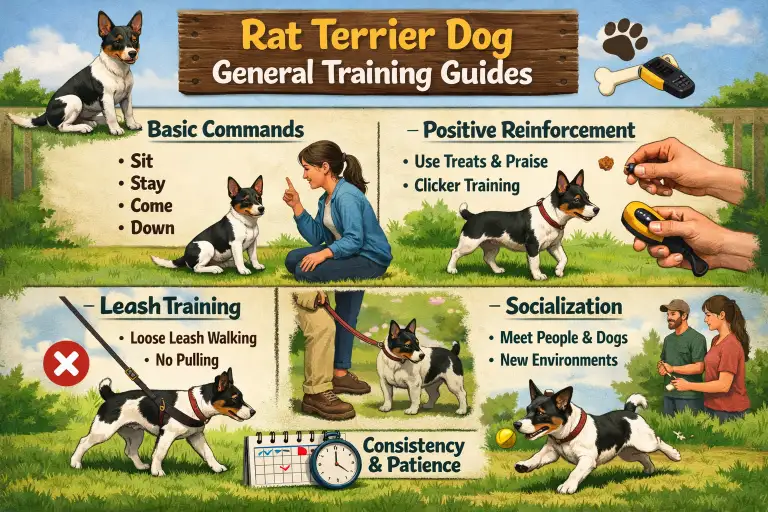
Rat Terrier training isn’t about forcing obedience—it’s about channeling intelligence, energy, and instinct in the right direction. This guide is designed to help you understand how to train a Rat Terrier effectively, whether you’re raising a young puppy, working with an energetic adolescent, or retraining an adult or rescue dog.
Recommended Dog Care Products
Based on your dog’s age, these products may help with comfort, health, grooming, and daily care.

Purina Pro Plan Veterinary Supplements
Daily probiotics for dogs to support digestive and gut health.
View on Amazon ↗
Earth Rated Poop Bags for Dogs
Leak-proof, extra thick waste bag refill rolls with lavender scent.
View on Amazon ↗
Greenies Pill Pockets for Dogs
Large dog treats for capsule medication, peanut butter flavor.
View on Amazon ↗
HONEY CARE All-Absorb Dog Wrap
Small male dog wraps, 50 count, useful for daily care support.
View on Amazon ↗
Seresto Flea & Tick Collar
Flea and tick treatment and prevention for dogs over 18 lbs.
View on Amazon ↗
Milk-Bone MaroSnacks
Small dog treats with real bone marrow in a 40 oz canister.
View on Amazon ↗
Vital Essentials Dog Treats
Freeze dried beef liver dog treats, grain free and single ingredient.
View on Amazon ↗
Stain & Odor Eliminator
Enzyme cleaner for pet stains, carpet messes, and strong odors.
View on Amazon ↗
Pur Luv Chicken Jerky Treats
Dog treats made with real chicken breast, high protein and chew-friendly.
View on Amazon ↗
Milk-Bone Flavor Snacks
Mini crunchy dog biscuits in a 36 oz canister for small rewards.
View on Amazon ↗As an Amazon Associate, we may earn from qualifying purchases.
Rat Terriers are smart, fast learners, but they’re also independent thinkers with strong prey drive and high alertness. That combination means generic “one-size-fits-all” dog training advice often falls short. Owners frequently describe them as stubborn or hard to train, when in reality, the training approach simply doesn’t match how this breed learns.
In this guide, you’ll learn practical, science-backed Rat Terrier training methods that work in real homes—not just in ideal training environments. The focus is on building focus, impulse control, and reliable obedience using positive reinforcement, clear structure, and realistic expectations.
By the end, you’ll understand what motivates Rat Terriers, how long training actually takes, which problems are normal for the breed, and how to set up a training routine that fits everyday life. Whether your goal is better recall, calmer behavior indoors, or simply a dog that listens the first time, this guide lays the foundation for long-term success.
Understanding Rat Terrier Behavior and Trainability
To train a Rat Terrier well, you must first understand how this breed thinks and reacts. Rat Terriers were bred to hunt small animals, make quick decisions, and work independently. These traits make them smart and alert, but they also explain why they can ignore commands when something more exciting appears.
Rat Terriers learn fast, but they get bored just as fast. Repeating the same command again and again often leads to frustration for both the dog and the owner. This breed responds best to short, clear training sessions with rewards that truly matter to them, such as treats, toys, or playtime.
Another important trait is prey drive. Moving objects like squirrels, cats, or even leaves can pull a Rat Terrier’s attention away instantly. This does not mean the dog is being disobedient. It means their brain is doing exactly what it was designed to do. Training must focus on impulse control and attention, not punishment.
Rat Terriers are also very aware of sounds and movement. This makes them good watchdogs but can lead to barking if training is inconsistent. Calm guidance, early social exposure, and clear rules help prevent problem behaviors from becoming habits.
Environment plays a big role in how well a Rat Terrier trains. A quiet home, a busy household, or a multi-pet setting all change how your dog responds. Training usually goes faster in low-distraction areas and needs to progress slowly to more challenging places.
Below is a quick table that shows common Rat Terrier traits and how they affect training.
Recommended Dog Care Products
Based on your dog’s age, these products may help with comfort, health, grooming, and daily care.
Purina Pro Plan Veterinary Supplements
Daily probiotics for dogs to support digestive and gut health.
View on Amazon ↗
Earth Rated Poop Bags for Dogs
Leak-proof, extra thick waste bag refill rolls with lavender scent.
View on Amazon ↗
Greenies Pill Pockets for Dogs
Large dog treats for capsule medication, peanut butter flavor.
View on Amazon ↗
HONEY CARE All-Absorb Dog Wrap
Small male dog wraps, 50 count, useful for daily care support.
View on Amazon ↗
Seresto Flea & Tick Collar
Flea and tick treatment and prevention for dogs over 18 lbs.
View on Amazon ↗
Milk-Bone MaroSnacks
Small dog treats with real bone marrow in a 40 oz canister.
View on Amazon ↗
Vital Essentials Dog Treats
Freeze dried beef liver dog treats, grain free and single ingredient.
View on Amazon ↗
Stain & Odor Eliminator
Enzyme cleaner for pet stains, carpet messes, and strong odors.
View on Amazon ↗
Pur Luv Chicken Jerky Treats
Dog treats made with real chicken breast, high protein and chew-friendly.
View on Amazon ↗
Milk-Bone Flavor Snacks
Mini crunchy dog biscuits in a 36 oz canister for small rewards.
View on Amazon ↗As an Amazon Associate, we may earn from qualifying purchases.
| Rat Terrier Trait | What It Means | How It Affects Training |
|---|---|---|
| High intelligence | Learns quickly | Needs mental challenge and variety |
| Strong prey drive | Chases moving things | Requires impulse control training |
| Independent nature | Thinks for itself | Needs clear rewards and consistency |
| High energy | Gets restless easily | Needs daily exercise before training |
| Alert and vocal | Notices every sound | Needs calm exposure and structure |
Understanding these traits helps you train smarter, not harder. When training matches the breed’s natural behavior, progress feels smoother and more predictable.
How to Train a Rat Terrier Step by Step
Training a Rat Terrier works best when it is simple, clear, and consistent. This breed learns fast, but only when training feels rewarding and fair. Short daily sessions are better than long ones. Most Rat Terriers do best with 5 to 10 minutes per session, two to three times a day.
Start training in a quiet place with very few distractions. Once your dog understands a skill at home, slowly practice it outside or around other people and pets. Going too fast is one of the most common reasons training fails.
Always reward the behavior you want as soon as it happens. Timing matters. Give the treat or praise within one second so your dog connects the reward to the action. Harsh corrections often cause confusion and reduce trust, especially in sensitive or smart dogs like Rat Terriers.
Focus training comes before commands. If your dog cannot look at you when you say their name, they are not ready for harder skills. Build attention first, then move to obedience.
These skills should be trained first because they support all other training:
- Responding to name
- Sit and down
- Loose leash walking
- Come when called
- Waiting calmly before moving
Puppies learn faster but need more breaks. Adult Rat Terriers can still learn very well, but progress may be slower if bad habits are already formed. Patience and steady practice matter more than age.
The table below shows a simple daily training plan that works for most Rat Terriers.
| Training Step | What to Do | Time Needed | Goal |
|---|---|---|---|
| Focus training | Reward eye contact and name response | 2–3 minutes | Build attention |
| Basic commands | Sit, down, stay | 3–5 minutes | Clear communication |
| Leash practice | Walk calmly indoors or yard | 5 minutes | Reduce pulling |
| Recall games | Short “come” practice | 3–5 minutes | Improve response |
| Play reward | Tug or fetch | 2–3 minutes | Keep training fun |
Consistency is more important than perfection. Even small daily practice leads to steady improvement over time.
Common Rat Terrier Training Problems and How to Fix Them
Rat Terriers are smart dogs, but their strong instincts can cause training problems if they are not guided the right way. Most issues come from confusion, not bad behavior. Knowing why the problem happens makes it easier to fix.
Recommended Dog Care Products
Based on your dog’s age, these products may help with comfort, health, grooming, and daily care.
Purina Pro Plan Veterinary Supplements
Daily probiotics for dogs to support digestive and gut health.
View on Amazon ↗
Earth Rated Poop Bags for Dogs
Leak-proof, extra thick waste bag refill rolls with lavender scent.
View on Amazon ↗
Greenies Pill Pockets for Dogs
Large dog treats for capsule medication, peanut butter flavor.
View on Amazon ↗
HONEY CARE All-Absorb Dog Wrap
Small male dog wraps, 50 count, useful for daily care support.
View on Amazon ↗
Seresto Flea & Tick Collar
Flea and tick treatment and prevention for dogs over 18 lbs.
View on Amazon ↗
Milk-Bone MaroSnacks
Small dog treats with real bone marrow in a 40 oz canister.
View on Amazon ↗
Vital Essentials Dog Treats
Freeze dried beef liver dog treats, grain free and single ingredient.
View on Amazon ↗
Stain & Odor Eliminator
Enzyme cleaner for pet stains, carpet messes, and strong odors.
View on Amazon ↗
Pur Luv Chicken Jerky Treats
Dog treats made with real chicken breast, high protein and chew-friendly.
View on Amazon ↗
Milk-Bone Flavor Snacks
Mini crunchy dog biscuits in a 36 oz canister for small rewards.
View on Amazon ↗As an Amazon Associate, we may earn from qualifying purchases.
One common problem is ignoring commands, especially outside. This usually happens because the area is too exciting. The fix is to go back to easier places and practice again. Slowly add more distractions instead of jumping straight to busy parks.
Chasing moving things is another challenge. Squirrels, birds, or fast toys can take over your dog’s focus. Teaching impulse control and recall in low-distraction areas helps. Never punish chasing. Instead, reward calm choices and eye contact.
Excessive barking often comes from alert behavior or boredom. Rat Terriers notice everything. Calm exposure to sounds, clear rules, and enough daily exercise reduce barking over time.
Some owners label Rat Terriers as stubborn. In most cases, the dog does not understand what is being asked or the reward is not strong enough. Clear cues, better timing, and higher-value rewards usually solve the issue.
Many training setbacks come from common owner mistakes, such as:
- Repeating commands too many times
- Training when the dog has too much energy
- Skipping daily practice
- Changing rules from day to day
The table below shows common problems and simple fixes.
| Training Problem | Why It Happens | Simple Fix |
|---|---|---|
| Ignores commands | Too many distractions | Train in quiet areas first |
| Pulls on leash | Excitement or lack of practice | Short, calm leash sessions |
| Chasing animals | Strong prey drive | Teach focus and recall |
| Excessive barking | Alert nature or boredom | Increase exercise and calm exposure |
| “Stubborn” behavior | Confusion or weak rewards | Use clearer cues and better rewards |
Fixing problems takes time, but steady practice leads to progress. Most issues improve when training becomes more consistent and clear.
Rat Terrier Training Timeline and When to Get Help
Training a Rat Terrier does not happen overnight. This breed learns fast, but real progress comes from daily practice and patience. Knowing what to expect helps owners stay calm and motivated.
In the first few weeks, most Rat Terriers begin to understand basic commands like sit, name response, and short leash walking. This stage is about building trust and focus, not perfection. Mistakes are normal.
After one to three months of steady training, many dogs show better listening skills at home and improved behavior indoors. Outdoor training may still feel difficult, especially around animals or noise. This is normal for Rat Terriers and does not mean training has failed.
Recommended Dog Care Products
Based on your dog’s age, these products may help with comfort, health, grooming, and daily care.
Purina Pro Plan Veterinary Supplements
Daily probiotics for dogs to support digestive and gut health.
View on Amazon ↗
Earth Rated Poop Bags for Dogs
Leak-proof, extra thick waste bag refill rolls with lavender scent.
View on Amazon ↗
Greenies Pill Pockets for Dogs
Large dog treats for capsule medication, peanut butter flavor.
View on Amazon ↗
HONEY CARE All-Absorb Dog Wrap
Small male dog wraps, 50 count, useful for daily care support.
View on Amazon ↗
Seresto Flea & Tick Collar
Flea and tick treatment and prevention for dogs over 18 lbs.
View on Amazon ↗
Milk-Bone MaroSnacks
Small dog treats with real bone marrow in a 40 oz canister.
View on Amazon ↗
Vital Essentials Dog Treats
Freeze dried beef liver dog treats, grain free and single ingredient.
View on Amazon ↗
Stain & Odor Eliminator
Enzyme cleaner for pet stains, carpet messes, and strong odors.
View on Amazon ↗
Pur Luv Chicken Jerky Treats
Dog treats made with real chicken breast, high protein and chew-friendly.
View on Amazon ↗
Milk-Bone Flavor Snacks
Mini crunchy dog biscuits in a 36 oz canister for small rewards.
View on Amazon ↗As an Amazon Associate, we may earn from qualifying purchases.
By three to six months, most dogs can follow basic commands in many settings if training has been consistent. Recall and impulse control usually take the longest because of the breed’s strong prey drive.
The table below shows a simple training timeline and what progress may look like.
| Training Stage | Time Frame | What to Expect |
|---|---|---|
| Early training | 1–4 weeks | Learns name, basic commands indoors |
| Building habits | 1–3 months | Better focus, calmer behavior at home |
| Skill improvement | 3–6 months | Improved recall, better leash manners |
| Long-term training | 6+ months | Reliable behavior with regular practice |
Sometimes, training does not improve even with effort. It may be time to get help if:
- Your dog shows fear, panic, or aggression
- Barking or chasing gets worse
- Your dog refuses food or shuts down during training
- Progress completely stops for several weeks
A professional dog trainer or behavior expert can help identify the problem and adjust the training plan. Early help often prevents bigger behavior issues later.
With patience, structure, and the right approach, most Rat Terriers become well-trained, confident dogs.
“For more detailed information about this breed, visit the American Kennel Club’s official breed page.”

Ata Ur Rehman is the founder of Pet Age in Human Years Calculator, an educational platform that provides age conversion charts and lifespan guides for dogs, cats, birds, and other companion animals. His work focuses on helping pet owners understand how animal ages translate into human years using commonly accepted age conversion formulas and published lifespan averages.
The website compiles breed and species lifespan data from kennel clubs, breed organizations, and general animal lifespan studies to present simple and easy-to-understand guides for pet owners worldwide.
This website was created to centralize animal age conversion charts into one easy reference platform for pet owners.