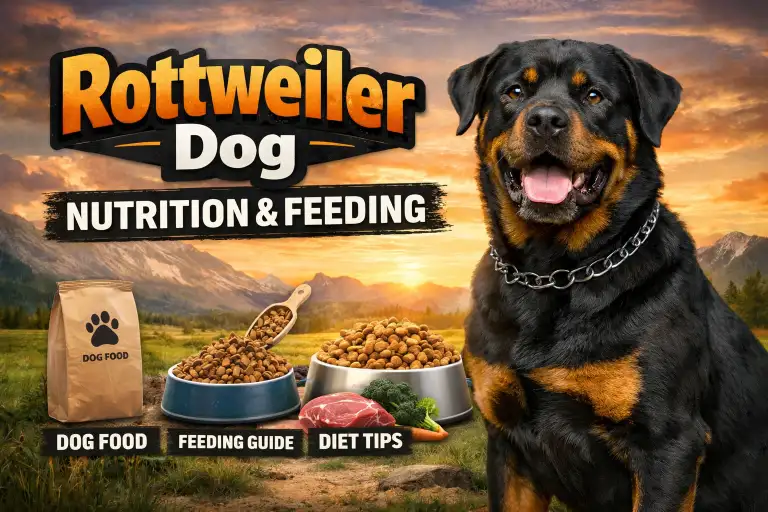
Rottweilers are not a “feed-any-large-dog” breed. Their size, muscle density, growth rate, and tendency to gain weight mean that nutrition plays a direct role in how well they move, age, and stay healthy over their lifetime. Feeding mistakes that might only cause mild weight gain in other breeds can quickly translate into joint stress, reduced stamina, and metabolic problems in a Rottweiler.
Recommended Dog Care Products
Based on your dog’s age, these products may help with comfort, health, grooming, and daily care.

Purina Pro Plan Veterinary Supplements
Daily probiotics for dogs to support digestive and gut health.
View on Amazon ↗
Earth Rated Poop Bags for Dogs
Leak-proof, extra thick waste bag refill rolls with lavender scent.
View on Amazon ↗
Greenies Pill Pockets for Dogs
Large dog treats for capsule medication, peanut butter flavor.
View on Amazon ↗
HONEY CARE All-Absorb Dog Wrap
Small male dog wraps, 50 count, useful for daily care support.
View on Amazon ↗
Seresto Flea & Tick Collar
Flea and tick treatment and prevention for dogs over 18 lbs.
View on Amazon ↗
Milk-Bone MaroSnacks
Small dog treats with real bone marrow in a 40 oz canister.
View on Amazon ↗
Vital Essentials Dog Treats
Freeze dried beef liver dog treats, grain free and single ingredient.
View on Amazon ↗
Stain & Odor Eliminator
Enzyme cleaner for pet stains, carpet messes, and strong odors.
View on Amazon ↗
Pur Luv Chicken Jerky Treats
Dog treats made with real chicken breast, high protein and chew-friendly.
View on Amazon ↗
Milk-Bone Flavor Snacks
Mini crunchy dog biscuits in a 36 oz canister for small rewards.
View on Amazon ↗As an Amazon Associate, we may earn from qualifying purchases.
One of the biggest nutritional risks for this breed starts early. Rottweiler puppies grow fast, but their bones and joints mature slowly. Diets that are too high in calories, calcium, or poorly balanced minerals can push growth faster than the skeleton can safely support. This is why large-breed-appropriate nutrition matters more for Rottweilers than for smaller dogs. Proper feeding helps control growth rate, protect developing joints, and reduce the risk of long-term orthopedic issues.
In adult Rottweilers, nutrition becomes a balancing act between maintaining lean muscle and preventing excess body fat. Rottweilers are powerful dogs with naturally strong appetites, and many are less active than owners assume once puppyhood ends. Overfeeding, free-feeding, or relying too heavily on treats often leads to gradual weight gain that owners don’t notice until mobility or endurance starts to decline. Excess weight places constant strain on hips, elbows, knees, and the spine, shortening a Rottweiler’s healthy, active years.
Diet also influences more than just body weight. The right balance of protein, fats, and micronutrients supports muscle recovery, skin and coat health, immune function, and even behavior and energy levels. Poor-quality diets or inconsistent feeding routines can contribute to digestive issues, chronic soft stool, dull coats, and fluctuating energy, all of which are common complaints among Rottweiler owners.
This guide is designed to help you make feeding decisions that match how Rottweilers actually live — from fast-growing puppies to muscular adults and slower-moving seniors. By understanding why nutrition matters for this breed specifically, you’ll be better equipped to choose the right food, feed the right amount, and adjust your dog’s diet as their needs change over time.
Core Nutritional Needs of a Rottweiler
Rottweilers need food that supports strong muscles, healthy joints, and steady energy without causing weight gain. Because they are a large, powerful breed, their nutrition must be balanced, not extreme. Too much of the wrong nutrient can be just as harmful as too little.
Below are the key parts of a healthy Rottweiler diet, explained in simple terms.
Protein is the most important nutrient for a Rottweiler. It helps build muscle, supports the immune system, and keeps the body strong.
Rottweilers do best with moderate to high-quality protein, not the highest possible number.
| Life Stage | Recommended Protein Range |
|---|---|
| Puppy (large-breed formula) | 22–26% |
| Adult Rottweiler | 22–28% |
| Senior Rottweiler | 20–25% |
Good protein sources include chicken, turkey, beef, lamb, fish, and eggs. The quality of protein matters more than the label number.
Recommended Dog Care Products
Based on your dog’s age, these products may help with comfort, health, grooming, and daily care.
Purina Pro Plan Veterinary Supplements
Daily probiotics for dogs to support digestive and gut health.
View on Amazon ↗
Earth Rated Poop Bags for Dogs
Leak-proof, extra thick waste bag refill rolls with lavender scent.
View on Amazon ↗
Greenies Pill Pockets for Dogs
Large dog treats for capsule medication, peanut butter flavor.
View on Amazon ↗
HONEY CARE All-Absorb Dog Wrap
Small male dog wraps, 50 count, useful for daily care support.
View on Amazon ↗
Seresto Flea & Tick Collar
Flea and tick treatment and prevention for dogs over 18 lbs.
View on Amazon ↗
Milk-Bone MaroSnacks
Small dog treats with real bone marrow in a 40 oz canister.
View on Amazon ↗
Vital Essentials Dog Treats
Freeze dried beef liver dog treats, grain free and single ingredient.
View on Amazon ↗
Stain & Odor Eliminator
Enzyme cleaner for pet stains, carpet messes, and strong odors.
View on Amazon ↗
Pur Luv Chicken Jerky Treats
Dog treats made with real chicken breast, high protein and chew-friendly.
View on Amazon ↗
Milk-Bone Flavor Snacks
Mini crunchy dog biscuits in a 36 oz canister for small rewards.
View on Amazon ↗As an Amazon Associate, we may earn from qualifying purchases.
Fats: Energy Without Excess Weight
Fats give energy and help keep the skin and coat healthy. But Rottweilers gain weight easily, so fat levels must be controlled.
| Dog Type | Ideal Fat Range |
|---|---|
| Puppy | 10–14% |
| Adult | 10–15% |
| Overweight / Low-activity | 8–12% |
Omega-3 fats (from fish oil or fish-based foods) are especially helpful for joints and inflammation.
Carbohydrates & Fiber: Digestion and Fullness
Carbohydrates give energy and fiber helps digestion. Rottweilers do not need high-carb diets, but they do benefit from digestible carbs and fiber.
Common healthy sources:
- Brown rice
- Oats
- Sweet potatoes
- Barley
- Pumpkin
Fiber helps Rottweilers feel full, which reduces begging and overeating.
Minerals: Very Important for Large Breeds
Minerals matter a lot for Rottweilers, especially calcium and phosphorus. Too much can damage joints, especially in puppies.
| Mineral | Why It Matters |
|---|---|
| Calcium | Bone strength |
| Phosphorus | Bone balance |
| Zinc | Skin and coat health |
| Selenium | Immune support |
Rottweiler puppies should never eat adult dog food or extra calcium unless a vet says so.
Vitamins & Supplements: Use With Care
Most complete dog foods already contain the vitamins a Rottweiler needs. Adding supplements without advice can cause harm.
Recommended Dog Care Products
Based on your dog’s age, these products may help with comfort, health, grooming, and daily care.
Purina Pro Plan Veterinary Supplements
Daily probiotics for dogs to support digestive and gut health.
View on Amazon ↗
Earth Rated Poop Bags for Dogs
Leak-proof, extra thick waste bag refill rolls with lavender scent.
View on Amazon ↗
Greenies Pill Pockets for Dogs
Large dog treats for capsule medication, peanut butter flavor.
View on Amazon ↗
HONEY CARE All-Absorb Dog Wrap
Small male dog wraps, 50 count, useful for daily care support.
View on Amazon ↗
Seresto Flea & Tick Collar
Flea and tick treatment and prevention for dogs over 18 lbs.
View on Amazon ↗
Milk-Bone MaroSnacks
Small dog treats with real bone marrow in a 40 oz canister.
View on Amazon ↗
Vital Essentials Dog Treats
Freeze dried beef liver dog treats, grain free and single ingredient.
View on Amazon ↗
Stain & Odor Eliminator
Enzyme cleaner for pet stains, carpet messes, and strong odors.
View on Amazon ↗
Pur Luv Chicken Jerky Treats
Dog treats made with real chicken breast, high protein and chew-friendly.
View on Amazon ↗
Milk-Bone Flavor Snacks
Mini crunchy dog biscuits in a 36 oz canister for small rewards.
View on Amazon ↗As an Amazon Associate, we may earn from qualifying purchases.
Supplements may help only when:
- A vet confirms a deficiency
- The dog has joint disease or arthritis
- The dog eats a properly planned homemade diet
Never add supplements just because they sound “healthy.”
How Much to Feed a Rottweiler (By Age, Size, and Activity)
Feeding the right amount is just as important as choosing the right food. Rottweilers often eat more than they need if portions are not controlled. Over time, this can lead to weight gain and joint problems. The goal is to keep your dog strong and lean, not heavy.
Below are simple feeding guidelines to help you start. These are general ranges, not exact rules. Every Rottweiler is a little different.
Calories depend on body weight and activity level.
| Rottweiler Weight | Low Activity | Moderate Activity | High Activity |
|---|---|---|---|
| 70 lbs (32 kg) | 1,300–1,500 | 1,600–1,800 | 1,900–2,100 |
| 90 lbs (41 kg) | 1,600–1,800 | 1,900–2,200 | 2,300–2,600 |
| 110 lbs (50 kg) | 1,900–2,100 | 2,300–2,600 | 2,800–3,100 |
Low activity means short walks and mostly indoor time.
High activity includes working dogs, training, or long daily exercise.
Feeding Amounts by Life Stage
Rottweiler puppies need more meals, but controlled portions. Adults need steady amounts. Seniors usually need fewer calories.
| Life Stage | Meals Per Day | Notes |
|---|---|---|
| Puppy (8 weeks–6 months) | 3–4 meals | Supports growth without stress on joints |
| Puppy (6–18 months) | 2–3 meals | Large-breed puppy food only |
| Adult | 2 meals | Helps control hunger and digestion |
| Senior | 2 smaller meals | Lower calories, easier digestion |
Best Food Choices for Rottweilers
Rottweilers need food that supports muscle strength, joint health, and steady energy. There is no single “perfect” food for every Rottweiler. The best choice depends on age, activity level, health, and how well your dog digests food.
Below is a simple look at the main types of dog food and how they work for Rottweilers.
Recommended Dog Care Products
Based on your dog’s age, these products may help with comfort, health, grooming, and daily care.
Purina Pro Plan Veterinary Supplements
Daily probiotics for dogs to support digestive and gut health.
View on Amazon ↗
Earth Rated Poop Bags for Dogs
Leak-proof, extra thick waste bag refill rolls with lavender scent.
View on Amazon ↗
Greenies Pill Pockets for Dogs
Large dog treats for capsule medication, peanut butter flavor.
View on Amazon ↗
HONEY CARE All-Absorb Dog Wrap
Small male dog wraps, 50 count, useful for daily care support.
View on Amazon ↗
Seresto Flea & Tick Collar
Flea and tick treatment and prevention for dogs over 18 lbs.
View on Amazon ↗
Milk-Bone MaroSnacks
Small dog treats with real bone marrow in a 40 oz canister.
View on Amazon ↗
Vital Essentials Dog Treats
Freeze dried beef liver dog treats, grain free and single ingredient.
View on Amazon ↗
Stain & Odor Eliminator
Enzyme cleaner for pet stains, carpet messes, and strong odors.
View on Amazon ↗
Pur Luv Chicken Jerky Treats
Dog treats made with real chicken breast, high protein and chew-friendly.
View on Amazon ↗
Milk-Bone Flavor Snacks
Mini crunchy dog biscuits in a 36 oz canister for small rewards.
View on Amazon ↗As an Amazon Associate, we may earn from qualifying purchases.
Common Dog Food Types for Rottweilers
| Food Type | Good For | Things to Watch |
|---|---|---|
| Dry kibble | Daily feeding, easy storage, dental health | Choose large-breed formulas |
| Canned food | Picky eaters, hydration | Higher calories per cup |
| Fresh food | High digestibility, better taste | Higher cost, storage needs |
| Freeze-dried | Travel, mixing with kibble | Must be rehydrated |
| Raw food | Some active dogs | Safety risks if not balanced |
| Homemade | Full control of ingredients | Must be vet-formulated |
Dry kibble made for large breeds is the most practical and safest option for most Rottweilers.
Large-Breed Formulas Matter
Large-breed foods control calorie density and mineral balance. This helps protect joints and bones, especially in puppies.
Avoid foods labeled only as “all life stages” unless they clearly state large-breed growth support.
Grain-Free vs Grain-Inclusive Diets
Some owners choose grain-free food due to allergies or beliefs. Most Rottweilers do not need grain-free diets.
| Diet Type | Notes |
|---|---|
| Grain-inclusive | Safe for most Rottweilers |
| Grain-free | Use only if medically needed |
Certain grain-free diets have been linked to heart problems in some dogs. Always talk to a vet before switching.
How to Read a Dog Food Label
When choosing food, look for:
- Named meat as the first ingredient
- AAFCO nutritional adequacy statement
- Fat and protein levels suited for large breeds
- Clear feeding instructions
Avoid foods that rely heavily on fillers or vague meat sources
Safe human foods in small amounts:
- Cooked chicken or turkey
- Plain rice
- Eggs (cooked)
- Carrots and green beans
Unsafe foods include:
- Chocolate
- Grapes and raisins
- Onions and garlic
- Xylitol
Water Is Part of Nutrition
Rottweilers should always have clean water. Large dogs drink more, especially in warm weather or after exercise.
Common Feeding Problems, Special Diets, and Practical Solutions
Many Rottweiler feeding problems aren’t caused by poor-quality food but by incorrect portion sizes, sudden diet changes, or habits that slowly build over time. Rottweilers gain weight easily, especially after neutering or when daily activity drops, and signs like hard-to-feel ribs, no visible waist, or low energy usually point to overfeeding rather than hunger. Safe weight loss should always be gradual—reducing food slightly, cutting back on treats, and increasing exercise helps protect muscle mass and joint health.
Some Rottweilers also struggle with food sensitivities, which can show up as itchy skin, recurring ear infections, or loose stool. Common trigger ingredients include beef, chicken, dairy, and wheat. These issues are often manageable by choosing limited-ingredient diets, changing only one food at a time, and giving each new food at least two to three weeks before judging results, allowing the digestive system and skin time to respond.
Many Rottweilers eat too fast, which can cause choking, vomiting, or bloat risk.
| Issue | Simple Fix |
|---|---|
| Eats too fast | Use slow feeder bowl |
| Begs constantly | Measure meals, add fiber |
| Guards food | Feed in quiet space |
Some Rottweilers skip meals or wait for better food.
Helpful rules:
- Set meal times
- Remove food after 20 minutes
- Avoid topping food every day
Healthy dogs will not starve themselves.
Sudden food changes often cause diarrhea.
| Day | Old Food | New Food |
|---|---|---|
| 1–2 | 75% | 25% |
| 3–4 | 50% | 50% |
| 5–6 | 25% | 75% |
| 7 | 0% | 100% |
Feeding During Travel or Routine Changes
Bring the same food and feeding schedule when traveling. Sudden changes often upset digestion.
Get professional help if your Rottweiler:
- Loses weight without reason
- Has ongoing diarrhea or vomiting
- Refuses food for more than 48 hours
- Has joint pain or trouble standing
For official guidance on complete and balanced dog food standards, you can review the AAFCO Dog Food Nutrient Profiles, which explain how commercial diets are formulated to meet dogs’ nutritional needs: https://www.aafco.org/consumers/understanding-pet-food/nutrient-profiles/

Ata Ur Rehman is the founder of Pet Age in Human Years Calculator, an educational platform that provides age conversion charts and lifespan guides for dogs, cats, birds, and other companion animals. His work focuses on helping pet owners understand how animal ages translate into human years using commonly accepted age conversion formulas and published lifespan averages.
The website compiles breed and species lifespan data from kennel clubs, breed organizations, and general animal lifespan studies to present simple and easy-to-understand guides for pet owners worldwide.
This website was created to centralize animal age conversion charts into one easy reference platform for pet owners.