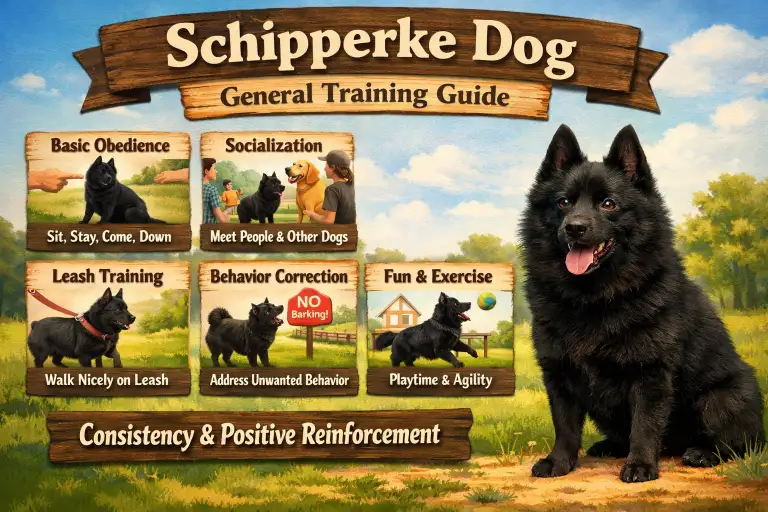
Schipperke dog training is not about forcing obedience—it’s about learning how to work with a smart, alert, and independent breed that was never meant to be passive or people-pleasing. Schipperkes were developed as small working watchdogs, and that heritage still shapes how they think, react, and learn today.
Recommended Dog Care Products
Based on your dog’s age, these products may help with comfort, health, grooming, and daily care.

Purina Pro Plan Veterinary Supplements
Daily probiotics for dogs to support digestive and gut health.
View on Amazon ↗
Earth Rated Poop Bags for Dogs
Leak-proof, extra thick waste bag refill rolls with lavender scent.
View on Amazon ↗
Greenies Pill Pockets for Dogs
Large dog treats for capsule medication, peanut butter flavor.
View on Amazon ↗
HONEY CARE All-Absorb Dog Wrap
Small male dog wraps, 50 count, useful for daily care support.
View on Amazon ↗
Seresto Flea & Tick Collar
Flea and tick treatment and prevention for dogs over 18 lbs.
View on Amazon ↗
Milk-Bone MaroSnacks
Small dog treats with real bone marrow in a 40 oz canister.
View on Amazon ↗
Vital Essentials Dog Treats
Freeze dried beef liver dog treats, grain free and single ingredient.
View on Amazon ↗
Stain & Odor Eliminator
Enzyme cleaner for pet stains, carpet messes, and strong odors.
View on Amazon ↗
Pur Luv Chicken Jerky Treats
Dog treats made with real chicken breast, high protein and chew-friendly.
View on Amazon ↗
Milk-Bone Flavor Snacks
Mini crunchy dog biscuits in a 36 oz canister for small rewards.
View on Amazon ↗As an Amazon Associate, we may earn from qualifying purchases.
If you approach training the same way you would with a highly biddable breed, you’ll likely feel frustrated. Many owners assume their Schipperke is “stubborn” or “selectively deaf,” when in reality the dog is constantly evaluating whether a behavior is worth doing. Understanding this mindset is the first step to successful training.
This guide is designed for both new and experienced owners who want practical, real-world results. Whether you’re training a Schipperke puppy or working with an adult dog that has already developed habits like excessive barking or ignoring recall, the goal is the same: build reliable communication, clear boundaries, and trust-based cooperation.
You’ll learn how Schipperkes learn, why structure matters more than repetition, and how to prevent common behavior problems before they become ingrained. With the right approach, Schipperke training becomes less of a battle and more of a partnership—one where your dog chooses to listen because it understands what’s expected and finds value in responding.
Why Schipperke Dog Training Is Different From Other Breeds
Schipperkes are smart, small, and very alert. They were bred to watch over farms and protect their homes. This makes them excellent watchdogs, but it also means they notice everything and think for themselves. If training is unclear, they can test limits, bark a lot, or ignore commands.
Unlike some other dogs, Schipperkes don’t follow orders just to please you. They need clear rules, consistency, and reasons to listen. Early training is important because habits can become set fast, especially for puppies, but even adults can learn if the right approach is used.
Here is a quick table showing the difference between a trained and untrained Schipperke:
| Behavior Area | Untrained Schipperke | Trained Schipperke |
|---|---|---|
| Barking | Barks at every sound or stranger | Barks only when necessary |
| Recall | Often ignores commands outdoors | Comes reliably when called |
| Leash Manners | Pulls or lunges | Walks calmly on a leash |
| Obedience to Commands | Chooses when to listen | Responds consistently |
| Focus & Attention | Easily distracted, wanders | Pays attention and engages in training |
| Household Rules | Tests boundaries constantly | Respects rules and understands limits |
Understanding these differences helps owners adjust training methods to fit the breed, instead of expecting them to behave like other small dogs. Clear expectations, consistency, and positive rewards make all the difference with a Schipperke.
Understanding Schipperke Temperament and Learning Style
Schipperkes are smart, curious, and independent. They like to think for themselves, which can make them seem stubborn, but really, they are just careful decision-makers. Knowing how they think makes training much easier.
Puppies learn quickly but can be easily distracted. Adult Schipperkes may already have habits, so training them takes patience and clear rules. Both need short, fun training sessions that challenge their minds.
Recommended Dog Care Products
Based on your dog’s age, these products may help with comfort, health, grooming, and daily care.
Purina Pro Plan Veterinary Supplements
Daily probiotics for dogs to support digestive and gut health.
View on Amazon ↗
Earth Rated Poop Bags for Dogs
Leak-proof, extra thick waste bag refill rolls with lavender scent.
View on Amazon ↗
Greenies Pill Pockets for Dogs
Large dog treats for capsule medication, peanut butter flavor.
View on Amazon ↗
HONEY CARE All-Absorb Dog Wrap
Small male dog wraps, 50 count, useful for daily care support.
View on Amazon ↗
Seresto Flea & Tick Collar
Flea and tick treatment and prevention for dogs over 18 lbs.
View on Amazon ↗
Milk-Bone MaroSnacks
Small dog treats with real bone marrow in a 40 oz canister.
View on Amazon ↗
Vital Essentials Dog Treats
Freeze dried beef liver dog treats, grain free and single ingredient.
View on Amazon ↗
Stain & Odor Eliminator
Enzyme cleaner for pet stains, carpet messes, and strong odors.
View on Amazon ↗
Pur Luv Chicken Jerky Treats
Dog treats made with real chicken breast, high protein and chew-friendly.
View on Amazon ↗
Milk-Bone Flavor Snacks
Mini crunchy dog biscuits in a 36 oz canister for small rewards.
View on Amazon ↗As an Amazon Associate, we may earn from qualifying purchases.
Here is a simple table showing Schipperke traits and how they affect training:
| Trait | How It Shows in Training | Training Tip |
|---|---|---|
| High Intelligence | Learns quickly, may get bored easily | Keep sessions short and varied |
| Independence | Tests limits, chooses when to obey | Use clear rules and consistent commands |
| Alertness | Notices every sound or movement | Teach when barking is allowed |
| Curiosity | Gets into things, explores a lot | Provide safe outlets and toys |
| Energy Level | Active, needs exercise | Include daily physical and mental work |
| Small Size | Can be underestimated by owners | Don’t rely on size—training must be firm |
Understanding these traits helps you plan training that works with your Schipperke, not against it. The right approach builds trust and makes learning enjoyable for both dog and owner.
Step-by-Step Schipperke Dog Training Method
Training a Schipperke works best with short, consistent sessions that mix learning and play. These dogs are smart but can get bored, so keep exercises fun and clear. Using rewards like treats, toys, or praise helps them understand what you want.
Here is a simple daily training plan example:
| Time of Day | Activity | Duration | Purpose |
|---|---|---|---|
| Morning | Basic obedience commands (sit, stay) | 5–10 min | Focus and engagement |
| Midday | Mental game (puzzle toy, scent work) | 10 min | Mental stimulation |
| Afternoon/Evening | Leash walking practice | 10–15 min | Loose-leash walking and control |
| Anytime | Recall exercises | 5 min | Reliable response outdoors |
Core skills to train every Schipperke include focus, recall, leash manners, and calm behavior around triggers.
Rewards that work well for Schipperkes:
| Reward Type | How to Use | Tip |
|---|---|---|
| Treats | Small, soft treats during learning | Use high-value treats for hard tasks |
| Toys | For fetch or tug as motivation | Rotate toys to keep interest high |
| Praise | Calm words and petting | Pair with treats for better learning |
| Play | Short fun games after training | Keeps them eager for the next session |
Adjust exercises for:
- High-energy dogs: add more active games
- Fearful dogs: start with quiet, low-stress environments
- Easily bored dogs: keep sessions varied
Short sessions repeated daily are better than long, tiring ones. Consistency, patience, and clear rewards make Schipperke training effective.
Common Schipperke Training Problems and When to Get Help
Even with consistent training, Schipperkes can develop problems if their needs aren’t met or training isn’t clear. Knowing common issues helps you fix them quickly before they become habits.
Here is a table showing typical problems, likely causes, and simple fixes:
Recommended Dog Care Products
Based on your dog’s age, these products may help with comfort, health, grooming, and daily care.
Purina Pro Plan Veterinary Supplements
Daily probiotics for dogs to support digestive and gut health.
View on Amazon ↗
Earth Rated Poop Bags for Dogs
Leak-proof, extra thick waste bag refill rolls with lavender scent.
View on Amazon ↗
Greenies Pill Pockets for Dogs
Large dog treats for capsule medication, peanut butter flavor.
View on Amazon ↗
HONEY CARE All-Absorb Dog Wrap
Small male dog wraps, 50 count, useful for daily care support.
View on Amazon ↗
Seresto Flea & Tick Collar
Flea and tick treatment and prevention for dogs over 18 lbs.
View on Amazon ↗
Milk-Bone MaroSnacks
Small dog treats with real bone marrow in a 40 oz canister.
View on Amazon ↗
Vital Essentials Dog Treats
Freeze dried beef liver dog treats, grain free and single ingredient.
View on Amazon ↗
Stain & Odor Eliminator
Enzyme cleaner for pet stains, carpet messes, and strong odors.
View on Amazon ↗
Pur Luv Chicken Jerky Treats
Dog treats made with real chicken breast, high protein and chew-friendly.
View on Amazon ↗
Milk-Bone Flavor Snacks
Mini crunchy dog biscuits in a 36 oz canister for small rewards.
View on Amazon ↗As an Amazon Associate, we may earn from qualifying purchases.
| Problem | Likely Cause | Quick Fix |
|---|---|---|
| Excessive barking | Alertness, boredom, or anxiety | Teach “quiet” command, provide mental stimulation |
| Ignoring recall outdoors | Distraction or low motivation | Use high-value rewards, practice in safe, low-distraction areas |
| Leash pulling | Excitement or lack of loose-leash training | Stop, redirect, reward calm walking |
| Stubborn behavior | Confusing rules or inconsistent training | Keep commands clear, reward compliance |
| Testing boundaries | Independence, seeking control | Set firm limits, consistent routines |
Owner mistakes that slow progress: skipping sessions, inconsistent rewards, or punishing mistakes instead of guiding behavior.
“For more detailed information about this breed, visit the American Kennel Club’s official breed page.”

Ata Ur Rehman is the founder of Pet Age in Human Years Calculator, an educational platform that provides age conversion charts and lifespan guides for dogs, cats, birds, and other companion animals. His work focuses on helping pet owners understand how animal ages translate into human years using commonly accepted age conversion formulas and published lifespan averages.
The website compiles breed and species lifespan data from kennel clubs, breed organizations, and general animal lifespan studies to present simple and easy-to-understand guides for pet owners worldwide.
This website was created to centralize animal age conversion charts into one easy reference platform for pet owners.