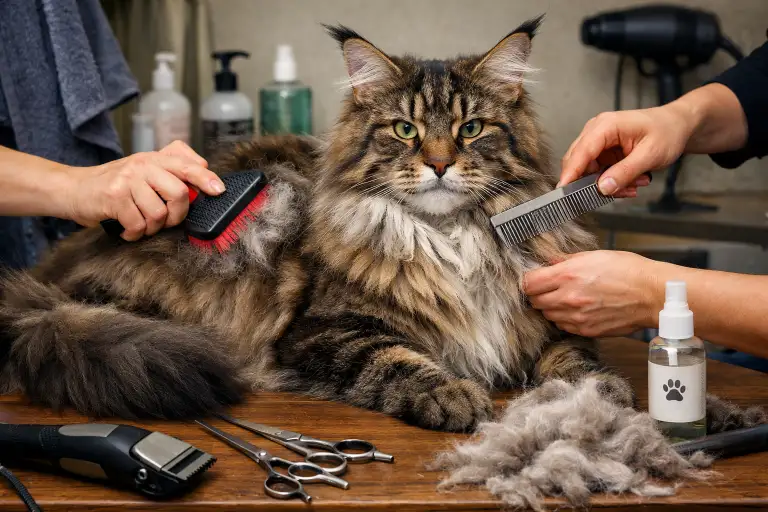
Maine Coon grooming is not optional, even though cats groom themselves. Maine Coons have long, thick fur with a heavy undercoat. This coat traps loose hair, dirt, and oils very easily. Without help from the owner, the fur can turn into painful mats that pull on the skin.
Many new owners think Maine Coons are “low effort” because they look calm and relaxed. In reality, their size and coat mean they need more grooming than short-haired cats. Grooming is not only about looks. It protects the skin, reduces hairballs, and helps you notice problems early.
Regular grooming also builds trust. When done gently, it becomes a calm routine instead of a fight. Cats that are groomed from a young age are usually more relaxed during vet visits and nail trims later in life.
Skipping grooming often leads to hidden problems. Mats can form under the arms or on the belly where owners do not look often. These mats can cause skin pain, limit movement, and even hide wounds or infections.
Brushing and Coat Care for Maine Coons
Brushing is the most important part of Maine Coon grooming. Their fur sheds all year, with heavy shedding in spring and fall. Brushing removes loose hair before it turns into mats or hairballs.
Always brush gently and slowly. Pulling or brushing too hard can hurt the skin and make your cat fear grooming. Short sessions work better than long ones. Even five minutes a day can make a big difference.
Some areas need more attention than others. Mats often form where the cat moves the most. These spots should be checked often, even if the rest of the coat looks fine.
Never cut mats close to the skin at home. Cat skin is thin and easy to injure. If a mat feels tight or painful, it is safer to stop and seek professional help.
Maine Coon Brushing Guide
| Body Area | Mat Risk | How Often to Brush | Notes |
|---|---|---|---|
| Neck and chest | Medium | 2–3 times a week | Fur is thick and dense |
| Underarms | High | Every other day | Common hidden mat area |
| Belly | High | Every other day | Be gentle, very sensitive |
| Back and sides | Low | 1–2 times a week | Easier area to brush |
| Tail | Medium | 1–2 times a week | Do not pull |
Nail Trimming, Bathing, and Basic Hygiene
Maine Coon nails grow fast and are thick. If not trimmed, they can snag on carpets or grow too long and affect walking. Nail trimming should be calm and quick. Trim only the sharp tip, never the pink area inside the nail.
Bathing is not needed often. Most Maine Coons do fine with only occasional baths. A bath may be helpful if the coat is greasy, dirty, or has something stuck in it. Too many baths can dry out the skin and make the coat worse.
Ear and eye care should be simple. Wipe only what you can see. Never push anything deep into the ear. Eye discharge should be cleaned gently with a soft, damp cloth.
Dental care matters too. Mouth pain can make cats hate grooming because touching the face becomes uncomfortable. Healthy teeth help keep grooming sessions calm and stress free.
Grooming Frequency and Routine for Maine Coons
A grooming routine helps both the cat and the owner. When grooming happens on a regular schedule, cats feel safer and know what to expect. Routines also help owners avoid forgetting important care steps.
Indoor Maine Coons usually need less cleaning than outdoor cats, but brushing is still required. Seasonal shedding changes how often grooming is needed. During heavy shed seasons, brushing should happen more often.
Keep grooming sessions short and positive. Stop before your cat becomes annoyed. Over time, your cat may allow longer sessions naturally.
Maine Coon Grooming Frequency Chart
| Grooming Task | How Often | Indoor Cats | Outdoor Cats |
|---|---|---|---|
| Brushing | 3–5 times a week | Moderate | Frequent |
| Nail trimming | Every 2–3 weeks | Same | Same |
| Ear check | Once a week | Same | Same |
| Eye cleaning | As needed | Same | Same |
| Bathing | Only when needed | Rare | Rare to occasional |
Grooming Safety, Stress Signs, and Common Mistakes
Maine Coons are gentle, but they will show stress if grooming becomes uncomfortable. Signs include tail flicking, ears turning sideways, skin rippling, or sudden attempts to leave. These signs mean it is time to stop.
Forcing grooming can cause long-term fear. A cat that feels trapped may bite or scratch, even if it is usually calm. Safety always comes first for both the cat and the owner.
One common mistake is waiting until mats are visible. By then, the mat is already tight and painful. Another mistake is brushing only the top layer and missing the undercoat.
Professional groomers and vets are helpful when mats are severe, the cat is in pain, or grooming becomes unsafe at home. Asking for help is part of responsible ownership.
Grooming Stress and Safety Signals
| Cat Signal | Meaning | What to Do |
|---|---|---|
| Tail whipping | Growing stress | Pause grooming |
| Ears flat or sideways | Discomfort or fear | Stop session |
| Skin twitching | Overstimulation | Give a break |
| Growling or hissing | High stress | End grooming |
| Trying to escape | Fear or pain | Release cat safely |
For additional guidance on safe feline grooming practices, you can visit the American Veterinary Medical Association:
https://www.avma.org/resources-tools/pet-owners/petcare/grooming-your-cat

Ata Ur Rehman is the founder of Pet Age in Human Years Calculator, an educational platform that provides age conversion charts and lifespan guides for dogs, cats, birds, and other companion animals. His work focuses on helping pet owners understand how animal ages translate into human years using commonly accepted age conversion formulas and published lifespan averages.
The website compiles breed and species lifespan data from kennel clubs, breed organizations, and general animal lifespan studies to present simple and easy-to-understand guides for pet owners worldwide.
This website was created to centralize animal age conversion charts into one easy reference platform for pet owners.