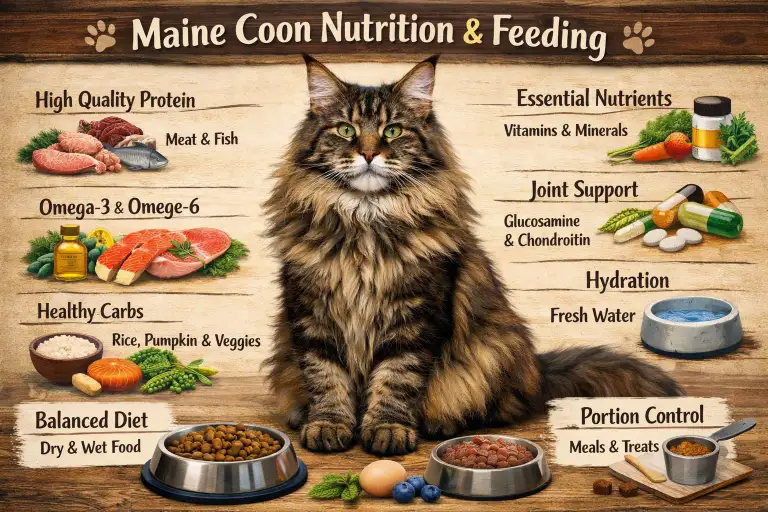
Maine Coons are large, slow-growing cats, and that size changes how their diet should be handled. Even though they eat the same types of nutrients as other cats, they usually need more total food and better balance to support muscle, joints, and overall health. Feeding them like a “regular” small cat can lead to problems over time, either too much weight or not enough nutrition.
All cats, including Maine Coons, are obligate carnivores. This means their bodies are built to get most nutrition from animal foods. Protein is the most important part of their diet because it supports strong muscles, heart function, and daily energy. For Maine Coons, good protein quality matters more than chasing very high numbers on a label.
Fat is also important. It gives energy and helps keep their long coat healthy and shiny. Too little fat can lead to dull fur and low energy, while too much can quietly add weight, especially in indoor cats. The goal is balance, not extremes.
Carbohydrates are not required for cats, but small amounts are common in commercial foods. They are not harmful when used properly, but they should not replace animal protein. Maine Coons can eat foods with some carbs, as long as meat-based ingredients are still the main focus.
What to Feed a Maine Coon (Wet, Dry, or Mixed Diets)
Many owners wonder whether wet food or dry food is better for Maine Coons. The truth is that each option has pros and cons, and the “best” choice often depends on the cat’s habits, the owner’s routine, and budget. What matters most is that the food is complete, balanced, and suitable for cats.
Wet food has high moisture content, which helps support hydration. This is helpful because cats naturally drink less water than they need. Dry food is easier to store and measure and works well for cats who like to graze. Mixed feeding uses both, giving moisture from wet food and convenience from dry food.
Instead of focusing on trends, owners should look at how their cat responds. A healthy Maine Coon should have steady energy, good muscle tone, a shiny coat, and normal digestion. Food that supports those signs is doing its job.
Below is a simple comparison to help readers skim and understand the differences.
| Feeding Type | Main Benefits | Possible Downsides | Best For |
|---|---|---|---|
| Wet Food | High moisture, strong smell, helps hydration | Higher cost, spoils faster | Cats that drink little water |
| Dry Food | Easy to store, budget friendly | Low moisture, easy to overeat | Busy households |
| Mixed Feeding | Balanced moisture and convenience | Needs portion control | Most Maine Coon owners |
How Much & How Often to Feed a Maine Coon
Because Maine Coons are big cats, owners often assume they should always get large portions. This is a common mistake. What matters more than bowl size is calorie intake and activity level. A very active Maine Coon may need more food than a calm indoor one, even if they look similar.
Some Maine Coons do well with set meal times, while others can handle free feeding. Scheduled meals help owners notice appetite changes early. Free feeding can work but makes it easier to overfeed, especially with dry food. Measuring food is always safer than guessing.
Long fur can hide weight gain, so owners should feel along the ribs and waist, not just look. If you can’t feel ribs easily or notice loss of shape, portions may need adjustment. Slow changes are better than sudden cuts.
This table gives a general, non-medical idea of feeding needs. Exact amounts vary by food type and calorie content.
| Life Stage | Meals Per Day | General Feeding Focus |
|---|---|---|
| Kitten | 3–4 meals | Growth and energy support |
| Adult | 2 meals | Muscle maintenance |
| Senior | 2 smaller meals | Easy digestion, hydration |
Feeding Maine Coons by Life Stage & Lifestyle
Maine Coon kittens grow for longer than most cats, sometimes up to four years. During this time, they need steady nutrition, not rushed growth. Food made for kittens supports this stage by providing more protein and energy without forcing rapid weight gain.
Adult Maine Coons need balanced meals that protect muscle while avoiding excess calories. Indoor cats usually need less food than outdoor or very active cats. After spaying or neutering, metabolism often slows, so portions may need to be reduced slightly.
Senior Maine Coons may eat less or become picky. Their bodies also handle nutrients differently. Moist food can help with hydration, and gentle consistency changes can support digestion. Any sudden appetite loss should be taken seriously and checked by a professional.
Here is a quick overview for easy reference.
| Stage or Lifestyle | Key Feeding Notes |
|---|---|
| Growing kitten | Higher energy, regular meals |
| Indoor adult | Portion control is important |
| Spayed/neutered | Watch for quiet weight gain |
| Senior | Focus on hydration and comfort |
Common Feeding Mistakes, Treats & Owner FAQs
One of the biggest feeding mistakes is overfeeding because Maine Coons are “supposed to be big.” Size should come from bone and muscle, not excess fat. Another mistake is changing foods too often, which can upset digestion.
Treats should stay limited. They are fine for bonding or training, but they should not make up a large part of daily calories. Many human foods are unsafe for cats, so it’s best to stick with cat-specific treats unless a food is clearly known to be safe.
Hydration is often overlooked. Even if a Maine Coon seems to drink normally, moisture from food still plays a big role in long-term health. Clean water bowls and fresh food make a difference.
Use this quick checklist to avoid common problems.
| Do | Don’t |
|---|---|
| Measure food portions | Guess based on bowl size |
| Watch body condition | Judge by fur alone |
| Limit treats | Feed table scraps |
| Provide fresh water | Rely only on dry food |
For trusted general nutrition standards used in cat food formulation, you can read more from the Association of American Feed Control Officials (AAFCO):
https://www.aafco.org

Ata Ur Rehman is the founder of Pet Age in Human Years Calculator, an educational platform that provides age conversion charts and lifespan guides for dogs, cats, birds, and other companion animals. His work focuses on helping pet owners understand how animal ages translate into human years using commonly accepted age conversion formulas and published lifespan averages.
The website compiles breed and species lifespan data from kennel clubs, breed organizations, and general animal lifespan studies to present simple and easy-to-understand guides for pet owners worldwide.
This website was created to centralize animal age conversion charts into one easy reference platform for pet owners.