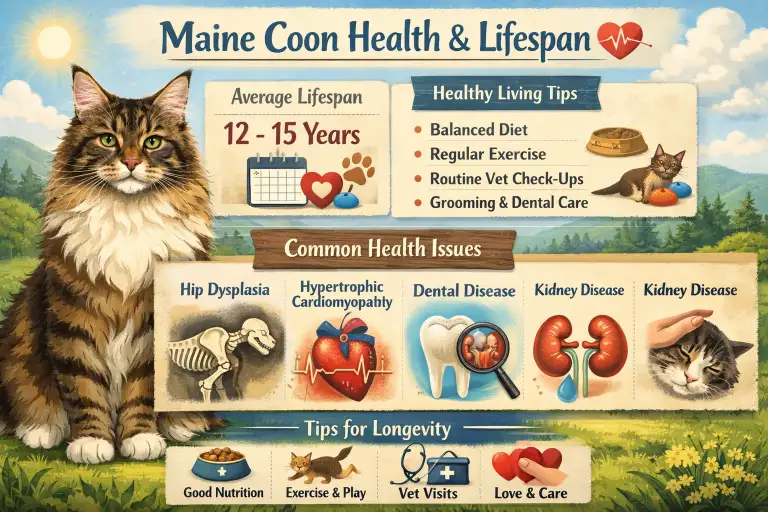
Maine Coons are known for their large size, gentle nature, and slow maturity. Many owners wonder how long these cats usually live. On average, a Maine Coon lives 12 to 15 years, and some live longer with steady care. Lifespan is a range, not a promise, and every cat is different.
Living environment matters a lot. Cats that live indoors are usually safer from accidents, fights, and infections. This often helps them live longer than cats who spend most of their time outside. Outdoor risks can shorten life, even for strong and healthy cats.
Genetics also play a role, but they are not the whole story. Two Maine Coons from the same family can have very different lifespans. Daily care, food habits, stress levels, and regular vet visits all shape long-term health.
It helps to focus less on a number and more on healthy years. A calm home, good routines, and early attention to small changes can support a longer and more comfortable life.
| Living Situation | Typical Lifespan Range |
|---|---|
| Indoor Maine Coon | 13–16 years (often longer) |
| Indoor/Outdoor Mix | 11–14 years |
| Mostly Outdoor | 8–12 years |
| Average Domestic Cat | 12–15 years |
Are Maine Coons Healthy Cats?
Maine Coons are generally strong and well-built cats. Many live full lives without serious health problems. Still, like all purebred cats, they can have certain health risks that show up more often in this breed.
“Common” health issues does not mean every Maine Coon will have them. It means owners should be aware and observant. Many problems, if noticed early, can be managed or monitored with a veterinarian’s help.
A healthy Maine Coon often shows steady energy, a good appetite, a clean coat, and a calm mood. Changes usually happen slowly, which is why owners sometimes miss early signs. Knowing your cat’s normal habits is very important.
Good breeding, proper nutrition, and routine care make a big difference. Maine Coons are not fragile cats, but their size and genetics mean they benefit from thoughtful, long-term care.
Common Maine Coon Health Issues Owners Should Be Aware Of
This section gives a high-level overview, not a diagnosis list. The goal is awareness, not worry. Many of these concerns are shared by other cats too.
Some health topics are talked about more often in Maine Coons because of their body size and genetic background. Age also matters. Certain issues are more common in adult or senior cats.
Owners should remember that cats are very good at hiding discomfort. Small changes in behavior, movement, or habits can matter more than obvious signs.
| Health Area | What It Means (General) | Often Seen At |
|---|---|---|
| Heart Health | Structural or rhythm concerns discussed in the breed | Adulthood |
| Joints & Mobility | Stiffness or reduced jumping ability | Middle age & senior |
| Dental Health | Tartar buildup and gum disease | Any age |
| Weight Issues | Easy weight gain if activity is low | Adult years |
| Kidney & Urinary Health | Changes in thirst or litter box habits | Senior years |
How Preventive Care Impacts a Maine Coon’s Health and Lifespan
Preventive care focuses on staying ahead of problems, not waiting for them to appear. Regular vet visits help build a health history for your cat. This makes small changes easier to spot.
Weight checks, dental checks, and movement observations are simple but powerful. Many serious problems begin quietly. Early detection often leads to better outcomes and less stress for both cat and owner.
Owners play a big role every day. Watching eating habits, grooming behavior, and energy levels can give early clues that something has changed.
Preventive care is not about doing more tests. It is about steady attention over time and working with a veterinarian when something feels “off.”
| Care Area | What Owners Watch | Why It Helps |
|---|---|---|
| Weight | Slow gain or loss | Signals metabolic or age changes |
| Teeth & Gums | Bad breath, drooling | Dental disease is common |
| Mobility | Hesitation to jump | Early joint changes |
| Drinking & Urination | More or less than usual | Kidney or urinary clues |
| Behavior | Hiding or irritability | Pain or stress signs |
Supporting a Healthy, Long Life for Your Maine Coon
Daily life has a strong impact on long-term health. A predictable routine, safe space, and mental stimulation help reduce stress. Maine Coons enjoy interaction but also value quiet rest.
As cats age, their needs change. Older Maine Coons may sleep more, move slower, or groom less. Some changes are normal, but sudden shifts should not be ignored.
Quality of life matters as much as lifespan. Comfort, mobility, and emotional well-being are just as important as physical health. Gentle play, easy-to-reach food, and calm handling can help senior cats stay engaged.
If something worries you, consulting a veterinarian is always the safest step. Asking questions early is better than waiting until signs become severe.
For more science-based feline health guidance, you can also visit the American Association of Feline Practitioners:
https://catvets.com

Ata Ur Rehman is the founder of Pet Age in Human Years Calculator, an educational platform that provides age conversion charts and lifespan guides for dogs, cats, birds, and other companion animals. His work focuses on helping pet owners understand how animal ages translate into human years using commonly accepted age conversion formulas and published lifespan averages.
The website compiles breed and species lifespan data from kennel clubs, breed organizations, and general animal lifespan studies to present simple and easy-to-understand guides for pet owners worldwide.
This website was created to centralize animal age conversion charts into one easy reference platform for pet owners.