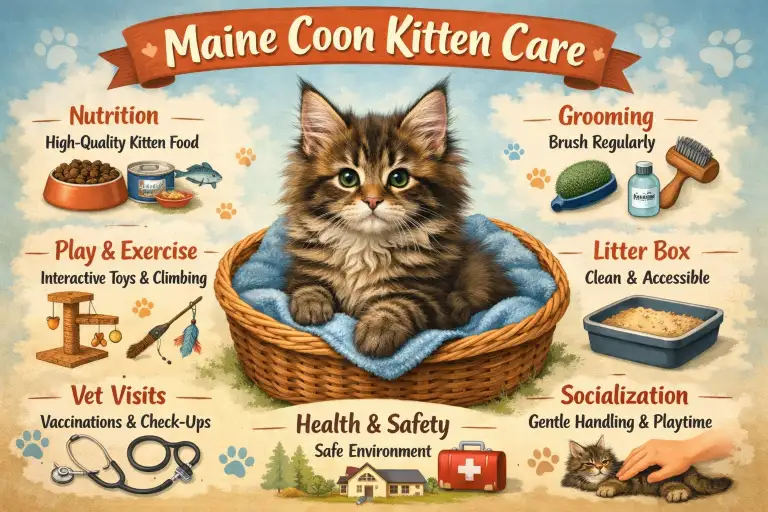
Bringing home a Maine Coon kitten is exciting, but it can also feel a little confusing at first. These kittens look bigger, grow faster, and stay playful longer than many other cats. That does not mean they are hard to care for. It just means they have a few special needs that are easy to manage once you understand them.
Maine Coon kittens are known for being friendly, gentle, and curious. Many people call them “gentle giants,” even when they are still small. Your kitten may follow you around the house, watch what you are doing, or try to join in. This is normal behavior and a sign they feel safe and interested in their new home.
One thing that surprises new owners is how long Maine Coons stay in the “kitten stage.” They grow for several years, not just one. So if your kitten seems clumsy, extra playful, or a bit silly, do not worry. This long growth period is normal for the breed.
It is also normal to feel unsure at first. You do not need to be perfect. A calm home, regular food, clean litter, playtime, and gentle care are more important than fancy tools or expert skills.
| Feature | Maine Coon Kitten | Average Kitten |
|---|---|---|
| Growth speed | Slow but steady over years | Faster, shorter growth |
| Energy level | High and playful | Moderate to high |
| Size | Larger paws and body | Smaller overall |
| Personality | Social and people-focused | Varies |
Preparing Your Home for a Maine Coon Kitten
Before your Maine Coon kitten arrives, it helps to prepare your home. This does not mean buying everything at once. It means making the space safe, calm, and easy for a growing kitten to explore.
Maine Coon kittens love to climb and stretch. Even at a young age, they may try to jump higher than you expect. Secure loose items, block small gaps, and keep breakable objects out of reach. Window screens should be strong, and cords should be tucked away.
Litter boxes are very important for this breed. Many accidents happen simply because the box is too small. A larger box gives your kitten room to turn around comfortably. Place it in a quiet area, away from loud noises and food bowls.
Scratching and climbing are normal kitten needs, not bad behavior. A sturdy scratching post or cat tree helps protect your furniture and keeps your kitten happy. Start with simple setups and add more later as your kitten grows.
| Home Item | Why It Matters |
|---|---|
| Large litter box | Prevents accidents |
| Scratching post | Protects furniture |
| Safe toys | Burns energy safely |
| Covered cords | Prevents chewing risks |
| Strong window screens | Stops falls |
Feeding and Growth Needs of a Maine Coon Kitten
Maine Coon kittens grow bigger and longer than many other cats, so feeding them properly is important. They need enough food to support growth, but not so much that they eat too fast or too often.
Most Maine Coon kittens do best with several small meals a day. Their stomachs are still small, and regular meals help keep their energy steady. Fresh water should always be available.
Wet food helps with hydration, while dry food supports chewing habits. Many owners use both. You do not need special or expensive food right away. The key is choosing kitten-labeled food and watching how your kitten responds.
Do not worry if your kitten seems hungry often. Maine Coons are active and growing. As long as your kitten is playful, alert, and gaining weight steadily, this is usually normal.
| Kitten Age | Meals Per Day |
|---|---|
| 8–12 weeks | 4 small meals |
| 3–6 months | 3 meals |
| 6–12 months | 2–3 meals |
| Age Range | Growth Notes |
|---|---|
| 2–4 months | Fast growth, big paws |
| 4–8 months | Long body stretch |
| 8–12 months | Muscles develop |
| 1–3 years | Slow, steady growth |
Behavior, Play, Sleep, and Socialization
Maine Coon kittens have a lot of energy, but they also sleep many hours a day. This mix can feel confusing. One moment they are racing around, and the next they are asleep in a strange spot. Both are normal.
Playtime is very important. It helps kittens learn boundaries and keeps them from getting bored. Use toys instead of hands, so your kitten learns not to bite or scratch people. Short play sessions spread through the day work best.
Social time matters too. Talk to your kitten, gently pick them up, and let them watch daily life. Maine Coons usually enjoy being near people, even if they are not always in your lap.
If your kitten seems shy at first, give them time. Do not force attention. Trust builds naturally with gentle handling and routine.
| Time of Day | Typical Activity |
|---|---|
| Morning | Play, eat, explore |
| Midday | Sleep |
| Afternoon | Play and social time |
| Evening | Play, eat, calm down |
| Night | Long sleep |
Grooming, Health Basics, and Long-Term Care
Maine Coon kittens have longer fur, so grooming should start early. This does not need to be long or stressful. A few minutes of brushing a couple of times a week helps your kitten get used to it.
Touch your kitten’s paws, ears, and mouth gently during calm moments. This makes future care easier and less scary. Always keep sessions short and positive.
Your first vet visit is usually about checking growth and overall health. It is a good chance to ask basic questions and make sure your kitten is developing well. You do not need to worry about every small change. Kittens grow and change quickly.
Long-term care for a Maine Coon is about patience. They stay playful for years and need space, attention, and regular routines to stay happy.
| Care Task | How Often |
|---|---|
| Brushing | 2–3 times a week |
| Nail trimming | Every few weeks |
| Ear check | Weekly |
| Vet check | As recommended |
For additional trusted information about kitten development and general care, you can visit the ASPCA’s kitten care guide:
https://www.aspca.org/pet-care/cat-care/kitten-care

Ata Ur Rehman is the founder of Pet Age in Human Years Calculator, an educational platform that provides age conversion charts and lifespan guides for dogs, cats, birds, and other companion animals. His work focuses on helping pet owners understand how animal ages translate into human years using commonly accepted age conversion formulas and published lifespan averages.
The website compiles breed and species lifespan data from kennel clubs, breed organizations, and general animal lifespan studies to present simple and easy-to-understand guides for pet owners worldwide.
This website was created to centralize animal age conversion charts into one easy reference platform for pet owners.