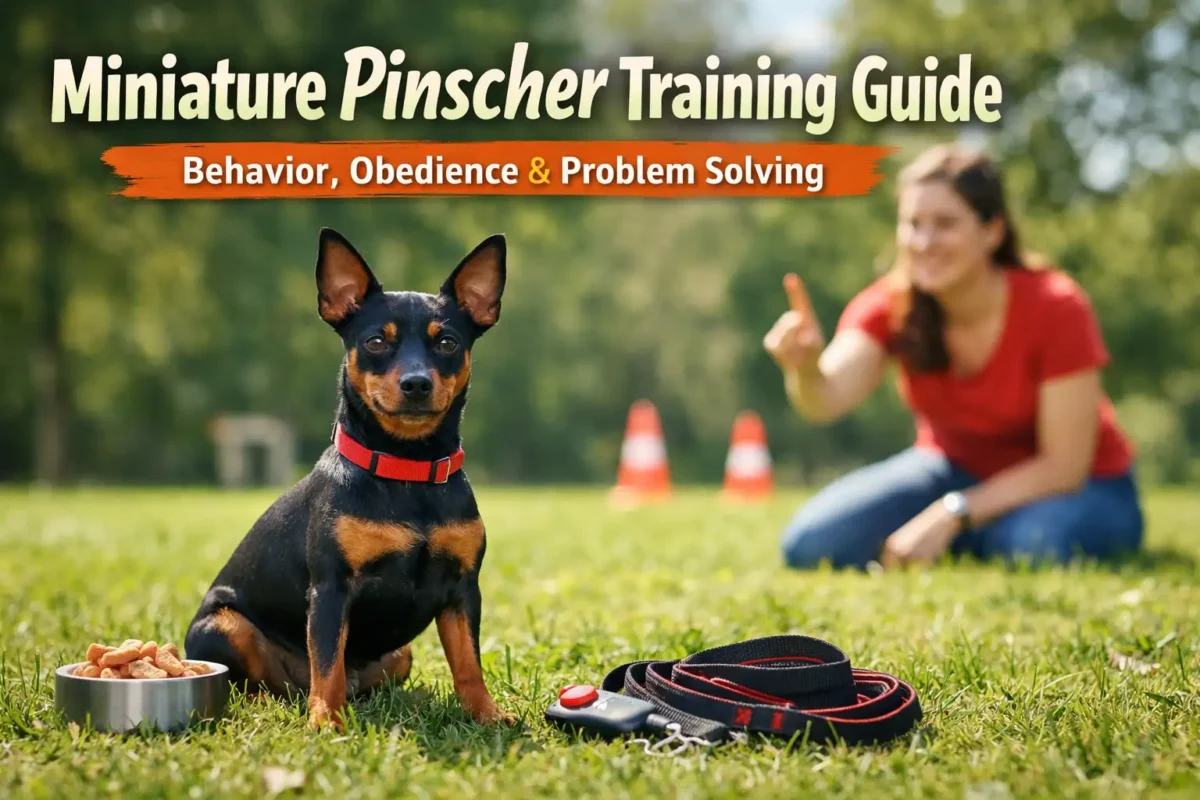
The best way to train a Miniature Pinscher is through short, reward-based sessions using treats, praise, or toys. Keep training sessions between 3–10 minutes, start in a quiet environment, and focus on basic commands like sit, stay, and come. Consistency and positive reinforcement are key to building obedience and reducing unwanted behavior.
Recommended Dog Care Products
Based on your dog’s age, these products may help with comfort, health, grooming, and daily care.

Purina Pro Plan Veterinary Supplements
Daily probiotics for dogs to support digestive and gut health.
View on Amazon ↗
Earth Rated Poop Bags for Dogs
Leak-proof, extra thick waste bag refill rolls with lavender scent.
View on Amazon ↗
Greenies Pill Pockets for Dogs
Large dog treats for capsule medication, peanut butter flavor.
View on Amazon ↗
HONEY CARE All-Absorb Dog Wrap
Small male dog wraps, 50 count, useful for daily care support.
View on Amazon ↗
Seresto Flea & Tick Collar
Flea and tick treatment and prevention for dogs over 18 lbs.
View on Amazon ↗
Milk-Bone MaroSnacks
Small dog treats with real bone marrow in a 40 oz canister.
View on Amazon ↗
Vital Essentials Dog Treats
Freeze dried beef liver dog treats, grain free and single ingredient.
View on Amazon ↗
Stain & Odor Eliminator
Enzyme cleaner for pet stains, carpet messes, and strong odors.
View on Amazon ↗
Pur Luv Chicken Jerky Treats
Dog treats made with real chicken breast, high protein and chew-friendly.
View on Amazon ↗
Milk-Bone Flavor Snacks
Mini crunchy dog biscuits in a 36 oz canister for small rewards.
View on Amazon ↗As an Amazon Associate, we may earn from qualifying purchases.
Miniature Pinschers are intelligent and energetic, which means training should focus on structure, clarity, and engagement rather than repetition. When training is predictable and motivating, Min Pins respond quickly and develop reliable behavior.
Miniature Pinschers are bold, energetic, and independent, so training can quickly become frustrating without a clear plan. With the right reward-based approach, however, they can become obedient, focused, and easier to manage at home and on walks.
This guide explains how to train a Miniature Pinscher using short sessions, clear commands, and practical methods that work for puppies, adults, and stubborn Min Pins. You’ll learn how to teach basic obedience, reduce common behavior problems, and build better daily habits through consistency and positive reinforcement.
If you’re new to the breed, you may also want to read our complete Miniature Pinscher breed guide to better understand their personality, energy level, and natural instincts before starting training.
How to Train a Miniature Pinscher (Step-by-Step)
This step-by-step approach helps your Miniature Pinscher learn faster while staying focused and engaged. Start with basic commands, build consistency, and gradually increase difficulty as your dog becomes more confident.
- Start in a quiet environment: Train your Miniature Pinscher in a calm space with no distractions so they can focus.
- Use rewards immediately: Give treats, praise, or toys right after correct behavior to reinforce learning.
- Keep sessions short: Train for 3–10 minutes to prevent boredom and maintain attention.
- Teach basic commands first: Focus on sit, stay, come, and leash walking before advanced training.
- Be consistent every day: Use the same commands and rewards so your dog learns faster.
- Slowly add distractions: Once your Min Pin understands commands, practice in more challenging environments.
If you’re unsure how your Miniature Pinscher’s personality affects training, reviewing their temperament and natural behavior can help you adjust your approach. You can learn more in this Miniature Pinscher breed guide.
Miniature Pinschers respond best when training is structured and engaging. Keeping sessions focused and gradually increasing difficulty helps maintain attention and improves long-term obedience.
Because Min Pins can be independent, harsh corrections often create resistance instead of better obedience. Positive reinforcement, patience, and consistency are the most effective way to keep them engaged and responsive during training.
Here is a simple table to help understand their behavior and how it affects training:
Recommended Dog Care Products
Based on your dog’s age, these products may help with comfort, health, grooming, and daily care.
Purina Pro Plan Veterinary Supplements
Daily probiotics for dogs to support digestive and gut health.
View on Amazon ↗
Earth Rated Poop Bags for Dogs
Leak-proof, extra thick waste bag refill rolls with lavender scent.
View on Amazon ↗
Greenies Pill Pockets for Dogs
Large dog treats for capsule medication, peanut butter flavor.
View on Amazon ↗
HONEY CARE All-Absorb Dog Wrap
Small male dog wraps, 50 count, useful for daily care support.
View on Amazon ↗
Seresto Flea & Tick Collar
Flea and tick treatment and prevention for dogs over 18 lbs.
View on Amazon ↗
Milk-Bone MaroSnacks
Small dog treats with real bone marrow in a 40 oz canister.
View on Amazon ↗
Vital Essentials Dog Treats
Freeze dried beef liver dog treats, grain free and single ingredient.
View on Amazon ↗
Stain & Odor Eliminator
Enzyme cleaner for pet stains, carpet messes, and strong odors.
View on Amazon ↗
Pur Luv Chicken Jerky Treats
Dog treats made with real chicken breast, high protein and chew-friendly.
View on Amazon ↗
Milk-Bone Flavor Snacks
Mini crunchy dog biscuits in a 36 oz canister for small rewards.
View on Amazon ↗As an Amazon Associate, we may earn from qualifying purchases.
| Behavior Trait | What It Means | How It Affects Training |
|---|---|---|
| Energetic | Loves to move and play | Short, fun, and frequent training sessions |
| Independent | Likes making own choices | Needs clear rules and calm patience |
| Alert and Watchful | Notices every sound and movement | Start training in quiet places at first |
| Very Smart | Learns fast but gets bored easily | Training should be simple, fun, and changing |
When you understand these traits, training becomes easier. You don’t fight their nature; you work with it. That’s how you build a happy, confident, and well-behaved Miniature Pinscher.
Best Miniature Pinscher Training Methods
Effective Miniature Pinscher training methods focus on clear communication, well-timed rewards, and structured routines. Keeping training predictable and engaging helps maintain focus and improves long-term obedience.
- Positive reinforcement: Reward good behavior with treats, praise, or toys to build motivation.
- Miniature Pinschers are highly food- and attention-motivated. Using positive reinforcement builds trust and prevents stubborn resistance, which often happens when harsh corrections are used.
- Marker or clicker training: Use a word like “yes” or a clicker to clearly mark correct behavior.
- Because Min Pins learn quickly, clear timing matters. A marker word or clicker helps them understand exactly which behavior earned the reward, speeding up learning.
- Lure training: Guide your Min Pin into position with a treat, then slowly remove the lure.
- This works especially well for energetic Miniature Pinschers who struggle to stay still. Luring gives them direction without force.
- Shaping: Reward small steps toward a behavior, which works well for smart, independent dogs.
- Shaping keeps intelligent Min Pins mentally engaged. Instead of forcing behavior, you reward progress, which reduces frustration.
- Short-session training: Train for 3–10 minutes to prevent boredom and frustration.
- This keeps your dog focused and prevents frustration during training.
- Management and prevention: Stop bad habits before they start by controlling the environment.
- Preventing rehearsal of bad habits is critical. For example, limiting access to windows can reduce reactive barking before it becomes a long-term problem.
Miniature Pinscher Training Tips (Quick Wins)
Miniature Pinschers are smart and energetic, which means small training mistakes can quickly turn into bad habits. These simple training tips help keep sessions calm, effective, and frustration-free for both you and your dog.
- Train in quiet spaces first, then slowly add distractions.
- Keep sessions short—3 to 10 minutes works best for Min Pins.
- Use one clear word per command and avoid repeating it.
- Reward calm behavior, not only excitement.
- Practice recall indoors before training outside.
- End training early, before your dog gets bored.
- Use puzzle toys and games to prevent boredom barking.
- Stay calm and consistent—shouting slows learning.
Training a Miniature Pinscher works best when it is simple, calm, and consistent. Handling during grooming is also part of obedience training. Teaching your dog to stay calm during nail trims or brushing becomes much easier when early training includes positive handling exercises.
Training results can vary depending on your Miniature Pinscher’s age, energy level, and daily routine. Focus on consistency and short, reward-based sessions to see steady improvement over time.
Here is an easy training plan to follow:
| Age / Stage | Session Length | How Many Times a Day | Training Goal | What to Expect |
|---|---|---|---|---|
| Puppy | 3–5 minutes | 2–3 times daily | Learn basic commands and build focus | Puppy learns fast but may get distracted |
| Young Adult | 5–10 minutes | 1–2 times daily | Better listening and control | More focus, better behavior |
| Adult | 10 minutes | 1 time daily or every other day | Keep skills strong and behavior stable | More calm response and good habits |
Basic Commands to Teach a Miniature Pinscher First
Start with a few simple commands before moving to advanced training. Miniature Pinschers learn faster when lessons are short, clear, and repeated consistently in the same way each day.
When training each command, repeat the same steps daily and reward immediately after the correct behavior. Keep sessions short and end on a positive note so your Miniature Pinscher stays engaged and motivated to learn.
- Sit: Use a treat to guide your dog into position, then reward immediately when they sit.
- Stay: Ask for a sit first, pause for a second, then reward calm stillness before increasing the time slowly.
- Come: Practice recall indoors first using a happy voice and high-value treats to build a strong response.
- Leash walking: Reward your Min Pin for walking beside you calmly and stop moving when pulling starts.
Focus on one command at a time and practice daily in short sessions. As your Miniature Pinscher improves, gradually combine commands and introduce small distractions.
Example Daily Miniature Pinscher Training Routine
If you’re adjusting training routines based on your dog’s life stage, you can use this Miniature Pinscher age calculator to better understand how age affects energy levels, focus, and learning speed.
Recommended Dog Care Products
Based on your dog’s age, these products may help with comfort, health, grooming, and daily care.
Purina Pro Plan Veterinary Supplements
Daily probiotics for dogs to support digestive and gut health.
View on Amazon ↗
Earth Rated Poop Bags for Dogs
Leak-proof, extra thick waste bag refill rolls with lavender scent.
View on Amazon ↗
Greenies Pill Pockets for Dogs
Large dog treats for capsule medication, peanut butter flavor.
View on Amazon ↗
HONEY CARE All-Absorb Dog Wrap
Small male dog wraps, 50 count, useful for daily care support.
View on Amazon ↗
Seresto Flea & Tick Collar
Flea and tick treatment and prevention for dogs over 18 lbs.
View on Amazon ↗
Milk-Bone MaroSnacks
Small dog treats with real bone marrow in a 40 oz canister.
View on Amazon ↗
Vital Essentials Dog Treats
Freeze dried beef liver dog treats, grain free and single ingredient.
View on Amazon ↗
Stain & Odor Eliminator
Enzyme cleaner for pet stains, carpet messes, and strong odors.
View on Amazon ↗
Pur Luv Chicken Jerky Treats
Dog treats made with real chicken breast, high protein and chew-friendly.
View on Amazon ↗
Milk-Bone Flavor Snacks
Mini crunchy dog biscuits in a 36 oz canister for small rewards.
View on Amazon ↗As an Amazon Associate, we may earn from qualifying purchases.
Miniature Pinschers thrive with short, structured sessions spread throughout the day. A simple routine keeps them mentally stimulated without overwhelming them.
- Morning (3–5 minutes): Practice sit, stay, and short recall indoors before breakfast.
- Midday (5 minutes): Leash walking practice with calm pacing and reward-based focus.
- Evening (5–10 minutes): Review commands and introduce one small new challenge or distraction.
- Throughout the day: Reward calm behavior, quiet responses, and polite greetings.
This type of structured Miniature Pinscher training routine builds obedience gradually while preventing boredom. Short sessions, consistency, and positive reinforcement produce faster and more stable results.
Solving Common Miniature Pinscher Behavior Problems
Many Miniature Pinscher owners face the same problems: barking, pulling on the leash, biting or nipping, not listening, or having trouble staying alone. The good news is that most of these problems can be improved with calm training, patience, and a consistent routine.
Before correcting a behavior, always ask: why is my dog doing this? Dogs do not “misbehave” for no reason. Most behavior problems improve faster when training is clear, rewards are timed well, and unwanted habits are addressed early.
Most behavior problems come from excess energy, lack of structure, or unclear training. When commands are consistent and rewards are timed correctly, issues like barking, pulling, and nipping become much easier to control.
Here is a simple troubleshooting table to help you:
| Problem | Likely Cause | What To Do | What NOT To Do |
|---|---|---|---|
| Too much barking | Over-alert, bored, or anxious | Teach quiet command, give more exercise, reward calm behavior | Do not shout, it makes barking worse |
| Leash pulling | Too much excitement | Use short walks at first, reward walking beside you | Do not yank the leash |
| Biting or nipping | Teething, excitement, lack of training | Give chew toys, teach gentle play, stop play when biting happens | Do not hit or scare the dog |
| Not listening | Too many distractions or unclear training | Train in quiet place, use treats, keep sessions short | Do not repeat commands angrily |
| Trouble staying alone | Separation anxiety | Practice short alone times slowly, leave toys or puzzles | Do not lock or punish for crying |
If you stay calm and train step by step, most Miniature Pinscher behavior problems get better over time. Consistency is the key. Practice a little every day instead of trying to fix everything in one day.
Common Miniature Pinscher Training Mistakes to Avoid
Even with good intentions, some training mistakes can slow progress with a Miniature Pinscher. Because this breed is intelligent and independent, small errors can quickly turn into stubborn habits.
- Training sessions that are too long: Miniature Pinschers lose focus quickly. Long sessions lead to boredom and frustration.
- Repeating commands multiple times: Saying “sit, sit, sit” teaches your dog to ignore the first command. Give the cue once and wait.
- Using punishment or yelling: Harsh corrections often create resistance and anxiety instead of better behavior.
- Inconsistent rules: Allowing jumping one day and correcting it the next confuses your dog and slows learning.
- Skipping mental stimulation: A bored Min Pin is more likely to bark, chew, or ignore commands.
The most effective Miniature Pinscher training methods focus on clarity, consistency, and positive reinforcement. Avoiding these common mistakes can dramatically speed up results.
When to Get Professional Help and How Long Training Takes
Every Miniature Pinscher learns at a different speed. Some learn very fast, while others take a little more time. This depends on their age, past experiences, personality, and how consistent the training is. Training is not magic. It is slow progress, small wins, and patience.
Recommended Dog Care Products
Based on your dog’s age, these products may help with comfort, health, grooming, and daily care.
Purina Pro Plan Veterinary Supplements
Daily probiotics for dogs to support digestive and gut health.
View on Amazon ↗
Earth Rated Poop Bags for Dogs
Leak-proof, extra thick waste bag refill rolls with lavender scent.
View on Amazon ↗
Greenies Pill Pockets for Dogs
Large dog treats for capsule medication, peanut butter flavor.
View on Amazon ↗
HONEY CARE All-Absorb Dog Wrap
Small male dog wraps, 50 count, useful for daily care support.
View on Amazon ↗
Seresto Flea & Tick Collar
Flea and tick treatment and prevention for dogs over 18 lbs.
View on Amazon ↗
Milk-Bone MaroSnacks
Small dog treats with real bone marrow in a 40 oz canister.
View on Amazon ↗
Vital Essentials Dog Treats
Freeze dried beef liver dog treats, grain free and single ingredient.
View on Amazon ↗
Stain & Odor Eliminator
Enzyme cleaner for pet stains, carpet messes, and strong odors.
View on Amazon ↗
Pur Luv Chicken Jerky Treats
Dog treats made with real chicken breast, high protein and chew-friendly.
View on Amazon ↗
Milk-Bone Flavor Snacks
Mini crunchy dog biscuits in a 36 oz canister for small rewards.
View on Amazon ↗As an Amazon Associate, we may earn from qualifying purchases.
Your Miniature Pinscher’s age plays a major role in how quickly they learn. Younger dogs often progress faster, while older dogs may need more repetition.
Most owners want to know, “How long will it take?” Here is a simple idea of what you may see with regular training:
| Time Period | What You May Notice | When to Worry |
|---|---|---|
| 1 to 2 weeks | Dog starts to understand commands, better focus | No worry yet, just keep training |
| 1 month | Better listening, fewer mistakes, calmer behavior | If there is zero improvement |
| 2 to 3 months | Good habits forming, stronger obedience | If behavior is getting worse |
| Longer time | Most daily problems under control | If aggression, fear, or anxiety is strong |
You should consider professional help if:
- Your Miniature Pinscher shows aggression or tries to bite
- Barking or anxiety is very severe
- Training feels too stressful or confusing
- You feel unsafe or unsure what to do
A certified dog trainer or veterinary behavior professional can help you safely guide your dog. Getting help is a smart choice, not a failure—especially if your Miniature Pinscher shows signs of aggression, anxiety, or persistent behavioral challenges that are difficult to manage on your own.
It protects both you and your dog.
Miniature Pinscher Training FAQs
Are Miniature Pinschers hard to train?
Miniature Pinschers are not hard to train, but they are independent and energetic. With short, reward-based Miniature Pinscher training methods, clear rules, and consistent daily practice, most Min Pins become obedient and responsive. Harsh corrections usually slow progress.
How long does it take to train a Miniature Pinscher?
Most Miniature Pinschers show improved focus within 1–2 weeks of consistent training. Stronger obedience usually develops within a month, and reliable habits form after 2–3 months. Results depend on daily consistency, age, and how many distractions are present.
Why do Miniature Pinschers bark so much?
Miniature Pinschers bark frequently because they are naturally alert and protective. Excess barking usually happens due to boredom, excitement, or anxiety. Consistent Miniature Pinscher training, daily exercise, mental stimulation, and teaching a clear “quiet” command can significantly reduce barking.
What is the best training method for a Miniature Pinscher?
The best training method for a Miniature Pinscher is positive reinforcement. Short sessions, clear commands, treats, praise, and daily consistency work better than punishment because Min Pins are intelligent, energetic, and often independent.
How do you discipline a Miniature Pinscher?
Miniature Pinschers respond best to positive discipline methods. Instead of punishment, redirect unwanted behavior, ignore attention-seeking actions when safe, and reward calm, correct behavior. Consistency and timing are key to effective discipline.
At what age should you start training a Miniature Pinscher?
You can start training a Miniature Pinscher as early as 8 weeks old. Early training helps build good habits, improve focus, and prevent unwanted behaviors from developing as the dog grows.
Why is my Miniature Pinscher not listening?
Miniature Pinschers may ignore commands due to distractions, inconsistent training, or lack of motivation. Training in a quiet environment, using rewards, and keeping sessions short can improve focus and responsiveness.

Ata Ur Rehman is the founder of Pet Age in Human Years Calculator, an educational platform that provides age conversion charts and lifespan guides for dogs, cats, birds, and other companion animals. His work focuses on helping pet owners understand how animal ages translate into human years using commonly accepted age conversion formulas and published lifespan averages.
The website compiles breed and species lifespan data from kennel clubs, breed organizations, and general animal lifespan studies to present simple and easy-to-understand guides for pet owners worldwide.
This website was created to centralize animal age conversion charts into one easy reference platform for pet owners.