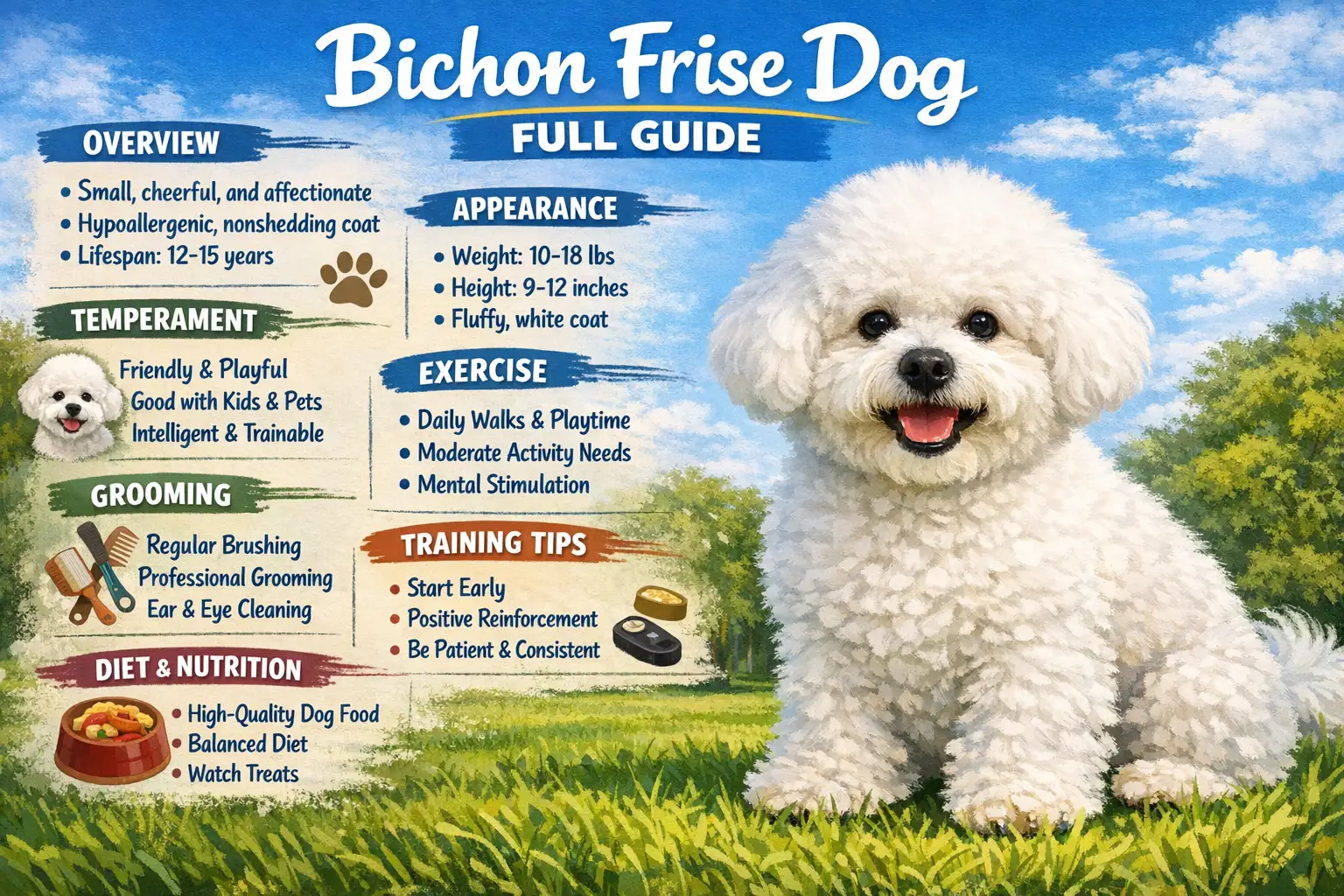
The average Bichon Frise lifespan is 12–15 years. Many healthy Bichon Frise dogs reach their mid-teens with proper dental care, weight control, balanced nutrition, regular grooming, and preventative veterinary checkups. Some may live longer, but genetics, lifestyle, and early health management strongly affect life expectancy.
Recommended Dog Care Products
Based on your dog’s age, these products may help with comfort, health, grooming, and daily care.

Purina Pro Plan Veterinary Supplements
Daily probiotics for dogs to support digestive and gut health.
View on Amazon ↗
Earth Rated Poop Bags for Dogs
Leak-proof, extra thick waste bag refill rolls with lavender scent.
View on Amazon ↗
Greenies Pill Pockets for Dogs
Large dog treats for capsule medication, peanut butter flavor.
View on Amazon ↗
HONEY CARE All-Absorb Dog Wrap
Small male dog wraps, 50 count, useful for daily care support.
View on Amazon ↗
Seresto Flea & Tick Collar
Flea and tick treatment and prevention for dogs over 18 lbs.
View on Amazon ↗
Milk-Bone MaroSnacks
Small dog treats with real bone marrow in a 40 oz canister.
View on Amazon ↗
Vital Essentials Dog Treats
Freeze dried beef liver dog treats, grain free and single ingredient.
View on Amazon ↗
Stain & Odor Eliminator
Enzyme cleaner for pet stains, carpet messes, and strong odors.
View on Amazon ↗
Pur Luv Chicken Jerky Treats
Dog treats made with real chicken breast, high protein and chew-friendly.
View on Amazon ↗
Milk-Bone Flavor Snacks
Mini crunchy dog biscuits in a 36 oz canister for small rewards.
View on Amazon ↗As an Amazon Associate, we may earn from qualifying purchases.
If you want to understand your Bichon’s current life stage, use our Bichon Frise Dog Age Calculator to compare their dog age with an estimated human-age equivalent.
Bichon Frise Lifespan at a Glance
| Lifespan Factor | Typical Range or Detail |
|---|---|
| Average lifespan | 12–15 years |
| Senior stage usually begins | 8–10 years |
| Common lifespan risks | Dental disease, obesity, allergies, eye issues, joint problems |
| Key longevity factor | Preventative veterinary care and healthy weight management |
| Best next step | Track your dog’s age stage with the Bichon Frise Dog Age Calculator |
Quick Navigation:
- Average Life Expectancy
- Bichon Frise Age Chart
- What Affects Lifespan
- Common Health Risks
- When a Bichon Frise Becomes Senior
- How to Help Them Live Longer
- FAQs
Bichon Frise Lifespan and Life Expectancy
How long do Bichon Frise live? Most Bichon Frise dogs live between 12 and 15 years. This makes the breed a relatively long-living small companion dog. However, reaching the upper end of that range depends on consistent care, especially dental hygiene, weight control, routine vet visits, and early treatment of health issues.
The Bichon Frise life expectancy is closely tied to its small size, indoor companion lifestyle, and overall health management. Smaller dogs often live longer than large breeds, but Bichons still need active prevention against dental disease, obesity, allergies, eye problems, and age-related mobility issues.
This page is focused on the Bichon Frise lifespan, aging process, senior stage, and the health factors that may shorten or extend life expectancy. For exact age conversion, the dedicated calculator page should be used alongside this guide.
Bichon Frise Breed Overview for Lifespan Planning
| Trait | Details |
|---|---|
| Breed type | Small companion dog |
| Size category | Small |
| Weight range | 12–18 pounds |
| Height | 9–11 inches |
| Average lifespan | 12–15 years |
| Senior stage | Usually around 8–10 years |
| Energy level | Moderate |
| Shedding level | Low |
| Main care needs | Dental care, grooming, weight control, routine vet checks |
The Bichon Frise is a small, social, people-focused dog. Its size can support a longer lifespan compared with many larger breeds, but small size alone does not guarantee a long life. Bichons need regular grooming, consistent dental care, healthy feeding habits, and attention to early signs of illness as they age.
Because this breed bonds closely with people, emotional well-being also matters. Stress, inactivity, poor routine, and long periods alone can affect behavior and overall quality of life. A stable home routine helps support both health and longevity.
Bichon Frise Temperament and Lifestyle Factors
The Bichon Frise temperament is usually friendly, affectionate, playful, and people-focused. Most Bichons enjoy being close to their owners and do best in homes where they receive daily attention, gentle play, and a predictable routine.
Recommended Dog Care Products
Based on your dog’s age, these products may help with comfort, health, grooming, and daily care.
Purina Pro Plan Veterinary Supplements
Daily probiotics for dogs to support digestive and gut health.
View on Amazon ↗
Earth Rated Poop Bags for Dogs
Leak-proof, extra thick waste bag refill rolls with lavender scent.
View on Amazon ↗
Greenies Pill Pockets for Dogs
Large dog treats for capsule medication, peanut butter flavor.
View on Amazon ↗
HONEY CARE All-Absorb Dog Wrap
Small male dog wraps, 50 count, useful for daily care support.
View on Amazon ↗
Seresto Flea & Tick Collar
Flea and tick treatment and prevention for dogs over 18 lbs.
View on Amazon ↗
Milk-Bone MaroSnacks
Small dog treats with real bone marrow in a 40 oz canister.
View on Amazon ↗
Vital Essentials Dog Treats
Freeze dried beef liver dog treats, grain free and single ingredient.
View on Amazon ↗
Stain & Odor Eliminator
Enzyme cleaner for pet stains, carpet messes, and strong odors.
View on Amazon ↗
Pur Luv Chicken Jerky Treats
Dog treats made with real chicken breast, high protein and chew-friendly.
View on Amazon ↗
Milk-Bone Flavor Snacks
Mini crunchy dog biscuits in a 36 oz canister for small rewards.
View on Amazon ↗As an Amazon Associate, we may earn from qualifying purchases.
Temperament matters for lifespan because lifestyle affects long-term health. A Bichon that receives enough attention, activity, training, and mental stimulation is less likely to develop stress-related behavior problems such as excessive barking, chewing, or separation anxiety.
Can Bichon Frises Be Left Alone?
Bichon Frises can be left alone for short periods, but they often struggle with long hours by themselves. Many do best with no more than 3–4 hours alone at a time. When left alone too often, some Bichons may develop separation anxiety, which can lead to barking, chewing, pacing, or indoor accidents.
If your schedule keeps you away most of the day, a dog sitter, daycare, family check-in, or structured routine can help reduce stress and support better long-term well-being.
Bichon Frise dogs are usually good with families, seniors, apartment living, and other pets when properly socialized. They are small enough for compact homes but still need daily walks, indoor play, grooming, and regular care to stay healthy through each life stage.
Bichon Frise Lifestyle Fit
| Lifestyle Factor | Fit for Bichon Frise |
|---|---|
| Families with children | Good with gentle handling |
| First-time owners | Good with consistent routine |
| Apartment living | Very good with daily walks |
| Seniors | Excellent for owners who can manage grooming needs |
| Multi-pet homes | Usually good with socialization |
| Owners away all day | Not ideal without support |
Overall, temperament should support the main goal of this page: helping owners understand how long Bichon Frise dogs live and what daily habits can improve their life expectancy. For age-stage tracking, use the Bichon Frise Dog Age Calculator.
Bichon Frise Age Chart
A Bichon Frise ages differently from a human, especially during the first two years of life. Small dogs like the Bichon Frise usually mature quickly as puppies, then age more gradually as adults. The chart below gives a simple estimate of how a Bichon Frise dog age may compare with human years.
| Bichon Frise Age | Estimated Human Age | Life Stage |
|---|---|---|
| 1 year | About 15 human years | Young adult |
| 2 years | About 24 human years | Adult |
| 3 years | About 28 human years | Adult |
| 5 years | About 36 human years | Adult |
| 7 years | About 44 human years | Mature adult |
| 8 years | About 48 human years | Early senior |
| 10 years | About 56 human years | Senior |
| 12 years | About 64 human years | Senior |
| 14 years | About 72 human years | Older senior |
| 15 years | About 76 human years | Older senior |
This chart is only an estimate. For a more specific age comparison, use the Bichon Frise Dog Age Calculator to check your dog’s age in human years.
What Affects Bichon Frise Lifespan?
The Bichon Frise lifespan is affected by genetics, dental care, body weight, diet quality, grooming consistency, daily activity, and preventative veterinary care. While many Bichons live 12–15 years, poor dental health, obesity, untreated allergies, and delayed vet care can shorten life expectancy.
Main factors that influence Bichon Frise life expectancy:
Recommended Dog Care Products
Based on your dog’s age, these products may help with comfort, health, grooming, and daily care.
Purina Pro Plan Veterinary Supplements
Daily probiotics for dogs to support digestive and gut health.
View on Amazon ↗
Earth Rated Poop Bags for Dogs
Leak-proof, extra thick waste bag refill rolls with lavender scent.
View on Amazon ↗
Greenies Pill Pockets for Dogs
Large dog treats for capsule medication, peanut butter flavor.
View on Amazon ↗
HONEY CARE All-Absorb Dog Wrap
Small male dog wraps, 50 count, useful for daily care support.
View on Amazon ↗
Seresto Flea & Tick Collar
Flea and tick treatment and prevention for dogs over 18 lbs.
View on Amazon ↗
Milk-Bone MaroSnacks
Small dog treats with real bone marrow in a 40 oz canister.
View on Amazon ↗
Vital Essentials Dog Treats
Freeze dried beef liver dog treats, grain free and single ingredient.
View on Amazon ↗
Stain & Odor Eliminator
Enzyme cleaner for pet stains, carpet messes, and strong odors.
View on Amazon ↗
Pur Luv Chicken Jerky Treats
Dog treats made with real chicken breast, high protein and chew-friendly.
View on Amazon ↗
Milk-Bone Flavor Snacks
Mini crunchy dog biscuits in a 36 oz canister for small rewards.
View on Amazon ↗As an Amazon Associate, we may earn from qualifying purchases.
- Dental care: Small breeds are prone to dental disease, which can affect overall health if ignored.
- Healthy weight: Extra weight increases pressure on joints, the heart, and overall mobility.
- Balanced diet: Proper nutrition supports energy, immune health, coat condition, and long-term wellness.
- Regular grooming: Coat and skin care help reduce matting, irritation, infections, and discomfort.
- Daily activity: Light exercise helps maintain muscle tone, weight control, and mental health.
- Routine vet checks: Early detection of dental, eye, skin, joint, and internal health issues can improve outcomes.
Owners who want a longer, healthier life for their Bichon should focus on prevention instead of waiting for visible symptoms. This is especially important once a Bichon Frise reaches the senior stage.
Exercise, Training, and Daily Care for a Longer Life
The Bichon Frise does not need heavy exercise, but daily movement is important for long-term health. Most adult Bichons do well with short daily walks, indoor play, and simple mental stimulation. Regular activity helps prevent weight gain, boredom, stiffness, and stress-related behavior problems.
The Bichon Frise energy level is usually moderate. Most dogs are satisfied with about 20–30 minutes of daily exercise plus playtime at home. Senior Bichons may need shorter, gentler walks depending on their joints, energy, and veterinary guidance.
Training also supports lifespan indirectly. A well-trained Bichon is easier to manage, less stressed, and more likely to follow safe routines around food, walking, grooming, and vet care. For deeper behavior help, use the Bichon Frise training guide.
Daily Care Routine for Longevity
| Care Area | Recommended Routine | Why It Matters |
|---|---|---|
| Walks | 20–30 minutes daily | Supports weight, joints, and heart health |
| Playtime | Daily indoor or outdoor play | Reduces boredom and stress |
| Mental stimulation | Puzzle toys, training, short games | Supports brain health and behavior |
| Weight control | Monitor food portions and treats | Helps reduce obesity-related risks |
| Vet care | Routine checkups and dental exams | Helps detect problems early |
Common Bichon Frise Health Risks That Can Affect Lifespan
Bichon Frise dogs are generally long-living, but they can still develop health issues that affect comfort, mobility, and life expectancy. The most important risks to watch are dental disease, obesity, allergies, ear infections, eye problems, and joint issues.
Bichon Frise Health Risks and Lifespan Impact
| Health Risk | Why It Matters | Prevention or Management |
|---|---|---|
| Dental disease | Can lead to pain, infection, tooth loss, and wider health problems | Brush teeth regularly and schedule dental checks |
| Obesity | Increases stress on joints, heart, and metabolism | Control portions, limit treats, and keep daily activity consistent |
| Allergies | Can cause itching, skin infections, and chronic discomfort | Monitor skin, diet, grooming, and vet treatment plans |
| Ear infections | Can become painful or recurring if ignored | Keep ears clean and dry during grooming |
| Eye problems | May affect comfort and quality of life as the dog ages | Watch for cloudiness, redness, discharge, or vision changes |
| Joint issues | Can reduce mobility in senior years | Maintain healthy weight and use gentle exercise |
Dental care deserves special attention because it is one of the most common issues in small breeds. Brushing several times per week, using vet-approved dental care, and keeping up with checkups can help protect your Bichon’s long-term health.
Grooming and Shedding: Why Coat Care Supports Health
The Bichon Frise has a soft, curly coat that sheds very little, but low shedding does not mean low maintenance. Without regular brushing and trimming, the coat can mat, trap moisture, irritate the skin, and make infections more likely.
Most Bichons need brushing several times per week and professional grooming every 4–6 weeks. A consistent Bichon Frise grooming routine helps protect skin health, reduce discomfort, and support better quality of life as the dog ages.
Recommended Dog Care Products
Based on your dog’s age, these products may help with comfort, health, grooming, and daily care.
Purina Pro Plan Veterinary Supplements
Daily probiotics for dogs to support digestive and gut health.
View on Amazon ↗
Earth Rated Poop Bags for Dogs
Leak-proof, extra thick waste bag refill rolls with lavender scent.
View on Amazon ↗
Greenies Pill Pockets for Dogs
Large dog treats for capsule medication, peanut butter flavor.
View on Amazon ↗
HONEY CARE All-Absorb Dog Wrap
Small male dog wraps, 50 count, useful for daily care support.
View on Amazon ↗
Seresto Flea & Tick Collar
Flea and tick treatment and prevention for dogs over 18 lbs.
View on Amazon ↗
Milk-Bone MaroSnacks
Small dog treats with real bone marrow in a 40 oz canister.
View on Amazon ↗
Vital Essentials Dog Treats
Freeze dried beef liver dog treats, grain free and single ingredient.
View on Amazon ↗
Stain & Odor Eliminator
Enzyme cleaner for pet stains, carpet messes, and strong odors.
View on Amazon ↗
Pur Luv Chicken Jerky Treats
Dog treats made with real chicken breast, high protein and chew-friendly.
View on Amazon ↗
Milk-Bone Flavor Snacks
Mini crunchy dog biscuits in a 36 oz canister for small rewards.
View on Amazon ↗As an Amazon Associate, we may earn from qualifying purchases.
Although many people describe the Bichon Frise as hypoallergenic, no dog is fully hypoallergenic. However, regular grooming can help reduce loose hair, dander buildup, and skin irritation.
What Do Bichon Frise Usually Die From?
Bichon Frise dogs usually die from age-related disease, complications from chronic health problems, cancer, organ disease, or serious untreated conditions. In many cases, lifespan is not affected by one single issue but by several health factors building up over time.
Common problems that may contribute to declining health in older Bichons include dental disease, heart concerns, kidney or liver problems, cancer, mobility loss, and complications from obesity. Regular vet visits are important because early treatment can sometimes slow progression and improve quality of life.
If a senior Bichon suddenly loses appetite, becomes weak, has trouble breathing, shows pain, collapses, or changes behavior quickly, owners should contact a veterinarian immediately.
When Is a Bichon Frise Considered Senior?
A Bichon Frise is usually considered senior around 8–10 years old. Some dogs still act playful at this age, but senior status means health monitoring should become more consistent. Dental exams, bloodwork, weight checks, eye checks, and mobility reviews become more important during this stage.
At 12–15 years old, a Bichon Frise is in the later senior stage. Many dogs can still enjoy a good quality of life at this age when pain is managed, body weight is healthy, and vet care is consistent.
How Long Do Bichons Live Compared to Other Small Dogs?
The Bichon lifespan is similar to many other small companion breeds. Most Bichon Frise dogs live 12–15 years, which is close to breeds like the Maltese, Havanese, and Toy Poodle. Individual lifespan still depends on genetics, weight, dental care, and overall health management.
| Breed | Typical Lifespan | Key Care Factor |
|---|---|---|
| Bichon Frise | 12–15 years | Dental care, grooming, weight control |
| Maltese | 12–15 years | Dental care and coat care |
| Havanese | 13–16 years | Weight control and routine care |
| Toy Poodle | 12–16 years | Dental care and activity |
Compared with many larger breeds, the Bichon Frise has a favorable life expectancy. The main opportunity for owners is not simply adding years, but helping the dog stay comfortable, active, and healthy through the senior stage.
Cost, Care Commitment, and Related Bichon Frise Guides
Long lifespan also means long-term responsibility. A Bichon Frise may live well into its teens, so owners should plan for grooming, dental care, food, vet visits, training, and senior care over many years.
Grooming and healthcare are often two of the biggest long-term costs for this breed. To plan your budget, review the Bichon Frise cost of ownership guide.
For full care planning, you may also want to review the Bichon Frise nutrition and feeding guide, the Bichon Frise grooming guide, and the Bichon Frise training guide.
How to Help a Bichon Frise Live Longer
The best way to help a Bichon Frise live longer is to focus on prevention, routine, and early care. Small daily habits can make a major difference over a 12–15 year lifespan.
- Brush teeth several times per week
- Keep your Bichon at a healthy body weight
- Feed a balanced diet with controlled portions
- Schedule regular veterinary checkups
- Monitor skin, ears, eyes, teeth, and mobility
- Keep grooming consistent to prevent mats and skin irritation
- Provide daily walks and gentle play
- Use mental stimulation to reduce boredom and stress
- Ask your vet about senior screenings after age 7–8
- Track your dog’s life stage with the Bichon Frise Dog Age Calculator
With attentive care, many Bichon Frise dogs remain playful, affectionate, and active well into their senior years. The goal is not only a longer lifespan, but a better quality of life at every stage.
Bichon Frise Lifespan FAQs
How long do Bichon Frise dogs live?
Most Bichon Frise dogs live between 12 and 15 years. Some may live longer with excellent genetics, dental care, healthy weight management, proper nutrition, and regular veterinary checkups.
What is the average lifespan of a Bichon Frise?
The average lifespan of a Bichon Frise is usually 12–15 years. This makes the breed a long-living small companion dog compared with many medium and large breeds.
Is 14 years old for a Bichon Frise considered old?
Yes, 14 years old is considered old for a Bichon Frise. However, many Bichons at this age can still have a good quality of life when dental care, weight control, pain management, and veterinary monitoring are consistent.
When is a Bichon Frise considered a senior?
A Bichon Frise is usually considered senior around 8–10 years old. At this stage, owners should pay closer attention to dental health, mobility, weight, eyes, skin, and routine vet screenings.
Do male or female Bichon Frise dogs live longer?
There is no reliable rule that male or female Bichon Frise dogs always live longer. Lifespan depends more on genetics, spay/neuter status, weight, dental care, diet, lifestyle, and preventative veterinary care.
What do Bichon Frise usually die from?
Bichon Frise dogs usually die from age-related illness, cancer, organ disease, complications from chronic health problems, or serious untreated conditions. Dental disease, obesity, heart issues, and mobility problems can also affect health and quality of life in senior years.
What is the oldest Bichon Frise?
Some Bichon Frise dogs are reported to live beyond 15 years, and occasional dogs may reach 17 years or older. However, most owners should plan around the typical Bichon Frise life expectancy of 12–15 years.
Can a Bichon Frise live to 16 years?
Yes, a Bichon Frise can live to 16 years, especially with strong genetics, healthy weight, good dental care, regular vet visits, and early treatment of health problems. However, 12–15 years is the more common lifespan range.
Are Bichon Frise dogs healthy?
Bichon Frise dogs are generally healthy and long-living, but they can be prone to dental disease, allergies, ear infections, eye problems, obesity, and joint issues. Preventative care is important for protecting lifespan and quality of life.
Next Step: To understand your dog’s current life stage, use the Bichon Frise Dog Age Calculator. Then review your dog’s grooming, feeding, training, and senior-care routine to support a longer, healthier life.
This guide is for informational purposes only and does not replace professional veterinary advice. Always consult a licensed veterinarian for medical concerns about your Bichon Frise.

Ata Ur Rehman is the founder of Pet Age in Human Years Calculator, an educational platform that provides age conversion charts and lifespan guides for dogs, cats, birds, and other companion animals. His work focuses on helping pet owners understand how animal ages translate into human years using commonly accepted age conversion formulas and published lifespan averages.
The website compiles breed and species lifespan data from kennel clubs, breed organizations, and general animal lifespan studies to present simple and easy-to-understand guides for pet owners worldwide.
This website was created to centralize animal age conversion charts into one easy reference platform for pet owners.