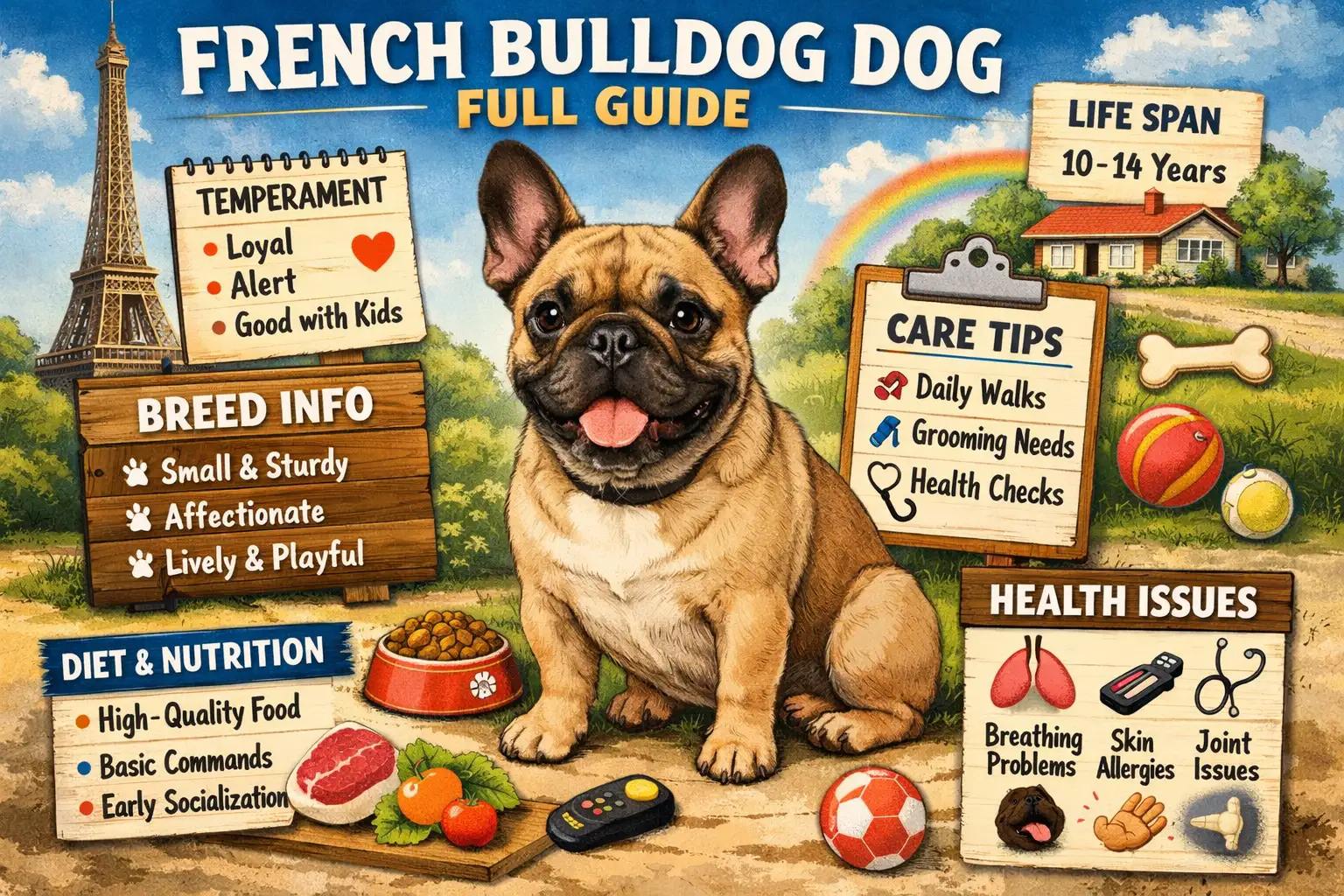
The French Bulldog is one of the most popular companion dog breeds, loved for its compact size, bat-like ears, playful personality, and strong attachment to people. Many owners choose this breed because it looks cute, fits well in apartments, and does not need heavy exercise. But before bringing one home, it is important to understand the full reality of French Bulldog temperament, care needs, size, health risks, and long-term ownership costs.
At its core, the French Bulldog is a companion-first breed. It wants to be close to its family, enjoys attention, and often follows its favorite person around the home. This makes the breed affectionate and entertaining, but it also means French Bulldogs are not ideal for owners who are away for long hours or want a low-commitment dog.
The French Bulldog’s appearance is part of its charm, but also part of its challenge. Its flat face, short body, wide chest, and compact build affect breathing, exercise ability, heat tolerance, and daily care. French Bulldogs are not endurance dogs, running dogs, or outdoor adventure dogs. They are better suited to short walks, indoor play, gentle routines, and close human companionship.
This French Bulldog guide explains the breed’s temperament, personality, size, energy level, care needs, health concerns, lifespan, and ownership reality. If you also want to understand your dog’s life stage in human years, you can use the French Bulldog Age Calculator as a quick companion tool while reading this guide.
French Bulldog quick facts
| Category | What to know |
|---|---|
| Breed size | Small, compact, and muscular |
| Typical weight | About 16–28 pounds |
| Typical height | About 11–13 inches |
| Temperament | Affectionate, playful, people-focused, and sometimes stubborn |
| Energy level | Low to medium |
| Exercise needs | Short walks and light indoor play |
| Apartment suitability | Excellent, if heat and breathing limits are managed |
| Grooming needs | Low to moderate |
| Health risk level | Higher than average |
| Best for | Owners who want a close indoor companion and can manage health needs |
French Bulldog History, Appearance, and Size
The French Bulldog has a short but interesting history. The breed began in England in the 1800s, where small bulldog-type dogs were kept by lace workers. When many of these workers moved to France, they brought their dogs with them. Over time, the breed became popular in French cities, especially among shopkeepers, artists, and families who wanted a small companion dog.
This city-friendly background still shapes the breed today. French Bulldogs are not farm dogs or working dogs. They are indoor companion dogs that usually do best in homes where they can stay close to people and follow a calm daily routine.
French Bulldog appearance and body shape
French Bulldogs are small dogs, but they are strong and muscular for their size. They have a wide chest, short legs, a compact body, and a square-looking frame. Their most famous feature is their large upright “bat ears,” along with a short, flat face and short tail.
This body shape gives the French Bulldog its unique look, but it also affects daily care. The flat face can make breathing harder, especially during exercise or hot weather. The compact body can also make jumping, long walks, and rough play harder on the dog’s joints and back.
The coat is short and smooth, which makes grooming easier than many long-haired breeds. French Bulldogs do shed, but usually at a low to moderate level. Common coat colors include brindle, fawn, cream, and pied. Some rare colors are heavily promoted online, but color should never be more important than health, structure, and responsible breeding.
French Bulldog size and weight
French Bulldogs are considered a small breed, but they are heavier and more solid than they may look. A healthy adult French Bulldog usually has a compact, muscular body rather than a thin or delicate frame. Because this breed can gain weight easily, diet control and gentle daily movement are important.
French Bulldog size and physical traits
| Feature | Typical range |
|---|---|
| Height | About 11–13 inches |
| Weight | About 16–28 pounds |
| Breed group by size | Small dog breed |
| Body type | Compact, muscular, and sturdy |
| Coat | Short and smooth |
| Shedding | Low to moderate |
| Distinctive traits | Bat ears, flat face, wide chest, short tail |
Male vs female French Bulldog size
Male and female French Bulldogs are usually close in size, but males may look slightly broader and heavier. Females may appear a little smaller or lighter, but the difference is not always large. Health, body condition, diet, and genetics matter more than gender alone.
A French Bulldog should look sturdy, not overweight. Extra weight can make breathing, movement, heat tolerance, and joint comfort worse, so owners should watch body condition carefully instead of focusing only on the number on the scale.
Because of their body shape, French Bulldogs are not built for running long distances, jumping from high furniture, or exercising in hot weather. Their small size makes them suitable for apartments, but their compact weight and flat face mean they still need careful handling and proper daily care.
French Bulldog Temperament, Personality, and Behavior
French Bulldog temperament is one of the biggest reasons this breed is so popular. French Bulldogs are usually affectionate, friendly, playful, and deeply people-focused. They enjoy being close to their owners and often want to be involved in everyday home life.
Many owners describe French Bulldogs as “shadow dogs” because they like to stay near their favorite person. They may follow you from room to room, sit beside you on the sofa, or wait nearby while you work. This close attachment makes them loving companions, but it can also create problems if they are left alone too often.
French Bulldogs are playful, but they are not usually high-energy dogs. They enjoy short play sessions, simple toys, gentle games, and attention from their family. They do not need intense exercise, but they still need daily interaction to stay happy and mentally settled.
French Bulldog personality in everyday life
In everyday life, French Bulldogs are often funny, expressive, and charming. They can make people laugh with their sounds, facial expressions, and silly behavior. Many are confident without being aggressive, playful without being overly demanding, and affectionate without needing a large yard or intense activity.
At the same time, French Bulldogs can be stubborn. They may ignore commands if they are bored, distracted, or not motivated. This does not mean they are not smart. It simply means they often need short, positive, reward-based training sessions. Treats, praise, and consistency usually work better than pressure or harsh correction.
French Bulldogs also tend to bark less than many small breeds. This is one reason they are popular apartment dogs. However, they can still be vocal in other ways. Snorting, snoring, grumbling, and playful sounds are common because of their face shape and personality.
French Bulldog temperament at a glance
| Trait | What to expect |
|---|---|
| Affection level | Very high |
| Energy level | Low to medium |
| Friendliness | Very friendly with proper socialization |
| Barking level | Usually low |
| Stubbornness | Medium |
| Need for attention | High |
| Trainability | Good with patience and rewards |
| Alone-time tolerance | Low to moderate |
French Bulldog energy level
The French Bulldog energy level is usually low to medium. This breed does not need long runs, hard exercise, or hours of outdoor activity. Most French Bulldogs are happy with short walks, light indoor play, and time with their owners.
Even though they are not highly active, French Bulldogs should not be completely inactive. Without movement and routine, they can gain weight, become bored, or develop unwanted habits. The key is gentle consistency, not intense exercise.
Heat is the biggest concern. Because of their flat face, French Bulldogs can overheat quickly. Walks should be shorter in warm weather, outdoor activity should be avoided during hot parts of the day, and owners should watch for signs of breathing trouble or tiredness.
Behavior with people, children, and other pets
French Bulldogs usually do well with family members. They enjoy spending time with adults and can be good with children when interactions are calm and supervised. Because they are small and have a sensitive body structure, rough play, pulling, jumping, or squeezing should always be avoided.
With strangers, most French Bulldogs are friendly, curious, or relaxed. They are not strong guard dogs, but they may alert you when someone comes to the door. With other dogs and pets, they often do well if they are introduced properly and socialized early.
French Bulldog compatibility
| Situation | Suitability |
|---|---|
| Families with kids | Good with gentle supervision |
| First-time owners | Good, if health needs are understood |
| Apartments | Excellent |
| Seniors | Very suitable |
| Other pets | Usually good with early socialization |
| Very active owners | Not ideal as a high-exercise dog |
| Hot climates | Needs extra caution |
French Bulldogs do not like being alone for long periods. If left alone too often, they may become anxious, bored, or clingy. This breed does best in homes where someone is around for much of the day, or where alone time is introduced slowly with a calm routine.
French Bulldog Care, Exercise, and Training Needs
French Bulldog care is not difficult in the same way as a high-energy working breed, but it does require consistency, attention, and awareness of the breed’s limits. A French Bulldog needs gentle exercise, careful heat management, regular grooming, basic training, and close daily interaction with its owner.
This breed is best for people who want an indoor companion and are willing to manage breathing limits, weight control, skin folds, and emotional attachment. French Bulldogs can be easy to live with, but they are not a “leave alone all day and forget about it” type of dog.
Daily care and exercise
French Bulldogs do not need long walks or intense activity. Most do well with short walks once or twice a day, light indoor play, and calm interaction with their family. Because of their short nose and compact body, they can get tired quickly if pushed too hard.
The safest approach is gentle, regular movement instead of heavy exercise. A French Bulldog should stay active enough to avoid weight gain, but not so active that breathing becomes difficult. Short play sessions, slow walks, and puzzle toys are usually better than running, jumping, or long outdoor exercise.
Hot weather is one of the biggest care concerns for this breed. French Bulldogs can overheat quickly, even during short walks. Outdoor activity should be limited during warm parts of the day, and owners should avoid leaving them in hot rooms, cars, or direct sun for too long.
Mental activity is also important. Simple toys, puzzle feeders, short training games, and a steady routine help prevent boredom. Proper French Bulldog nutrition also supports healthy weight, digestion, skin condition, and long-term comfort.
French Bulldog daily care needs
| Care area | What they need |
|---|---|
| Exercise | Short walks and light indoor play |
| Mental activity | Puzzle toys, simple games, and attention |
| Training time | Short daily sessions with rewards |
| Grooming | Weekly brushing and skin fold checks |
| Alone time | Low tolerance; needs gradual training |
| Heat tolerance | Very low; needs strong heat protection |
| Weight control | Very important because extra weight affects breathing and joints |
Training needs
French Bulldogs are smart, but they can also be stubborn. They usually respond best to short, positive, reward-based training sessions. Treats, praise, routine, and patience work better than pressure or harsh correction.
A good French Bulldog training guide can help with basic commands, house training, leash manners, socialization, and common behavior issues. Training should start early, but adult French Bulldogs can also learn well when sessions are calm and consistent.
House training may take time, so owners should use a clear schedule and avoid confusing the dog with changing rules. Short sessions work better than long lessons because French Bulldogs may lose interest if training feels repetitive or boring.
Grooming basics
French Bulldogs have a short coat, so grooming is usually simple. Weekly brushing helps remove loose hair and keeps the coat smooth. Bathing is only needed when the dog is dirty or has odor, because too much bathing may dry the skin.
The most important grooming areas are the skin folds, ears, teeth, and nails. Moisture and dirt can collect in facial folds, which may lead to irritation or infection if ignored. Following proper French Bulldog grooming basics can help owners build a simple routine for coat care, fold cleaning, ear checks, and nail trimming.
Overall, French Bulldogs are low-to-medium energy dogs, but they need careful daily management. They are best for owners who enjoy spending time at home, can protect them from heat, and are ready to manage their health and comfort consistently.
French Bulldog Health, Lifespan, Cost, and Ownership Reality
French Bulldogs are loving and entertaining dogs, but they come with serious health and cost responsibilities. This is one of the most important things to understand before choosing the breed. Their flat face, compact body, and popularity all affect long-term ownership in real ways.
A French Bulldog can be a wonderful companion for the right person, but it is not the best choice for everyone. Owners should be prepared for vet visits, heat precautions, possible breathing issues, skin care, weight control, and higher-than-average ownership costs.
French Bulldog health problems
French Bulldogs can face several health problems, and many are connected to their flat face and body structure. Breathing trouble is one of the most common concerns. Some French Bulldogs snort, snore, breathe loudly, or struggle during exercise, especially in hot weather.
Overheating is another major risk. Because French Bulldogs cannot cool themselves as efficiently as longer-nosed breeds, they need extra protection in warm weather. Owners should avoid intense exercise, hot sidewalks, direct sun, and poorly ventilated spaces.
Skin allergies, fold irritation, ear problems, eye issues, and spine or back problems can also occur. Not every French Bulldog will have serious health issues, but the breed has a higher health-risk profile than many other small companion dogs.
Common French Bulldog health problems
| Health issue | Why it matters |
|---|---|
| Breathing problems | Can affect exercise, sleep, heat tolerance, and daily comfort |
| Overheating | High risk in warm weather or during heavy activity |
| Skin allergies | May cause itching, redness, irritation, and recurring vet visits |
| Skin fold irritation | Moisture and dirt can collect around facial folds |
| Eye problems | Flat-faced breeds can be more prone to eye irritation or injury |
| Spine and back problems | Jumping, rough play, or poor structure may increase discomfort risk |
| Weight gain | Extra weight can worsen breathing, joints, and heat tolerance |
Responsible breeding, weight control, regular vet checks, and early attention to symptoms can make a major difference. However, even with good care, French Bulldogs may still need more medical attention than many other breeds.
French Bulldog lifespan and life stages
The typical French Bulldog lifespan is about 10 to 12 years, though some may live longer with careful breeding, good daily care, healthy weight management, and regular veterinary support. Because this breed can face health challenges, quality of life matters just as much as lifespan.
French Bulldogs change quickly across life stages. Puppies need training, socialization, safe play, and careful feeding. Adults need weight control, routine exercise, and regular health monitoring. Senior French Bulldogs may need extra support for breathing, joints, dental care, and comfort.
You can use the French Bulldog Age Calculator to estimate your dog’s age in human years and better understand which life stage they may be in.
French Bulldog age and life stage preview
| French Bulldog age | General life stage | What owners should focus on |
|---|---|---|
| Puppy | Under 1 year | Training, socialization, feeding routine, safe play |
| Young adult | 1–3 years | Routine exercise, behavior consistency, weight control |
| Adult | 4–7 years | Health monitoring, dental care, skin care, steady activity |
| Senior | 8+ years | Joint comfort, breathing checks, vet support, easier routines |
For a more detailed breakdown by age, you can also visit the French Bulldog age chart.
Cost of owning a French Bulldog
French Bulldogs are often expensive to buy and can also be expensive to care for over time. The cost is not only about the puppy price. Vet care, insurance, skin care, breathing-related issues, food, grooming supplies, and emergency costs can all add up.
Understanding the full cost of owning a French Bulldog is important before making a decision. Many new owners underestimate the long-term cost because the breed looks small and easy to manage.
French Bulldog ownership costs
| Expense type | Cost level | Why it matters |
|---|---|---|
| Puppy price | Very high | French Bulldogs are in high demand and responsible breeding is costly |
| Vet care | Above average | Breathing, skin, eye, and spine concerns may need monitoring |
| Emergency care | High | Heat stress, breathing trouble, or injury can become urgent |
| Grooming | Low to moderate | Coat care is simple, but folds, ears, teeth, and nails need attention |
| Food and weight control | Moderate | Good nutrition helps manage weight and long-term health |
| Pet insurance | Strongly recommended | Can help manage unexpected medical costs |
Ownership reality
French Bulldogs are not low-effort dogs. They are affectionate and easy to love, but they need time, attention, money, and careful daily management. They are best for owners who are home often, prefer an indoor companion, and are ready to handle breed-specific health needs.
This breed may not be right for people who travel often, live in very hot climates, want a running partner, or want a dog with very low medical risk. French Bulldogs also need owners who can be patient with stubborn behavior and consistent with training.
For the right owner, the French Bulldog can be a loyal, funny, affectionate companion that brings a lot of personality into everyday life. The key is choosing the breed with realistic expectations instead of only focusing on its cute appearance or popularity.
French Bulldog Pros and Cons
French Bulldogs can be wonderful companion dogs, but they are not the right breed for every owner. Their affectionate temperament, small size, and low-to-medium energy level make them easy to love, but their health risks, heat sensitivity, and emotional attachment require serious commitment.
French Bulldog pros and cons
| Pros | Cons |
|---|---|
| Affectionate and people-focused | Can struggle when left alone too long |
| Excellent apartment companion | Very sensitive to heat |
| Usually low barking compared to many small breeds | Higher risk of breathing problems |
| Short coat is easy to maintain | May need careful skin fold, ear, and dental care |
| Playful without needing intense exercise | Can become overweight if diet and activity are not managed |
| Good for many first-time owners | Can be stubborn during training |
| Loving, funny, and loyal companion | Often more expensive to own than people expect |
The biggest advantage of the French Bulldog is companionship. This breed is usually happiest when it can stay close to its people and be part of daily life. The biggest disadvantage is responsibility. Owners must be ready for health monitoring, heat protection, weight control, and possible higher vet costs.
Is a French Bulldog Right for You?
A French Bulldog may be right for you if you want a small indoor companion with a loving personality, moderate exercise needs, and a strong bond with its owner. This breed is especially suitable for apartment living, calm homes, seniors, and families who want a playful but not overly active dog.
A French Bulldog may not be right for you if you want a running partner, a dog that can handle hot weather easily, or a breed that can be left alone for long hours every day. French Bulldogs also may not be ideal for owners who want a very low-cost dog with minimal health concerns.
A French Bulldog is a good fit if you:
- Want a close companion dog that enjoys human attention
- Live in an apartment or smaller home
- Prefer short walks and light play instead of heavy exercise
- Can manage heat sensitivity and breathing limitations
- Are prepared for possible higher vet and insurance costs
- Can provide routine, attention, and patient training
A French Bulldog may not be a good fit if you:
- Are away from home for most of the day
- Want a highly athletic dog for long runs or outdoor adventures
- Live in a very hot climate and cannot provide strong heat protection
- Want a dog with very low health-risk concerns
- Do not want to manage skin folds, breathing limits, or weight control
- Want a dog that is fully independent and low-attention
In simple terms, the French Bulldog is best for owners who want companionship more than athleticism. If you can give this breed attention, structure, health care, and a safe indoor lifestyle, it can be a deeply rewarding dog to own.
Related French Bulldog Tools and Guides
If you are researching French Bulldog care, age, health, training, or ownership costs, these related guides can help you explore the breed in more detail.
- French Bulldog Age Calculator — estimate your French Bulldog’s age in human years and understand their current life stage.
- French Bulldog Age Chart — view a more detailed French Bulldog age breakdown by life stage.
- French Bulldog Training Guide — learn how to manage stubbornness, house training, leash manners, and basic commands.
- French Bulldog Grooming Basics — understand coat care, skin fold cleaning, ear checks, nail trimming, and hygiene needs.
- French Bulldog Nutrition & Feeding — learn how feeding, weight control, and diet affect French Bulldog health.
- French Bulldog Cost of Ownership — understand the real cost of buying, feeding, caring for, and insuring a French Bulldog.
French Bulldog FAQs
Are French Bulldogs good apartment dogs?
Yes, French Bulldogs are usually excellent apartment dogs because they are small, low-to-medium energy, and do not usually need a large yard. However, they still need daily walks, indoor play, attention, and strong protection from heat.
Are French Bulldogs low-energy dogs?
French Bulldogs are generally low-to-medium energy dogs. They enjoy short walks, light play, and time with their owners, but they are not built for long runs, intense exercise, or hot outdoor activity.
Do French Bulldogs bark a lot?
French Bulldogs usually do not bark as much as many other small breeds. They may alert their owner when someone comes to the door, but they are more commonly known for snorting, snoring, grumbling, and other playful sounds.
Can French Bulldogs be left alone?
French Bulldogs can be left alone for short periods if they are trained gradually, but they are not ideal for owners who are away for long hours every day. This breed is people-focused and may become anxious or bored without enough attention.
Are French Bulldogs good with kids?
French Bulldogs can be good with children when play is gentle and supervised. Because they are compact but physically sensitive, children should be taught not to pull, squeeze, chase, or encourage rough jumping.
How much exercise does a French Bulldog need?
Most French Bulldogs need short walks once or twice a day, plus light indoor play. They should not be pushed into heavy exercise, especially in warm weather, because they can overheat or struggle with breathing.
What health problems do French Bulldogs have?
Common French Bulldog health concerns include breathing problems, overheating, skin allergies, skin fold irritation, eye issues, spine or back problems, and weight gain. Not every French Bulldog will have serious problems, but the breed has a higher health-risk profile than many small dogs.
How long do French Bulldogs live?
French Bulldogs usually live around 10 to 12 years. Some may live longer with responsible breeding, healthy weight management, regular vet care, and careful daily management.
Are French Bulldogs expensive to own?
Yes, French Bulldogs can be expensive to own. The purchase price is often high, and ongoing costs may include vet care, insurance, food, grooming supplies, skin care, and possible emergency treatment for breathing or heat-related issues.
Is a French Bulldog good for first-time owners?
A French Bulldog can be good for first-time owners if they understand the breed’s health risks, heat sensitivity, stubbornness, and need for attention. They are loving and manageable, but they are not a low-responsibility breed.

Ata Ur Rehman is the founder of Pet Age in Human Years Calculator, an educational platform that provides age conversion charts and lifespan guides for dogs, cats, birds, and other companion animals. His work focuses on helping pet owners understand how animal ages translate into human years using commonly accepted age conversion formulas and published lifespan averages.
The website compiles breed and species lifespan data from kennel clubs, breed organizations, and general animal lifespan studies to present simple and easy-to-understand guides for pet owners worldwide.
This website was created to centralize animal age conversion charts into one easy reference platform for pet owners.