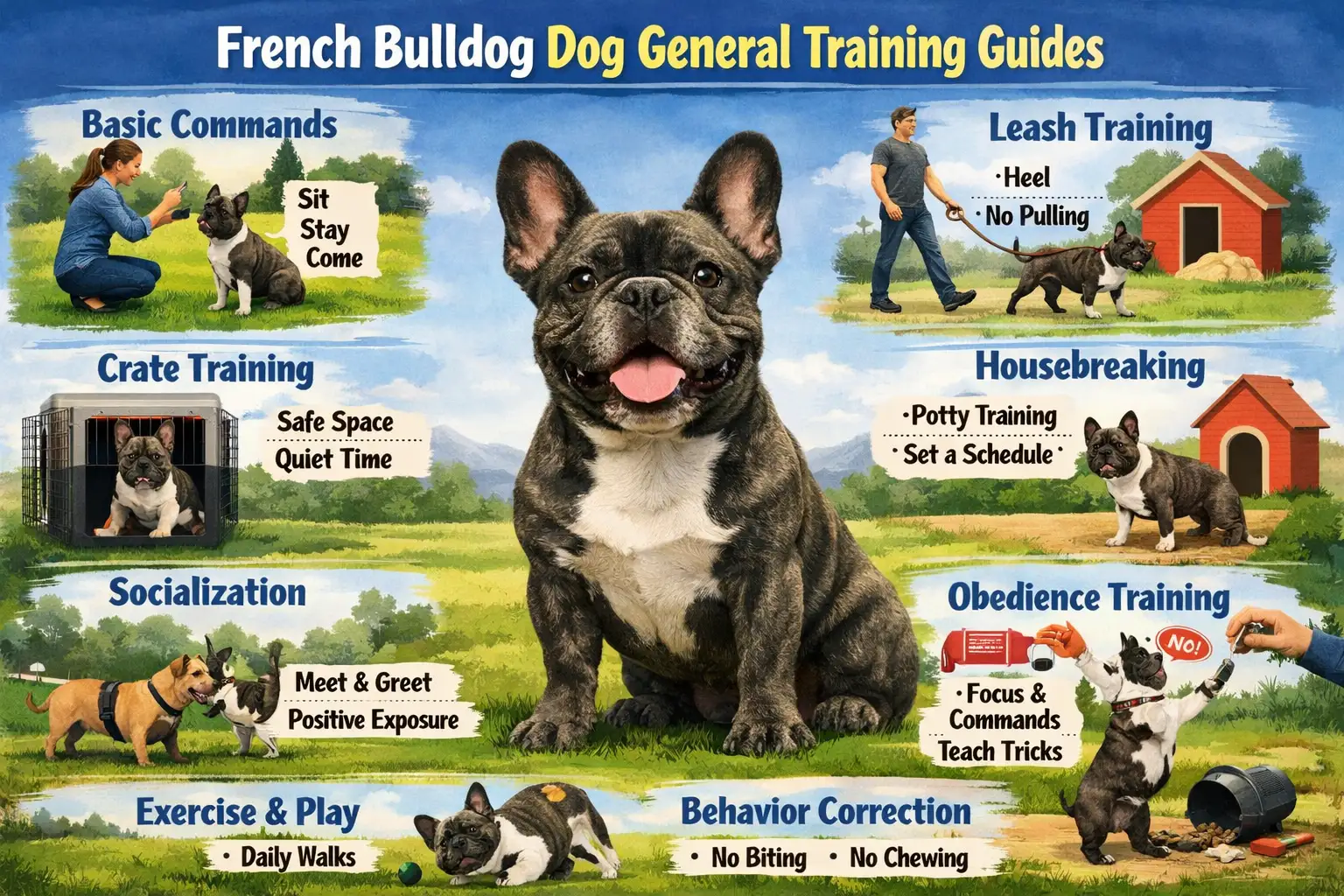
French Bulldog training works best when it is simple, positive, and built around short daily routines. Frenchies are affectionate, people-focused, and intelligent, but they can also be selective listeners. That does not mean they are impossible to train. It means they need clear rules, quick rewards, and training methods that match their personality and physical limits.
This guide is designed for owners who want practical French Bulldog training tips that actually work in everyday life. Whether you are training a French Bulldog puppy or helping an adult Frenchie improve old habits, the goal is the same: build attention, teach basic commands, improve leash manners, reduce common behavior problems, and make obedience easier at home.
The best way to train a French Bulldog is to keep sessions short, reward good behavior quickly, and stay consistent with the same commands every day. Because French Bulldogs can tire quickly and may overheat more easily than many other breeds, training should never be long, harsh, or physically intense. A few focused minutes, repeated daily, usually works better than one long session.
In the sections below, you’ll learn how to train a French Bulldog using realistic steps for puppies and adults, why Frenchies can seem stubborn, which training methods work best, and how to adjust expectations based on your dog’s age and life stage. For a complete overview of the breed, behavior, and care needs, you can also read the French Bulldog dog full guide.
Are French Bulldogs Easy to Train?
French Bulldogs are usually easy to train when training is positive, short, and consistent. They are smart dogs and often enjoy working with their owners, but they can become stubborn if training feels boring, confusing, or unrewarding.
The main challenge is not intelligence. The challenge is motivation. A French Bulldog may understand what you want but still ignore the command if the reward is not interesting enough or if the session has gone on too long. This is why food rewards, praise, calm repetition, and simple routines are so important.
French Bulldogs are also sensitive dogs. Harsh correction, shouting, or punishment can make them nervous or less willing to listen. They respond better when training feels like a calm game with clear rules and quick rewards.
Why French Bulldog Training Is Important
Training is important for French Bulldogs because it keeps them safe, calm, and easier to live with. Even though Frenchies are small dogs, untrained behavior can quickly become a problem inside the home, around visitors, and outside on walks.
French Bulldogs are very people-focused. Without training, they may develop habits like jumping, pulling on the leash, barking for attention, chewing household items, or ignoring basic commands. These behaviors are not signs of a “bad dog.” They usually happen because the dog has not been taught what to do instead.
Training also supports your Frenchie’s mental health. French Bulldogs can get bored easily, especially if they spend a lot of time indoors. Short daily training sessions give their brain something positive to focus on and can help reduce restlessness, attention-seeking, and anxiety-related behavior.
Another reason training matters is safety. A French Bulldog that responds to basic commands like sit, stay, leave it, and come is easier to control in real-life situations. This is especially important in apartments, busy homes, public places, or outdoor areas with people and other dogs.
Benefits of Training a French Bulldog
| Area | Why Training Matters |
|---|---|
| Safety | Helps prevent pulling, darting, jumping, and poor control |
| Behavior | Reduces barking, chewing, attention-seeking, and ignoring commands |
| Mental health | Keeps your Frenchie calm, focused, and mentally active |
| Daily life | Makes walks, visitors, feeding routines, and indoor behavior easier |
| Bond with owner | Builds trust, confidence, and clearer communication |
Training is not about being strict or harsh. For French Bulldogs, good training is about clear rules, kind guidance, and consistency. When training is done the right way, Frenchies become calmer, more confident, and more responsive in daily life.
Understanding French Bulldog Behavior and Learning Style
To train a French Bulldog well, you need to understand how they think and learn. French Bulldogs are loving, playful, and very attached to their people. They enjoy attention and like being close to their family, which makes training easier when the session feels positive and rewarding.
French Bulldogs are often called stubborn, but in many cases they are simply deciding whether the behavior is worth the effort. If the reward is weak, the command is unclear, or the owner repeats the same word too many times, a Frenchie may ignore the instruction. This is why reward timing and consistency matter so much.
This breed also has limited stamina. Because French Bulldogs have short noses and can tire quickly, long training sessions may lead to frustration, distraction, or physical stress. Short, focused sessions are usually more effective than long practice periods.
French Bulldogs learn best with:
- Clear and simple commands
- Small rewards given immediately
- Short sessions of 5 to 10 minutes
- Calm praise and patient repetition
- The same rules, words, and routines every day
French Bulldog Training Traits
| Trait | What It Means for Training |
|---|---|
| People-focused | They learn best when training feels like bonding |
| Food-motivated | Small treats can increase focus and cooperation |
| Selective listener | Commands must be clear, rewarding, and consistent |
| Sensitive temperament | Harsh correction can cause stress or shutdown |
| Low endurance | Short sessions help prevent tiredness and frustration |
Puppies usually learn faster but get distracted easily. Adult French Bulldogs may take longer to change old habits, but they can still learn very well with steady practice. Age does not stop learning, but it does affect attention span, energy level, and training expectations. You can use the French Bulldog age calculator to better understand your dog’s life stage before setting training goals.
When you train in a way that matches how French Bulldogs learn, obedience becomes easier for both you and your dog. The key is not to train harder, but to train smarter: shorter sessions, better rewards, clearer commands, and consistent daily practice.
Step-by-Step French Bulldog Training Guide
Training a French Bulldog works best when the process is simple, short, positive, and consistent. You do not need long sessions or complicated tools. Most Frenchies learn better with a few focused minutes each day than with one long training session that makes them tired or bored.
Start in a quiet indoor space with very few distractions. Move toys away, turn off loud sounds, and keep treats close. Use the same short words every time, speak calmly, and reward your French Bulldog immediately when they do the right thing. Fast rewards help your dog understand exactly which behavior you want repeated.
Basic French Bulldog Training Rules to Follow
- Keep each session around 5 to 10 minutes
- Train 2 to 3 short times per day
- Use small, soft treats that are easy to chew
- Reward the correct behavior immediately
- Use the same command words every day
- Stop before your dog becomes tired, hot, or frustrated
- End every session with something your Frenchie can do successfully
Ideal French Bulldog Training Plan
| Training Factor | What Works Best |
|---|---|
| Session length | 5 to 10 minutes |
| Sessions per day | 2 to 3 short sessions |
| Best rewards | Small treats, praise, toys, and calm attention |
| Best training place | Quiet indoor area before moving to harder locations |
| Best method | Positive reinforcement with clear commands |
| Results timeline | Small improvements in 2 to 4 weeks with daily practice |
1. Teach Attention First
Before teaching commands, teach your French Bulldog to look at you when you say their name. Say your dog’s name once in a happy voice. When they look at you, reward immediately. Repeat this several times until your Frenchie understands that paying attention leads to something good.
This step matters because many training problems begin when the dog is not focused. If your French Bulldog does not look at you, they are less likely to listen to sit, stay, come, or leash commands.
2. Teach Sit
Hold a small treat near your French Bulldog’s nose, then slowly move it upward and slightly back over their head. As their nose follows the treat, their bottom will usually lower naturally. As soon as they sit, say “sit,” reward them, and praise calmly.
Do not push your dog’s body into position. Let them figure it out with the treat movement. This keeps training positive and helps your Frenchie understand the command instead of feeling forced.
3. Teach Stay
Ask your French Bulldog to sit, then hold your hand up and say “stay.” Wait for one second, reward, and release them with a simple word like “okay.” Once your dog understands the idea, slowly increase the time by a few seconds.
Keep this command very easy at first. If your Frenchie keeps moving, the training may be too difficult too soon. Go back to shorter stays and reward faster.
4. Teach Come
Start in a quiet room. Say your French Bulldog’s name, then say “come” in a cheerful voice. When they move toward you, reward them with a treat and praise. Never use “come” before punishment, bathing, nail trimming, or anything your dog may dislike.
The come command should always feel positive. This makes your French Bulldog more likely to respond when you need them in a real-life situation.
5. Teach Leash Manners
French Bulldog leash training should begin with calm walking, not long walks. Start indoors or in a quiet outdoor area. When your dog walks beside you without pulling, reward them. If they pull, stop walking and wait. When the leash becomes loose again, continue forward.
This teaches your Frenchie that pulling does not move them forward, but calm walking does. Keep walks short in warm weather and avoid intense exercise because French Bulldogs can tire or overheat quickly.
6. Teach Calm Behavior Around People
Many French Bulldogs jump because they want attention. Instead of pushing them away or shouting, wait for calm behavior. When all four paws are on the floor, reward them with attention, praise, or a treat.
If visitors are coming over, keep your Frenchie on a leash at first. Ask for a sit before greetings. This helps your dog learn that calm behavior gets attention faster than jumping or barking.
French Bulldog Training by Age
A French Bulldog’s age affects attention span, energy level, behavior, and training expectations. Puppies need short lessons and habit-building. Adult French Bulldogs may need help fixing old behaviors. Senior Frenchies often need slower, gentler training that respects their comfort and stamina.
Before setting training goals, it helps to understand your dog’s current life stage. You can use the French Bulldog age calculator to estimate your Frenchie’s age in human years and adjust training expectations more realistically.
Puppy vs Adult French Bulldog Training Focus
| Training Area | French Bulldog Puppy | Adult French Bulldog |
|---|---|---|
| Attention span | Very short and easily distracted | Usually calmer but may have fixed habits |
| Learning speed | Fast, but needs repetition | Steady, but may need more patience |
| Main focus | Name response, potty habits, crate comfort, basic commands | Leash manners, impulse control, listening, and fixing problem behaviors |
| Training length | Very short sessions of a few minutes | 5 to 10 minute sessions, depending on focus and energy |
| Best approach | Build good habits early | Replace unwanted habits with better routines |
Training should always feel safe and positive. Never yell, hit, or force your French Bulldog. Harsh correction can create fear, reduce trust, and make training problems worse. Calm, reward-based training is usually more effective for this sensitive breed.
Common French Bulldog Training Problems and Solutions
Even with good training, French Bulldogs can still have behavior problems. This is normal and does not mean you are failing. Most training issues happen because the dog is confused, the reward is not strong enough, the rule changes from day to day, or training stops before the habit becomes reliable.
French Bulldogs are smart, but they can test limits. If jumping works once, pulling gets them somewhere once, or barking gets attention once, they may repeat that behavior. The solution is not punishment. The solution is to make the wanted behavior more rewarding and more consistent than the unwanted behavior.
Common French Bulldog Training Issues and Fixes
| Problem | Why It Happens | Simple Fix |
|---|---|---|
| Not listening | The command is unclear or the reward is not motivating | Use better treats, say the command once, and reward faster |
| Pulling on leash | Excitement or learning that pulling moves them forward | Stop walking when they pull and reward calm steps |
| Jumping on people | They want attention and greetings | Ignore jumping and reward four paws on the floor |
| Barking for attention | Barking has worked before | Reward quiet behavior and avoid giving attention during barking |
| Training worked, then stopped | The behavior was not practiced long enough | Go back to easy practice for a few days |
| Gets distracted easily | The environment is too difficult too soon | Train in quiet areas first, then slowly add distractions |
| Refuses commands | The dog may be tired, bored, hot, or confused | Shorten the session and make the command easier |
What If Your French Bulldog Is Stubborn?
If your French Bulldog seems stubborn, first check the training setup. Is the session too long? Is the reward exciting enough? Are you repeating the command too many times? Is the room too distracting? Many Frenchies ignore commands when the training is unclear or not rewarding enough.
Make the task easier, use a better reward, and ask for one simple behavior at a time. For example, instead of asking for a long stay, ask for a one-second stay and reward quickly. Small wins build confidence and make your Frenchie more willing to cooperate.
Potty Training and Crate Training Basics
Potty training and crate training are important parts of French Bulldog training, especially for puppies. Keep potty routines predictable by taking your Frenchie out after waking, eating, playing, and resting. Reward immediately after they go in the correct place so they connect the reward with the behavior.
For crate training, make the crate feel calm and safe. Add a comfortable bed, keep sessions short at first, and never use the crate as punishment. A crate should help your French Bulldog relax, not feel trapped or afraid.
When to Slow Down Training
Some French Bulldogs struggle when training becomes too hard too quickly. If your dog seems scared, shuts down, refuses treats, pants heavily, or walks away, stop the session and give them a break. Training should always feel safe, calm, and manageable.
Because French Bulldogs can tire quickly, progress may come from short daily practice rather than long sessions. If you stay consistent, use positive rewards, and respect your dog’s limits, your Frenchie can learn strong everyday obedience without stress.
French Bulldog Training Safety Tips
French Bulldog training should always respect the breed’s physical limits. Frenchies can tire quickly, especially during warm weather or active training. Because they have short noses and lower endurance than many athletic breeds, training should be calm, short, and never physically intense.
If your French Bulldog starts panting heavily, slowing down, refusing treats, lying down, or walking away, stop the session and give them time to rest. These signs usually mean the training is too long, too difficult, or too physically demanding for that moment.
Safe Training Rules for French Bulldogs
- Keep training sessions short, usually 5 to 10 minutes
- Train indoors or in shaded areas during warm weather
- Avoid long drills, intense running, or repeated jumping exercises
- Give your Frenchie breaks between sessions
- Stop training if your dog seems hot, tired, stressed, or frustrated
- Use calm obedience exercises instead of high-energy workouts
Good French Bulldog training is not about pushing harder. It is about making training easier to understand, safer to repeat, and realistic for your dog’s age, health, and energy level.
Related French Bulldog Guides
If you want to understand your Frenchie beyond training, these related guides can help you build a stronger care routine around age, health, feeding, grooming, and long-term ownership.
- French Bulldog Age Calculator
- French Bulldog Dog Full Guide
- French Bulldog Dog Age Chart
- French Bulldog Dog Grooming Basics
- French Bulldog Dog Nutrition & Feeding
- French Bulldog Dog Cost of Ownership
French Bulldog Training FAQs
Are French Bulldogs easy to train?
French Bulldogs are usually easy to train when sessions are short, positive, and consistent. They are smart dogs, but they can become stubborn if training feels boring, confusing, or unrewarding.
Are French Bulldogs hard to train?
French Bulldogs are not usually hard to train, but they do need patience. Many training problems happen because the dog is tired, distracted, confused, or not motivated by the reward being offered.
What is the best way to train a French Bulldog?
The best way to train a French Bulldog is to use positive reinforcement, simple commands, quick rewards, and short daily sessions. Frenchies respond better to calm repetition than harsh correction or long training drills.
How long does it take to train a French Bulldog?
Many French Bulldogs can show small improvements within 2 to 4 weeks of daily practice. More reliable obedience usually takes longer, especially if you are fixing old habits in an adult Frenchie.
Can adult French Bulldogs be trained?
Yes, adult French Bulldogs can be trained. They may take longer to change old habits than puppies, but with consistent rewards, short sessions, and clear routines, adult Frenchies can learn new behaviors very well.
Why is my French Bulldog not listening?
Your French Bulldog may not be listening because the command is unclear, the reward is not motivating, the environment is too distracting, or the session is too long. Start in a quiet place, use better rewards, and ask for one simple behavior at a time.
How do you discipline a French Bulldog?
The best way to discipline a French Bulldog is to redirect unwanted behavior and reward the behavior you want instead. Avoid yelling, hitting, or harsh punishment because Frenchies are sensitive and may become fearful or less responsive.
How often should I train my French Bulldog?
Most French Bulldogs do well with 2 to 3 short training sessions per day. Each session can be around 5 to 10 minutes, depending on your dog’s age, focus, energy level, and comfort.
Final Thoughts on French Bulldog Training
French Bulldog training works best when you keep it simple, positive, and realistic. Your Frenchie does not need long lessons or harsh correction. They need clear commands, quick rewards, short practice sessions, and the same rules every day.
The most important thing is to match training to your dog’s age and life stage. A puppy, adult, and senior French Bulldog will not always learn at the same pace or need the same training focus. Before setting your next training goal, use the French Bulldog Age Calculator to better understand your dog’s age in human years and adjust your expectations.

Ata Ur Rehman is the founder of Pet Age in Human Years Calculator, an educational platform that provides age conversion charts and lifespan guides for dogs, cats, birds, and other companion animals. His work focuses on helping pet owners understand how animal ages translate into human years using commonly accepted age conversion formulas and published lifespan averages.
The website compiles breed and species lifespan data from kennel clubs, breed organizations, and general animal lifespan studies to present simple and easy-to-understand guides for pet owners worldwide.
This website was created to centralize animal age conversion charts into one easy reference platform for pet owners.