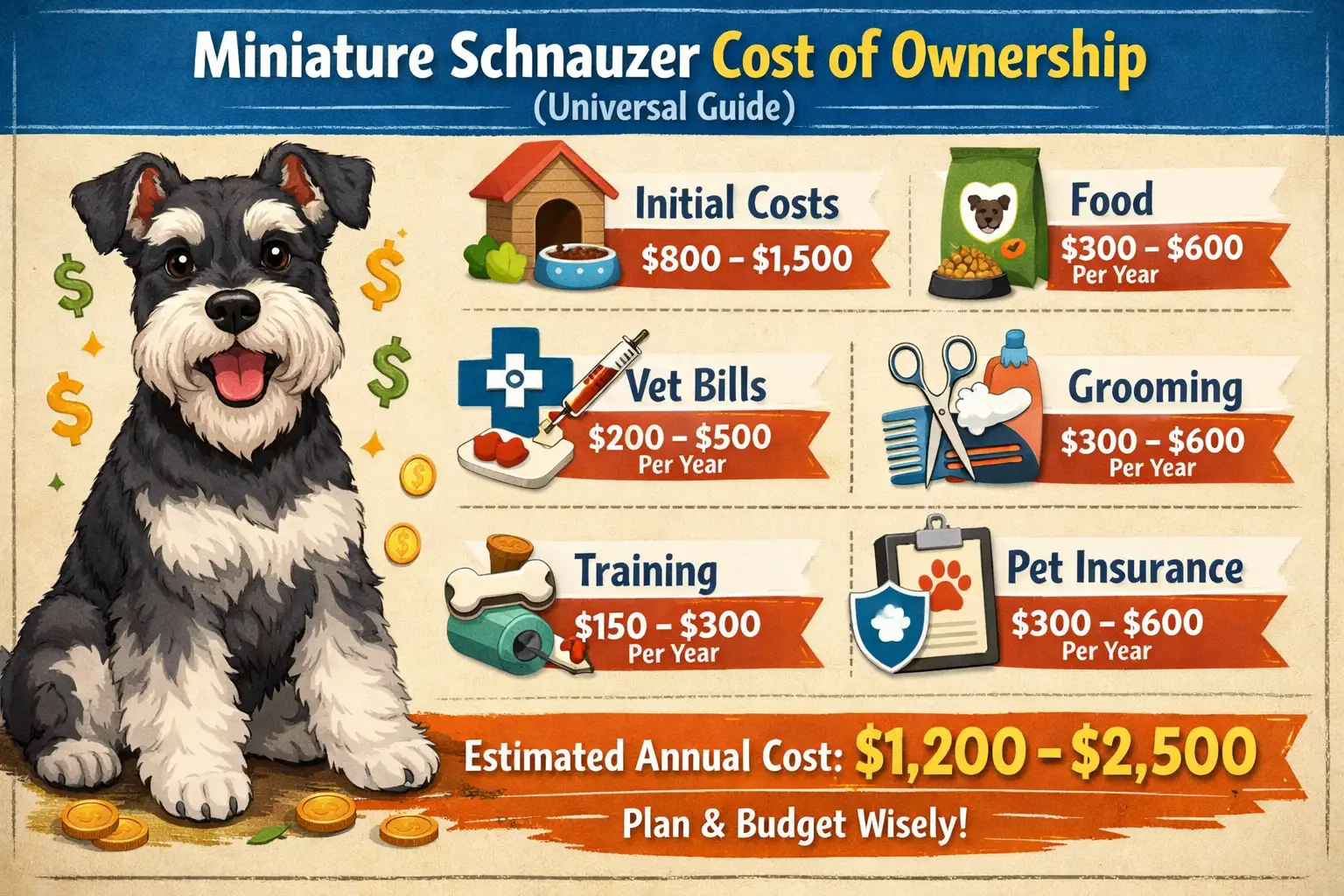
The Miniature Schnauzer cost can vary depending on whether you adopt, buy from a breeder, or bring home a puppy. In most cases, the Miniature Schnauzer adoption cost ranges from $150 to $500 through a shelter or rescue, while a Miniature Schnauzer puppy from a reputable breeder can cost $800 to $2,500. But the real cost does not stop at the adoption fee or purchase price. Owners also need to budget for grooming, veterinary care, food, supplies, insurance, training, and long-term health planning.
Recommended Dog Care Products
Based on your dog’s age, these products may help with comfort, health, grooming, and daily care.

Purina Pro Plan Veterinary Supplements
Daily probiotics for dogs to support digestive and gut health.
View on Amazon ↗
Earth Rated Poop Bags for Dogs
Leak-proof, extra thick waste bag refill rolls with lavender scent.
View on Amazon ↗
Greenies Pill Pockets for Dogs
Large dog treats for capsule medication, peanut butter flavor.
View on Amazon ↗
HONEY CARE All-Absorb Dog Wrap
Small male dog wraps, 50 count, useful for daily care support.
View on Amazon ↗
Seresto Flea & Tick Collar
Flea and tick treatment and prevention for dogs over 18 lbs.
View on Amazon ↗
Milk-Bone MaroSnacks
Small dog treats with real bone marrow in a 40 oz canister.
View on Amazon ↗
Vital Essentials Dog Treats
Freeze dried beef liver dog treats, grain free and single ingredient.
View on Amazon ↗
Stain & Odor Eliminator
Enzyme cleaner for pet stains, carpet messes, and strong odors.
View on Amazon ↗
Pur Luv Chicken Jerky Treats
Dog treats made with real chicken breast, high protein and chew-friendly.
View on Amazon ↗
Milk-Bone Flavor Snacks
Mini crunchy dog biscuits in a 36 oz canister for small rewards.
View on Amazon ↗As an Amazon Associate, we may earn from qualifying purchases.
This guide is designed for prospective and current owners who want a realistic financial picture, not just a simple puppy price estimate. If you’re still learning about the breed’s personality, temperament, and care needs, you can read our complete Miniature Schnauzer breed guide before deciding. Costs are influenced by factors such as whether you adopt or buy from a breeder, where you live, how much grooming you outsource, and how proactive you are with preventive care. A well-cared-for Miniature Schnauzer can live 12–15 years, making this a long-term financial commitment rather than a one-time expense.
Before getting into the full numbers, it’s important to understand how Miniature Schnauzer expenses usually break down over time:
How Much Does a Miniature Schnauzer Cost?
A Miniature Schnauzer typically costs $150 to $500 to adopt from a shelter or rescue, while buying from a reputable breeder usually costs $800 to $2,500. Puppies are usually more expensive than adult dogs because they often require more vaccinations, training, supplies, and early veterinary care. Adoption is usually the more affordable option, especially when the fee includes basic medical care such as vaccinations, spay or neuter surgery, and microchipping.
- Adoption cost: Usually $150 to $500 through shelters or rescues.
- Breeder price: Usually $800 to $2,500 depending on lineage, location, health testing, and breeder reputation.
- First-year costs: Often the highest because of the adoption fee or purchase price, vet care, spay/neuter surgery, training, and setup supplies.
- Monthly and annual expenses: Include food, grooming, routine vet visits, preventatives, toys, training, and optional pet insurance.
- Lifetime costs: Can vary widely depending on health, grooming frequency, location, and emergency medical needs.
Miniature Schnauzers are small dogs, but they are not always low-cost dogs. Their wiry, low-shedding coat requires regular grooming, either professionally or at home. Their intelligence and energy level can also make Miniature Schnauzer training and enrichment important parts of the budget. They may also be prone to certain health issues, which makes preventive care and emergency planning important from a cost perspective.
By the end of this article, you’ll have a clear understanding of:
- How much it costs to adopt or buy a Miniature Schnauzer
- What Miniature Schnauzer owners usually spend in the first year
- What you can expect to spend monthly and annually
- Why some owners pay significantly more or less than average
- Whether a Miniature Schnauzer fits your long-term budget, not just your lifestyle
This upfront clarity helps avoid financial surprises and ensures you’re prepared to provide consistent, high-quality care throughout your dog’s life.
Miniature Schnauzer Adoption Cost, Breeder Price, and First-Year Expenses
The first year is usually the most expensive year of owning a Miniature Schnauzer. This is because you are paying for the initial adoption fee or breeder purchase price, early veterinary care, training, and all the basic items your dog needs to live comfortably in your home.
Many new owners only think about the price of getting the dog, but the real first-year cost includes much more than that. Even if you adopt instead of buying from a breeder, you should still plan for vet checks, supplies, grooming, food, and basic training.
Where first-year Miniature Schnauzer costs come from
In the first year, you usually pay for:
Recommended Dog Care Products
Based on your dog’s age, these products may help with comfort, health, grooming, and daily care.
Purina Pro Plan Veterinary Supplements
Daily probiotics for dogs to support digestive and gut health.
View on Amazon ↗
Earth Rated Poop Bags for Dogs
Leak-proof, extra thick waste bag refill rolls with lavender scent.
View on Amazon ↗
Greenies Pill Pockets for Dogs
Large dog treats for capsule medication, peanut butter flavor.
View on Amazon ↗
HONEY CARE All-Absorb Dog Wrap
Small male dog wraps, 50 count, useful for daily care support.
View on Amazon ↗
Seresto Flea & Tick Collar
Flea and tick treatment and prevention for dogs over 18 lbs.
View on Amazon ↗
Milk-Bone MaroSnacks
Small dog treats with real bone marrow in a 40 oz canister.
View on Amazon ↗
Vital Essentials Dog Treats
Freeze dried beef liver dog treats, grain free and single ingredient.
View on Amazon ↗
Stain & Odor Eliminator
Enzyme cleaner for pet stains, carpet messes, and strong odors.
View on Amazon ↗
Pur Luv Chicken Jerky Treats
Dog treats made with real chicken breast, high protein and chew-friendly.
View on Amazon ↗
Milk-Bone Flavor Snacks
Mini crunchy dog biscuits in a 36 oz canister for small rewards.
View on Amazon ↗As an Amazon Associate, we may earn from qualifying purchases.
- Adoption fees or breeder purchase price
- First vet visits and vaccinations
- Spay or neuter surgery
- Microchipping and basic health checks
- Crate, bed, bowls, leash, toys, and grooming tools
- Puppy training classes or basic obedience support
Puppies usually cost more in the first year than adult dogs because they need more vet visits, training, supervision, and starter supplies.
Miniature Schnauzer Adoption Fee vs Breeder Price
Adoption is usually the most affordable way to get a Miniature Schnauzer, while buying from a breeder costs significantly more. The difference often comes down to pedigree, location, breeder reputation, early health testing, registration, and whether the puppy comes from carefully screened parents.
| Source | Typical Cost | What’s Usually Included |
|---|---|---|
| Shelter Adoption | $150 – $400 | Vaccinations, spay/neuter, basic health check |
| Breed-Specific Rescue | $300 – $600 | Medical screening, microchip, foster evaluation |
| Reputable Breeder | $800 – $2,500 | Pedigree papers, early health testing, breeder support |
If your main goal is to reduce upfront cost, adoption is usually the better option. If you choose a breeder, focus on health testing, transparency, and responsible breeding practices rather than choosing only by the lowest price.
Miniature Schnauzer first-year cost breakdown
| Expense category | Typical cost range (USD) |
|---|---|
| Purchase from breeder | $800 – $2,500 |
| Adoption fee | $150 – $500 |
| Initial vet visits & vaccines | $300 – $600 |
| Spay / neuter surgery | $200 – $600 |
| Microchipping | $40 – $75 |
| Basic supplies & setup | $250 – $500 |
| Puppy training classes | $100 – $300 |
| Estimated first-year total | $1,400 – $4,000+ |
These numbers can go higher if you live in a big city, choose premium services, buy from a high-demand breeder, or face early medical issues.
Miniature Schnauzer puppy cost vs adult dog cost
- Puppy: Higher first-year costs because of vaccinations, training, spay/neuter surgery, supplies, and extra supervision.
- Adult dog: Lower first-year costs in many cases, but adoption fees, vet checks, grooming, and supplies may still apply.
Adopting an adult Miniature Schnauzer can save money upfront, but you should still budget for health checks, grooming, food, and basic home setup.
Why planning for the first year matters
If you only plan for food costs, the first year can feel overwhelming. A realistic first-year budget helps you avoid stress and make better choices for your Miniature Schnauzer’s health, safety, and long-term care.
Monthly and Annual Miniature Schnauzer Expenses
After the first year, most Miniature Schnauzer costs become monthly and annual ownership expenses. These are the recurring bills you should expect throughout your dog’s life, including food, grooming, routine vet care, preventatives, toys, training, and optional pet insurance. Planning for these costs early helps you avoid financial stress later.
Even though Miniature Schnauzers are small dogs, they are not always cheap to maintain. Food costs are usually manageable, but grooming, health care, dental care, and emergency planning can make the total Miniature Schnauzer ownership cost higher than some first-time owners expect.
Regular Miniature Schnauzer costs you should expect
Most owners spend money regularly on:
- Food and treats
- Professional grooming or at-home grooming tools
- Routine vet care and preventive medicines
- Training, toys, and mental enrichment
- Pet insurance or emergency savings
Some expenses happen every month, while others are paid once or twice a year. Either way, they should be included in your Miniature Schnauzer budget.
Recommended Dog Care Products
Based on your dog’s age, these products may help with comfort, health, grooming, and daily care.
Purina Pro Plan Veterinary Supplements
Daily probiotics for dogs to support digestive and gut health.
View on Amazon ↗
Earth Rated Poop Bags for Dogs
Leak-proof, extra thick waste bag refill rolls with lavender scent.
View on Amazon ↗
Greenies Pill Pockets for Dogs
Large dog treats for capsule medication, peanut butter flavor.
View on Amazon ↗
HONEY CARE All-Absorb Dog Wrap
Small male dog wraps, 50 count, useful for daily care support.
View on Amazon ↗
Seresto Flea & Tick Collar
Flea and tick treatment and prevention for dogs over 18 lbs.
View on Amazon ↗
Milk-Bone MaroSnacks
Small dog treats with real bone marrow in a 40 oz canister.
View on Amazon ↗
Vital Essentials Dog Treats
Freeze dried beef liver dog treats, grain free and single ingredient.
View on Amazon ↗
Stain & Odor Eliminator
Enzyme cleaner for pet stains, carpet messes, and strong odors.
View on Amazon ↗
Pur Luv Chicken Jerky Treats
Dog treats made with real chicken breast, high protein and chew-friendly.
View on Amazon ↗
Milk-Bone Flavor Snacks
Mini crunchy dog biscuits in a 36 oz canister for small rewards.
View on Amazon ↗As an Amazon Associate, we may earn from qualifying purchases.
Average Miniature Schnauzer monthly and annual cost breakdown
| Expense | Monthly Cost | Annual Cost |
|---|---|---|
| Food and treats | $30 – $60 | $360 – $720 |
| Grooming | $40 – $90 | $480 – $1,080 |
| Routine vet care & preventatives | $25 – $50 | $300 – $600 |
| Pet insurance | $20 – $50 | $240 – $600 |
| Training, toys, and enrichment | $15 – $40 | $180 – $480 |
| Estimated total | $130 – $290 | $1,560 – $3,480 |
These are average estimates. Your real Miniature Schnauzer monthly cost may be higher or lower depending on your location, grooming routine, vet prices, insurance coverage, and your dog’s health needs.
Why grooming is a major Miniature Schnauzer cost
Miniature Schnauzers have a wiry, low-shedding coat that needs regular maintenance. This is one reason many people like the breed, but it also means grooming is one of the biggest recurring expenses for Miniature Schnauzer owners.
- Professional grooming is usually needed every 6–8 weeks
- At-home grooming can reduce costs, but it requires the right tools and routine
- Skipping grooming can lead to matting, skin irritation, discomfort, and higher grooming bills later
- Many owners use a mix of professional grooming and basic home maintenance to control costs
If you want to lower grooming expenses without hurting coat health, review our Miniature Schnauzer Grooming Basics guide for practical grooming care tips.
Grooming is one of the main reasons Miniature Schnauzers can cost more to maintain than some other small dog breeds.
Food, treats, and nutrition costs
Food is usually not the most expensive part of owning a Miniature Schnauzer, but it still matters. Most owners spend around $30 to $60 per month on food and treats, depending on food quality, portion size, age, activity level, and any digestive sensitivities.
Choosing the right diet can also affect long-term health costs. A balanced diet may help reduce avoidable issues related to weight, digestion, skin, and energy levels. For more detailed feeding guidance, read our Miniature Schnauzer Nutrition & Feeding guide.
Vet care and health planning
Routine veterinary care is another important part of the annual Miniature Schnauzer cost. Even healthy dogs need regular checkups and preventive care to avoid bigger health problems later.
Routine vet care usually includes:
- Yearly wellness exams
- Vaccines and boosters
- Flea, tick, and worm prevention
- Dental checks and cleanings when needed
- Bloodwork or senior dog screening as your dog gets older
Healthy dogs usually cost less each year, but emergency vet visits can be expensive. This is why many owners either choose pet insurance or build a separate emergency savings fund for unexpected vet bills.
Miniature Schnauzer Insurance Cost
Pet insurance for a Miniature Schnauzer typically costs between $20 and $50 per month, depending on your location, your dog’s age, deductible, reimbursement level, and the type of coverage you choose. Accident-only plans usually cost less, while more complete plans that cover illness, hereditary conditions, and emergency care cost more.
Recommended Dog Care Products
Based on your dog’s age, these products may help with comfort, health, grooming, and daily care.
Purina Pro Plan Veterinary Supplements
Daily probiotics for dogs to support digestive and gut health.
View on Amazon ↗
Earth Rated Poop Bags for Dogs
Leak-proof, extra thick waste bag refill rolls with lavender scent.
View on Amazon ↗
Greenies Pill Pockets for Dogs
Large dog treats for capsule medication, peanut butter flavor.
View on Amazon ↗
HONEY CARE All-Absorb Dog Wrap
Small male dog wraps, 50 count, useful for daily care support.
View on Amazon ↗
Seresto Flea & Tick Collar
Flea and tick treatment and prevention for dogs over 18 lbs.
View on Amazon ↗
Milk-Bone MaroSnacks
Small dog treats with real bone marrow in a 40 oz canister.
View on Amazon ↗
Vital Essentials Dog Treats
Freeze dried beef liver dog treats, grain free and single ingredient.
View on Amazon ↗
Stain & Odor Eliminator
Enzyme cleaner for pet stains, carpet messes, and strong odors.
View on Amazon ↗
Pur Luv Chicken Jerky Treats
Dog treats made with real chicken breast, high protein and chew-friendly.
View on Amazon ↗
Milk-Bone Flavor Snacks
Mini crunchy dog biscuits in a 36 oz canister for small rewards.
View on Amazon ↗As an Amazon Associate, we may earn from qualifying purchases.
Insurance is optional, but it can help reduce the financial impact of emergency surgeries, chronic conditions, or unexpected medical treatments. If you do not use insurance, it is smart to save a small amount each month for future vet emergencies.
What Makes Miniature Schnauzers More or Less Expensive to Own
Not all Miniature Schnauzer owners spend the same amount of money. Two people can own the same breed and still have very different costs. Your total Miniature Schnauzer ownership cost depends on grooming choices, health needs, location, lifestyle, insurance decisions, and how much care you handle at home.
Are Miniature Schnauzers Expensive Compared to Other Dogs?
Miniature Schnauzers are moderately expensive compared to many small dog breeds. Their food costs are usually similar to other small dogs, but regular grooming, dental care, skin care, and possible health issues can increase yearly expenses. They often cost more to maintain than very low-grooming breeds, but they are usually less expensive than large breeds that need more food and may have higher medical costs.
Miniature Schnauzer cost compared to other small dogs
| Breed | Typical Cost Level | Main Cost Driver |
|---|---|---|
| Miniature Schnauzer | Moderate to high | Regular grooming, vet care, dental care |
| Dachshund | Moderate | Back health, vet care, weight control |
| Shih Tzu | Moderate to high | Frequent grooming and coat care |
| Maltese | Moderate to high | Grooming, dental care, tear staining |
| Pug | Moderate to high | Breathing issues, vet care, weight control |
This comparison shows why Miniature Schnauzers are not usually the cheapest small dogs to own. Their size helps keep food costs lower, but grooming and health planning still make them a serious financial commitment.
Main factors that change the total cost
Some cost factors are in your control, while others depend on your dog’s health, age, and location. The biggest cost drivers are:
- Grooming style and how often it is done
- Your dog’s health and medical needs
- Where you live
- Your lifestyle and travel habits
- Whether you use pet insurance or emergency savings
- Whether you adopt an adult dog or buy a puppy from a breeder
Cost differences explained simply
| Cost Factor | Lower-Cost Situation | Higher-Cost Situation |
|---|---|---|
| Grooming | Basic grooming at home | Professional grooming every 6–8 weeks |
| Health | Healthy dog with few issues | Allergies, dental problems, or chronic illness |
| Location | Small town or lower-cost area | Big city or high-cost area |
| Lifestyle | Home often, little travel | Frequent travel, boarding, or pet sitters |
| Insurance | Emergency savings only | Full pet insurance plan |
| Source | Adoption or rescue | Reputable breeder or high-demand puppy |
Grooming choices matter a lot
Miniature Schnauzers need regular grooming no matter what. The biggest difference is who does the grooming and how often you pay for professional services.
- Home grooming costs less but requires tools, patience, and consistency
- Professional grooming costs more but saves time and keeps the coat neat
- A mixed routine can help reduce costs while still keeping the coat healthy
Many owners use professional grooming for full coat trims and handle brushing, basic cleaning, and maintenance at home between appointments.
Health and medical risks
Miniature Schnauzers are usually healthy, but some dogs may develop health needs that increase the total cost of ownership. Common cost-related concerns can include:
- Skin issues
- Dental problems
- Digestive sensitivities
- Weight management needs
- Senior dog care as they get older
A healthy dog costs less each year. Dogs with long-term health problems can cost much more because of vet visits, medicines, special food, testing, and ongoing care.
Location and lifestyle impact
Where you live can strongly affect the cost of owning a Miniature Schnauzer. Big cities and high-cost areas often have higher prices for grooming, veterinary care, boarding, pet sitting, and emergency services.
Living in a city often means:
- Higher vet bills
- Higher grooming prices
- Higher boarding or pet-sitting costs
- More expensive emergency care
If you travel often, boarding or pet sitting can become a regular expense. Owners who are home more often usually spend less on outside care.
Lifetime Cost, Hidden Expenses, and Smart Budgeting Tips
Beyond the initial adoption fee or breeder purchase price, owning a Miniature Schnauzer is a long-term financial commitment. Most Miniature Schnauzers live between 12 and 15 years, so it is important to think beyond the first year and plan for the full lifetime cost.
If you’re curious how your dog’s age compares in human years, you can use our Miniature Schnauzer Age Calculator for a quick estimate. Understanding your dog’s life stage can also help you plan for changing care needs as your Miniature Schnauzer moves from puppyhood to adulthood and senior age.
Small monthly costs may seem easy to handle, but over many years, they become a large total. This is why lifetime budgeting matters.
Estimated lifetime cost of a Miniature Schnauzer
| Time Period | Estimated Cost (USD) |
|---|---|
| First year | $1,400 – $4,000+ |
| Each adult year | $1,500 – $3,500 |
| 12–15 year lifetime | $18,000 – $45,000+ |
These are average estimates. A healthy Miniature Schnauzer with basic care may cost less, while a dog with medical issues, frequent grooming needs, special food, or emergency vet bills may cost more.
Miniature Schnauzer cost summary
- Adoption cost: $150 – $500
- Breeder price: $800 – $2,500
- First-year total: $1,400 – $4,000+
- Monthly cost: $130 – $290
- Annual cost: $1,560 – $3,480
- Estimated lifetime cost: $18,000 – $45,000+
Hidden costs many Miniature Schnauzer owners forget
Some costs do not happen every month, but they still matter. These hidden expenses can increase the real cost of owning a Miniature Schnauzer over time:
- Emergency vet visits
- Dental cleanings
- Replacing chewed toys, beds, or furniture
- Boarding or pet sitting during travel
- Special food for allergies or stomach issues
- Medicine for long-term health problems
- Senior dog checkups and extra testing
These costs can appear without warning, which is why planning ahead is important. A small monthly emergency fund can make future vet bills easier to manage.
Simple budgeting tips for Miniature Schnauzer owners
You do not need to be rich to own a Miniature Schnauzer, but you do need a realistic plan. Budgeting helps you give your dog steady care without being surprised by predictable expenses.
Helpful ideas include:
- Set aside a small amount of money each month for vet emergencies
- Learn basic grooming to reduce salon visits
- Use good-quality food to support long-term health
- Compare pet insurance plans before choosing one
- Track yearly costs so nothing surprises you
- Plan extra care as your dog gets older
Saving money is good, but skipping vet care, grooming, or proper nutrition can create bigger problems and higher costs later.
Final reality check
Miniature Schnauzers are loving, smart, and fun dogs, but they are not the cheapest breed to own. Their grooming needs, health care, dental care, and long lifespan make them a serious financial responsibility.
If you can plan for the costs and stick to a realistic budget, owning a Miniature Schnauzer can be very rewarding. To understand your dog’s age and care stage more clearly, use our Miniature Schnauzer Age Calculator as a helpful next step.
Miniature Schnauzer Cost FAQs
How much does a Miniature Schnauzer cost?
A Miniature Schnauzer typically costs between $150 and $500 to adopt from a shelter or rescue. If purchased from a reputable breeder, the price usually ranges from $800 to $2,500 depending on lineage, location, breeder reputation, and health testing.
What is the average Miniature Schnauzer adoption fee?
The average Miniature Schnauzer adoption fee usually ranges from $150 to $400 at shelters and $300 to $600 through breed-specific rescues. Adoption fees often include basic care such as vaccinations, spay or neuter surgery, microchipping, and a health check.
How much is a Miniature Schnauzer puppy?
A Miniature Schnauzer puppy from a reputable breeder usually costs between $800 and $2,500. The price can be higher for puppies from champion lines, high-demand locations, registered breeders, or parents with documented health testing.
Are Miniature Schnauzers expensive to own?
Miniature Schnauzers are moderately expensive to own compared to many small breeds. Their food costs are usually reasonable, but regular grooming, dental care, routine vet care, insurance, and possible health issues can increase the total yearly cost.
Are Miniature Schnauzers expensive to maintain?
Yes, Miniature Schnauzers can be more expensive to maintain than some low-grooming small breeds. Their wiry coat needs regular grooming, and owners should also budget for vet care, food, training, preventatives, and possible insurance.
What is the monthly cost of owning a Miniature Schnauzer?
The average monthly cost of owning a Miniature Schnauzer is usually around $130 to $290. This includes food, grooming, routine care, preventatives, toys, training, and optional pet insurance. Costs can be higher if your dog needs frequent grooming or medical care.
What is the lifetime cost of a Miniature Schnauzer?
Over a 12–15 year lifespan, a Miniature Schnauzer can cost between $18,000 and $45,000 or more. The final amount depends on health, grooming frequency, vet bills, food quality, insurance, location, and emergency expenses.
Is adopting a Miniature Schnauzer cheaper than buying one?
Yes, adopting a Miniature Schnauzer is usually much cheaper than buying one from a breeder. Adoption often costs $150 to $500, while a breeder puppy may cost $800 to $2,500. Adoption fees may also include basic medical care, which can reduce early expenses.

Ata Ur Rehman is the founder of Pet Age in Human Years Calculator, an educational platform that provides age conversion charts and lifespan guides for dogs, cats, birds, and other companion animals. His work focuses on helping pet owners understand how animal ages translate into human years using commonly accepted age conversion formulas and published lifespan averages.
The website compiles breed and species lifespan data from kennel clubs, breed organizations, and general animal lifespan studies to present simple and easy-to-understand guides for pet owners worldwide.
This website was created to centralize animal age conversion charts into one easy reference platform for pet owners.