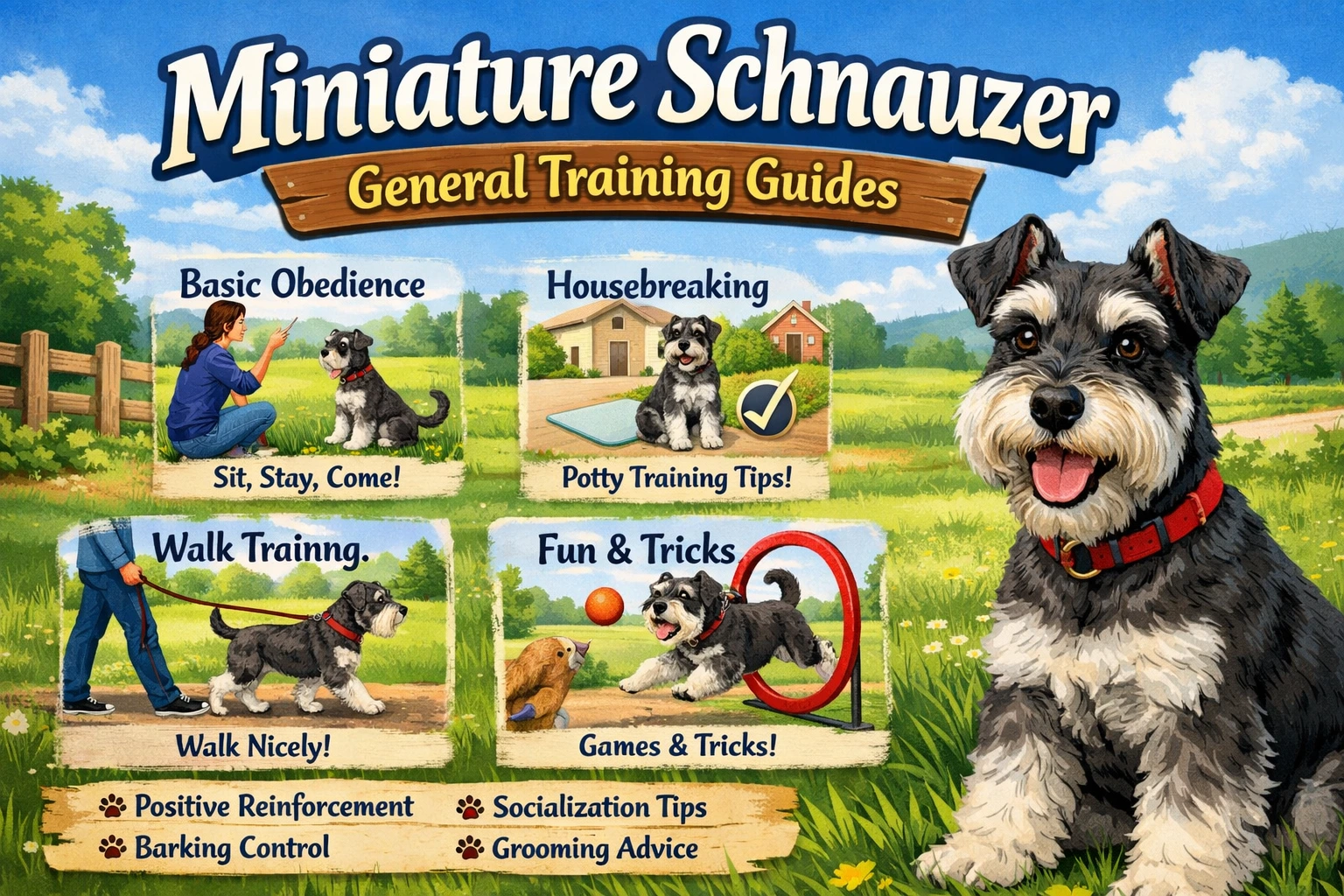
Miniature Schnauzer training is about more than teaching a dog to sit or stay. It is about building focus, confidence, calm behavior, and everyday manners in a smart, alert, and independent breed. This guide explains how to train a Miniature Schnauzer step by step, whether you have a young puppy, an adult dog, or a recently adopted rescue.
Miniature Schnauzers are quick learners, but they also have strong opinions. They often respond best to short lessons, clear rules, consistent routines, and reward-based training. Without proper guidance, their intelligence can turn into excessive barking, selective listening, leash pulling, or stubborn habits. With the right method, they can become focused, obedient, and easier to manage at home and outdoors.
This Miniature Schnauzer training guide focuses on practical methods you can use in real life. You will learn how Miniature Schnauzers think, what motivates them, how to train puppies and adults, and how to handle common behavior problems like barking, poor recall, and ignoring commands.
How to Train a Miniature Schnauzer
To train a Miniature Schnauzer, start with short daily sessions, clear commands, and rewards your dog truly values. This breed learns quickly, but long or repetitive training can make them bored. A better approach is to train for 5 to 10 minutes, repeat often, and reward the exact behavior you want.
Begin in a quiet place with few distractions. Teach simple commands first, such as name response, sit, stay, come, and loose leash walking. Once your Miniature Schnauzer understands these commands indoors, slowly practice in harder places like the yard, sidewalk, or park.
The most important rule is consistency. Everyone in the home should use the same commands, same rules, and same rewards. If one person allows jumping or barking while another person corrects it, the dog becomes confused. Clear and repeated training helps your Miniature Schnauzer understand what behavior is expected.
Why Miniature Schnauzer Training Is Different
Miniature Schnauzers are not usually difficult to train, but they are different from many other small dogs. They were originally bred as alert working dogs, so they naturally notice sounds, movement, strangers, and changes around them. This is one reason many owners describe the breed as smart, alert, and sometimes stubborn.
These dogs learn fast, but they also think for themselves. If training feels boring, confusing, or unfair, a Miniature Schnauzer may stop listening. This does not mean the dog is bad. It usually means the training method needs to become clearer, shorter, or more rewarding.
Training matters because it helps control common Miniature Schnauzer behavior problems, including barking, pulling on the leash, jumping, ignoring commands, and reacting too quickly to people or pets. A well-trained Miniature Schnauzer is calmer, safer, and easier to live with every day.
Mental exercise is just as important as physical exercise for this breed. Walks alone are not enough. Short obedience sessions, focus games, scent games, and simple problem-solving activities give their brain a job to do and reduce behavior problems caused by boredom.
Miniature Schnauzer Traits and Training Implications
| Breed Trait | How It Affects Training | What Owners Should Do |
|---|---|---|
| Very intelligent | Learns quickly but gets bored easily | Keep sessions short, clear, and interesting |
| Alert and watchful | May bark at sounds, people, or movement | Teach focus, quiet, and calm behavior early |
| Independent nature | May ignore commands if the reward is weak | Use treats, praise, or play the dog truly enjoys |
| Strong prey interest | May chase small animals or moving objects | Practice recall, leash control, and impulse control |
| Loyal to family | Bonds closely but may become protective | Use socialization and calm exposure to new people |
Understanding these traits of the Miniature Schnauzer breed helps you train smarter, not harder. When you work with your dog’s natural personality instead of fighting against it, training becomes easier and more effective.
Miniature Schnauzer Training Methods That Work Best
The best Miniature Schnauzer training methods are clear, positive, and consistent. This breed does not respond well to shouting, fear, or harsh correction. Harsh training can make a Schnauzer anxious, defensive, or less willing to listen. Reward-based training works better because it teaches the dog what to do instead of only punishing what not to do.
Reward-based learning means your dog receives something valuable right after doing the correct behavior. This may be a small treat, praise, a toy, or a short play session. Timing matters. The reward should come immediately, so your Miniature Schnauzer connects the reward with the right action.
For example, if your dog sits and receives a treat right away, the dog learns that sitting brings a good result. If the reward comes too late, the dog may not understand what it did correctly. This is why short, focused sessions usually work better than long training sessions.
Miniature Schnauzer training should also match the dog’s age and life stage. A puppy needs short lessons, socialization, potty training, and basic routines. An adult dog may need more work on old habits, leash manners, barking control, or focus around distractions. You can also use a Miniature Schnauzer age calculator to better understand your dog’s life stage before choosing the right training pace.
Puppy vs Adult Miniature Schnauzer Training Differences
| Training Factor | Puppy Miniature Schnauzer | Adult Miniature Schnauzer |
|---|---|---|
| Attention span | Very short | Longer but more selective |
| Learning speed | Fast but easily distracted | Steady with repetition |
| Main focus | Routines, potty training, socialization, and basic commands | Breaking old habits and improving reliability |
| Common challenge | Overexcitement and short focus | Ignoring known commands or reacting to distractions |
| Best approach | Gentle, fun, and frequent practice | Calm, consistent, and patient retraining |
If training feels slow, that is normal. Miniature Schnauzers are intelligent, but every dog learns at its own pace. Small progress each day is a good sign, especially when your dog is becoming calmer, more focused, and more responsive.
Step-by-Step Miniature Schnauzer Training Guide
Training a Miniature Schnauzer works best when it is done a little every day. Long sessions are not needed. Short, clear training helps your dog stay focused and prevents frustration.
Start in a quiet place at home with very few distractions. Once your dog understands a command indoors, slowly practice in harder places like the yard, sidewalk, or park. Always reward good behavior immediately with a small treat, praise, or play.
Begin with basic obedience skills first. These commands create the foundation for better behavior, safer walks, and stronger control around distractions.
Train these skills early:
- Name response, so your dog looks at you when called
- Sit, for calm control before food, doors, and greetings
- Stay, to build patience and impulse control
- Come, for recall and safety
- Loose leash walking, to reduce pulling on walks
- Quiet, to help manage barking
Training should feel calm and positive. If your dog becomes tired, distracted, or frustrated, stop and try again later. Ending on a successful command helps your Miniature Schnauzer enjoy the next session.
Daily Miniature Schnauzer Training Schedule
| Time of Day | Session Length | Training Focus |
|---|---|---|
| Morning | 5–10 minutes | Name response, sit, stay, and focus |
| Afternoon | 5 minutes | Leash walking, recall, or quiet command |
| Evening | 5–10 minutes | Calm behavior, review, and gentle handling |
Short sessions like these usually work better than one long training session. The goal is not to tire your dog out. The goal is to build habits your dog can repeat every day.
Miniature Schnauzer Puppy Training Timeline by Age
A Miniature Schnauzer puppy should be trained in small steps based on age, focus level, and confidence. Young puppies need simple routines first. Older puppies can slowly handle more commands, distractions, and impulse-control exercises.
| Puppy Age | Main Training Focus | What to Practice |
|---|---|---|
| 8–12 weeks | Trust, name response, potty routine, crate comfort | Use short sessions, reward calm behavior, and start gentle handling |
| 3–4 months | Basic commands and socialization | Practice sit, come, leash introduction, and calm exposure to people and sounds |
| 5–6 months | Impulse control and better focus | Practice stay, quiet, loose leash walking, and waiting before doors or meals |
| 6–12 months | Reliability around distractions | Practice commands outdoors, improve recall, and reduce barking or pulling habits |
| Adult stage | Stronger obedience and habit correction | Review basic commands, fix problem behaviors, and build consistent routines |
This timeline is a guide, not a strict rule. Some Miniature Schnauzers learn faster, while others need more repetition. If you want to better understand your dog’s life stage, you can use the Miniature Schnauzer age calculator before choosing the right training pace.
Miniature Schnauzer Training Progress Timeline
| Time Period | What to Expect | Signs of Progress |
|---|---|---|
| Week 1–2 | Learning simple commands and routines | Responds better indoors |
| Week 3–4 | Better focus and faster response | Follows cues with fewer reminders |
| Month 2 | More reliable behavior in normal home situations | Listens with mild distractions |
| Month 3+ | Stronger habits and better public behavior | Commands work on walks or around people |
Every Miniature Schnauzer is different. If your dog seems stubborn, check the reward, the environment, and the difficulty level. Many Schnauzers work harder for food than praise, especially in the beginning. Use small, tasty treats during training, then slowly reduce treats as the behavior becomes more reliable.
Common Miniature Schnauzer Training Problems and When to Get Help
Even with good training, Miniature Schnauzers can develop behavior problems. This is normal. Most issues come from boredom, mixed signals, weak rewards, lack of socialization, or training that moves too fast.
Barking is one of the most common Miniature Schnauzer training problems. These dogs are naturally alert and often want to warn their owners about sounds, visitors, other dogs, or movement outside. Training should focus on teaching calm behavior, not punishing the dog for noticing things.
Another common issue is ignoring commands. This usually means the dog is distracted, the reward is not strong enough, or the command has not been practiced enough in different places. It does not always mean the dog is being difficult on purpose.
Some Miniature Schnauzers also pull on the leash or become too excited during walks. This often happens when the dog has not learned how to stay calm before moving forward. Leash training should begin slowly, with rewards for walking near you and stopping when pulling starts.
Common Miniature Schnauzer Training Problems and Fixes
| Problem | Likely Cause | What to Try | When to Get Help |
|---|---|---|---|
| Too much barking | Alert nature, boredom, or poor impulse control | Teach quiet, reward calm moments, and add mental games | Barking becomes fearful, aggressive, or constant |
| Ignoring commands | Distractions, weak rewards, or unclear training | Train in quiet areas first and use better rewards | Dog does not respond even after steady practice |
| Pulling on leash | Excitement or poor leash habits | Stop when pulling starts and reward walking near you | Dog lunges, panics, or reacts aggressively |
| Training going backward | Teen stage, routine change, or inconsistent rules | Go back to basics and rebuild simple commands | No progress after several weeks |
| Fear or anxiety | Past experiences, poor socialization, or stress | Use slow training, safe spaces, and gentle exposure | Fear gets worse or causes aggression |
You should seek professional help if training problems do not improve after several weeks of steady practice. A certified dog trainer or behavior expert can help if your Miniature Schnauzer shows strong fear, aggression, panic, or stress that you cannot manage safely at home.
Early help is better than waiting. The sooner you fix problem behaviors, the easier training becomes for both you and your dog.
How to Stop a Miniature Schnauzer From Barking Too Much
Barking is one of the most common Miniature Schnauzer training challenges. This breed is naturally alert, so your dog may bark at visitors, doorbells, other dogs, outside noises, or movement near the home. The goal is not to stop all barking. The goal is to teach your Miniature Schnauzer when to be quiet and how to stay calm after noticing something.
Start by finding the trigger. If your dog barks at the window, block the view during training. If your dog barks at the doorbell, practice with a softer doorbell sound first. If your dog barks at other dogs on walks, increase the distance and reward calm focus before your dog reacts.
Teach the quiet command when your dog is calm enough to listen. Say “quiet” in a calm voice, wait for even one second of silence, then reward immediately. Repeat this often. Over time, ask for two seconds, then five seconds, then longer quiet periods before giving the reward.
Avoid yelling when your Miniature Schnauzer barks. To the dog, yelling can sound like you are barking too, which may make the behavior worse. Calm timing works better. Reward quiet moments, redirect your dog before barking becomes intense, and give your Schnauzer enough mental exercise during the day.
Miniature Schnauzer Barking Training Steps
| Step | What to Do | Why It Helps |
|---|---|---|
| Find the trigger | Notice whether your dog barks at sounds, people, dogs, or windows | You can train more clearly when you know the cause |
| Reduce the trigger | Use distance, curtains, calm rooms, or softer sounds | Prevents barking from becoming too intense |
| Reward quiet moments | Give a treat when your dog stops barking, even briefly | Teaches that quiet behavior brings a reward |
| Teach “quiet” | Say the cue calmly and reward silence right away | Gives your dog a clear behavior to follow |
| Practice daily | Repeat short sessions with the same cue and reward | Builds a reliable habit over time |
Miniature Schnauzer Leash Training Tips
Miniature Schnauzer leash training should start slowly because this breed can become excited by movement, smells, people, and other dogs. Pulling usually happens when the dog learns that pulling helps them move forward. To fix this, your Miniature Schnauzer needs to learn that a loose leash is what makes the walk continue.
Begin in a quiet area before practicing on busy streets. Hold the leash calmly, keep treats ready, and reward your dog when it walks near you without pulling. If your dog pulls, stop walking. Wait until the leash becomes loose or your dog looks back at you, then move forward again.
Do not expect perfect leash walking in one session. Miniature Schnauzers need repeated practice in different places. Start with short walks focused on training, not distance. A five-minute calm leash session is more useful than a long walk where your dog pulls the whole time.
Loose Leash Training Method
| Problem | What to Do | Training Goal |
|---|---|---|
| Dog pulls ahead | Stop walking and wait for the leash to loosen | Teach that pulling does not move the walk forward |
| Dog walks near you | Reward with a treat or praise | Teach that staying close is valuable |
| Dog reacts to another dog | Create distance and reward calm focus | Reduce excitement before it becomes barking or lunging |
| Dog sniffs too much | Use a clear cue like “let’s go” and reward movement | Build better focus during walks |
| Dog loses focus outside | Practice in quieter places first | Make training easier before adding distractions |
How to Socialize a Miniature Schnauzer
Socialization is an important part of Miniature Schnauzer training because this breed is naturally watchful. A poorly socialized Miniature Schnauzer may bark more, become nervous around strangers, or react strongly to other dogs. Good socialization teaches your dog that new people, sounds, places, and situations are normal.
Socialization does not mean forcing your dog to meet every person or dog. It means giving your Miniature Schnauzer calm, positive exposure at a pace the dog can handle. Your dog should feel safe, not overwhelmed. If your dog looks stressed, move farther away and make the situation easier.
For puppies, socialization should include gentle exposure to household sounds, visitors, different surfaces, car rides, grooming tools, and calm dogs. For adult Miniature Schnauzers, socialization may need to move more slowly, especially if the dog already has fear, barking, or reactivity issues.
Handling practice is also useful for this breed. Teach your dog to accept gentle touching of the paws, ears, beard, and body. This can make grooming, vet visits, and daily care easier. For more care-related support, you can also read the Miniature Schnauzer grooming basics guide.
Miniature Schnauzer Socialization Checklist
| Socialization Area | What to Practice | Training Tip |
|---|---|---|
| People | Calm exposure to adults, children, and visitors | Reward calm behavior instead of forcing interaction |
| Sounds | Doorbells, traffic, household sounds, and outdoor noise | Start with low intensity and increase slowly |
| Other dogs | Controlled distance around calm dogs | Reward focus before barking starts |
| Handling | Paws, ears, beard, collar, and gentle brushing | Keep sessions short and positive |
| New places | Car rides, sidewalks, parks, and safe public spaces | Use short visits and end before your dog gets overwhelmed |
Miniature Schnauzer Training Mistakes to Avoid
Many Miniature Schnauzer training problems become worse because of small mistakes that happen every day. This breed is intelligent, so it quickly learns what works. If barking gets attention, barking may continue. If pulling moves the walk forward, pulling may become stronger. If rules change from person to person, the dog becomes confused.
The biggest mistake is being inconsistent. A Miniature Schnauzer needs clear rules from everyone in the home. If your dog is not allowed to jump, bark for attention, or pull on the leash, that rule should stay the same every day.
Another mistake is making training sessions too long. Miniature Schnauzers usually do better with short, focused practice. Long sessions can lead to boredom, frustration, or stubborn behavior. Keep training simple, reward often, and stop before your dog loses interest.
You should also avoid using weak rewards in distracting places. Praise may work at home, but outside around dogs, people, or smells, your Miniature Schnauzer may need a higher-value treat. If you use treats often during training, choose small portions and keep your dog’s daily food needs in mind. For feeding support, see the Miniature Schnauzer nutrition and feeding guide.
Common Training Mistakes
| Mistake | Why It Hurts Training | Better Approach |
|---|---|---|
| Training for too long | Your dog gets bored or frustrated | Use short 5 to 10 minute sessions |
| Changing commands | Your dog becomes confused | Use the same cue every time |
| Rewarding too late | Your dog may not know what was correct | Reward immediately after the right behavior |
| Yelling at barking | Can increase excitement or stress | Teach quiet and reward calm behavior |
| Skipping socialization | Can lead to fear, barking, or reactivity | Use calm exposure in small steps |
| Expecting fast results | Creates frustration for owner and dog | Build progress slowly with repetition |
Miniature Schnauzer Training FAQs
Are Miniature Schnauzers easy to train?
Miniature Schnauzers are usually easy to train when lessons are short, clear, and reward-based. They are intelligent dogs, so they learn quickly, but they can become stubborn if training feels boring, confusing, or inconsistent.
Are Miniature Schnauzers stubborn?
Miniature Schnauzers can seem stubborn because they are independent and alert. In many cases, the dog is not refusing to learn. The training may need better rewards, fewer distractions, shorter sessions, or clearer rules.
How do you stop a Miniature Schnauzer from barking?
To stop a Miniature Schnauzer from barking too much, first identify the trigger, then reward quiet behavior before barking becomes intense. Teach a calm “quiet” command, reduce window or door triggers when needed, and avoid yelling because it can make barking worse.
When should you start training a Miniature Schnauzer puppy?
You can start training a Miniature Schnauzer puppy as soon as the puppy comes home. Begin with name response, potty routine, crate comfort, gentle handling, and simple commands. Keep sessions short and positive.
Can adult Miniature Schnauzers be trained?
Yes, adult Miniature Schnauzers can be trained. Adult dogs may need more time if they already have old habits, but they can still learn well with patience, consistency, and reward-based training.
How long does Miniature Schnauzer training take?
Basic commands can improve within a few weeks, but reliable behavior usually takes several months of consistent practice. Miniature Schnauzers need repeated training in different places before commands become dependable around distractions.
What is the best training method for a Miniature Schnauzer?
The best training method for a Miniature Schnauzer is reward-based training with clear commands, short sessions, and consistent rules. This method works well because it teaches the dog what behavior earns praise, treats, play, or attention.

Ata Ur Rehman is the founder of Pet Age in Human Years Calculator, an educational platform that provides age conversion charts and lifespan guides for dogs, cats, birds, and other companion animals. His work focuses on helping pet owners understand how animal ages translate into human years using commonly accepted age conversion formulas and published lifespan averages.
The website compiles breed and species lifespan data from kennel clubs, breed organizations, and general animal lifespan studies to present simple and easy-to-understand guides for pet owners worldwide.
This website was created to centralize animal age conversion charts into one easy reference platform for pet owners.