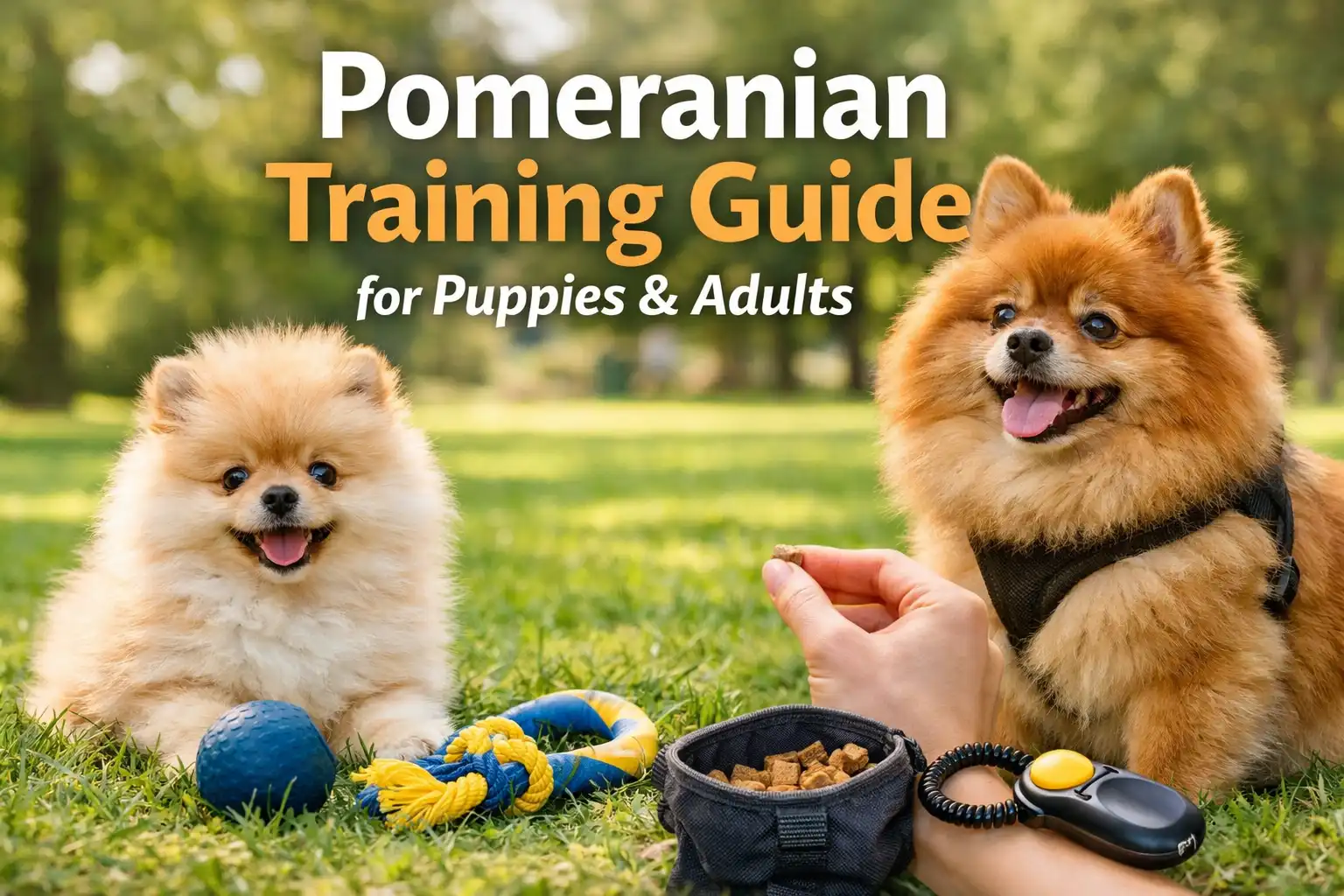
Pomeranians may be small, but they are confident, alert, and highly intelligent dogs. That combination makes Pomeranian training very rewarding, but it can also be challenging if rules, routines, and rewards are not clear from the beginning.
Recommended Dog Care Products
Based on your dog’s age, these products may help with comfort, health, grooming, and daily care.

Purina Pro Plan Veterinary Supplements
Daily probiotics for dogs to support digestive and gut health.
View on Amazon ↗
Earth Rated Poop Bags for Dogs
Leak-proof, extra thick waste bag refill rolls with lavender scent.
View on Amazon ↗
Greenies Pill Pockets for Dogs
Large dog treats for capsule medication, peanut butter flavor.
View on Amazon ↗
HONEY CARE All-Absorb Dog Wrap
Small male dog wraps, 50 count, useful for daily care support.
View on Amazon ↗
Seresto Flea & Tick Collar
Flea and tick treatment and prevention for dogs over 18 lbs.
View on Amazon ↗
Milk-Bone MaroSnacks
Small dog treats with real bone marrow in a 40 oz canister.
View on Amazon ↗
Vital Essentials Dog Treats
Freeze dried beef liver dog treats, grain free and single ingredient.
View on Amazon ↗
Stain & Odor Eliminator
Enzyme cleaner for pet stains, carpet messes, and strong odors.
View on Amazon ↗
Pur Luv Chicken Jerky Treats
Dog treats made with real chicken breast, high protein and chew-friendly.
View on Amazon ↗
Milk-Bone Flavor Snacks
Mini crunchy dog biscuits in a 36 oz canister for small rewards.
View on Amazon ↗As an Amazon Associate, we may earn from qualifying purchases.
Many owners assume that because Pomeranians are cute and easy to carry, training is optional. In reality, proper training helps prevent excessive barking, stubborn behavior, toilet accidents, leash pulling, and nervous reactions around new people or pets.
This Pomeranian training guide is designed for both puppy owners and people training an adult Pomeranian who may have missed early lessons. You will learn how to train a Pomeranian using simple, calm, reward-based methods that work in real homes.
If you want a broader overview of this breed’s temperament, care needs, and daily routine, read our Pomeranian dog full guide.
The goal is not to make your dog perfect. The goal is to help your Pomeranian understand what you expect, feel secure in daily routines, and respond better to you at home, outdoors, and around distractions.
By the end of this guide, you will understand how Pomeranians learn, why common behavior problems develop, and how to build better habits step by step. Whether you are working on puppy training, barking, house training, leash walking, or basic obedience, this guide gives you a strong foundation.
Why Pomeranian Training Matters
Training a Pomeranian is not just about teaching tricks. It is about safety, calm behavior, confidence, and building a stronger bond with your dog. Because Pomeranians are small, some owners ignore behavior problems at first. Over time, those small problems can become difficult habits.
Training matters for this breed because:
- Pomeranians are confident and may try to control situations if rules are unclear.
- Barking can become excessive when limits and routines are not taught early.
- Small dogs can become fearful, reactive, or bossy if poor behavior is allowed.
- Good training makes daily life calmer for both the dog and the owner.
- Consistent routines help Pomeranians feel more secure and less stressed.
Training also helps prevent what many owners call “small dog syndrome.” This happens when a small dog is allowed to jump, bark, ignore commands, or act possessive in ways that would not be accepted from a larger dog. Clear rules help your Pomeranian understand what behavior is acceptable.
Good training does not mean being harsh. Pomeranians usually respond best to calm guidance, short sessions, consistent commands, and immediate rewards. When your dog understands which behavior earns praise or treats, learning becomes faster and less stressful.
Recommended Dog Care Products
Based on your dog’s age, these products may help with comfort, health, grooming, and daily care.
Purina Pro Plan Veterinary Supplements
Daily probiotics for dogs to support digestive and gut health.
View on Amazon ↗
Earth Rated Poop Bags for Dogs
Leak-proof, extra thick waste bag refill rolls with lavender scent.
View on Amazon ↗
Greenies Pill Pockets for Dogs
Large dog treats for capsule medication, peanut butter flavor.
View on Amazon ↗
HONEY CARE All-Absorb Dog Wrap
Small male dog wraps, 50 count, useful for daily care support.
View on Amazon ↗
Seresto Flea & Tick Collar
Flea and tick treatment and prevention for dogs over 18 lbs.
View on Amazon ↗
Milk-Bone MaroSnacks
Small dog treats with real bone marrow in a 40 oz canister.
View on Amazon ↗
Vital Essentials Dog Treats
Freeze dried beef liver dog treats, grain free and single ingredient.
View on Amazon ↗
Stain & Odor Eliminator
Enzyme cleaner for pet stains, carpet messes, and strong odors.
View on Amazon ↗
Pur Luv Chicken Jerky Treats
Dog treats made with real chicken breast, high protein and chew-friendly.
View on Amazon ↗
Milk-Bone Flavor Snacks
Mini crunchy dog biscuits in a 36 oz canister for small rewards.
View on Amazon ↗As an Amazon Associate, we may earn from qualifying purchases.
Understanding How Pomeranians Learn
To train a Pomeranian well, you first need to understand how this breed thinks. Pomeranians are smart and quick to learn, but they can also be independent. Some owners describe them as stubborn, but in many cases the dog is simply confused, overstimulated, or not motivated by the reward being offered.
These traits can affect Pomeranian training:
- Pomeranians are intelligent and notice small changes in tone, routine, and body language.
- They learn quickly when the reward is clear and given at the right time.
- They may ignore commands if training is inconsistent or repeated too often.
- They can become defensive or nervous if corrected harshly.
- They do best with short, focused training sessions instead of long lessons.
Use a calm voice, simple command words, and small rewards such as treats, praise, or play. Avoid yelling or repeating the same command many times. If your Pomeranian does not respond, pause, reset their attention, and try again with a simpler step.
Training also changes depending on your dog’s age. A young puppy needs short lessons, frequent toilet breaks, and basic habit-building. An adult Pomeranian may have a longer attention span, but old habits can take more time to change.
To match training expectations with your dog’s life stage, use the Pomeranian Dog Age Calculator to check your Pomeranian’s age in human years.
| Training factor | Pomeranian puppy | Adult Pomeranian |
|---|---|---|
| Attention span | Very short and easily distracted | Longer, but may be selective |
| Learning style | Fast learner, but needs repetition | Can learn well, but may need habit correction |
| Common challenge | Toilet accidents, chewing, overexcitement | Ignoring commands, barking, old routines |
| Best training focus | Basic commands, potty routine, socialization | Consistency, obedience, behavior correction |
| Session length | 3–5 minutes at a time | 5–10 minutes at a time |
When your expectations match your Pomeranian’s age and attention span, training becomes easier. Start with small goals, reward quickly, and build progress one habit at a time.
How to Train a Pomeranian Step by Step
Learning how to train a Pomeranian starts with keeping each lesson simple, short, and consistent. Pomeranians are intelligent dogs, but they can lose focus quickly if training feels too long, confusing, or repetitive. The best results usually come from short daily sessions that reward the exact behavior you want to see again.
Before starting any Pomeranian training routine, follow these basic rules:
- Train for 3 to 10 minutes at a time, depending on your dog’s age and focus.
- Practice 1 to 3 short sessions per day instead of one long session.
- Reward good behavior immediately with treats, praise, or play.
- Use the same command words every time.
- Teach one skill at a time before adding a new one.
- Stay calm, patient, and consistent.
Start in a quiet place with few distractions. Once your Pomeranian understands a command indoors, practice the same command in slightly busier areas such as the yard, hallway, or during a calm walk. This helps your dog learn that the command applies everywhere, not only in one room.
Here is a simple Pomeranian training schedule to follow:
Recommended Dog Care Products
Based on your dog’s age, these products may help with comfort, health, grooming, and daily care.
Purina Pro Plan Veterinary Supplements
Daily probiotics for dogs to support digestive and gut health.
View on Amazon ↗
Earth Rated Poop Bags for Dogs
Leak-proof, extra thick waste bag refill rolls with lavender scent.
View on Amazon ↗
Greenies Pill Pockets for Dogs
Large dog treats for capsule medication, peanut butter flavor.
View on Amazon ↗
HONEY CARE All-Absorb Dog Wrap
Small male dog wraps, 50 count, useful for daily care support.
View on Amazon ↗
Seresto Flea & Tick Collar
Flea and tick treatment and prevention for dogs over 18 lbs.
View on Amazon ↗
Milk-Bone MaroSnacks
Small dog treats with real bone marrow in a 40 oz canister.
View on Amazon ↗
Vital Essentials Dog Treats
Freeze dried beef liver dog treats, grain free and single ingredient.
View on Amazon ↗
Stain & Odor Eliminator
Enzyme cleaner for pet stains, carpet messes, and strong odors.
View on Amazon ↗
Pur Luv Chicken Jerky Treats
Dog treats made with real chicken breast, high protein and chew-friendly.
View on Amazon ↗
Milk-Bone Flavor Snacks
Mini crunchy dog biscuits in a 36 oz canister for small rewards.
View on Amazon ↗As an Amazon Associate, we may earn from qualifying purchases.
| Training goal | What to do | How often | Expected progress |
|---|---|---|---|
| Potty training | Take your Pomeranian to the same toilet spot after meals, naps, play, and waking up. | Several times daily | 2–8 weeks, depending on age and consistency |
| Sit and stay | Reward your dog when they sit calmly and hold position for a few seconds. | Daily | 1–2 weeks |
| Come when called | Call your dog’s name once, use a happy tone, and reward immediately when they come. | Daily | 2–3 weeks |
| Leash walking | Reward calm walking beside you and stop when your dog pulls. | Daily walks | 3–6 weeks |
| Barking control | Reward quiet moments and redirect attention before barking becomes intense. | Daily | Gradual improvement |
| Basic obedience | Practice simple commands such as sit, stay, come, leave it, and wait. | Daily | 2–6 weeks |
Start with one or two goals only. For example, a young puppy may need to focus first on potty training, name recognition, and short sit commands. An adult Pomeranian may need more work on barking, leash manners, or ignoring distractions.
When your Pomeranian does something correctly, reward them right away. Timing matters because dogs connect the reward with the behavior that happened immediately before it. If the reward comes too late, your dog may not understand what they did right.
Choosing the right training treats also matters. Use small, soft rewards that your Pomeranian can eat quickly without becoming too full. For healthier reward ideas, see our Pomeranian nutrition and feeding guide.
If your dog ignores a command, do not shout or repeat the word again and again. Instead, pause, get their attention, move to an easier environment, and try again. Training should feel clear and positive, not stressful or confusing.
Pomeranian Puppy Training Schedule
A Pomeranian puppy training schedule should focus on short lessons, frequent potty breaks, gentle socialization, and simple commands. Puppies learn quickly, but they also forget quickly, so the goal is to repeat small habits every day instead of expecting perfect behavior too soon.
The best schedule depends on your puppy’s age, attention span, and daily routine. Young Pomeranian puppies usually need more structure than adult dogs because they are still learning where to potty, how to respond to their name, and how to stay calm around people, sounds, and other pets.
| Puppy stage | Main training focus | Session length | Daily routine |
|---|---|---|---|
| 8–10 weeks | Name recognition, potty routine, crate comfort, gentle handling | 2–3 minutes | Frequent potty breaks, short play, calm rewards |
| 10–12 weeks | Sit, come, potty habits, bite control, basic boundaries | 3–5 minutes | Practice after naps, meals, and short play sessions |
| 3–4 months | Leash introduction, stay, quiet command, social exposure | 5 minutes | Short walks, indoor commands, calm introductions |
| 4–6 months | Obedience, barking control, leash manners, longer focus | 5–10 minutes | Daily command practice and controlled outdoor exposure |
| 6 months and older | Reliability, distraction training, habit correction | 5–10 minutes | Practice commands in different rooms, outdoors, and around distractions |
Keep puppy training positive and predictable. A good daily routine should include potty breaks after waking, eating, drinking, playing, and napping. Training works best when your puppy knows what happens next and receives a reward immediately after doing the right thing.
Do not overload a young Pomeranian puppy with too many commands at once. Start with name recognition, potty routine, sit, come, and gentle handling. Once those habits become easier, add leash walking, stay, quiet, and leave it.
How to Potty Train a Pomeranian
Potty training a Pomeranian requires routine, supervision, and quick rewards. Because Pomeranians are small dogs with small bladders, they may need more frequent toilet breaks than larger breeds, especially as puppies.
The first step is choosing one potty method and staying consistent. You can train your Pomeranian to go outside, use a pee pad, or use a combination during early puppyhood. The mistake many owners make is changing the potty location too often, which confuses the dog.
Recommended Dog Care Products
Based on your dog’s age, these products may help with comfort, health, grooming, and daily care.
Purina Pro Plan Veterinary Supplements
Daily probiotics for dogs to support digestive and gut health.
View on Amazon ↗
Earth Rated Poop Bags for Dogs
Leak-proof, extra thick waste bag refill rolls with lavender scent.
View on Amazon ↗
Greenies Pill Pockets for Dogs
Large dog treats for capsule medication, peanut butter flavor.
View on Amazon ↗
HONEY CARE All-Absorb Dog Wrap
Small male dog wraps, 50 count, useful for daily care support.
View on Amazon ↗
Seresto Flea & Tick Collar
Flea and tick treatment and prevention for dogs over 18 lbs.
View on Amazon ↗
Milk-Bone MaroSnacks
Small dog treats with real bone marrow in a 40 oz canister.
View on Amazon ↗
Vital Essentials Dog Treats
Freeze dried beef liver dog treats, grain free and single ingredient.
View on Amazon ↗
Stain & Odor Eliminator
Enzyme cleaner for pet stains, carpet messes, and strong odors.
View on Amazon ↗
Pur Luv Chicken Jerky Treats
Dog treats made with real chicken breast, high protein and chew-friendly.
View on Amazon ↗
Milk-Bone Flavor Snacks
Mini crunchy dog biscuits in a 36 oz canister for small rewards.
View on Amazon ↗As an Amazon Associate, we may earn from qualifying purchases.
Use this simple potty training method:
- Take your Pomeranian to the same potty spot after waking up, eating, drinking, playing, and napping.
- Use one simple phrase such as “go potty” each time.
- Wait calmly without playing or distracting your dog.
- Reward immediately after your Pomeranian finishes.
- Limit free roaming indoors until accidents are under control.
- Clean accidents properly so the smell does not attract repeat mistakes.
If you are training a Pomeranian puppy to pee on a pad, keep the pad in the same location at first. Once your puppy understands the routine, you can slowly move the pad if needed. Moving it too quickly can cause accidents because your puppy may return to the old spot.
For outdoor potty training, take your Pomeranian out more often than you think is necessary in the beginning. A young puppy may need to go out every couple of hours, while an adult dog usually has better control but may still need a reset routine if accidents have become a habit.
| Potty problem | Likely reason | Best fix |
|---|---|---|
| Accidents after meals | Dog is not taken out quickly enough | Schedule a potty break soon after eating |
| Accidents near the door | Dog understands the goal but cannot wait | Respond faster and add more breaks |
| Peeing beside the pad | Pad location is unclear or too small | Use a larger pad area and reward success |
| Hiding to potty indoors | Too much freedom or fear of correction | Supervise closely and avoid punishment |
| Regression after progress | Routine changed or freedom increased too soon | Return to a stricter schedule for a few days |
Never punish your Pomeranian after an accident. If you find the mess later, your dog will not connect the correction with the accident. Instead, clean the area, reduce freedom, and reward the next successful potty trip.
How to Train a Pomeranian Not to Bark
Pomeranians are naturally alert, so barking is one of the most common training problems for this breed. The goal is not to stop all barking. The goal is to teach your Pomeranian when to be quiet, how to calm down faster, and what behavior earns a reward.
Before correcting barking, identify the reason behind it. A Pomeranian may bark because of excitement, boredom, fear, attention-seeking, window watching, door sounds, other dogs, or separation stress. The right solution depends on the trigger.
Use this barking control method:
- Watch for the trigger that starts the barking.
- Say a calm cue such as “quiet” once.
- Wait for even one second of silence.
- Reward the quiet moment immediately.
- Redirect your Pomeranian to a simple command such as sit or come.
- Repeat daily until your dog learns that calm behavior earns attention.
Do not shout over barking. To a Pomeranian, loud correction can sound like you are joining the noise, which may make the barking stronger. Calm timing works better than volume.
| Barking trigger | What it usually means | Training response |
|---|---|---|
| Doorbell or knocking | Alert barking | Teach sit or place before opening the door |
| People outside the window | Territorial or excitement barking | Block the view and reward quiet behavior |
| Barking for attention | Dog wants play, food, or interaction | Reward calm behavior, not barking |
| Barking when alone | Stress or poor alone-time practice | Build short alone sessions gradually |
| Barking at other dogs | Excitement, fear, or reactivity | Create distance and reward calm focus |
If barking happens because your Pomeranian is bored, add more daily enrichment. Short walks, sniffing games, puzzle toys, and command practice can reduce extra energy. A mentally tired Pomeranian is usually easier to train than one with nothing to do.
For barking that comes from fear or reactivity, work from a distance where your dog can still focus. Reward calm looking, turning away, or checking in with you. Over time, this helps your Pomeranian learn that triggers do not always require barking.
Common Pomeranian Training Problems and Solutions
Even with a good routine, Pomeranians can develop training problems. This is normal, especially for first-time owners or dogs that missed early puppy training. The key is to identify the reason behind the behavior and correct it calmly before it becomes a habit.
Here are the most common Pomeranian training problems and what to do about them:
| Problem | Likely cause | What to do |
|---|---|---|
| Too much barking | Alert nature, boredom, excitement, or poor boundaries | Reward quiet moments, teach a calm command, and reduce unnecessary triggers. |
| Ignoring commands | Inconsistent training, weak rewards, or too many distractions | Use the same command words, train in a quieter space, and reward faster. |
| Toilet accidents | Missed routine, too much freedom, or unclear potty area | Take your dog out more often, use the same spot, and reward immediately after success. |
| Pulling on the leash | Excitement, lack of leash practice, or rushing walks | Stop when your dog pulls, reward calm walking, and keep early walks short. |
| Fear of strangers | Limited socialization or bad past experiences | Introduce new people slowly and reward calm behavior from a safe distance. |
| Separation stress | Strong attachment or sudden alone time | Practice short alone periods, stay calm when leaving, and increase time gradually. |
| Nipping or jumping | Overexcitement or attention-seeking behavior | Pause attention, redirect to a command, and reward calm behavior instead. |
One mistake many owners make is expecting fast results. Pomeranians need repetition before a behavior becomes reliable. If a problem returns, it does not mean training has failed. It usually means your dog needs more practice, clearer rules, or fewer distractions.
Stay patient and track small improvements. A calmer walk, fewer accidents, shorter barking episodes, or faster response to a command are all signs that your Pomeranian training routine is working.
Pomeranian Obedience Training Basics
Pomeranian obedience training should begin with simple commands that make daily life easier and safer. The goal is not to teach many commands at once. The goal is to make a few important commands reliable in normal situations.
Start with basic commands such as sit, stay, come, wait, leave it, and quiet. These commands help with feeding, door manners, walks, grooming, barking, and safety around people or other pets.
| Command | Why it matters | Training tip |
|---|---|---|
| Sit | Builds calm behavior before meals, treats, and attention | Reward as soon as your Pomeranian sits naturally |
| Stay | Helps your dog remain calm instead of rushing or jumping | Start with one or two seconds, then slowly increase time |
| Come | Improves safety and recall | Use a happy voice and reward every successful response |
| Wait | Useful at doors, stairs, food bowls, and crossings | Reward your dog for pausing before moving forward |
| Leave it | Prevents chewing, grabbing unsafe items, or reacting to distractions | Trade the item for a better reward instead of pulling it away |
| Quiet | Helps control barking without harsh correction | Reward a short silent pause immediately |
Keep obedience lessons short. A Pomeranian may understand a command quickly, but reliability takes repetition. Practice the same command in different places so your dog learns to respond in the kitchen, living room, yard, and outdoors.
If your Pomeranian only listens when treats are visible, start rewarding randomly after the command becomes familiar. Give praise every time, but offer treats sometimes. This helps your dog learn to respond even when food is not in your hand.
How to Leash Train a Pomeranian
Leash training a Pomeranian is important because this breed can be excited, alert, and easily distracted outdoors. Even though Pomeranians are small, pulling, barking, or rushing on walks can become stressful if leash manners are not taught early.
Start leash training indoors or in a quiet outdoor area. Let your Pomeranian get used to the harness and leash before expecting a perfect walk. Short, calm practice works better than long walks where your dog becomes overstimulated.
Use this simple leash training method:
- Use a comfortable harness instead of attaching the leash to the collar.
- Start in a quiet area with few distractions.
- Reward your Pomeranian when they walk beside you calmly.
- Stop walking when your dog pulls ahead.
- Continue only when the leash becomes loose again.
- Keep early walks short and positive.
If your Pomeranian barks at people, dogs, bikes, or cars during walks, create more distance instead of forcing close contact. Reward calm focus from a distance where your dog can still listen. As your dog improves, slowly reduce the distance over time.
Do not drag or pull your Pomeranian forward if they freeze or refuse to walk. Small dogs can become nervous outdoors. Pause, use a calm voice, offer a reward, and move at a pace your dog can handle.
How to Socialize a Pomeranian
Socialization teaches a Pomeranian how to stay calm around people, pets, sounds, surfaces, and new places. Good socialization does not mean forcing your dog to meet everyone. It means creating safe, positive experiences that build confidence.
Pomeranians can become suspicious, noisy, or defensive if they are not introduced to the world gradually. This is why socialization should be calm, controlled, and reward-based, especially for puppies and nervous adult dogs.
| Socialization area | What to introduce | Best approach |
|---|---|---|
| People | Adults, children, visitors, delivery sounds | Reward calm behavior and avoid forced handling |
| Dogs | Calm, friendly dogs at a safe distance | Start with distance and reward quiet observation |
| Sounds | Doorbells, cars, grooming tools, household noise | Use low exposure first and reward calm reactions |
| Places | Yard, sidewalk, car, vet area, quiet parks | Keep visits short and positive |
| Handling | Paws, ears, brushing, collar, harness | Pair gentle touch with treats and praise |
If your Pomeranian becomes scared, barks intensely, hides, or refuses treats, the situation may be too difficult. Move farther away, reduce the noise or activity, and try again at an easier level.
For adult Pomeranians, socialization may take longer because they may already have habits or fears. Do not rush the process. Reward calm behavior, avoid overwhelming situations, and build confidence one experience at a time.
Common Pomeranian Training Mistakes
Many Pomeranian training problems come from small mistakes that happen repeatedly. Because this breed is smart and confident, unclear rules can quickly become habits. Fixing these mistakes early makes training calmer and more predictable.
| Training mistake | Why it causes problems | What to do instead |
|---|---|---|
| Repeating commands too many times | Your dog learns they do not need to respond the first time | Say the command once, pause, then reset attention |
| Rewarding barking by accident | Attention can make barking stronger | Reward quiet behavior before giving attention |
| Giving too much freedom too soon | Toilet accidents and chewing become easier | Use supervision, routine, and controlled spaces |
| Training for too long | Pomeranians lose focus and become frustrated | Use short sessions and end on a successful step |
| Changing rules between family members | Your dog becomes confused about expectations | Use the same commands, rewards, and boundaries |
| Punishing after the mistake | Your dog may not understand what caused the correction | Redirect, manage the situation, and reward the correct behavior |
The biggest mistake is waiting until a behavior becomes serious before training it. If your Pomeranian starts barking for attention, ignoring commands, or having repeated potty accidents, return to simple routines before the habit becomes stronger.
Good training is mostly about timing and consistency. Reward the behavior you want, reduce chances for the behavior you do not want, and keep your expectations realistic for your dog’s age and attention span.
Are Pomeranians Easy to Train?
Pomeranians are usually easy to train when lessons are short, positive, and consistent. They are intelligent dogs and often learn commands quickly. However, they can also be independent, vocal, and easily distracted, which makes training harder if the owner is inconsistent.
The real answer depends on what you are training. Basic commands such as sit, come, and stay are usually easier. Potty training, barking control, and leash manners may take longer because they depend on routine, impulse control, and daily repetition.
| Training area | Difficulty level | Why |
|---|---|---|
| Basic commands | Easy to moderate | Pomeranians learn quickly with rewards |
| Potty training | Moderate | Small bladders and missed routines can cause accidents |
| Barking control | Moderate to hard | The breed is naturally alert and vocal |
| Leash training | Moderate | Outdoor distractions can make focus harder |
| Socialization | Moderate | Confidence improves with gradual positive exposure |
| Adult habit correction | Moderate to hard | Old habits need more repetition to change |
So, are Pomeranians hard to train? Not usually. They become hard to train when rules change, barking gets rewarded, potty routines are inconsistent, or training sessions are too long. With calm repetition and quick rewards, most Pomeranians can become well-mannered companions.
Pomeranian Training Expectations by Age
Pomeranian training should match your dog’s age. A puppy needs short lessons and frequent potty breaks, while an adult Pomeranian may need more work on habits that have already formed. Expecting too much too soon can make training frustrating for both you and your dog.
| Age stage | What to focus on | What to expect |
|---|---|---|
| 8–12 weeks | Name recognition, potty routine, crate comfort, gentle handling | Very short focus and frequent accidents are normal |
| 3–4 months | Sit, come, leash introduction, quiet moments, socialization | Fast learning, but reminders are still needed |
| 4–6 months | Potty reliability, barking control, stay, wait, leash manners | Better focus, but distractions can still cause setbacks |
| 6–12 months | Obedience, impulse control, outdoor practice, habit correction | More independence and testing of boundaries |
| Adult Pomeranian | Consistency, behavior correction, recall, barking, leash manners | Can learn well, but old habits may take longer to change |
| Senior Pomeranian | Gentle routines, comfort, simple commands, confidence | Short, low-pressure sessions work best |
If your Pomeranian is older, do not assume training is too late. Adult dogs can still learn new routines, but they may need more repetition because they already have established habits. Keep sessions short, reward small wins, and focus on one behavior at a time.
For puppies, progress may feel inconsistent. A puppy may understand a command one day and forget it the next. This is normal. Keep the routine predictable and reward the same behaviors every day until they become automatic.
Pomeranian Training FAQs
How long does it take to train a Pomeranian?
Basic commands can improve within a few weeks, but full training takes longer. Potty training, barking control, leash manners, and reliable obedience may take several weeks or months depending on your dog’s age, routine, and consistency.
What is the best age to start Pomeranian training?
The best time to start is as soon as your Pomeranian comes home. Young puppies can begin with name recognition, potty routine, gentle handling, and short sit commands. Adult Pomeranians can also be trained, but habit correction may take more time.
Are Pomeranians hard to potty train?
Pomeranians can be harder to potty train than some larger dogs because they have small bladders and need frequent breaks as puppies. A consistent potty spot, quick rewards, and limited indoor freedom help reduce accidents.
How do I stop my Pomeranian from barking so much?
First, identify the barking trigger. Then reward quiet moments, redirect your dog to a simple command, and reduce triggers when possible. Avoid shouting, because loud correction can make barking worse.
Can an adult Pomeranian still be trained?
Yes. Adult Pomeranians can learn new commands and routines. The process may take longer if the dog already has habits such as barking, pulling, or ignoring commands, but consistent rewards and clear rules can still improve behavior.
How many training sessions does a Pomeranian need each day?
Most Pomeranians do well with one to three short sessions per day. Puppies may only focus for a few minutes, while adults can usually handle five to ten minutes at a time.
Should I use treats to train a Pomeranian?
Yes, small treats can be very effective, especially in the beginning. Once your Pomeranian understands a command, you can mix treats with praise, play, and occasional rewards so your dog does not depend only on food.

Ata Ur Rehman is the founder of Pet Age in Human Years Calculator, an educational platform that provides age conversion charts and lifespan guides for dogs, cats, birds, and other companion animals. His work focuses on helping pet owners understand how animal ages translate into human years using commonly accepted age conversion formulas and published lifespan averages.
The website compiles breed and species lifespan data from kennel clubs, breed organizations, and general animal lifespan studies to present simple and easy-to-understand guides for pet owners worldwide.
This website was created to centralize animal age conversion charts into one easy reference platform for pet owners.