Yorkshire Terrier Training Methods: Easy Yorkie Training Tips That Work
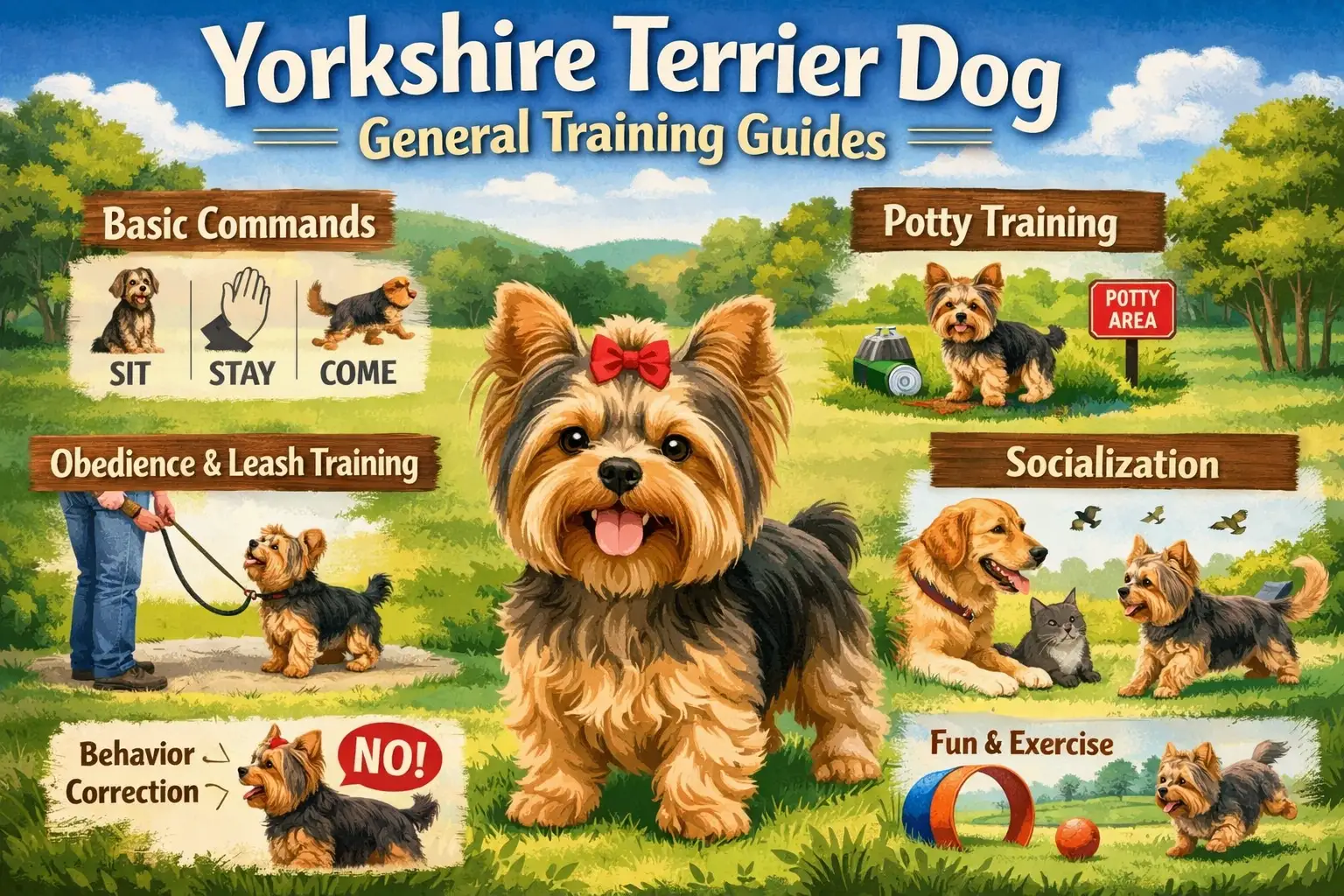
Yorkshire Terrier training methods work best when they are simple, consistent, and built around positive reinforcement. Yorkies are small, but they are bold, intelligent, alert, and quick to learn patterns. With the right approach, you can teach a Yorkshire Terrier good manners, basic obedience, potty routines, leash skills, and calmer behavior at home.
Recommended Dog Care Products
Based on your dog’s age, these products may help with comfort, health, grooming, and daily care.

Purina Pro Plan Veterinary Supplements
Daily probiotics for dogs to support digestive and gut health.
View on Amazon ↗
Earth Rated Poop Bags for Dogs
Leak-proof, extra thick waste bag refill rolls with lavender scent.
View on Amazon ↗
Greenies Pill Pockets for Dogs
Large dog treats for capsule medication, peanut butter flavor.
View on Amazon ↗
HONEY CARE All-Absorb Dog Wrap
Small male dog wraps, 50 count, useful for daily care support.
View on Amazon ↗
Seresto Flea & Tick Collar
Flea and tick treatment and prevention for dogs over 18 lbs.
View on Amazon ↗
Milk-Bone MaroSnacks
Small dog treats with real bone marrow in a 40 oz canister.
View on Amazon ↗
Vital Essentials Dog Treats
Freeze dried beef liver dog treats, grain free and single ingredient.
View on Amazon ↗
Stain & Odor Eliminator
Enzyme cleaner for pet stains, carpet messes, and strong odors.
View on Amazon ↗
Pur Luv Chicken Jerky Treats
Dog treats made with real chicken breast, high protein and chew-friendly.
View on Amazon ↗
Milk-Bone Flavor Snacks
Mini crunchy dog biscuits in a 36 oz canister for small rewards.
View on Amazon ↗As an Amazon Associate, we may earn from qualifying purchases.
This guide explains how to train a Yorkshire Terrier using practical, at-home Yorkie training tips for both puppies and adults. The goal is not harsh control or forced obedience. The goal is to help your Yorkie understand what you want, reward the right behavior, and build habits that make daily life easier.
Because Yorkshire Terriers are sensitive and confident, training must be clear without being rough. Loud corrections, punishment, or inconsistent rules can create fear, barking, or selective listening. Short sessions, calm handling, and rewards usually work better for this breed.
Below, you’ll learn the most useful Yorkie training methods, including how to structure short sessions, understand common behavior problems, build a realistic training schedule, and know when professional support may be needed.
Understanding Yorkshire Terrier Behavior Before Training
Before choosing training methods, it helps to understand how Yorkshire Terriers think. Many training problems happen because owners expect Yorkies to behave like larger, calmer dogs. Yorkies are different, and that difference affects how they learn.
Yorkshire Terriers are smart and alert. They often learn quickly, but they also get bored quickly. If the rules change from one day to the next, a Yorkie may test limits or ignore commands. This is often called stubbornness, but in many cases it is confusion, weak consistency, or unclear rewards.
Yorkies are also sensitive. Yelling, rough handling, or punishment can make them nervous, defensive, or less willing to listen. Calm guidance and reward-based training help them feel secure and more eager to cooperate.
Their terrier instincts also matter. Yorkshire Terriers were originally bred to be active, alert, and responsive to movement. This explains common behaviors like barking, chasing, and reacting quickly to sounds. Good training does not remove these instincts completely. It teaches your Yorkie when to settle, listen, and redirect attention.
Puppies and adult Yorkies also need different expectations. A Yorkie puppy needs short, frequent lessons and a predictable routine. An adult Yorkie can still learn, but existing habits may take longer to change.
Yorkshire Terrier Traits and How They Affect Training
Recommended Dog Care Products
Based on your dog’s age, these products may help with comfort, health, grooming, and daily care.
Purina Pro Plan Veterinary Supplements
Daily probiotics for dogs to support digestive and gut health.
View on Amazon ↗
Earth Rated Poop Bags for Dogs
Leak-proof, extra thick waste bag refill rolls with lavender scent.
View on Amazon ↗
Greenies Pill Pockets for Dogs
Large dog treats for capsule medication, peanut butter flavor.
View on Amazon ↗
HONEY CARE All-Absorb Dog Wrap
Small male dog wraps, 50 count, useful for daily care support.
View on Amazon ↗
Seresto Flea & Tick Collar
Flea and tick treatment and prevention for dogs over 18 lbs.
View on Amazon ↗
Milk-Bone MaroSnacks
Small dog treats with real bone marrow in a 40 oz canister.
View on Amazon ↗
Vital Essentials Dog Treats
Freeze dried beef liver dog treats, grain free and single ingredient.
View on Amazon ↗
Stain & Odor Eliminator
Enzyme cleaner for pet stains, carpet messes, and strong odors.
View on Amazon ↗
Pur Luv Chicken Jerky Treats
Dog treats made with real chicken breast, high protein and chew-friendly.
View on Amazon ↗
Milk-Bone Flavor Snacks
Mini crunchy dog biscuits in a 36 oz canister for small rewards.
View on Amazon ↗As an Amazon Associate, we may earn from qualifying purchases.
| Yorkie Trait | What Owners Often Notice | Best Training Approach |
|---|---|---|
| High intelligence | Learns fast but gets bored easily | Use short sessions with clear rewards |
| Bold confidence | May challenge rules or ignore weak cues | Set consistent boundaries every day |
| Sensitivity | May react badly to yelling or pressure | Use calm voice, patience, and positive reinforcement |
| Alert instincts | Barks at sounds, people, or movement | Teach quiet behavior and attention cues |
| Small size | May be overprotected or carried too often | Build confidence with safe practice and routine |
When you work with your Yorkie’s natural temperament instead of against it, training becomes easier, calmer, and more effective.
Step-by-Step Yorkshire Terrier Training Methods
The best Yorkshire Terrier training methods are based on repetition, timing, rewards, and consistency. Yorkies do not need long lessons. They usually learn better through short sessions repeated throughout the day.
Start in a quiet place with few distractions. Teach one skill at a time, reward the correct behavior immediately, and stop before your Yorkie becomes bored or frustrated. Once your dog understands the skill indoors, practice in slightly harder places, such as the yard, porch, or a quiet walking area.
For most Yorkies, training should feel like a game. Use tiny treats, praise, toys, or short play breaks. The reward should happen right after the correct behavior so your dog connects the action with the result.
These basic Yorkie training tips work for most puppies and adults:
- Keep sessions short and focused.
- Use the same cue words every time.
- Reward good behavior immediately.
- Practice in quiet places before adding distractions.
- End each session before your Yorkie loses interest.
- Avoid yelling, chasing, or repeating commands too many times.
Yorkshire Terrier Training Schedule by Age
| Yorkie Age | Session Length | Sessions per Day | Main Training Focus |
|---|---|---|---|
| 8–16 weeks | 3–5 minutes | 3–4 short sessions | Name response, potty routine, crate comfort, gentle handling |
| 4–6 months | 5–7 minutes | 2–3 short sessions | Sit, come, leash basics, calm greetings, social confidence |
| 6–12 months | 5–10 minutes | 2 sessions | Better focus, barking control, impulse control, outdoor practice |
| Adult Yorkie | 5–10 minutes | 1–2 sessions | Reinforcing manners, fixing habits, improving reliability |
Choosing the right reward also matters. Yorkies are small, so treats should be tiny. Rewards should support training without causing overfeeding.
Effective Rewards for Yorkshire Terrier Training
| Reward Type | Best Time to Use | Helpful Tip |
|---|---|---|
| Small soft treats | Teaching a new skill | Use very small pieces to avoid weight gain |
| Praise | Reinforcing known commands | Use a happy but calm voice |
| Toys | High-energy Yorkies | Keep play short so your dog can refocus |
| Life rewards | Daily manners | Reward sitting before meals, doors, walks, or attention |
Training should feel like teamwork, not a struggle. When the reward is clear and the routine is predictable, most Yorkshire Terriers become more confident and more willing to listen.
Common Yorkshire Terrier Training Problems and Solutions
Most Yorkshire Terrier owners face a few training problems at some point. This does not mean your dog is bad or impossible to train. It usually means your Yorkie needs clearer structure, more practice, or a better reward system.
Recommended Dog Care Products
Based on your dog’s age, these products may help with comfort, health, grooming, and daily care.
Purina Pro Plan Veterinary Supplements
Daily probiotics for dogs to support digestive and gut health.
View on Amazon ↗
Earth Rated Poop Bags for Dogs
Leak-proof, extra thick waste bag refill rolls with lavender scent.
View on Amazon ↗
Greenies Pill Pockets for Dogs
Large dog treats for capsule medication, peanut butter flavor.
View on Amazon ↗
HONEY CARE All-Absorb Dog Wrap
Small male dog wraps, 50 count, useful for daily care support.
View on Amazon ↗
Seresto Flea & Tick Collar
Flea and tick treatment and prevention for dogs over 18 lbs.
View on Amazon ↗
Milk-Bone MaroSnacks
Small dog treats with real bone marrow in a 40 oz canister.
View on Amazon ↗
Vital Essentials Dog Treats
Freeze dried beef liver dog treats, grain free and single ingredient.
View on Amazon ↗
Stain & Odor Eliminator
Enzyme cleaner for pet stains, carpet messes, and strong odors.
View on Amazon ↗
Pur Luv Chicken Jerky Treats
Dog treats made with real chicken breast, high protein and chew-friendly.
View on Amazon ↗
Milk-Bone Flavor Snacks
Mini crunchy dog biscuits in a 36 oz canister for small rewards.
View on Amazon ↗As an Amazon Associate, we may earn from qualifying purchases.
Barking is one of the most common Yorkie training issues. Yorkshire Terriers are alert dogs, so they often bark at sounds, people, movement, or boredom. Yelling can make the barking worse because your dog may think you are joining in. A better method is to reward quiet moments, teach an attention cue, and reduce triggers where possible.
Potty training can also take longer with Yorkies, especially when the routine is inconsistent. Small dogs need frequent bathroom opportunities, close supervision, and praise immediately after going in the right place.
Some Yorkies resist leash walking. This can happen because of fear, noise, pressure from the leash, or lack of practice. Start slowly, reward small steps, and avoid dragging your dog forward.
Selective listening is another common issue. A Yorkie may listen at home but ignore commands outdoors. This usually means the dog has not practiced the skill around distractions yet. The answer is more gradual practice, not stronger punishment.
Common Yorkshire Terrier Training Problems and Fixes
| Training Problem | Why It Happens | Best Fix |
|---|---|---|
| Too much barking | Alert instinct, boredom, or attention-seeking | Reward quiet behavior, teach focus, and add mental activity |
| Potty accidents | Weak routine or too much freedom indoors | Use scheduled potty breaks, supervision, and immediate praise |
| Won’t walk on leash | Fear, overstimulation, or leash pressure | Start in a quiet area and reward small forward steps |
| Ignores commands outside | Too many distractions too soon | Practice gradually in new places with better rewards |
| Jumping or demanding attention | Excitement or rewarded behavior | Reward calm sitting before attention |
| Fearful behavior | Stress, poor socialization, or rough handling | Use calm exposure, distance, and positive reinforcement |
Most training problems improve through small daily changes. Quick fixes rarely work with Yorkies. Consistency, patience, and reward timing are what create lasting progress.
How to Train a Yorkie Puppy
Yorkie puppy training should start with simple routines, not advanced commands. Young Yorkshire Terrier puppies learn best through short, calm, repeatable lessons that happen several times a day. At this age, the most important goals are name response, potty habits, gentle handling, crate comfort, and basic focus.
If you are learning how to train a Yorkie puppy, start in a quiet room with very few distractions. Say your puppy’s name once, reward eye contact, and keep each session short. A few successful minutes are better than a long session that ends with frustration.
Use tiny rewards because Yorkies are small dogs. Reward immediately after the correct behavior so your puppy understands what worked. Avoid chasing, shouting, or repeating commands many times, because this can teach your puppy to ignore you.
Yorkie Puppy Training Priorities
Recommended Dog Care Products
Based on your dog’s age, these products may help with comfort, health, grooming, and daily care.
Purina Pro Plan Veterinary Supplements
Daily probiotics for dogs to support digestive and gut health.
View on Amazon ↗
Earth Rated Poop Bags for Dogs
Leak-proof, extra thick waste bag refill rolls with lavender scent.
View on Amazon ↗
Greenies Pill Pockets for Dogs
Large dog treats for capsule medication, peanut butter flavor.
View on Amazon ↗
HONEY CARE All-Absorb Dog Wrap
Small male dog wraps, 50 count, useful for daily care support.
View on Amazon ↗
Seresto Flea & Tick Collar
Flea and tick treatment and prevention for dogs over 18 lbs.
View on Amazon ↗
Milk-Bone MaroSnacks
Small dog treats with real bone marrow in a 40 oz canister.
View on Amazon ↗
Vital Essentials Dog Treats
Freeze dried beef liver dog treats, grain free and single ingredient.
View on Amazon ↗
Stain & Odor Eliminator
Enzyme cleaner for pet stains, carpet messes, and strong odors.
View on Amazon ↗
Pur Luv Chicken Jerky Treats
Dog treats made with real chicken breast, high protein and chew-friendly.
View on Amazon ↗
Milk-Bone Flavor Snacks
Mini crunchy dog biscuits in a 36 oz canister for small rewards.
View on Amazon ↗As an Amazon Associate, we may earn from qualifying purchases.
| Puppy Skill | Why It Matters | Best Method |
|---|---|---|
| Name response | Builds attention and focus | Say the name once and reward eye contact |
| Potty routine | Prevents indoor accidents | Use fixed potty times and praise immediately |
| Crate comfort | Helps with rest and routine | Make the crate calm, positive, and never forced |
| Gentle handling | Prepares for grooming and vet care | Touch paws, ears, and body gently while rewarding calm behavior |
| Basic cues | Builds early manners | Teach sit, come, and wait in short sessions |
The biggest mistake with Yorkie puppies is giving too much freedom too soon. Puppies need supervision, routine, and simple rules before they can be trusted around the house.
Adult Yorkshire Terrier Training Tips
Adult Yorkshire Terriers can still learn new training methods, even if they already have habits you want to change. The difference is that adult Yorkies may need more repetition because they have practiced certain behaviors for months or years.
Start by choosing one behavior to improve first. For example, do not try to fix barking, leash pulling, potty accidents, and jumping all in the same week. Pick the most important issue, create a clear routine, and reward the behavior you want more often.
Adult Yorkies often respond well when training is connected to daily life. Ask for a sit before meals, calm behavior before opening the door, and attention before crossing the street. These small moments help your dog practice manners without needing long formal sessions.
Best Training Approach for Adult Yorkies
| Adult Yorkie Issue | What to Change | Training Tip |
|---|---|---|
| Old habits | Replace the habit instead of only stopping it | Teach an alternative behavior such as sit, come, or settle |
| Selective listening | Practice in more places | Start indoors, then move to quiet outdoor areas |
| Demand barking | Stop rewarding barking with attention | Reward quiet behavior before your Yorkie barks |
| Poor leash manners | Slow the walk down | Reward calm steps beside you |
| Fear or nervousness | Reduce pressure | Use distance, calm praise, and gradual exposure |
The key with adult Yorkshire Terrier training is consistency. If a behavior has worked for your Yorkie in the past, it may take time for your dog to trust the new routine.
How to Potty Train a Yorkie
Potty training is one of the most important parts of Yorkshire Terrier training. Many owners search for how to train a Yorkie not to pee in the house because accidents can continue when the routine is unclear or the dog has too much unsupervised freedom indoors.
Yorkies are small dogs with small bladders, so they need frequent potty opportunities, especially as puppies. Take your Yorkie out after waking up, eating, drinking, playing, and before bedtime. Praise immediately when your dog goes in the correct place.
Do not punish accidents after they happen. Your Yorkie will not clearly connect the punishment with the earlier mistake. Instead, clean the area well, reduce freedom, and improve supervision so the next success is easier.
Yorkie Potty Training Routine
| Potty Time | Why It Helps | Owner Action |
|---|---|---|
| After waking up | Most dogs need to go soon after rest | Take your Yorkie to the same potty spot |
| After meals | Eating often triggers bathroom needs | Use a consistent schedule |
| After play | Excitement can lead to accidents | Pause play and offer a potty break |
| Before bedtime | Reduces overnight accidents | Keep the last potty trip calm and predictable |
| After indoor accidents | Helps reset the routine | Clean the area and increase supervision |
If your Yorkie keeps peeing in the house, the usual fix is not punishment. The fix is a tighter routine, fewer chances to wander unsupervised, better cleaning, and faster rewards when your dog gets it right.
How to Train a Yorkie Not to Bark Too Much
Learning how to train a Yorkie not to bark is important because Yorkshire Terriers are naturally alert. Barking is not always bad. It becomes a problem when your Yorkie barks at every sound, demands attention, or cannot settle after a trigger passes.
The first step is to understand why your Yorkie is barking. Some Yorkies bark from boredom, some bark from fear, and others bark because barking has worked in the past. If barking gets attention, food, play, or being picked up, your dog may repeat it.
Instead of yelling, wait for a quiet moment and reward it. You can also teach a simple attention cue such as “look” or “here.” When your Yorkie turns toward you instead of barking at the trigger, reward quickly.
Yorkie Barking Problems and Fixes
| Barking Trigger | What It Usually Means | Best Training Fix |
|---|---|---|
| Doorbell or knocking | Alert instinct | Practice calm place training and reward quiet pauses |
| People outside | Excitement or guarding | Block constant window access and reward calm behavior |
| Barking for attention | The behavior has been rewarded before | Reward quiet sitting before giving attention |
| Barking on walks | Fear, excitement, or frustration | Create distance and reward focus before moving closer |
| Barking when alone | Stress, boredom, or separation difficulty | Build alone time gradually and provide safe enrichment |
The goal is not to stop every bark. The goal is to teach your Yorkie how to pause, look back at you, and settle faster.
Yorkie Leash Training Basics
Yorkie leash training should be slow and positive. Some Yorkshire Terriers resist walking because they feel overwhelmed by sounds, people, cars, other dogs, or pressure from the leash. Pulling or dragging a Yorkie forward can make fear worse.
Start indoors or in a quiet yard. Let your Yorkie wear the harness for short periods, reward calm movement, and practice taking a few steps beside you. Once your dog feels comfortable, move to quiet outdoor areas before trying busier streets.
Keep walks short at first. A Yorkie does not need a long walk to learn leash manners. Short, calm, successful practice is better than forcing your dog through a stressful route.
Yorkie Leash Training Steps
| Step | Goal | What to Do |
|---|---|---|
| Introduce harness | Build comfort | Let your Yorkie sniff it and reward calm behavior |
| Practice indoors | Reduce distractions | Reward a few calm steps beside you |
| Move to quiet outdoors | Build confidence | Use treats and praise for forward movement |
| Pause when pulling starts | Teach leash control | Stop calmly and continue when the leash relaxes |
| Add distractions slowly | Improve real-world reliability | Practice near mild distractions before busier areas |
If your Yorkie freezes, pulls backward, or refuses to move, make the training easier. Move farther from the trigger, shorten the session, and reward small signs of confidence.
When to Get Professional Help for Your Yorkie
Many Yorkshire Terriers can be trained at home with a clear routine, but some situations need professional support. Getting help early can prevent fear, stress, and unsafe behavior from becoming stronger habits.
If your Yorkie often shakes, hides, freezes, growls, snaps, or tries to bite, do not rely on trial and error. These signs may point to fear, anxiety, poor socialization, or a safety risk. A qualified reward-based trainer or behavior professional can help you build a safer plan.
You should also get help if you have practiced the same skill for several weeks with no improvement. Sometimes the issue is not the dog’s ability, but the training setup, timing, reward choice, or level of distraction.
Choose a trainer who uses calm, reward-based methods. Avoid trainers who rely on fear, harsh corrections, or punishment-heavy techniques, especially with small and sensitive dogs like Yorkshire Terriers.
When Home Training Isn’t Enough
| Sign | What It May Mean | What to Do Next |
|---|---|---|
| Strong fear, shaking, hiding, or freezing | Your Yorkie may feel anxious, overwhelmed, or poorly socialized | Use calm handling and contact a reward-based trainer |
| Growling, snapping, or biting | There may be fear, stress, pain, or a safety risk | Speak with a qualified behavior professional before the issue gets worse |
| No progress after several weeks | The training method, reward timing, or difficulty level may be wrong | Get a professional review of your training routine |
| Potty accidents, barking, or leash problems keep returning | The routine may not be consistent enough yet | Adjust the schedule and get guidance if the problem continues |
| You feel frustrated or overwhelmed | Stress can make training harder for both you and your dog | Ask for guided help before using harsh corrections |
Getting help does not mean you have failed. It means you are protecting your Yorkshire Terrier’s well-being and safety. The best trainer for a Yorkie is someone who explains the plan clearly, uses reward-based methods, and helps you build calmer habits without fear or force.
If your Yorkie’s behavior changes suddenly, or if fear, aggression, or house-training problems appear without a clear reason, consider speaking with a veterinarian as well. Some behavior changes can be linked to discomfort, stress, or health issues rather than training alone.

Ata Ur Rehman is the founder of Pet Age in Human Years Calculator, an educational platform that provides age conversion charts and lifespan guides for dogs, cats, birds, and other companion animals. His work focuses on helping pet owners understand how animal ages translate into human years using commonly accepted age conversion formulas and published lifespan averages.
The website compiles breed and species lifespan data from kennel clubs, breed organizations, and general animal lifespan studies to present simple and easy-to-understand guides for pet owners worldwide.
This website was created to centralize animal age conversion charts into one easy reference platform for pet owners.