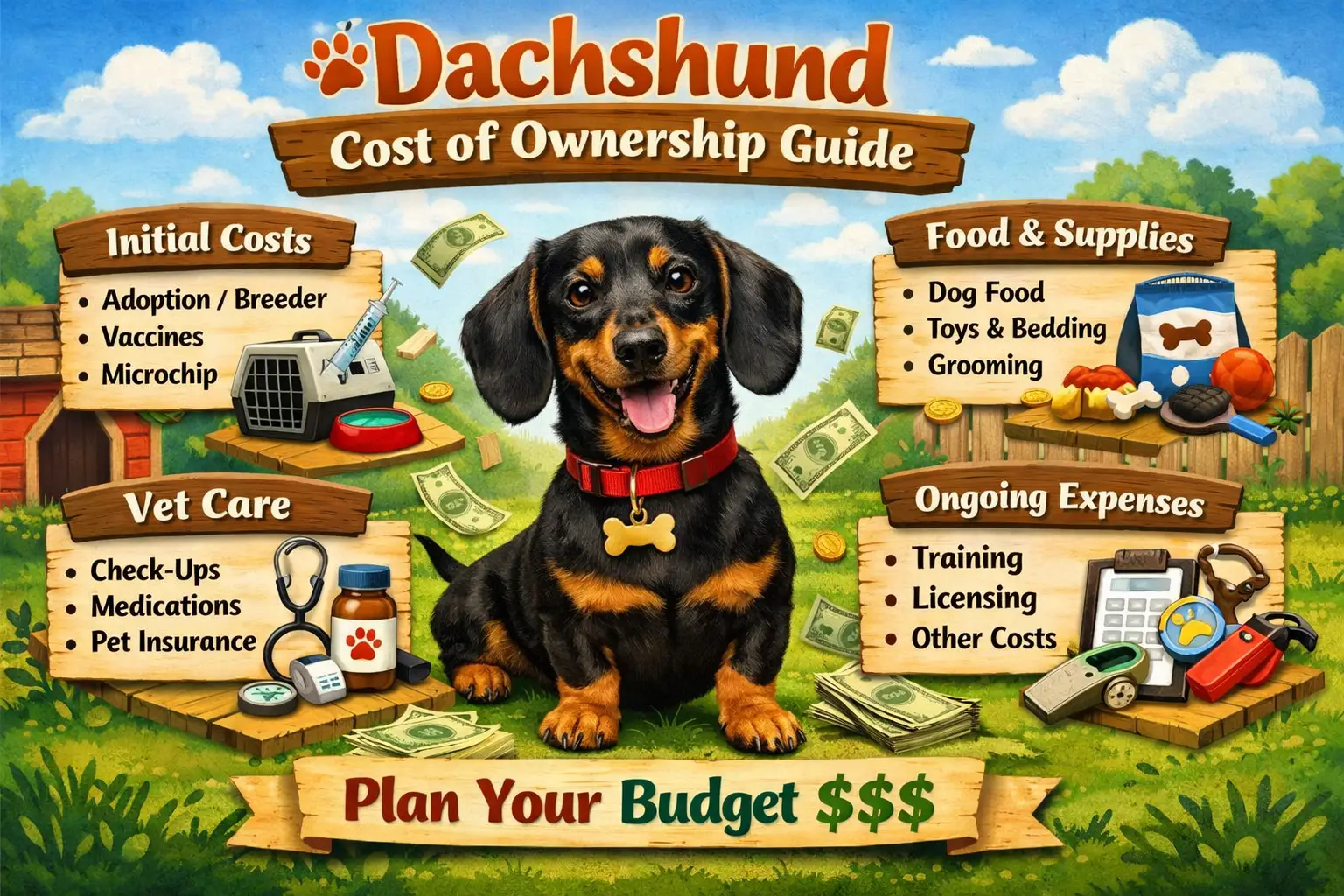
How much does a Dachshund cost to own? While their small size makes them look affordable, the true cost goes far beyond food and toys. Between first-year setup expenses, monthly care, and breed-specific medical risks like back and dental problems, Dachshunds often cost more over a lifetime than many new owners expect.
This guide breaks down the real cost of owning a Dachshund—not just the purchase price, but what you will realistically spend in the first year, per month, per year, and over a full lifetime.
- what you’ll spend in the first year,
- what it costs per month and per year, and
- how much a Dachshund typically costs over a full lifetime.
Unlike generic small-dog estimates, this breakdown reflects real owner expenses, veterinary billing patterns, and long-term care considerations commonly reported by vets and owner surveys from organizations such as the American Pet Products Association and the American Veterinary Medical Association.
Dachshunds also have unique cost drivers:
- a high risk of intervertebral disc disease (IVDD),
- frequent dental care needs,
- body-support equipment like ramps and harnesses, and
- costs that increase noticeably in senior years.
To give you instant clarity before diving deeper, the table below shows a high-level snapshot of what Dachshund ownership usually looks like financially.
How Much Does a Dachshund Cost to Own?
Quick Answer: The average cost of owning a Dachshund ranges from $1,500 to $3,500 in the first year, depending on purchase source and medical needs. After that, most owners spend $800 to $2,000 per year on food, vet care, grooming, and prevention. Over a full lifetime, total ownership costs commonly range from $12,000 to $20,000+, especially if back problems or emergency care are needed.
While daily expenses are moderate, medical risks such as intervertebral disc disease (IVDD), dental care, and senior health needs are the biggest long-term cost drivers for this breed.
At-a-Glance Dachshund Cost Overview
| Cost Category | Typical First-Year Cost | Ongoing Annual Cost | Notes |
|---|---|---|---|
| Purchase or adoption | $200 – $3,000+ | — | Varies by breeder or rescue |
| Initial vet care | $300 – $800 | — | Vaccines, exams, microchip |
| Food | $300 – $600 | $300 – $600 | Depends on food quality |
| Routine vet care | $200 – $500 | $200 – $500 | Annual exams & prevention |
| Grooming | $100 – $400 | $100 – $400 | Varies by coat type |
| Insurance (optional) | $300 – $700 | $300 – $700 | Helps cover emergencies |
| Estimated First-Year Total | $1,500 – $3,500+ | — | Most expensive year |
| Estimated Annual After Year One | — | $800 – $2,000+ | Excludes emergencies |
What to take away from this section:
A Dachshund may be small, but it is not a “cheap dog” by default. The biggest financial surprises usually come from medical care, first-year expenses, and long-term health management, not from day-to-day basics.
First-Year Dachshund Costs: Purchase, Setup, and Initial Vet Care
The first year of owning a Dachshund is usually the most expensive. This is when you pay for getting the dog, setting up your home, and completing all early vet care. Many new owners feel surprised by how fast these costs add up.
Investing in early training can prevent costly behavior problems later. Our complete Dachshund training guide explains how structured training reduces long-term stress and unexpected expenses.
Below is a simple breakdown of what most owners spend during the first year.
Dachshund First-Year Cost Breakdown
| Expense Type | What This Includes | Why It’s Needed |
|---|---|---|
| Adoption or purchase | Shelter adoption or breeder puppy | One-time cost to get the dog |
| Initial vet visits | Vaccines, health exam, deworming | Required for puppy health |
| Spay or neuter | Surgical procedure | Prevents health and behavior issues |
| Microchip & registration | Permanent ID | Helps recover lost dogs |
| Crate and bed | Safe sleeping and resting space | Comfort and training |
| Bowls, leash, harness | Daily walking and feeding | Dachshunds need body-support harnesses |
| Ramps or steps | Couch and bed access | Helps protect the back |
| Toys and chews | Mental stimulation | Prevents boredom and damage |
| Training basics | Puppy classes or home training | Reduces behavior problems later |
Why Dachshund First-Year Costs Are Higher
Dachshunds have long backs and short legs, which makes them more likely to develop back injuries. Because of this, many owners buy ramps, special harnesses, and better bedding right away. These items may seem optional, but they often help prevent much bigger medical bills later.
Puppies also need more vet visits than adult dogs. Vaccines, early checkups, and surgery costs all happen in the first year, not spread out over time.
Puppy vs Adult Dachshund First-Year Costs
- Puppies usually cost more in the first year due to vaccines, training, and supplies
- Adult Dachshunds often cost less upfront but may already need dental or medical care
- Rescue dogs can be cheaper to get but may still need vet work early on
Key takeaway:
Even though Dachshunds are small, their first-year costs are not small-dog cheap. Planning ahead for these early expenses helps avoid stress and rushed decisions.
Monthly and Annual Dachshund Expenses
After the first year, most Dachshund costs become regular and predictable. These are the expenses you pay every month or every year to keep your dog healthy, clean, and happy.
Many owners think small dogs are cheap to care for, but Dachshunds still need good food, vet care, and prevention medicine just like bigger dogs.
Typical Monthly and Annual Dachshund Expenses
| Expense | What You Pay For | How Often |
|---|---|---|
| Food | Dry or wet dog food | Every month |
| Flea, tick, and heartworm prevention | Prevents parasites and illness | Monthly or yearly |
| Routine vet visit | Health check and basic vaccines | Once per year |
| Grooming | Bathing, brushing, nail trimming | Monthly or as needed |
| Training and enrichment | Classes, toys, puzzles | Ongoing |
| License and registration | Local dog license | Once per year |
| Basic supplies | Replacing toys, bowls, beds | As needed |
Food Costs for Dachshunds
Dachshunds do not eat a lot, but food quality matters. Cheap food can lead to weight gain, which puts extra stress on their back. Choosing the right diet plays a major role in preventing obesity-related back problems. Our detailed Dachshund feeding and nutrition guide explains portion control, food quality, and weight management strategies. Many owners spend a little more on better food to help avoid health problems later.
Because Dachshunds love to eat, owners also need to control treats. Too many treats can cause weight problems and higher vet bills.
Grooming and Care Costs
Grooming costs depend on the coat type:
- Short-haired Dachshunds need very little grooming
- Long-haired and wire-haired Dachshunds need more brushing and care
- Nail trims are needed for all Dachshunds
Most owners can do basic grooming at home, but some choose a groomer for convenience.
For coat-specific care tips and maintenance schedules, see our full Dachshund grooming guide, which explains how grooming needs vary by coat type and how to avoid preventable skin and dental costs.
Vet Care and Prevention
Every Dachshund needs:
- A yearly vet check
- Vaccines
- Parasite prevention
These costs may seem small each month, but they add up over the year. Skipping them often leads to bigger medical bills later.
Key takeaway:
Monthly and yearly costs may feel manageable on their own, but together they make up a large part of a Dachshund’s lifetime cost.
Major Cost Drivers That Make Dachshunds Expensive (or Affordable)
Not all Dachshund owners spend the same amount of money. Some spend much more than others. This happens because a few key factors can raise or lower the total cost of care.
Understanding these cost drivers helps you plan better and avoid surprises.
High-Impact Dachshund Cost Factors
| Cost Driver | Why It Matters | How It Affects Cost |
|---|---|---|
| Health and back problems | Dachshunds have long backs | Can lead to high vet bills |
| Emergency vet care | Accidents or sudden illness | Very expensive without savings |
| Pet insurance | Helps cover big medical bills | Monthly cost but long-term help |
| Grooming needs | Depends on coat type | Higher for long-haired dogs |
| Age of the dog | Older dogs need more care | Costs rise in senior years |
| Living space | Stairs and jumping risks | May require ramps or changes |
Back Problems and Medical Risks
Dachshunds are known for back and spine problems. These issues can happen from jumping, stairs, or being overweight. Treatment may include vet visits, medicine, or even surgery.
Some dogs never have back issues, but others do. This is one of the biggest reasons Dachshunds can be costly.
Emergency Vet Costs
Even healthy dogs can have emergencies:
- Accidents
- Sudden illness
- Swallowing objects
Emergency care is often much more expensive than normal vet visits. Owners without savings or insurance often struggle with these costs.
Pet Insurance for Dachshunds
Many Dachshund owners choose pet insurance because of back problems. Insurance adds a monthly cost, but it can help cover large bills later. It does not always save money, but it can protect against worst-case situations.
Aging and Senior Care
As Dachshunds get older, they often need:
- More vet visits
- Dental care
- Joint or pain medicine
Senior dogs usually cost more to care for than young adults.
If you’re planning long-term costs, our Dachshund age calculator helps you understand how aging impacts health needs, vet frequency, and expected senior care expenses.
Key takeaway:
The biggest costs usually come from health problems and emergencies, not food or toys. Planning for these risks makes Dachshund ownership much less stressful.
How Location and Lifestyle Affect Dachshund Ownership Costs
The cost of owning a Dachshund can vary depending on where you live and your lifestyle. Veterinary services, grooming, and pet insurance premiums are often higher in large cities than in rural areas. Local licensing fees and boarding costs also differ by region.
Your home setup also affects expenses. Homes with stairs may require additional ramps or safety adjustments to protect a Dachshund’s back. Owners who travel frequently may spend more on boarding or pet sitting, while apartment dwellers may have lower yard-related costs but higher training needs.
These factors do not change the core cost structure, but they can increase or decrease total lifetime ownership expenses.
Why Are Dachshunds So Expensive?
Dachshunds can become expensive primarily because of medical risks, especially back and spine problems like intervertebral disc disease (IVDD). Treatment may involve diagnostic imaging, medication, physical therapy, or surgery, which can cost thousands of dollars. While routine monthly expenses are moderate, unexpected veterinary care is the main reason lifetime ownership costs increase significantly.
What Is the Most Expensive Part of Owning a Dachshund?
The most expensive part of owning a Dachshund is usually veterinary care. Routine annual visits are manageable, but emergency treatment, back injuries, dental procedures, and senior health care can create large bills. Preventative measures—such as weight control, ramps, harnesses, and regular dental cleanings—can help reduce long-term medical expenses.
Lifetime Cost Summary, Budgeting Tips, and FAQs
Owning a Dachshund is a long-term money commitment. Most Dachshunds live many years, so small costs over time turn into big numbers. Looking at the full lifetime cost helps you decide if this breed fits your budget.
Estimated Lifetime Cost of Owning a Dachshund
| Ownership Style | What This Looks Like | Lifetime Cost Level |
|---|---|---|
| Low-cost care | Healthy dog, basic needs, few vet issues | Lower |
| Average care | Routine vet care, good food, some medical needs | Medium |
| High-cost care | Back problems, senior care, emergencies | High |
Some Dachshunds stay healthy for most of their lives. Others may need long-term medical care, especially for back or dental problems. This is why costs can be very different from one owner to another.
How the Lifetime Cost Adds Up
To better understand total ownership cost, consider a typical scenario:
- First-year expenses: $1,500 – $3,500
- Annual expenses after year one: $800 – $2,000
- Average lifespan: 12–15 years
Using moderate estimates, a Dachshund may cost between $12,000 and $20,000 or more over its lifetime. This total increases if emergency surgery, chronic back problems, or advanced senior care are needed.
Planning for both predictable yearly expenses and unexpected medical costs is the key to responsible long-term ownership.
How to Budget for a Dachshund
Simple budgeting tips:
- Save a little money every month for vet care
- Plan for yearly costs, not just monthly ones
- Keep an emergency fund for sudden vet visits
- Buy ramps and use a harness to protect the back
Planning ahead makes costs easier to handle.
Ways to Save Money Without Hurting Care
- Keep your Dachshund at a healthy weight
- Do basic grooming at home
- Prevent problems instead of fixing them later
- Compare food and insurance options carefully
Saving money should never mean skipping vet care or feeding poor food. That usually leads to bigger costs later.
Common Cost Questions
Are Dachshunds Expensive to Own?
Dachshunds can be moderately expensive to own compared to other small breeds. While food and routine monthly expenses are manageable, medical risks—especially back problems like intervertebral disc disease (IVDD) and dental issues—can significantly increase lifetime costs. First-year expenses are usually the highest, and total lifetime ownership often reaches $12,000 to $20,000 or more depending on health and emergency care needs.
Are Small Dogs Cheaper Than Big Dogs?
Small dogs typically eat less food and may cost less in basic supplies, but they are not always cheaper overall. Dachshunds, for example, are prone to back injuries and dental issues that can result in expensive vet bills. While daily expenses are lower than large breeds, medical care and long-term health risks can make total ownership costs similar or even higher.
Is Pet Insurance Worth It for Dachshunds?
Pet insurance can be worthwhile for Dachshunds because of their higher risk of back problems and unexpected emergency care. While insurance adds a monthly expense, it can help offset large veterinary bills, including surgery or long-term treatment. Owners who prefer financial predictability often choose insurance to reduce the impact of sudden high-cost medical events.
Final Reality Check
Dachshunds are loving, loyal, and fun dogs. But they are not a low-cost breed. If you plan well, budget smart, and understand the risks, owning a Dachshund can be rewarding and manageable.
If you’re still learning about the breed’s temperament, lifespan, and physical traits, our detailed Dachshund breed guide explains what makes them unique and why their body structure affects long-term health costs.
For a helpful breakdown of common pet care costs and tips on managing them, check out the ASPCA’s guide on cutting pet care costs, which covers typical expenses like food, vet visits, preventive care, and more — useful for anyone budgeting for a Dachshund or any dog. ASPCA Pet Care Cost Guide — Cutting Pet Care Costs

Ata Ur Rehman is the founder of Pet Age in Human Years Calculator, an educational platform that provides age conversion charts and lifespan guides for dogs, cats, birds, and other companion animals. His work focuses on helping pet owners understand how animal ages translate into human years using commonly accepted age conversion formulas and published lifespan averages.
The website compiles breed and species lifespan data from kennel clubs, breed organizations, and general animal lifespan studies to present simple and easy-to-understand guides for pet owners worldwide.
This website was created to centralize animal age conversion charts into one easy reference platform for pet owners.