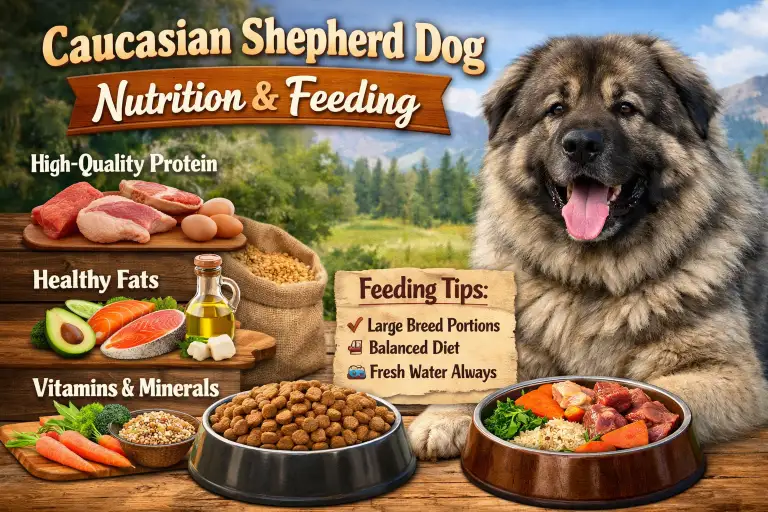
Proper nutrition is especially important for the Caucasian Shepherd Dog because this breed is giant, slow-maturing, and built for guarding rather than constant high activity.
If you would like a broader overview of temperament, size, and breed characteristics before adjusting diet plans, see our complete Caucasian Shepherd Dog breed guide and then return to this detailed feeding guide for calorie and nutrition planning.
This guide focuses specifically on diet, feeding schedules, calorie needs, and food selection for the Caucasian Shepherd Dog. If you are looking for information about climate tolerance, grooming, or general breed traits, those topics are covered in separate guides. Here, we concentrate only on safe, balanced nutrition for long-term health.
This guide focuses specifically on diet, feeding schedules, calorie needs, and food selection for the Caucasian Shepherd Dog. If you are looking for information about climate tolerance, grooming, or general breed traits, those topics are covered in separate guides. Here, we concentrate only on safe, balanced nutrition for long-term health.
Feeding a Caucasian Shepherd the same way you would feed a medium or even a typical large breed often leads to problems such as excessive weight gain, joint stress, poor growth patterns, or digestive issues.
This guide is designed to help you make safe, informed, and practical feeding decisions for every life stage of a Caucasian Shepherd Dog—whether you are raising a puppy, managing an adult guardian, or supporting an aging senior.
What Is the Best Diet for a Caucasian Shepherd Dog?
The best diet for a Caucasian Shepherd Dog is a balanced giant-breed formula with 22–28% protein, moderate fat (10–16%), and controlled calcium levels to support slow, steady growth and joint protection. Puppies need large-breed puppy formulas, while adults require portion control to prevent obesity and stress on their joints.
Unlike many breeds, Caucasian Shepherds:
- Grow very slowly, often taking 2–3 years to fully mature
- Carry substantial body mass, which places long-term stress on joints
- Tend to have lower daily activity levels than working herding or sporting breeds
- Are prone to overfeeding, especially when owners equate size with calorie needs
Nutrition directly affects:
- Skeletal development and joint longevity
- Body weight and mobility
- Digestive health and stool quality
- Energy balance and behavior
- Overall lifespan and quality of life
Since feeding routines directly influence behavior and focus, structured meals also support better training outcomes. You can learn more in our detailed Caucasian Shepherd training guide.
For puppies, the biggest risk is growing too fast, which increases the likelihood of orthopedic problems later in life. For adults, the most common issue is gradual weight gain caused by excess calories combined with moderate activity. For seniors, improper nutrition can accelerate muscle loss and reduce mobility.
A well-designed diet for a Caucasian Shepherd Dog is not about feeding more food—it is about feeding the right balance of nutrients, controlling portions carefully, and adjusting intake based on body condition rather than guesswork.
In the sections that follow, you’ll learn:
- What nutrients Caucasian Shepherd Dogs actually need
- How much to feed and how often
- Which types of dog food work best for this breed
- How to avoid common feeding mistakes
- How to troubleshoot real-world feeding problems
What to Feed a Caucasian Shepherd Dog: Core Nutritional Needs Explained
Feeding a Caucasian Shepherd Dog is not about giving the biggest bowl of food. Many owners specifically ask what to feed a Caucasian Shepherd, and the answer depends on life stage, activity level, and joint protection needs. Many owners specifically ask what to feed a Caucasian Shepherd, and the answer depends on life stage, activity level, and joint protection needs. It is about giving the right nutrients in the right balance. Because this breed is very large and grows slowly, small feeding mistakes can cause big health problems over time.
Below are the main nutrition basics every Caucasian Shepherd owner should understand.
Protein, fats, and carbohydrates (simple explanation)
- Protein helps build and maintain strong muscles.
Caucasian Shepherds need good-quality animal protein, but not extreme levels. Too much protein during growth can push puppies to grow too fast. - Fats give energy and keep the coat and skin healthy.
This breed does not need very high fat unless it works outdoors in cold weather. - Carbohydrates give steady energy and help digestion when they come from good sources like rice, oats, or vegetables.
Dogs do not need carbs, but many dogs digest them well when used correctly.
A proper diet also improves coat density and shedding control. For brushing routines and coat maintenance tips, see our Caucasian Shepherd grooming guide.
Minerals, vitamins, and bone health
For giant breeds, calcium balance matters more than calcium amount.
Too much calcium can damage growing bones and joints, especially in puppies.
Vitamins support:
- Immune health
- Skin and coat
- Muscle and nerve function
Most complete dog foods already contain these, so extra supplements are usually not needed unless a vet says so.
Recommended nutrient ranges for Caucasian Shepherd Dogs
| Nutrient | General Range | Why It Matters |
|---|---|---|
| Protein | 22–28% (dry matter) | Supports muscle without forcing fast growth |
| Fat | 10–16% | Energy, coat health, cold tolerance |
| Fiber | 3–6% | Digestion and stool quality |
| Calcium | Controlled, not high | Protects joints and bone growth |
| Phosphorus | Balanced with calcium | Proper skeletal development |
These are guidelines, not exact rules. Your dog’s age, weight, and activity level still matter.
How to read dog food labels (without confusion)
Dog food labels can look confusing, but you only need to check a few things.
Dog food label cheat sheet
| Label Part | What It Means | What Owners Should Do |
|---|---|---|
| Ingredients list | Listed by weight before cooking | Look for named meats near the top |
| Guaranteed analysis | Shows protein, fat, fiber | Check ranges, not just “high” numbers |
| Life stage claim | Puppy, adult, all life stages | Choose the correct stage for your dog |
| Marketing words | “Premium”, “natural”, “holistic” | Ignore these—they are not regulated |
Always look for a food that says it is complete and balanced for dogs. This means it meets basic nutrition standards.
Key takeaway for owners
A good diet for a Caucasian Shepherd Dog:
- Uses balanced nutrition, not extreme formulas
- Supports slow, steady growth
- Protects joints and digestion
- Matches the dog’s real activity level
You do not need fancy food. You need correct food.
How Much and How Often to Feed a Caucasian Shepherd Dog
This is the part most owners care about the most. Feeding too little can cause weakness. Feeding too much can cause weight gain, joint pain, and bloat risk. Because Caucasian Shepherd Dogs are very large and not very active, portion control matters a lot.
There is no single perfect amount. You must adjust food based on weight, age, and activity level.
How Much Should a Caucasian Shepherd Dog Eat Per Day?
Most adult Caucasian Shepherd Dogs weighing 100–165 pounds need approximately 1,900 to 3,000 calories per day, depending on activity level. Low-activity guardian dogs require fewer calories, while moderately active dogs need more. Feeding two measured meals per day helps maintain healthy weight and reduces bloat risk.
Daily calorie needs by body weight and activity level
| Adult Dog Weight | Low Activity (Guarding, Yard Life) | Moderate Activity |
|---|---|---|
| 45 kg (100 lb) | 1,900–2,100 calories | 2,200–2,400 calories |
| 55 kg (120 lb) | 2,100–2,300 calories | 2,400–2,700 calories |
| 65 kg (145 lb) | 2,300–2,600 calories | 2,700–3,000 calories |
| 75 kg (165 lb) | 2,600–2,900 calories | 3,000–3,300 calories |
Most Caucasian Shepherds fall into the low-activity range, especially adults that guard property.
Feeding frequency by age
How often you feed matters just as much as how much you feed.
| Life Stage | Meals Per Day | Why |
|---|---|---|
| Puppy (2–6 months) | 3 meals | Supports growth without overloading digestion |
| Puppy (6–12 months) | 2–3 meals | Slows growth and protects joints |
| Adult | 2 meals | Helps digestion and lowers bloat risk |
| Senior | 2 smaller meals | Easier digestion and weight control |
Avoid feeding one large meal per day. Large meals increase bloat risk, especially in giant breeds.
Using body condition instead of guessing
Do not rely only on the scale. Look at your dog.
Body condition score quick guide
| What You See | What It Means | What To Do |
|---|---|---|
| Ribs very visible | Underweight | Increase food slowly |
| Ribs easy to feel, waist visible | Ideal | Keep feeding the same |
| Ribs hard to feel, no waist | Overweight | Reduce portions by 10–15% |
| Heavy belly, slow movement | Obese | Vet check + feeding plan |
A healthy Caucasian Shepherd should look strong, not round.
Real-life feeding examples
- A farm guardian that walks the fence daily may need more food
- A yard dog that sleeps most of the day needs less
- Neutered dogs usually need fewer calories
- Cold weather may slightly increase calorie needs
Never increase food just because the bowl looks small. This breed does not need huge portions to stay healthy.
Key takeaway for owners
Good feeding habits mean:
- Measuring food, not guessing
- Feeding twice a day
- Watching body shape every month
- Adjusting food before weight becomes a problem
Slow changes are safer than big changes.
Best Dog Food Types for Caucasian Shepherd Dogs
Many owners feel confused when choosing dog food because there are so many options. The truth is that no single food type is perfect for every Caucasian Shepherd Dog. The best choice depends on safety, digestion, cost, and how much time you have.
This breed does best with simple, steady, and safe feeding, not trendy or extreme diets.
Common dog food types explained
| Food Type | What It Is | Good For | Main Concerns |
|---|---|---|---|
| Dry kibble | Cooked dry food | Easy feeding, balanced nutrition | Some brands use low-quality ingredients |
| Canned food | Wet, cooked food | Picky eaters, extra moisture | High cost, not ideal alone |
| Raw diet | Raw meat, bones, organs | Some dogs digest it well | Bacteria risk, hard to balance |
| Fresh cooked | Gently cooked meals | Good digestion, high taste | Expensive, short shelf life |
| Freeze-dried | Dehydrated raw or cooked food | Travel, topping meals | Needs water, high cost |
| Homemade | Owner-prepared meals | Full control of ingredients | Easy to cause nutrition gaps |
For most owners, high-quality giant-breed kibble is the safest and easiest base diet.
Kibble vs raw vs fresh: what works best
- Kibble is the most balanced option when it meets nutrition standards
- Raw feeding requires strict hygiene and expert planning
- Fresh food works well if it is properly balanced
- Homemade diets should only be used with professional guidance
Mixing food types is fine, but sudden changes can cause stomach upset.
Grain-free vs grain-inclusive foods
Grains are not bad for dogs. Many Caucasian Shepherds digest grains like rice or oats very well.
Grain-free foods are only needed when:
- A vet confirms a grain allergy
- A dog reacts poorly to grains
For most dogs, grain-inclusive diets are safer and more proven.
Safe and unsafe foods for Caucasian Shepherd Dogs
Some human foods are safe in small amounts. Others are dangerous.
| Safe Foods (Small Amounts) | Unsafe or Toxic Foods |
|---|---|
| Plain cooked chicken | Chocolate |
| Plain rice | Grapes and raisins |
| Cooked eggs | Onions and garlic |
| Carrots | Xylitol (sweetener) |
| Pumpkin | Alcohol |
| Yogurt (plain) | Cooked bones |
Never feed cooked bones. They can splinter and cause serious injury.
Key takeaway for owners
The best food choice:
- Is complete and balanced
- Matches your dog’s life stage
- Supports joint and digestive health
- Fits your budget and routine
Because large guardian breeds consume significant portions over time, it is also important to understand long-term expenses. Review our breakdown of Caucasian Shepherd cost of ownership to plan food budgets realistically.
Simple feeding done right is better than complex feeding done wrong.
Special Diets, Common Feeding Problems, and Practical Owner Guidance
Even with good food, problems can still happen. Caucasian Shepherd Dogs are large, slow-moving, and sensitive to overfeeding and sudden diet changes. This section helps you fix common issues safely and early.
Feeding puppies, adults, and seniors
Caucasian Shepherd puppies must grow slowly. Fast growth can damage bones and joints.
- Puppies need controlled portions, not extra food
- Adults need steady meals and weight control
- Seniors need fewer calories but good protein
Never add supplements unless a vet tells you to do so.
Common feeding problems and what to do
| Problem | What Owners Often Do | What Works Better |
|---|---|---|
| Dog gaining weight | Feed less randomly | Reduce food by 10–15% slowly |
| Dog always hungry | Add more food | Check activity level and treats |
| Loose stool | Switch food fast | Change food over 7–10 days |
| Won’t eat meals | Add toppers daily | Set meal times, remove bowl |
| Gas or bloating | One big meal | Feed two smaller meals |
Most problems improve with small changes, not big ones.
Sensitive stomachs and food allergies
Some Caucasian Shepherds have soft stool or itching.
Signs may include:
- Loose stool
- Ear redness
- Itchy skin
- Frequent gas
If this happens:
- Use simple diets with fewer ingredients
- Avoid frequent food switching
- See a vet if symptoms last more than 2–3 weeks
Treat and human food rules
| Treat Rule | Why It Matters |
|---|---|
| Treats under 10% of daily calories | Prevents weight gain |
| Avoid fatty table scraps | Protects digestion |
| Use treats for training only | Controls intake |
| Cut treats into small pieces | Same reward, fewer calories |
Healthy treats include:
- Small carrot pieces
- Apple slices (no seeds)
- Plain cooked meat
When to see a vet or nutrition expert
You should ask for help if:
- Weight keeps changing despite adjustments
- Puppy grows unevenly or limps
- Chronic diarrhea or vomiting continues
- Skin or ear problems do not improve
Early advice prevents long-term damage.
If you are unsure whether your dog is entering adulthood or senior years, you can use our Caucasian Shepherd age calculator in human years to determine life stage and then adjust feeding portions and calorie intake using this guide.to better understand how age affects feeding needs and calorie adjustments.
Key takeaway for owners
Good feeding habits mean:
- Consistent meals
- Slow changes
- Watching body shape
- Asking for help when needed
Caucasian Shepherd Complete Care Guides
Caucasian Shepherd Feeding FAQs
Can Caucasian Shepherd Dogs Eat Raw Food?
Yes, some Caucasian Shepherds can eat raw diets, but raw feeding must be carefully balanced and handled safely to avoid bacteria risks and nutritional deficiencies. Most owners find that high-quality giant-breed kibble is safer and easier to manage long term.
Is Grain-Free Food Good for Caucasian Shepherds?
Grain-free food is not necessary for most Caucasian Shepherd Dogs unless a veterinarian confirms a grain allergy. Many dogs digest grains like rice and oats very well, and grain-inclusive formulas are generally more researched and proven.
How Much Should a Caucasian Shepherd Puppy Eat?
Caucasian Shepherd puppies need controlled portions using large-breed puppy formulas. Overfeeding can cause rapid growth and joint stress. Meals should be divided into three feedings per day until about six months of age.
How Often Should You Feed a Caucasian Shepherd?
Adult Caucasian Shepherd Dogs should be fed two measured meals per day. Feeding once daily increases bloat risk and can lead to overeating. Puppies may require three meals per day during early growth stages.
Final Thoughts on Feeding a Caucasian Shepherd Dog
A Caucasian Shepherd thrives on balance, portion control, and steady nutrition tailored to its life stage. Avoid overfeeding, monitor body condition regularly, and prioritize joint protection. With the right feeding strategy, this powerful guardian can maintain strength, mobility, and long-term health.
For official guidance on complete and balanced dog food standards, you can review the nutritional guidelines published by the Association of American Feed Control Officials (AAFCO) which are widely used by veterinarians and pet food manufacturers.

Ata Ur Rehman is the founder of Pet Age in Human Years Calculator, an educational platform that provides age conversion charts and lifespan guides for dogs, cats, birds, and other companion animals. His work focuses on helping pet owners understand how animal ages translate into human years using commonly accepted age conversion formulas and published lifespan averages.
The website compiles breed and species lifespan data from kennel clubs, breed organizations, and general animal lifespan studies to present simple and easy-to-understand guides for pet owners worldwide.
This website was created to centralize animal age conversion charts into one easy reference platform for pet owners.