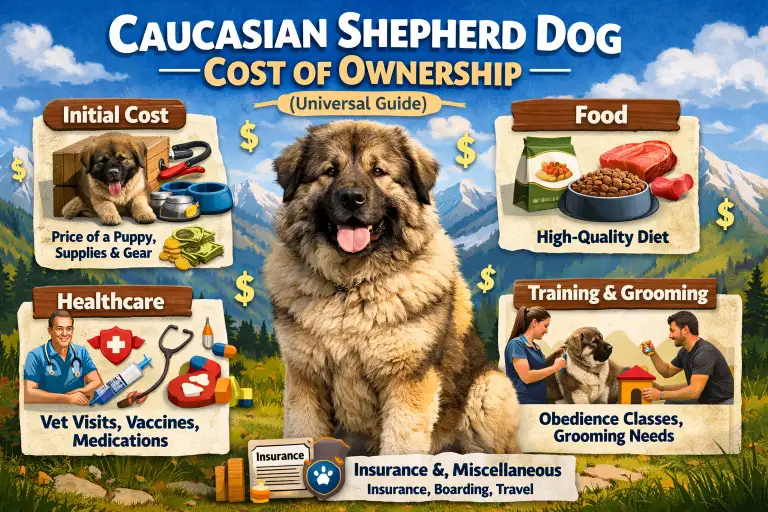
Owning a Caucasian Shepherd Dog is a serious financial commitment, not a casual pet expense. This is a giant, powerful livestock guardian breed with high food intake, above-average veterinary risk, training and handling requirements, and potential insurance or liability costs that many owners don’t anticipate until after bringing the dog home.
This guide focuses on realistic, ownership-wide costs—not just the purchase price. It reflects what owners typically spend across the first year, ongoing adult years, and the dog’s full lifetime, factoring in size, health risk, and living situation.
Quick Cost Snapshot: Caucasian Shepherd Dog
| Cost Period | Typical Cost Range (USD) | What This Includes |
|---|---|---|
| First year of ownership | $3,500 – $7,500+ | Purchase/adoption, initial vet care, supplies, food, training |
| Average annual cost (adult years) | $2,000 – $4,500 per year | Food, routine vet care, grooming, preventatives, training upkeep |
| Estimated lifetime cost (12–15 years) | $25,000 – $45,000+ | All lifetime care, emergencies, replacements, rising costs |
These numbers assume responsible ownership—appropriate nutrition, routine veterinary care, and basic training. Costs rise significantly if the dog develops orthopedic issues, requires specialized training, or lives in a high-cost urban area.
It’s also important to understand that Caucasian Shepherd Dogs are not scalable in cost the way smaller breeds are. Skipping quality food, delaying vet care, or avoiding training can quickly lead to larger expenses later, including medical emergencies, behavioral problems, or property damage.
First-Year Costs: Puppy vs Adult Caucasian Shepherd Dog
The first year is the most expensive year of owning a Caucasian Shepherd Dog. This is when most setup, medical, and training costs happen all at once. Costs are higher for puppies than for adult dogs, but adult dogs still come with large upfront expenses.
Below is a simple breakdown so you can quickly see what to expect.
First-Year Cost Breakdown (Puppy vs Adult)
| Expense Type | Puppy (USD) | Adult Dog (USD) | Why This Cost Matters |
|---|---|---|---|
| Purchase or adoption | $1,500 – $4,000 | $300 – $1,200 | Puppies from breeders cost more; rescues are cheaper |
| Initial vet care | $500 – $1,200 | $300 – $800 | Vaccines, exams, microchip, parasite treatment |
| Spay or neuter | $300 – $800 | $200 – $600 | Large dogs need more anesthesia and time |
| Food (first year) | $800 – $1,200 | $700 – $1,000 | Giant breed diets cost more |
| Supplies & setup | $400 – $900 | $300 – $700 | Crate, bed, leash, bowls, fencing |
| Training & handling | $300 – $1,000 | $200 – $800 | Guardian breeds need early structure |
| Total first-year cost | $3,800 – $9,100 | $2,300 – $5,100 | Realistic range for responsible care |
Why Puppies Cost More in the First Year
Puppies need:
- Multiple vet visits for vaccines
- Extra food as they grow
- Early training to prevent behavior problems
- Strong crates and supplies as they outgrow items fast
Skipping early training or vet care often leads to higher costs later, especially with a large, strong dog like this breed.
Adult Dog Cost Reality
Adult dogs may cost less upfront, but:
- Health history may be unknown
- Training gaps may need fixing
- Large dogs adopted later can still need behavior support
An adult Caucasian Shepherd Dog is not “cheap”, even when adopted.
Quick Takeaway for First-Time Owners
If your budget is tight in the first year, this breed may be hard to manage financially. The first-year cost shock is one of the main reasons people struggle with giant guardian dogs.
Monthly and Annual Cost Breakdown
After the first year, costs become more steady, but a Caucasian Shepherd Dog is still expensive to keep every month. This breed is very large, eats a lot, and needs regular care to stay healthy and safe to handle.
Below are the typical monthly costs most owners should plan for.
Monthly Cost Breakdown
| Monthly Expense | Average Cost (USD) | What This Covers |
|---|---|---|
| Food | $70 – $120 | High-quality food for a giant dog |
| Preventatives & supplements | $25 – $50 | Flea, tick, heartworm, joint support |
| Grooming | $20 – $40 | Brushing tools or occasional grooming |
| Training & behavior upkeep | $20 – $60 | Group classes or private help |
| Insurance or vet savings | $40 – $80 | Pet insurance or emergency fund |
| Miscellaneous | $20 – $40 | Toys, replacements, small supplies |
| Total monthly cost | $195 – $390 | Realistic monthly spending |
These costs can be higher if:
- Your dog eats premium food
- You live in a city
- Your dog has health or behavior issues
Annual Cost Summary
| Yearly Expense | Typical Cost (USD) |
|---|---|
| Food | $850 – $1,400 |
| Routine vet care | $300 – $700 |
| Preventatives & medications | $300 – $600 |
| Grooming | $250 – $500 |
| Training | $200 – $700 |
| Insurance or emergency fund | $500 – $1,000 |
| Total annual cost | $2,000 – $4,500 |
This does not include:
- Emergency vet visits
- Surgery or long-term illness
- Property damage or travel costs
Simple Reality Check
A Caucasian Shepherd Dog is not cheap in any year. Even after setup costs are done, owners must be ready for regular, ongoing spending to keep the dog healthy and under control.
Trying to save money by skipping food quality, training, or vet care often leads to bigger bills later.
Major Cost Drivers That Change the Price of Ownership
Not every Caucasian Shepherd Dog costs the same to own. Some owners spend much more than others. The reason is cost drivers. These are things that raise or lower the total cost over time.
Understanding these can help you plan better and avoid surprises.
Cost Differences by Living Situation
| Living Situation | Cost Impact | Why Costs Change |
|---|---|---|
| Rural property | Lower to medium | More space, fewer restrictions, less liability |
| Suburban home | Medium | Fencing, training, insurance often needed |
| Urban or city area | High | Insurance limits, higher vet fees, housing rules |
This breed does best on large properties. City living often adds extra costs for training, insurance, and housing limits.
Cost Differences by Dog Size and Health
| Factor | Cost Impact | Explanation |
|---|---|---|
| Larger or heavier dog | Higher | Eats more, higher vet and medicine costs |
| Orthopedic problems | Much higher | Joint issues are expensive to treat |
| Emergency vet care | High | Large dogs cost more to stabilize and treat |
| Chronic illness | Very high | Long-term meds and repeat visits |
Large dogs cost more for:
- X-rays
- Surgery
- Anesthesia
- Hospital stays
Even one emergency can cost $2,000 to $5,000 or more.
Insurance vs No Insurance
| Coverage Choice | Monthly Cost | Risk Level |
|---|---|---|
| With insurance | $40 – $80 | Lower risk for big vet bills |
| No insurance | $0 | High risk if emergency happens |
Some insurance companies limit or refuse coverage for guardian breeds. Many owners choose to save money monthly instead.
Simple Takeaway
The biggest cost risks for this breed are:
- Living in cities
- Health problems
- Emergency vet care
- No financial backup
Planning for these early can save thousands of dollars later.
Lifetime Cost, Hidden Expenses, and Budgeting Reality
Owning a Caucasian Shepherd Dog is a long-term money commitment. This breed often lives 12 to 15 years, and costs add up over time. Many owners plan for food and vet care, but forget hidden costs that can be very expensive.
Estimated Lifetime Cost
| Cost Type | Estimated Lifetime Cost (USD) | What This Includes |
|---|---|---|
| Basic care | $18,000 – $28,000 | Food, routine vet care, grooming, training |
| Emergency vet care | $3,000 – $8,000+ | Accidents, illness, surgery |
| Supplies & replacements | $2,000 – $4,000 | Beds, crates, leashes, toys |
| Insurance or savings | $4,000 – $10,000 | Monthly insurance or emergency fund |
| Total lifetime cost | $25,000 – $45,000+ | Realistic long-term ownership cost |
These numbers can be higher if your dog has health problems or lives in a city.
Common Hidden Costs Owners Forget
| Hidden Expense | Typical Cost | Why It Matters |
|---|---|---|
| Property damage | $500 – $3,000 | Chewed doors, fencing, furniture |
| Boarding or pet sitting | $40 – $100 per day | Large dogs cost more to care for |
| Travel limits | Varies | Some places do not allow large guardian dogs |
| Dental care | $500 – $1,500 | Often skipped, but very important |
| Special training | $500 – $2,000 | Needed if behavior problems appear |
These costs often show up without warning.
Simple Budget Planning Tips
| Tip | Why It Helps |
|---|---|
| Save $100–$150 per month | Covers emergencies and big vet bills |
| Buy quality food | Prevents health problems later |
| Train early | Reduces damage and safety risks |
| Plan housing first | Moving later can be very costly |
Trying to save money by skipping care usually causes bigger bills later.
Final Reality Check
A Caucasian Shepherd Dog is not a budget dog. This breed needs space, strong handling, good food, and steady medical care. If long-term costs feel stressful now, ownership may feel overwhelming later.
For a broader look at average dog ownership expenses across all breeds, you can also review the ASPCA guide on the cost of owning a dog, which provides general benchmarks that help put Caucasian Shepherd Dog costs into perspective.

Ata Ur Rehman is the founder of Pet Age in Human Years Calculator, an educational platform that provides age conversion charts and lifespan guides for dogs, cats, birds, and other companion animals. His work focuses on helping pet owners understand how animal ages translate into human years using commonly accepted age conversion formulas and published lifespan averages.
The website compiles breed and species lifespan data from kennel clubs, breed organizations, and general animal lifespan studies to present simple and easy-to-understand guides for pet owners worldwide.
This website was created to centralize animal age conversion charts into one easy reference platform for pet owners.