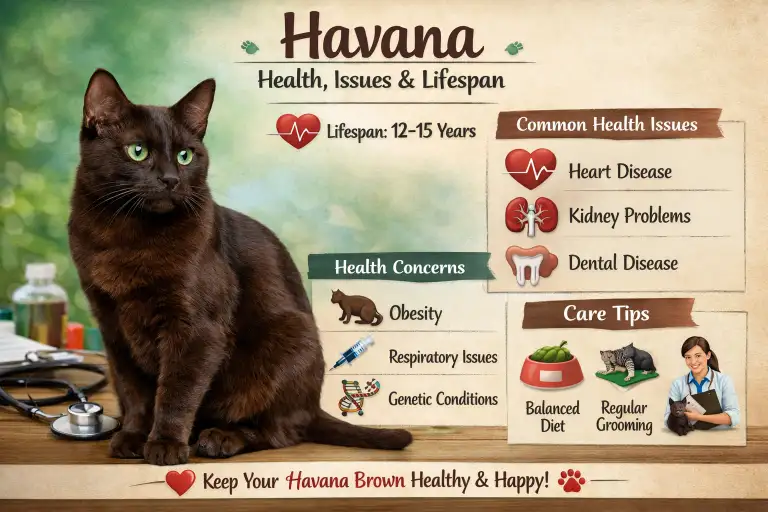
Havana cats, often called Havana Browns, are known for being calm, people-focused, and generally healthy. Most Havana cats live a similar length of time to other well-cared-for domestic cats. On average, many reach their early to mid-teens, and some live longer with steady care and a safe indoor life.
Recommended Dog Care Products
Based on your dog’s age, these products may help with comfort, health, grooming, and daily care.

Purina Pro Plan Veterinary Supplements
Daily probiotics for dogs to support digestive and gut health.
View on Amazon ↗
Earth Rated Poop Bags for Dogs
Leak-proof, extra thick waste bag refill rolls with lavender scent.
View on Amazon ↗
Greenies Pill Pockets for Dogs
Large dog treats for capsule medication, peanut butter flavor.
View on Amazon ↗
HONEY CARE All-Absorb Dog Wrap
Small male dog wraps, 50 count, useful for daily care support.
View on Amazon ↗
Seresto Flea & Tick Collar
Flea and tick treatment and prevention for dogs over 18 lbs.
View on Amazon ↗
Milk-Bone MaroSnacks
Small dog treats with real bone marrow in a 40 oz canister.
View on Amazon ↗
Vital Essentials Dog Treats
Freeze dried beef liver dog treats, grain free and single ingredient.
View on Amazon ↗
Stain & Odor Eliminator
Enzyme cleaner for pet stains, carpet messes, and strong odors.
View on Amazon ↗
Pur Luv Chicken Jerky Treats
Dog treats made with real chicken breast, high protein and chew-friendly.
View on Amazon ↗
Milk-Bone Flavor Snacks
Mini crunchy dog biscuits in a 36 oz canister for small rewards.
View on Amazon ↗As an Amazon Associate, we may earn from qualifying purchases.
Lifespan is not fixed. Two Havana cats from the same litter can age very differently. Daily habits, food quality, stress levels, and regular vet visits matter just as much as genetics. This is why it helps to think of lifespan as a range, not a promise.
Indoor living plays a big role in overall health. Cats kept indoors are less exposed to traffic, fights, parasites, and contagious diseases. For Havana cats, who tend to form strong bonds with their people, an indoor lifestyle also supports emotional well-being.
Overall, the Havana is not considered a fragile breed. Many owners report steady health across most of the cat’s life, especially when preventive care and early observation are part of the routine.
| Lifestyle | Typical Lifespan Range | General Notes |
|---|---|---|
| Indoor Havana cat | 13–16 years or more | Lower risk from accidents and infections |
| Mixed indoor/outdoor | Often shorter | Higher exposure to hazards |
| General domestic cat | 12–15 years | Varies widely by care and environment |
Common Health Issues Seen in Havana Cats
Havana cats do not have a long list of severe breed-specific problems. Most health concerns seen in this breed are also common in many cats. This is important because it means many issues are manageable with awareness and routine care.
Some Havana cats may show a tendency toward dental problems, weight gain, or age-related conditions later in life. These are not guaranteed problems, but areas where owners should stay observant. Health tendencies describe patterns seen across a population, not a diagnosis for an individual cat.
Like all cats, Havana cats can also develop issues such as kidney changes, urinary concerns, or diabetes as they age. These conditions are not unique to the breed and are often linked to lifestyle, diet, and aging rather than genetics alone.
Many Havana cats live their entire lives without serious illness. The goal of learning about possible health issues is not to worry, but to notice changes early and support long-term comfort.
| Health Area | High-Level Description | Seen in Many Cats? |
|---|---|---|
| Dental health | Gum and tooth changes over time | Yes |
| Weight management | Tendency to gain weight if inactive | Yes |
| Kidney changes | More common in senior cats | Yes |
| Urinary health | Sensitivity to diet and hydration | Yes |
Factors That Influence a Havana Cat’s Lifespan
A Havana cat’s lifespan is shaped by daily life more than by breed alone. Nutrition is one of the biggest factors. Balanced food, correct portions, and steady meal routines help maintain healthy weight and energy levels.
Activity and mental engagement also matter. Havana cats enjoy interaction and play. Regular movement helps joints, digestion, and mood, especially as the cat gets older. Boredom and stress can affect health in quiet ways over time.
Recommended Dog Care Products
Based on your dog’s age, these products may help with comfort, health, grooming, and daily care.
Purina Pro Plan Veterinary Supplements
Daily probiotics for dogs to support digestive and gut health.
View on Amazon ↗
Earth Rated Poop Bags for Dogs
Leak-proof, extra thick waste bag refill rolls with lavender scent.
View on Amazon ↗
Greenies Pill Pockets for Dogs
Large dog treats for capsule medication, peanut butter flavor.
View on Amazon ↗
HONEY CARE All-Absorb Dog Wrap
Small male dog wraps, 50 count, useful for daily care support.
View on Amazon ↗
Seresto Flea & Tick Collar
Flea and tick treatment and prevention for dogs over 18 lbs.
View on Amazon ↗
Milk-Bone MaroSnacks
Small dog treats with real bone marrow in a 40 oz canister.
View on Amazon ↗
Vital Essentials Dog Treats
Freeze dried beef liver dog treats, grain free and single ingredient.
View on Amazon ↗
Stain & Odor Eliminator
Enzyme cleaner for pet stains, carpet messes, and strong odors.
View on Amazon ↗
Pur Luv Chicken Jerky Treats
Dog treats made with real chicken breast, high protein and chew-friendly.
View on Amazon ↗
Milk-Bone Flavor Snacks
Mini crunchy dog biscuits in a 36 oz canister for small rewards.
View on Amazon ↗As an Amazon Associate, we may earn from qualifying purchases.
Routine veterinary care supports early detection. Regular checkups help spot small changes before they become bigger problems. This does not mean something is wrong, only that prevention works best when care is consistent.
A stable home environment supports both physical and emotional health. Havana cats often bond closely with their owners, and predictable routines can reduce stress as they age.
| Factor | How It Affects Lifespan |
|---|---|
| Diet quality | Supports weight, organs, and energy |
| Indoor safety | Reduces injury and disease risk |
| Mental stimulation | Supports emotional health |
| Routine vet visits | Helps catch changes early |
Preventive Care and Early Health Monitoring
Preventive care focuses on keeping a healthy cat healthy. For Havana cats, this includes regular wellness exams, dental monitoring, and keeping vaccinations and parasite prevention up to date as advised by a veterinarian.
Owners play an important role in early health monitoring. Small changes in appetite, litter box habits, energy, or behavior can be meaningful. Noticing patterns is more helpful than watching for one-time events.
Dental care deserves special attention. Dental disease is common in cats and often develops quietly. Regular checks help protect comfort and overall health as cats age.
Preventive care is not about fear. It is about building a long-term picture of what “normal” looks like for your cat, so changes are easier to spot.
| Care Area | Why It Matters |
|---|---|
| Wellness exams | Tracks health over time |
| Dental checks | Supports comfort and eating |
| Weight monitoring | Reduces strain on organs |
| Parasite prevention | Protects long-term health |
Aging, Quality of Life, and When to See a Vet
As Havana cats grow older, changes often happen slowly. Energy levels may decrease, sleep time may increase, and play style may shift. These changes are often part of normal aging and not a sign of illness by themselves.
Quality of life focuses on comfort, mobility, appetite, and enjoyment of daily activities. Simple adjustments, like softer bedding or easier access to favorite spots, can make a big difference for senior cats.
What matters most is change. When a cat’s behavior, eating habits, or routines shift noticeably, it is worth discussing with a veterinarian. Early conversations often lead to better support and peace of mind.
Aging does not mean poor health. Many Havana cats remain affectionate, alert, and engaged well into their senior years when supported with patience and routine care.
Recommended Dog Care Products
Based on your dog’s age, these products may help with comfort, health, grooming, and daily care.
Purina Pro Plan Veterinary Supplements
Daily probiotics for dogs to support digestive and gut health.
View on Amazon ↗
Earth Rated Poop Bags for Dogs
Leak-proof, extra thick waste bag refill rolls with lavender scent.
View on Amazon ↗
Greenies Pill Pockets for Dogs
Large dog treats for capsule medication, peanut butter flavor.
View on Amazon ↗
HONEY CARE All-Absorb Dog Wrap
Small male dog wraps, 50 count, useful for daily care support.
View on Amazon ↗
Seresto Flea & Tick Collar
Flea and tick treatment and prevention for dogs over 18 lbs.
View on Amazon ↗
Milk-Bone MaroSnacks
Small dog treats with real bone marrow in a 40 oz canister.
View on Amazon ↗
Vital Essentials Dog Treats
Freeze dried beef liver dog treats, grain free and single ingredient.
View on Amazon ↗
Stain & Odor Eliminator
Enzyme cleaner for pet stains, carpet messes, and strong odors.
View on Amazon ↗
Pur Luv Chicken Jerky Treats
Dog treats made with real chicken breast, high protein and chew-friendly.
View on Amazon ↗
Milk-Bone Flavor Snacks
Mini crunchy dog biscuits in a 36 oz canister for small rewards.
View on Amazon ↗As an Amazon Associate, we may earn from qualifying purchases.
| Normal Aging Changes | Changes to Discuss With a Vet |
|---|---|
| Sleeping more | Sudden appetite loss |
| Slower movement | Ongoing weight loss |
| Less intense play | Repeated vomiting or litter changes |
For additional trusted feline health guidance, you can visit the American Association of Feline Practitioners: https://catvets.com

Ata Ur Rehman is the founder of Pet Age in Human Years Calculator, an educational platform that provides age conversion charts and lifespan guides for dogs, cats, birds, and other companion animals. His work focuses on helping pet owners understand how animal ages translate into human years using commonly accepted age conversion formulas and published lifespan averages.
The website compiles breed and species lifespan data from kennel clubs, breed organizations, and general animal lifespan studies to present simple and easy-to-understand guides for pet owners worldwide.
This website was created to centralize animal age conversion charts into one easy reference platform for pet owners.