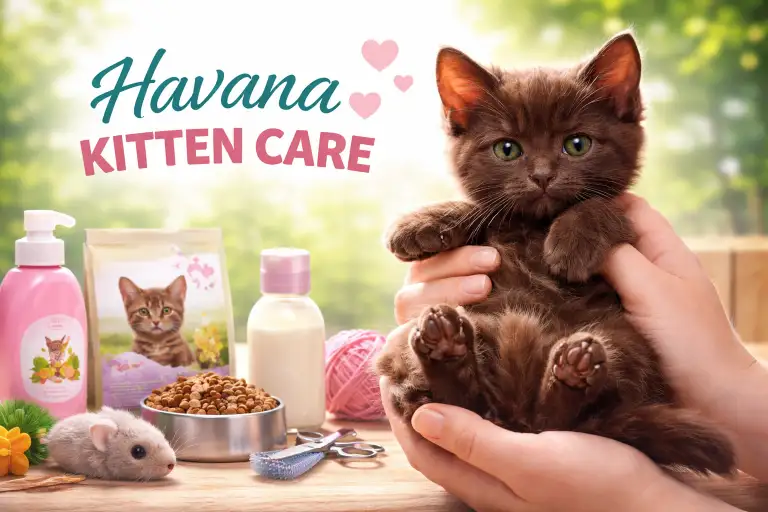
Bringing home a Havana kitten is exciting, but it can also feel a little scary if this is your first kitten. Kittens are not tiny adult cats. They have different needs, lots of energy, and they are still learning how the world works. This guide is meant to help you feel calm and confident, not perfect.
Recommended Dog Care Products
Based on your dog’s age, these products may help with comfort, health, grooming, and daily care.

Purina Pro Plan Veterinary Supplements
Daily probiotics for dogs to support digestive and gut health.
View on Amazon ↗
Earth Rated Poop Bags for Dogs
Leak-proof, extra thick waste bag refill rolls with lavender scent.
View on Amazon ↗
Greenies Pill Pockets for Dogs
Large dog treats for capsule medication, peanut butter flavor.
View on Amazon ↗
HONEY CARE All-Absorb Dog Wrap
Small male dog wraps, 50 count, useful for daily care support.
View on Amazon ↗
Seresto Flea & Tick Collar
Flea and tick treatment and prevention for dogs over 18 lbs.
View on Amazon ↗
Milk-Bone MaroSnacks
Small dog treats with real bone marrow in a 40 oz canister.
View on Amazon ↗
Vital Essentials Dog Treats
Freeze dried beef liver dog treats, grain free and single ingredient.
View on Amazon ↗
Stain & Odor Eliminator
Enzyme cleaner for pet stains, carpet messes, and strong odors.
View on Amazon ↗
Pur Luv Chicken Jerky Treats
Dog treats made with real chicken breast, high protein and chew-friendly.
View on Amazon ↗
Milk-Bone Flavor Snacks
Mini crunchy dog biscuits in a 36 oz canister for small rewards.
View on Amazon ↗As an Amazon Associate, we may earn from qualifying purchases.
During the first few days, your kitten may act shy, hide, or cry a little at night. This is normal. Everything is new: smells, sounds, people, and rules. Most kittens need time to feel safe before they show their true playful personality.
A Havana kitten will need daily care, gentle handling, and a steady routine. You do not need fancy products or expert skills. What matters most is consistency, patience, and paying attention to your kitten’s behavior.
Mistakes will happen. Your kitten might knock things over, miss the litter box once, or bite during play. These moments are part of learning. This guide focuses on what to expect and how to respond calmly, without fear or stress.
Preparing Your Home & Daily Routine for a Havana Kitten
Before your kitten explores the whole house, set up a small, quiet space. This can be one room with food, water, a litter box, and a soft place to sleep. A smaller space helps kittens feel safe and reduces accidents.
Remove or block dangers like loose wires, small objects, open windows, and toxic plants. Kittens explore with their mouths and paws, so anything on the floor is interesting to them. If it looks tempting, it probably is.
A simple daily routine helps your kitten feel secure. Feeding, playtime, and sleep should happen around the same times each day. Routine reduces stress and helps with litter training and behavior.
You do not need to play with your kitten all day. Short play sessions spread across the day are better than one long session. Always let your kitten rest when they choose to stop.
Sample Daily Routine for a Havana Kitten
| Time of Day | Activity | Notes |
|---|---|---|
| Morning | Feed + play | Gentle play helps burn energy |
| Midday | Sleep + snack | Kittens sleep a lot |
| Evening | Play + feed | Best time for active play |
| Night | Calm time | Quiet helps reduce night crying |
Feeding, Litter Training & Hygiene Basics
Kittens need food made for kittens. They grow fast and need more nutrients than adult cats. Feed small meals several times a day and always provide fresh water.
Recommended Dog Care Products
Based on your dog’s age, these products may help with comfort, health, grooming, and daily care.
Purina Pro Plan Veterinary Supplements
Daily probiotics for dogs to support digestive and gut health.
View on Amazon ↗
Earth Rated Poop Bags for Dogs
Leak-proof, extra thick waste bag refill rolls with lavender scent.
View on Amazon ↗
Greenies Pill Pockets for Dogs
Large dog treats for capsule medication, peanut butter flavor.
View on Amazon ↗
HONEY CARE All-Absorb Dog Wrap
Small male dog wraps, 50 count, useful for daily care support.
View on Amazon ↗
Seresto Flea & Tick Collar
Flea and tick treatment and prevention for dogs over 18 lbs.
View on Amazon ↗
Milk-Bone MaroSnacks
Small dog treats with real bone marrow in a 40 oz canister.
View on Amazon ↗
Vital Essentials Dog Treats
Freeze dried beef liver dog treats, grain free and single ingredient.
View on Amazon ↗
Stain & Odor Eliminator
Enzyme cleaner for pet stains, carpet messes, and strong odors.
View on Amazon ↗
Pur Luv Chicken Jerky Treats
Dog treats made with real chicken breast, high protein and chew-friendly.
View on Amazon ↗
Milk-Bone Flavor Snacks
Mini crunchy dog biscuits in a 36 oz canister for small rewards.
View on Amazon ↗As an Amazon Associate, we may earn from qualifying purchases.
Most kittens learn to use the litter box quickly if it is clean and easy to reach. Use a low-sided box and place it away from food. Scoop daily if possible. A dirty box is a common reason for accidents.
Grooming should start early but stay simple. Gently touch paws, ears, and mouth so your kitten gets used to handling. Short nail trims and light brushing help build trust over time.
Do not punish your kitten for mistakes. If something goes wrong, clean the area and adjust the setup instead. Kittens learn through repetition, not fear.
Feeding & Litter Basics by Kitten Age
| Kitten Age | Feeding Pattern | Litter Expectations |
|---|---|---|
| 8–12 weeks | 4 small meals daily | Learning, few accidents |
| 3–4 months | 3–4 meals daily | More consistent habits |
| 5–6 months | 3 meals daily | Reliable litter use |
Understanding Havana Kitten Behavior & Development
Kittens sleep more than you expect, often 16–20 hours a day. This is healthy and supports growth. Short bursts of energy followed by deep sleep are normal.
Play biting and scratching are common behaviors. Kittens are learning how to control their bodies. Always use toys, not hands, during play. This teaches safe boundaries.
Your kitten may follow you around one day and ignore you the next. This does not mean something is wrong. Independence grows with confidence, and moods can change quickly at this age.
Watching behavior over time matters more than single moments. Sudden changes in energy, appetite, or litter habits are worth noticing, but small daily changes are normal.
Normal Kitten Behaviors vs Common Beginner Worries
| Behavior | Why It’s Normal | What to Do |
|---|---|---|
| Play biting | Learning hunting skills | Redirect to toys |
| Hiding at first | Adjusting to new space | Give quiet time |
| Zoomies | Releasing energy | Schedule daily play |
| Sleeping a lot | Healthy growth | Let them rest |
Health Awareness, Safety & Common New Owner Mistakes
A healthy kitten is curious, playful, and eats regularly. Some quiet days are normal, especially after big changes like moving homes. Watch patterns, not single moments.
Recommended Dog Care Products
Based on your dog’s age, these products may help with comfort, health, grooming, and daily care.
Purina Pro Plan Veterinary Supplements
Daily probiotics for dogs to support digestive and gut health.
View on Amazon ↗
Earth Rated Poop Bags for Dogs
Leak-proof, extra thick waste bag refill rolls with lavender scent.
View on Amazon ↗
Greenies Pill Pockets for Dogs
Large dog treats for capsule medication, peanut butter flavor.
View on Amazon ↗
HONEY CARE All-Absorb Dog Wrap
Small male dog wraps, 50 count, useful for daily care support.
View on Amazon ↗
Seresto Flea & Tick Collar
Flea and tick treatment and prevention for dogs over 18 lbs.
View on Amazon ↗
Milk-Bone MaroSnacks
Small dog treats with real bone marrow in a 40 oz canister.
View on Amazon ↗
Vital Essentials Dog Treats
Freeze dried beef liver dog treats, grain free and single ingredient.
View on Amazon ↗
Stain & Odor Eliminator
Enzyme cleaner for pet stains, carpet messes, and strong odors.
View on Amazon ↗
Pur Luv Chicken Jerky Treats
Dog treats made with real chicken breast, high protein and chew-friendly.
View on Amazon ↗
Milk-Bone Flavor Snacks
Mini crunchy dog biscuits in a 36 oz canister for small rewards.
View on Amazon ↗As an Amazon Associate, we may earn from qualifying purchases.
Your first vet visit is mainly for a general check and advice. It helps set a baseline for your kitten’s growth and health. Write down questions ahead of time so you don’t forget.
Many new owners expect kittens to behave perfectly. This leads to frustration. Kittens knock things over, chew odd items, and test limits. This phase passes with guidance and patience.
Indoor safety is important. Keep doors and windows secure, store cleaning products safely, and check small spaces before closing them. Prevention is easier than fixing accidents later.
Common New Kitten Owner Mistakes & Better Alternatives
| Mistake | Why It Happens | Better Approach |
|---|---|---|
| Using hands as toys | Easy during play | Use wand or soft toys |
| Skipping playtime | Busy schedules | Short daily play sessions |
| Punishing accidents | Frustration | Adjust setup calmly |
| No routine | Lack of planning | Set simple daily schedule |
For more trusted kitten care guidance, you can visit the American Society for the Prevention of Cruelty to Animals (ASPCA): https://www.aspca.org/pet-care/cat-care

Ata Ur Rehman is the founder of Pet Age in Human Years Calculator, an educational platform that provides age conversion charts and lifespan guides for dogs, cats, birds, and other companion animals. His work focuses on helping pet owners understand how animal ages translate into human years using commonly accepted age conversion formulas and published lifespan averages.
The website compiles breed and species lifespan data from kennel clubs, breed organizations, and general animal lifespan studies to present simple and easy-to-understand guides for pet owners worldwide.
This website was created to centralize animal age conversion charts into one easy reference platform for pet owners.