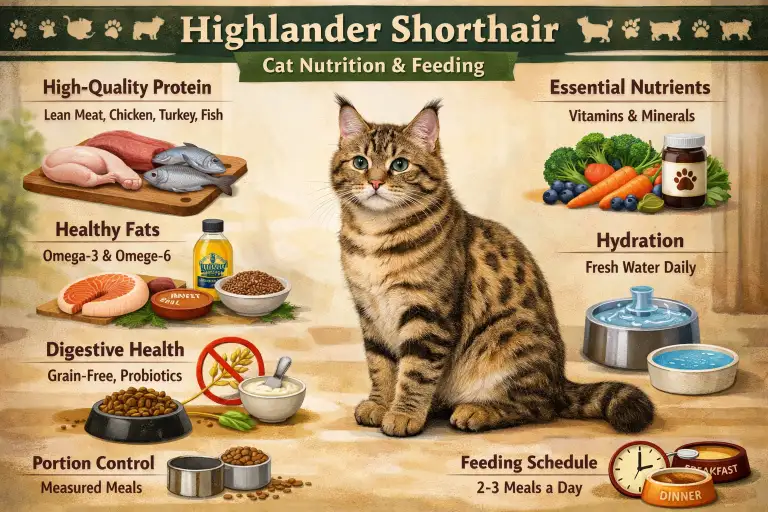
Highlander Shorthairs are active, muscular cats with unique dietary needs. Because they are obligate carnivores, they rely on animal-based protein for energy, muscle maintenance, and overall health. Unlike some other pets, cats cannot make certain essential nutrients themselves, like taurine, so their food must provide these.
Recommended Dog Care Products
Based on your dog’s age, these products may help with comfort, health, grooming, and daily care.

Purina Pro Plan Veterinary Supplements
Daily probiotics for dogs to support digestive and gut health.
View on Amazon ↗
Earth Rated Poop Bags for Dogs
Leak-proof, extra thick waste bag refill rolls with lavender scent.
View on Amazon ↗
Greenies Pill Pockets for Dogs
Large dog treats for capsule medication, peanut butter flavor.
View on Amazon ↗
HONEY CARE All-Absorb Dog Wrap
Small male dog wraps, 50 count, useful for daily care support.
View on Amazon ↗
Seresto Flea & Tick Collar
Flea and tick treatment and prevention for dogs over 18 lbs.
View on Amazon ↗
Milk-Bone MaroSnacks
Small dog treats with real bone marrow in a 40 oz canister.
View on Amazon ↗
Vital Essentials Dog Treats
Freeze dried beef liver dog treats, grain free and single ingredient.
View on Amazon ↗
Stain & Odor Eliminator
Enzyme cleaner for pet stains, carpet messes, and strong odors.
View on Amazon ↗
Pur Luv Chicken Jerky Treats
Dog treats made with real chicken breast, high protein and chew-friendly.
View on Amazon ↗
Milk-Bone Flavor Snacks
Mini crunchy dog biscuits in a 36 oz canister for small rewards.
View on Amazon ↗As an Amazon Associate, we may earn from qualifying purchases.
Protein is the most important part of a Highlander Shorthair’s diet. High-quality meat, fish, or poultry helps build strong muscles and maintain a healthy weight. Fat is also important because it gives them energy and helps keep their skin and coat shiny. Carbohydrates are not a major part of their natural diet, so only small amounts are needed.
Moisture is another key factor. Highlander Shorthairs can be prone to urinary tract issues if they do not get enough water. Wet food or fresh water is crucial to keep them hydrated. Cats often do not drink enough water on their own, so wet food can help maintain hydration and reduce the risk of kidney problems.
Finally, every cat is different. Age, activity level, and neutering status can affect how much food a Highlander needs. Monitoring their body condition and weight regularly ensures they are healthy and happy. Understanding these basics is the first step to providing the best diet for your Highlander Shorthair.
Choosing the Right Cat Food
When choosing food for a Highlander Shorthair, it’s important to know the difference between wet and dry food. Wet food has higher moisture content, which helps with hydration. It usually has fewer carbohydrates and more protein per serving. Dry food is convenient, lasts longer, and can help keep teeth clean, but it has less moisture and often contains more fillers.
Reading cat food labels is essential. Look for high-quality protein sources like chicken, turkey, or fish listed at the top of the ingredient list. Avoid foods with too many grains or artificial additives. AAFCO-approved foods meet minimum nutrition requirements and ensure your cat is getting a complete diet.
Some owners choose a mixed feeding approach. Offering both wet and dry food can combine the benefits of hydration and convenience. Make sure to balance the portions so your cat does not gain extra weight. Observing how your cat responds to different foods is important. Some cats may prefer wet food, while others may thrive on a combination.
Choosing the right food also means adjusting for life stage. Kittens need higher calories and fat for growth, while senior cats may need lower calories but more joint-supporting nutrients. Always check labels for life-stage suitability to ensure your Highlander gets what they need.
Wet Food vs Dry Food Comparison
| Feature | Wet Food | Dry Food | Best Use |
|---|---|---|---|
| Moisture | High | Low | Hydration support |
| Protein | High | Moderate | Muscle maintenance |
| Carbs | Low | Moderate-High | Energy filler |
| Convenience | Needs refrigeration | Easy storage | Busy owners |
| Dental Health | Limited | Can help reduce plaque | Prevent tartar buildup |
Feeding Amounts & Schedule
Feeding a Highlander Shorthair the right amount is important to keep them healthy. Overfeeding can cause obesity, while underfeeding may lead to nutrient deficiencies. The right portion depends on age, weight, and activity level.
Recommended Dog Care Products
Based on your dog’s age, these products may help with comfort, health, grooming, and daily care.
Purina Pro Plan Veterinary Supplements
Daily probiotics for dogs to support digestive and gut health.
View on Amazon ↗
Earth Rated Poop Bags for Dogs
Leak-proof, extra thick waste bag refill rolls with lavender scent.
View on Amazon ↗
Greenies Pill Pockets for Dogs
Large dog treats for capsule medication, peanut butter flavor.
View on Amazon ↗
HONEY CARE All-Absorb Dog Wrap
Small male dog wraps, 50 count, useful for daily care support.
View on Amazon ↗
Seresto Flea & Tick Collar
Flea and tick treatment and prevention for dogs over 18 lbs.
View on Amazon ↗
Milk-Bone MaroSnacks
Small dog treats with real bone marrow in a 40 oz canister.
View on Amazon ↗
Vital Essentials Dog Treats
Freeze dried beef liver dog treats, grain free and single ingredient.
View on Amazon ↗
Stain & Odor Eliminator
Enzyme cleaner for pet stains, carpet messes, and strong odors.
View on Amazon ↗
Pur Luv Chicken Jerky Treats
Dog treats made with real chicken breast, high protein and chew-friendly.
View on Amazon ↗
Milk-Bone Flavor Snacks
Mini crunchy dog biscuits in a 36 oz canister for small rewards.
View on Amazon ↗As an Amazon Associate, we may earn from qualifying purchases.
Kittens require multiple small meals throughout the day because they grow quickly and burn a lot of energy. Adult cats usually do well with two meals a day, though some owners use free-feeding with measured portions. Seniors may need smaller, more frequent meals, especially if their appetite decreases.
Indoor cats often need fewer calories because they are less active, while outdoor or highly active cats need more energy. Neutered cats may have slower metabolism, so watch for weight gain. Measuring food with a cup or scale helps control portions and prevent overfeeding.
It is also important to monitor your cat’s body condition regularly. Adjust the portion sizes if they gain or lose weight. Keep track of their activity and health to ensure they are getting the right nutrition for their lifestyle.
Feeding Amounts by Life Stage
| Life Stage | Suggested Daily Calories | Portion Example |
|---|---|---|
| Kitten | 200–300 kcal per 1 lb | 3–4 small meals/day |
| Adult | 50–70 kcal per lb | 2 meals/day |
| Senior | 40–60 kcal per lb | 2 small meals/day |
Treats, Supplements & Hydration
Treats can be a fun way to bond with your Highlander Shorthair, but they should be limited to avoid extra calories. Safe cat treats can include freeze-dried meat or small commercial treats. Avoid giving human foods that are toxic, such as chocolate, onions, garlic, or grapes.
Supplements are usually not needed if you feed a complete, balanced diet. Extra vitamins or minerals should only be given under veterinary guidance. Too many supplements can harm your cat, so it’s better to rely on high-quality food.
Hydration is very important. Cats often drink little water naturally, so wet food can help. Some cats enjoy water fountains, which encourage drinking. Always make sure your cat has fresh water available throughout the day.
Sample Cat Food Nutrient Checklist
| Nutrient | Purpose | Recommended Source |
|---|---|---|
| Protein | Muscle maintenance | Chicken, fish, turkey |
| Taurine | Heart & eye health | Meat-based foods |
| Fat | Energy & coat health | Animal fat, fish oil |
| Moisture | Hydration | Wet food, fresh water |
| Minerals | Bones & body function | Balanced commercial food |
Monitoring Health & When to Adjust Diet
Watching your Highlander Shorthair’s weight and behavior is essential for a healthy diet. If your cat is gaining too much weight, reduce portions or increase activity. If they are losing weight or seem lethargic, they may need more calories or a different food type.
Body condition scoring is a simple way to track health. You should be able to feel your cat’s ribs without excess fat and see a slight waist behind the ribs. Regular check-ups with a veterinarian help identify issues early.
Recommended Dog Care Products
Based on your dog’s age, these products may help with comfort, health, grooming, and daily care.
Purina Pro Plan Veterinary Supplements
Daily probiotics for dogs to support digestive and gut health.
View on Amazon ↗
Earth Rated Poop Bags for Dogs
Leak-proof, extra thick waste bag refill rolls with lavender scent.
View on Amazon ↗
Greenies Pill Pockets for Dogs
Large dog treats for capsule medication, peanut butter flavor.
View on Amazon ↗
HONEY CARE All-Absorb Dog Wrap
Small male dog wraps, 50 count, useful for daily care support.
View on Amazon ↗
Seresto Flea & Tick Collar
Flea and tick treatment and prevention for dogs over 18 lbs.
View on Amazon ↗
Milk-Bone MaroSnacks
Small dog treats with real bone marrow in a 40 oz canister.
View on Amazon ↗
Vital Essentials Dog Treats
Freeze dried beef liver dog treats, grain free and single ingredient.
View on Amazon ↗
Stain & Odor Eliminator
Enzyme cleaner for pet stains, carpet messes, and strong odors.
View on Amazon ↗
Pur Luv Chicken Jerky Treats
Dog treats made with real chicken breast, high protein and chew-friendly.
View on Amazon ↗
Milk-Bone Flavor Snacks
Mini crunchy dog biscuits in a 36 oz canister for small rewards.
View on Amazon ↗As an Amazon Associate, we may earn from qualifying purchases.
Adjusting diet for life stage, activity, and neutering status is part of responsible feeding. Always monitor for changes in appetite, energy, or coat quality, as these can indicate nutrition or health problems. Minor adjustments in food type or amount often solve most issues.
For more detailed information on cat nutrition and feeding strategies, you can visit the American Association of Feed Control Officials (AAFCO).

Ata Ur Rehman is the founder of Pet Age in Human Years Calculator, an educational platform that provides age conversion charts and lifespan guides for dogs, cats, birds, and other companion animals. His work focuses on helping pet owners understand how animal ages translate into human years using commonly accepted age conversion formulas and published lifespan averages.
The website compiles breed and species lifespan data from kennel clubs, breed organizations, and general animal lifespan studies to present simple and easy-to-understand guides for pet owners worldwide.
This website was created to centralize animal age conversion charts into one easy reference platform for pet owners.