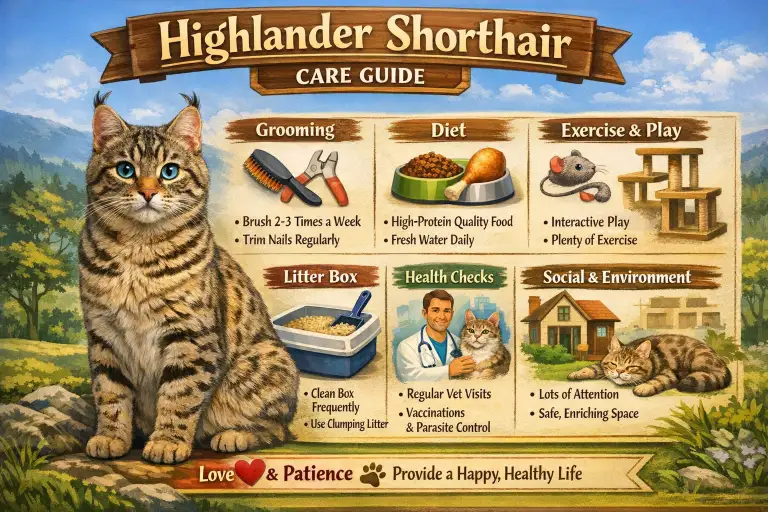
The Highlander Shorthair is a unique and energetic cat breed that needs special attention to stay healthy and happy. They are known for their playful nature, strong muscles, and social personality. Because of their high activity levels, they are not a breed that can sit around all day—they need toys, climbing spaces, and interaction with their owners. This guide is designed for first-time owners, families with multiple cats, and anyone who wants to understand how to care for a Highlander Shorthair properly.
Recommended Dog Care Products
Based on your dog’s age, these products may help with comfort, health, grooming, and daily care.

Purina Pro Plan Veterinary Supplements
Daily probiotics for dogs to support digestive and gut health.
View on Amazon ↗
Earth Rated Poop Bags for Dogs
Leak-proof, extra thick waste bag refill rolls with lavender scent.
View on Amazon ↗
Greenies Pill Pockets for Dogs
Large dog treats for capsule medication, peanut butter flavor.
View on Amazon ↗
HONEY CARE All-Absorb Dog Wrap
Small male dog wraps, 50 count, useful for daily care support.
View on Amazon ↗
Seresto Flea & Tick Collar
Flea and tick treatment and prevention for dogs over 18 lbs.
View on Amazon ↗
Milk-Bone MaroSnacks
Small dog treats with real bone marrow in a 40 oz canister.
View on Amazon ↗
Vital Essentials Dog Treats
Freeze dried beef liver dog treats, grain free and single ingredient.
View on Amazon ↗
Stain & Odor Eliminator
Enzyme cleaner for pet stains, carpet messes, and strong odors.
View on Amazon ↗
Pur Luv Chicken Jerky Treats
Dog treats made with real chicken breast, high protein and chew-friendly.
View on Amazon ↗
Milk-Bone Flavor Snacks
Mini crunchy dog biscuits in a 36 oz canister for small rewards.
View on Amazon ↗As an Amazon Associate, we may earn from qualifying purchases.
Highlander Shorthairs have short, dense coats that are easier to maintain than long-haired breeds, but they still need regular grooming to avoid shedding and hairballs. They also tend to be strong and curious, so providing a safe environment is crucial. Understanding their behavior and energy patterns helps owners reduce stress for both the cat and themselves.
These cats are very social and enjoy spending time with people and other pets. Without enough stimulation, they can become bored or anxious, which may lead to destructive behavior. Owners should be prepared to spend time playing, training, and interacting with their Highlander Shorthair every day.
Finally, knowing the breed’s common health issues and needs for different life stages can prevent serious problems later. This guide will cover daily routines, health tips, life stage adjustments, and safety measures. By following these steps, owners can enjoy a happy and long life with their Highlander Shorthair.
Daily and Weekly Care Routine
Taking care of a Highlander Shorthair involves daily and weekly tasks that keep them healthy and happy. Daily care includes feeding, giving fresh water, playing, and cleaning the litter box. Feeding should be portion-controlled and balanced for their age and activity level. Make sure water bowls are always full because Highlanders are active and need hydration.
Playtime is essential for this breed. Short bursts of interactive play every day help burn off energy and prevent boredom. Toys like feather wands, balls, and climbing towers work well. Grooming can also be a daily or weekly task. Brushing their coat two to three times a week helps reduce shedding and hairballs, while nail trimming can be done every couple of weeks.
Litter box maintenance is another daily task. Scoop at least once a day and wash the box weekly to prevent odors and infections. Keep multiple litter boxes if you have more than one cat to avoid territorial problems.
Here is a simple table for daily and weekly care routines:
| Task | Daily | Weekly |
|---|---|---|
| Feeding | ✅ | – |
| Fresh water | ✅ | – |
| Litter box scoop | ✅ | Wash box |
| Play/interaction | ✅ | – |
| Brushing coat | – | 2-3 times |
| Nail trimming | – | Every 2 weeks |
Health & Safety Considerations
Highlander Shorthairs are generally healthy, but they can face some breed-specific health issues. Common concerns include joint problems, dental issues, and heart conditions. Regular vet visits help detect these early. Vaccinations, flea and tick prevention, and parasite control are also essential.
Watching for warning signs is key. If your cat shows changes in appetite, energy, or litter box habits, it could indicate a health problem. Behavioral changes, like excessive hiding or aggression, should also be noted and discussed with a vet.
Recommended Dog Care Products
Based on your dog’s age, these products may help with comfort, health, grooming, and daily care.
Purina Pro Plan Veterinary Supplements
Daily probiotics for dogs to support digestive and gut health.
View on Amazon ↗
Earth Rated Poop Bags for Dogs
Leak-proof, extra thick waste bag refill rolls with lavender scent.
View on Amazon ↗
Greenies Pill Pockets for Dogs
Large dog treats for capsule medication, peanut butter flavor.
View on Amazon ↗
HONEY CARE All-Absorb Dog Wrap
Small male dog wraps, 50 count, useful for daily care support.
View on Amazon ↗
Seresto Flea & Tick Collar
Flea and tick treatment and prevention for dogs over 18 lbs.
View on Amazon ↗
Milk-Bone MaroSnacks
Small dog treats with real bone marrow in a 40 oz canister.
View on Amazon ↗
Vital Essentials Dog Treats
Freeze dried beef liver dog treats, grain free and single ingredient.
View on Amazon ↗
Stain & Odor Eliminator
Enzyme cleaner for pet stains, carpet messes, and strong odors.
View on Amazon ↗
Pur Luv Chicken Jerky Treats
Dog treats made with real chicken breast, high protein and chew-friendly.
View on Amazon ↗
Milk-Bone Flavor Snacks
Mini crunchy dog biscuits in a 36 oz canister for small rewards.
View on Amazon ↗As an Amazon Associate, we may earn from qualifying purchases.
Safety at home is important for Highlanders because they are curious and strong. Keep dangerous items like chemicals, small objects, and cords out of reach. For owners who allow outdoor access, supervised outdoor play or a secure catio is recommended to prevent accidents.
Here’s a table of common warning signs to watch for:
| Warning Sign | Possible Issue |
|---|---|
| Loss of appetite | Illness, dental pain |
| Lethargy | Infection, injury, heart issue |
| Excessive hiding | Stress, illness |
| Aggression or sudden biting | Pain, fear, illness |
| Frequent vomiting | Hairballs, digestive issues, illness |
Life Stage & Household Adjustments
Highlander Shorthairs have different needs depending on their age. Kittens need more frequent feeding, socialization, and gentle play. Adult cats need regular exercise and a consistent routine to maintain their weight and energy levels. Seniors may require special diets, more frequent vet checkups, and softer bedding.
If you have more than one cat, it’s important to introduce a Highlander slowly to other pets. They are social but strong-willed, so monitoring interactions at first prevents conflicts. Providing separate feeding stations, litter boxes, and resting areas can help reduce tension.
Environmental adjustments are also important. Highlanders love climbing and exploring, so cat trees, shelves, and safe climbing spaces keep them active and happy. Scratching posts prevent furniture damage, while puzzle feeders encourage mental stimulation.
Here is a table summarizing life stage care adjustments:
| Life Stage | Feeding | Play/Exercise | Health Notes |
|---|---|---|---|
| Kitten | Small, frequent meals | Short interactive sessions | Vaccinations, socialization |
| Adult | Balanced portions | Daily play & climbing | Routine vet checks |
| Senior | Easier-to-digest diet | Gentle activity | Monitor joints, weight, teeth |
Final Care Summary & Owner Tips
Caring for a Highlander Shorthair is rewarding but requires planning, time, and attention. Daily routines, weekly grooming, and play sessions keep your cat happy and healthy. Remember to watch for warning signs and schedule regular vet visits to prevent health issues.
Avoid common mistakes like skipping playtime, neglecting grooming, or letting boredom set in. These cats need mental and physical stimulation to thrive. Creating a safe, enriched environment will prevent destructive behaviors and keep your cat active.
Owners should also remember that Highlanders thrive on social interaction. Spend quality time every day, even if it’s just a few minutes of gentle play or petting. Adjust routines as your cat ages and be mindful of household dynamics in multi-cat homes.
By following this guide, owners can ensure their Highlander Shorthair lives a long, happy, and healthy life. For more detailed veterinary guidance and breed-specific care tips, check out the American Association of Feline Practitioners.
Recommended Dog Care Products
Based on your dog’s age, these products may help with comfort, health, grooming, and daily care.
Purina Pro Plan Veterinary Supplements
Daily probiotics for dogs to support digestive and gut health.
View on Amazon ↗
Earth Rated Poop Bags for Dogs
Leak-proof, extra thick waste bag refill rolls with lavender scent.
View on Amazon ↗
Greenies Pill Pockets for Dogs
Large dog treats for capsule medication, peanut butter flavor.
View on Amazon ↗
HONEY CARE All-Absorb Dog Wrap
Small male dog wraps, 50 count, useful for daily care support.
View on Amazon ↗
Seresto Flea & Tick Collar
Flea and tick treatment and prevention for dogs over 18 lbs.
View on Amazon ↗
Milk-Bone MaroSnacks
Small dog treats with real bone marrow in a 40 oz canister.
View on Amazon ↗
Vital Essentials Dog Treats
Freeze dried beef liver dog treats, grain free and single ingredient.
View on Amazon ↗
Stain & Odor Eliminator
Enzyme cleaner for pet stains, carpet messes, and strong odors.
View on Amazon ↗
Pur Luv Chicken Jerky Treats
Dog treats made with real chicken breast, high protein and chew-friendly.
View on Amazon ↗
Milk-Bone Flavor Snacks
Mini crunchy dog biscuits in a 36 oz canister for small rewards.
View on Amazon ↗As an Amazon Associate, we may earn from qualifying purchases.

Ata Ur Rehman is the founder of Pet Age in Human Years Calculator, an educational platform that provides age conversion charts and lifespan guides for dogs, cats, birds, and other companion animals. His work focuses on helping pet owners understand how animal ages translate into human years using commonly accepted age conversion formulas and published lifespan averages.
The website compiles breed and species lifespan data from kennel clubs, breed organizations, and general animal lifespan studies to present simple and easy-to-understand guides for pet owners worldwide.
This website was created to centralize animal age conversion charts into one easy reference platform for pet owners.