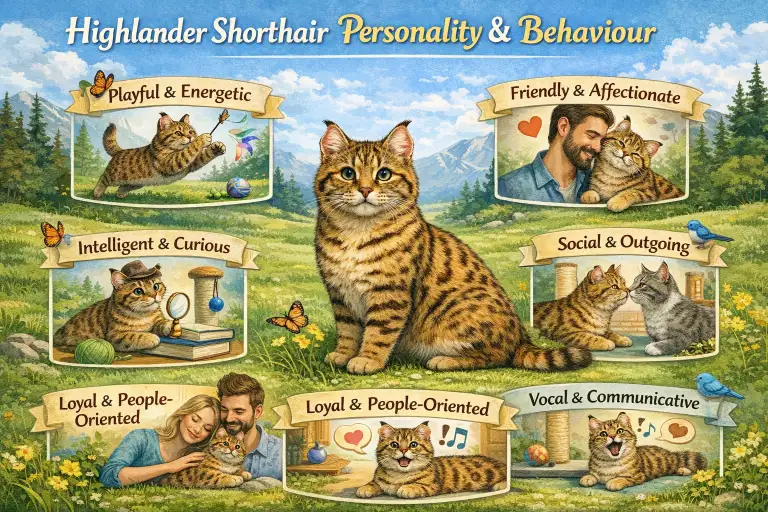
The Highlander Shorthair is a cat with a big personality. They are playful, energetic, and love to interact with their human family. Unlike some cats who prefer to hide or stay alone, Highlanders are often described as dog-like in their loyalty. They enjoy following you around the house and being part of daily activities.
Recommended Dog Care Products
Based on your dog’s age, these products may help with comfort, health, grooming, and daily care.

Purina Pro Plan Veterinary Supplements
Daily probiotics for dogs to support digestive and gut health.
View on Amazon ↗
Earth Rated Poop Bags for Dogs
Leak-proof, extra thick waste bag refill rolls with lavender scent.
View on Amazon ↗
Greenies Pill Pockets for Dogs
Large dog treats for capsule medication, peanut butter flavor.
View on Amazon ↗
HONEY CARE All-Absorb Dog Wrap
Small male dog wraps, 50 count, useful for daily care support.
View on Amazon ↗
Seresto Flea & Tick Collar
Flea and tick treatment and prevention for dogs over 18 lbs.
View on Amazon ↗
Milk-Bone MaroSnacks
Small dog treats with real bone marrow in a 40 oz canister.
View on Amazon ↗
Vital Essentials Dog Treats
Freeze dried beef liver dog treats, grain free and single ingredient.
View on Amazon ↗
Stain & Odor Eliminator
Enzyme cleaner for pet stains, carpet messes, and strong odors.
View on Amazon ↗
Pur Luv Chicken Jerky Treats
Dog treats made with real chicken breast, high protein and chew-friendly.
View on Amazon ↗
Milk-Bone Flavor Snacks
Mini crunchy dog biscuits in a 36 oz canister for small rewards.
View on Amazon ↗As an Amazon Associate, we may earn from qualifying purchases.
These cats are also intelligent and curious. They like to explore new spaces, climb to high perches, and figure out puzzles or toys. Because of their energy and curiosity, they can get bored if they don’t have enough stimulation, so providing interactive toys and safe climbing spots is important.
Highlanders are known for being affectionate but in their own way. Some like to sit on laps, while others prefer to stay close nearby, keeping an eye on their people. They usually communicate clearly with their owners, making it easier to understand what they want without feeling pushy.
One interesting thing about Highlanders is their playful nature even as adults. While kittens are naturally energetic, adult Highlanders often retain a lively spirit, enjoying fetch, chasing toys, and even learning tricks. This mix of intelligence, playfulness, and loyalty makes their personality stand out among other cat breeds.
How Highlander Cats Communicate
Highlander Shorthairs are very expressive, using both body language and vocalizations to communicate. Their tail positions, ear angles, and eye expressions can tell you a lot about their mood. For example, a tail held high usually means they are confident and happy, while slow blinking is a sign of trust and affection.
These cats are also known for their unique vocalizations. They can chirp, trill, or make soft meows to get attention or show excitement. Unlike breeds that meow loudly all the time, Highlanders tend to choose their “words” carefully, often communicating when they really want interaction or play.
| Communication Type | Signals / Behavior | Meaning |
|---|---|---|
| Tail Position | Tail held high | Confident, happy |
| Tail flicking | Irritation or excitement | |
| Ears | Forward | Curious or attentive |
| Flattened | Fear or annoyance | |
| Eyes | Slow blink | Trust, affection |
| Wide open | Alert or playful | |
| Vocalizations | Chirp or trill | Attention-seeking, excitement |
| Soft meow | Request interaction or play | |
| Body Contact | Head-butt or rub | Affection, bonding |
| Gentle pawing | Requesting play or attention | |
| Posture / Movement | Relaxed, stretched | Comfortable, content |
| Pouncing, crouching | Playful or hunting behavior |
Body language is equally important. Highlanders may rub against your legs, head-butt, or gently paw at you to show affection. They often use their posture and movements to signal when they want to play, rest, or explore. Watching these subtle signals helps owners understand their needs without any frustration.
Understanding Highlander communication can make life easier for both you and your cat. By noticing tail flicks, ear positions, and vocal patterns, you can respond appropriately and strengthen your bond.
Social Behavior with Humans & Other Pets
Highlanders are social cats who enjoy spending time with their human families. They are usually friendly with children, making them a good choice for families who want an interactive pet. They often follow family members from room to room and enjoy participating in household routines.
These cats can also get along with other pets, including dogs and other cats, as long as introductions are gradual. Their playful nature makes them willing to engage in group play, but they also know when to take a break and seek a quiet spot.
Recommended Dog Care Products
Based on your dog’s age, these products may help with comfort, health, grooming, and daily care.
Purina Pro Plan Veterinary Supplements
Daily probiotics for dogs to support digestive and gut health.
View on Amazon ↗
Earth Rated Poop Bags for Dogs
Leak-proof, extra thick waste bag refill rolls with lavender scent.
View on Amazon ↗
Greenies Pill Pockets for Dogs
Large dog treats for capsule medication, peanut butter flavor.
View on Amazon ↗
HONEY CARE All-Absorb Dog Wrap
Small male dog wraps, 50 count, useful for daily care support.
View on Amazon ↗
Seresto Flea & Tick Collar
Flea and tick treatment and prevention for dogs over 18 lbs.
View on Amazon ↗
Milk-Bone MaroSnacks
Small dog treats with real bone marrow in a 40 oz canister.
View on Amazon ↗
Vital Essentials Dog Treats
Freeze dried beef liver dog treats, grain free and single ingredient.
View on Amazon ↗
Stain & Odor Eliminator
Enzyme cleaner for pet stains, carpet messes, and strong odors.
View on Amazon ↗
Pur Luv Chicken Jerky Treats
Dog treats made with real chicken breast, high protein and chew-friendly.
View on Amazon ↗
Milk-Bone Flavor Snacks
Mini crunchy dog biscuits in a 36 oz canister for small rewards.
View on Amazon ↗As an Amazon Associate, we may earn from qualifying purchases.
Affection styles vary between cats. Some Highlanders prefer sitting on your lap, while others like being near you but not touching. Respecting their personal space helps them feel safe and more willing to interact when they want attention.
Highlanders are known to bond closely with their owners. They may greet you at the door, follow you around the house, or even sleep nearby. This social loyalty, combined with their playful curiosity, makes them feel like a true family companion.
Energy, Play & Natural Behavior Patterns
Highlanders are active cats who love to play. They enjoy toys that mimic hunting, such as feather wands or small balls. Their intelligence allows them to learn new games quickly, and they often invent their own ways to entertain themselves.
Even as adults, Highlanders maintain high energy levels. They may jump on counters, climb shelves, or explore new spaces. Providing climbing structures, scratching posts, and safe outdoor access can help them use their energy in positive ways.
Play is also an important way for Highlanders to bond with their owners. Games like fetch, hide-and-seek, or puzzle toys allow them to stay active while connecting with people. Play sessions also reduce boredom and prevent destructive behavior.
Their natural behavior includes hunting instincts, curiosity, and problem-solving. Watching your Highlander explore and “hunt” in playtime gives insight into their intelligence and personality. Understanding these patterns helps you create an environment where they thrive physically and mentally.
Common Questions About Highlander Shorthair Behavior
Many owners have similar questions about Highlanders. Are they clingy? They can be, but usually in a friendly, playful way rather than demanding attention. Are they noisy? They are vocal, but their sounds are often soft and communicative rather than loud or annoying.
Highlanders are independent yet social. They enjoy their alone time but still want interaction daily. How do they get along with other pets? With gradual introductions, they are often very friendly toward other cats and even dogs.
They retain kitten-like curiosity as adults, which can make them more active than other breeds. Are they easy to train? Their intelligence makes them responsive to gentle training and interactive games, especially if rewarded with play or treats.
By understanding their behavior, owners can meet their Highlander’s needs without frustration. Watching their body language, listening to their vocal cues, and respecting their personality helps strengthen the bond and ensures a happy, healthy cat.
Recommended Dog Care Products
Based on your dog’s age, these products may help with comfort, health, grooming, and daily care.
Purina Pro Plan Veterinary Supplements
Daily probiotics for dogs to support digestive and gut health.
View on Amazon ↗
Earth Rated Poop Bags for Dogs
Leak-proof, extra thick waste bag refill rolls with lavender scent.
View on Amazon ↗
Greenies Pill Pockets for Dogs
Large dog treats for capsule medication, peanut butter flavor.
View on Amazon ↗
HONEY CARE All-Absorb Dog Wrap
Small male dog wraps, 50 count, useful for daily care support.
View on Amazon ↗
Seresto Flea & Tick Collar
Flea and tick treatment and prevention for dogs over 18 lbs.
View on Amazon ↗
Milk-Bone MaroSnacks
Small dog treats with real bone marrow in a 40 oz canister.
View on Amazon ↗
Vital Essentials Dog Treats
Freeze dried beef liver dog treats, grain free and single ingredient.
View on Amazon ↗
Stain & Odor Eliminator
Enzyme cleaner for pet stains, carpet messes, and strong odors.
View on Amazon ↗
Pur Luv Chicken Jerky Treats
Dog treats made with real chicken breast, high protein and chew-friendly.
View on Amazon ↗
Milk-Bone Flavor Snacks
Mini crunchy dog biscuits in a 36 oz canister for small rewards.
View on Amazon ↗As an Amazon Associate, we may earn from qualifying purchases.
Highlander Shorthair Behavior Summary Table
| Trait | Description |
|---|---|
| Affection | Friendly, sometimes lap-loving, often follows owners around |
| Energy Level | High, playful even in adulthood, needs interactive play |
| Vocalization | Chirps, trills, soft meows; expressive but not overly loud |
| Social Compatibility | Good with kids, other cats, and often dogs |
| Intelligence | Highly intelligent, enjoys problem-solving and interactive toys |
| Playfulness | Enjoys hunting games, fetch, climbing, and exploration |
| Independence vs Attachment | Balanced — enjoys interaction but respects personal space |
Highlander Shorthairs are truly remarkable cats. Their combination of loyalty, playfulness, intelligence, and affectionate communication makes them ideal for active families or owners who want a cat that participates in daily life. By understanding their behaviors and needs, you can provide an environment where they thrive, feel secure, and share countless happy moments with you.
For more expert insights on Highlander cats, visit Cats Fandom – Highlander Breed.

Ata Ur Rehman is the founder of Pet Age in Human Years Calculator, an educational platform that provides age conversion charts and lifespan guides for dogs, cats, birds, and other companion animals. His work focuses on helping pet owners understand how animal ages translate into human years using commonly accepted age conversion formulas and published lifespan averages.
The website compiles breed and species lifespan data from kennel clubs, breed organizations, and general animal lifespan studies to present simple and easy-to-understand guides for pet owners worldwide.
This website was created to centralize animal age conversion charts into one easy reference platform for pet owners.