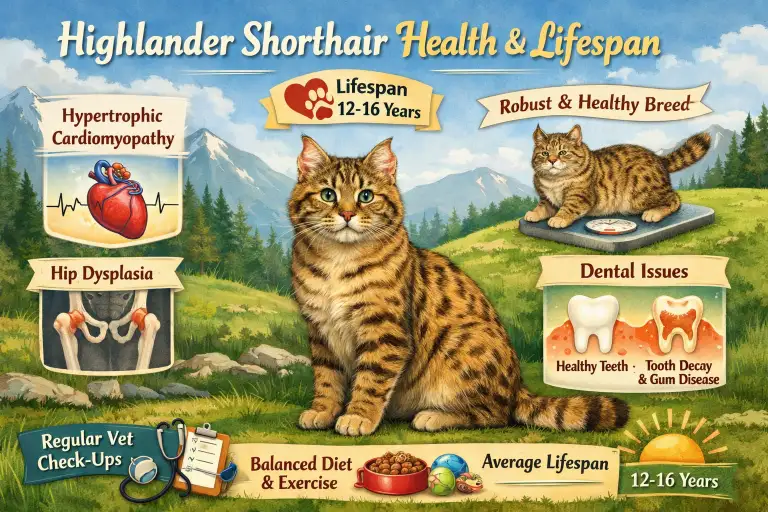
Highlander Shorthairs are known for their playful personality and strong build. Many owners wonder how long these cats live and what affects their lifespan. While every cat is different, understanding typical lifespan ranges can help owners plan preventive care and provide the best environment for their cat.
Recommended Dog Care Products
Based on your dog’s age, these products may help with comfort, health, grooming, and daily care.

Purina Pro Plan Veterinary Supplements
Daily probiotics for dogs to support digestive and gut health.
View on Amazon ↗
Earth Rated Poop Bags for Dogs
Leak-proof, extra thick waste bag refill rolls with lavender scent.
View on Amazon ↗
Greenies Pill Pockets for Dogs
Large dog treats for capsule medication, peanut butter flavor.
View on Amazon ↗
HONEY CARE All-Absorb Dog Wrap
Small male dog wraps, 50 count, useful for daily care support.
View on Amazon ↗
Seresto Flea & Tick Collar
Flea and tick treatment and prevention for dogs over 18 lbs.
View on Amazon ↗
Milk-Bone MaroSnacks
Small dog treats with real bone marrow in a 40 oz canister.
View on Amazon ↗
Vital Essentials Dog Treats
Freeze dried beef liver dog treats, grain free and single ingredient.
View on Amazon ↗
Stain & Odor Eliminator
Enzyme cleaner for pet stains, carpet messes, and strong odors.
View on Amazon ↗
Pur Luv Chicken Jerky Treats
Dog treats made with real chicken breast, high protein and chew-friendly.
View on Amazon ↗
Milk-Bone Flavor Snacks
Mini crunchy dog biscuits in a 36 oz canister for small rewards.
View on Amazon ↗As an Amazon Associate, we may earn from qualifying purchases.
Indoor Highlander Shorthairs usually live longer than those who spend time outdoors. Indoor cats often reach 12 to 16 years, and some may even live into their early twenties with proper care. Outdoor cats face more risks, such as accidents or infections, and may have slightly shorter lifespans. Genetics, diet, exercise, and routine veterinary care all play a role in these differences.
Highlander Shorthairs are generally healthy, but like all cats, they can be prone to certain conditions as they age. Owners who understand lifespan trends can better recognize early warning signs and adjust care as their cat grows older. Being proactive about health checkups, weight management, and dental hygiene can help improve life expectancy.
It is important to remember that lifespan is an estimate, not a guarantee. Each Highlander Shorthair is unique, and quality of life is just as important as length of life. Supporting mental stimulation, playtime, and safe environments all contribute to a happier, longer life.
Highlander Shorthair Lifespan Expectancy
| Living Environment | Typical Lifespan | Notes |
|---|---|---|
| Indoor only | 12 – 16 years | Can live longer with excellent care |
| Indoor/Outdoor mix | 10 – 14 years | More risk of injuries or illness |
| Outdoor only | 8 – 12 years | Higher exposure to accidents and disease |
Common Highlander Shorthair Health Issues
Highlander Shorthairs are strong and active, but they can still face some common health problems. Knowing what to watch for helps owners spot issues early and seek veterinary advice if needed.
Muscle and joint problems can occur, especially as cats age. Some Highlander Shorthairs may develop hip or joint stiffness. Heart and kidney health are also important to monitor. Kidney disease and urinary tract issues are common in many cats and may not show obvious signs at first, so regular checkups are essential.
Weight and dental health play a big role too. Highlander Shorthairs that eat too much or get little exercise can become overweight, leading to extra stress on the joints and higher risk of diabetes. Dental problems, like gum disease or tooth decay, are common and can affect overall health if not addressed.
Parasites and preventable illnesses, such as fleas, ticks, or infections, can also affect cats of any age. Preventive care, proper vaccination, and parasite control help reduce these risks. By being aware of common conditions, owners can take steps to keep their Highlander Shorthair healthy.
Common Health Issues Overview
Recommended Dog Care Products
Based on your dog’s age, these products may help with comfort, health, grooming, and daily care.
Purina Pro Plan Veterinary Supplements
Daily probiotics for dogs to support digestive and gut health.
View on Amazon ↗
Earth Rated Poop Bags for Dogs
Leak-proof, extra thick waste bag refill rolls with lavender scent.
View on Amazon ↗
Greenies Pill Pockets for Dogs
Large dog treats for capsule medication, peanut butter flavor.
View on Amazon ↗
HONEY CARE All-Absorb Dog Wrap
Small male dog wraps, 50 count, useful for daily care support.
View on Amazon ↗
Seresto Flea & Tick Collar
Flea and tick treatment and prevention for dogs over 18 lbs.
View on Amazon ↗
Milk-Bone MaroSnacks
Small dog treats with real bone marrow in a 40 oz canister.
View on Amazon ↗
Vital Essentials Dog Treats
Freeze dried beef liver dog treats, grain free and single ingredient.
View on Amazon ↗
Stain & Odor Eliminator
Enzyme cleaner for pet stains, carpet messes, and strong odors.
View on Amazon ↗
Pur Luv Chicken Jerky Treats
Dog treats made with real chicken breast, high protein and chew-friendly.
View on Amazon ↗
Milk-Bone Flavor Snacks
Mini crunchy dog biscuits in a 36 oz canister for small rewards.
View on Amazon ↗As an Amazon Associate, we may earn from qualifying purchases.
| Health Issue | Typical Age | Common Signs | Preventive Tip |
|---|---|---|---|
| Joint or Hip Stiffness | Adult/Senior | Reduced activity, limping | Maintain healthy weight, exercise |
| Kidney Disease | Adult/Senior | Increased thirst, frequent urination | Routine vet checkups, monitor water intake |
| Obesity & Diabetes | All ages | Weight gain, reduced energy | Balanced diet, regular play |
| Dental Disease | All ages | Bad breath, difficulty eating | Regular dental care, checkups |
| Parasites & Infections | All ages | Scratching, lethargy, vomiting | Vaccinations, flea/tick control |
Preventive Care to Support Lifelong Health
Preventive care is one of the best ways to help Highlander Shorthairs live a long and healthy life. Small daily steps and regular vet visits can make a big difference. Owners should schedule routine veterinary checkups at least once a year, or more often as cats age. These visits help catch potential problems before they become serious.
Nutrition is another key factor. Feeding a balanced diet with the right portions keeps weight under control and supports overall health. Avoid overfeeding and provide fresh water at all times. Treats are fine occasionally, but they should not make up a large part of the diet.
Dental hygiene should not be overlooked. Brushing teeth or providing dental-friendly toys can reduce plaque buildup and prevent gum disease. Regular weight checks and body condition assessments at home help spot obesity early. Exercise and playtime also support joint health and mental stimulation.
Vaccinations and parasite prevention are important for preventing illness. Fleas, ticks, and intestinal parasites can cause discomfort and serious health problems. Following a vet’s recommended vaccination schedule keeps your cat safe from common preventable diseases.
Preventive Care Checklist
| Task | Frequency | Owner Action |
|---|---|---|
| Vet Checkup | 1–2 times/year | Schedule visits, track health notes |
| Weight & Body Check | Monthly | Monitor diet, adjust food as needed |
| Dental Care | Weekly/As advised | Brush teeth or use dental toys |
| Vaccination & Parasite Control | Yearly / seasonal | Follow vet guidance |
| Exercise & Enrichment | Daily | Play, climbing structures, toys |
Warning Signs & Health Changes to Watch For
Even healthy Highlander Shorthairs can show early signs of illness. Knowing what to look for helps owners act before problems become serious. Sudden changes in appetite, drinking habits, or weight should not be ignored. Lethargy, hiding, or unusual behavior may indicate discomfort or illness.
Changes in urination or defecation, persistent vomiting, coughing, or sneezing are also warning signs. Dental issues can appear as bad breath or difficulty eating. Paying attention to these signals and recording patterns helps vets make better assessments.
Senior Highlander Shorthairs may develop mobility issues, vision or hearing decline, or other age-related conditions. While some changes are normal with aging, owners should still monitor their cat closely and provide supportive care.
Regular observation and preventive care together make it easier to catch problems early. Small adjustments, like ramps for easier access or softer bedding, can greatly improve a senior cat’s comfort.
Warning Signs Quick Reference
Recommended Dog Care Products
Based on your dog’s age, these products may help with comfort, health, grooming, and daily care.
Purina Pro Plan Veterinary Supplements
Daily probiotics for dogs to support digestive and gut health.
View on Amazon ↗
Earth Rated Poop Bags for Dogs
Leak-proof, extra thick waste bag refill rolls with lavender scent.
View on Amazon ↗
Greenies Pill Pockets for Dogs
Large dog treats for capsule medication, peanut butter flavor.
View on Amazon ↗
HONEY CARE All-Absorb Dog Wrap
Small male dog wraps, 50 count, useful for daily care support.
View on Amazon ↗
Seresto Flea & Tick Collar
Flea and tick treatment and prevention for dogs over 18 lbs.
View on Amazon ↗
Milk-Bone MaroSnacks
Small dog treats with real bone marrow in a 40 oz canister.
View on Amazon ↗
Vital Essentials Dog Treats
Freeze dried beef liver dog treats, grain free and single ingredient.
View on Amazon ↗
Stain & Odor Eliminator
Enzyme cleaner for pet stains, carpet messes, and strong odors.
View on Amazon ↗
Pur Luv Chicken Jerky Treats
Dog treats made with real chicken breast, high protein and chew-friendly.
View on Amazon ↗
Milk-Bone Flavor Snacks
Mini crunchy dog biscuits in a 36 oz canister for small rewards.
View on Amazon ↗As an Amazon Associate, we may earn from qualifying purchases.
| Sign | Possible Concern | Urgency Level |
|---|---|---|
| Reduced appetite | Illness, dental or digestive issues | Medium |
| Increased thirst or urination | Kidney or urinary tract problem | High |
| Weight loss or gain | Metabolic or chronic issue | Medium |
| Lethargy or hiding | Pain, stress, illness | High |
| Vomiting, coughing, sneezing | Digestive, respiratory, or infection | Medium |
Supporting Quality of Life as Your Highlander Ages
Quality of life is just as important as lifespan. Keeping your Highlander Shorthair active, engaged, and comfortable ensures happiness at every age. Enrichment through play, climbing, scratching posts, and safe exploration supports mental health.
Diet and weight management remain critical in senior cats. Adjusting food to meet changing metabolism and preventing obesity helps maintain mobility and reduces risk of chronic disease. Comfortable resting areas and safe spaces are essential as joint stiffness or arthritis may develop.
Regular grooming, gentle handling, and attention to behavior changes also enhance comfort. Pain management and mobility support can be provided in consultation with a veterinarian. Small daily routines, like interactive play or gentle massages, can improve both physical and emotional well-being.
Quality of Life Checklist
| Area | Actionable Steps |
|---|---|
| Mental Stimulation | Toys, climbing structures, puzzles |
| Physical Health | Weight checks, exercise, safe spaces |
| Comfort & Rest | Soft bedding, ramps, quiet areas |
| Grooming & Hygiene | Regular brushing, nail trimming |
| Veterinary Support | Routine checkups, monitor chronic conditions |
Highlander Shorthairs can enjoy long, healthy, and happy lives with attentive care. Understanding lifespan, common health issues, preventive steps, warning signs, and quality of life considerations gives owners confidence in supporting their cats every day.
For more detailed feline health advice, visit the American Association of Feline Practitioners at https://catvets.com.

Ata Ur Rehman is the founder of Pet Age in Human Years Calculator, an educational platform that provides age conversion charts and lifespan guides for dogs, cats, birds, and other companion animals. His work focuses on helping pet owners understand how animal ages translate into human years using commonly accepted age conversion formulas and published lifespan averages.
The website compiles breed and species lifespan data from kennel clubs, breed organizations, and general animal lifespan studies to present simple and easy-to-understand guides for pet owners worldwide.
This website was created to centralize animal age conversion charts into one easy reference platform for pet owners.