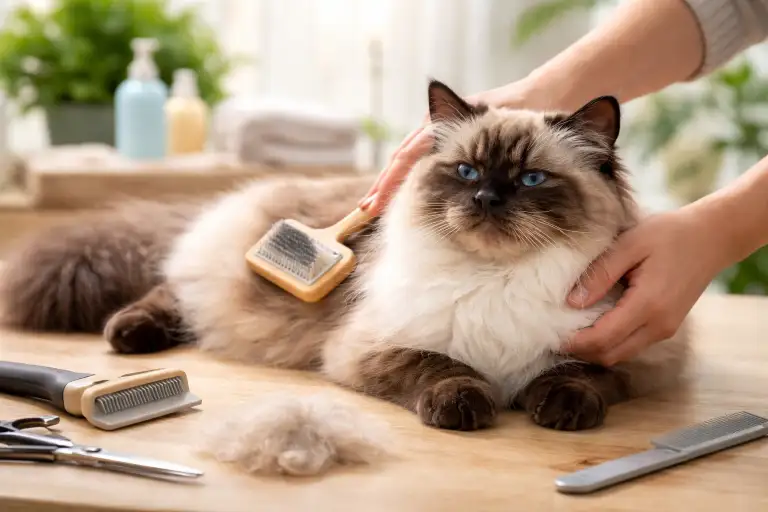
Grooming your Himalayan cat is more than just keeping it looking pretty. It is an important part of keeping your cat healthy and comfortable. Himalayans have long, dense coats that can easily tangle and mat if not cared for properly. Mats can pull on the skin, cause pain, and even lead to infections. Regular grooming also helps you notice health problems early, like skin irritation, lumps, or parasites.
Recommended Dog Care Products
Based on your dog’s age, these products may help with comfort, health, grooming, and daily care.

Purina Pro Plan Veterinary Supplements
Daily probiotics for dogs to support digestive and gut health.
View on Amazon ↗
Earth Rated Poop Bags for Dogs
Leak-proof, extra thick waste bag refill rolls with lavender scent.
View on Amazon ↗
Greenies Pill Pockets for Dogs
Large dog treats for capsule medication, peanut butter flavor.
View on Amazon ↗
HONEY CARE All-Absorb Dog Wrap
Small male dog wraps, 50 count, useful for daily care support.
View on Amazon ↗
Seresto Flea & Tick Collar
Flea and tick treatment and prevention for dogs over 18 lbs.
View on Amazon ↗
Milk-Bone MaroSnacks
Small dog treats with real bone marrow in a 40 oz canister.
View on Amazon ↗
Vital Essentials Dog Treats
Freeze dried beef liver dog treats, grain free and single ingredient.
View on Amazon ↗
Stain & Odor Eliminator
Enzyme cleaner for pet stains, carpet messes, and strong odors.
View on Amazon ↗
Pur Luv Chicken Jerky Treats
Dog treats made with real chicken breast, high protein and chew-friendly.
View on Amazon ↗
Milk-Bone Flavor Snacks
Mini crunchy dog biscuits in a 36 oz canister for small rewards.
View on Amazon ↗As an Amazon Associate, we may earn from qualifying purchases.
Himalayans are also prone to tear staining because of their flat faces. Cleaning their eyes and face regularly prevents discoloration and skin irritation. Grooming is a good chance to check for other issues too, such as ear wax, dental problems, or abnormal smells. These small checks can save your cat from bigger health problems later.
Another reason grooming is essential is bonding. Many cats enjoy gentle brushing when done slowly and safely. It can reduce stress and help your cat trust you more. Grooming also reduces hairballs, which are common in long-haired cats like Himalayans, and helps keep your home cleaner.
Finally, understanding the grooming needs of your Himalayan helps you set a routine. Daily or regular care keeps the cat comfortable, prevents matting, and ensures you notice any health concerns early. Grooming is not just about looks; it is a key part of keeping your Himalayan happy and healthy.
Brushing, Bathing, and Coat Care
Brushing is the most important part of grooming a Himalayan cat. Their long fur can easily tangle and form mats, especially around the belly, armpits, and behind the ears. Using a wide-toothed comb for mats and a soft brush for daily grooming works best. Start gently and follow the direction of hair growth to avoid pulling. If your cat resists, try brushing for a few minutes at a time instead of forcing long sessions.
Bathing is usually not needed very often for Himalayans. Most cats keep themselves clean, but baths may be necessary if the coat becomes greasy, dirty, or stained. Use a gentle cat shampoo and lukewarm water. Dry your cat carefully with a towel and, if tolerated, a low-heat hair dryer. Avoid water in the ears and eyes, and never use human shampoo.
It is also important to check for mats while brushing. Small tangles can be gently teased apart, but large mats may need a professional groomer. Trying to cut mats at home can accidentally cut the skin, so safety comes first. Regular brushing helps prevent mats from forming in the first place.
Here is a simple table for brushing and bathing frequency for Himalayan cats:
| Grooming Task | How Often | Notes |
|---|---|---|
| Brushing | Daily | Focus on belly, chest, and underarms |
| Bathing | Every 6-8 weeks or as needed | Only if coat is dirty or greasy |
| Mat check | Daily during brushing | Remove small tangles gently |
| Seasonal shedding care | Weekly extra brushing | Helps control loose hair |
Nail, Ear, Eye, and Dental Care
Nail trimming is essential to prevent scratches and injury. Himalayan cats often hide their paws, so check them gently. Only trim the sharp tip and avoid the quick, which is the pink part inside the nail. If your cat gets stressed, try trimming one or two nails at a time or use a towel wrap for safety.
Himalayans have large tear ducts that can cause tear stains on their face. Clean the area daily with a soft, damp cloth or cat-safe wipes. Be gentle to avoid irritation. Ear cleaning is also important. Check for dirt, wax buildup, or bad smell. Use a cat-safe ear cleaner on a cotton pad; never insert anything deep into the ear canal.
Recommended Dog Care Products
Based on your dog’s age, these products may help with comfort, health, grooming, and daily care.
Purina Pro Plan Veterinary Supplements
Daily probiotics for dogs to support digestive and gut health.
View on Amazon ↗
Earth Rated Poop Bags for Dogs
Leak-proof, extra thick waste bag refill rolls with lavender scent.
View on Amazon ↗
Greenies Pill Pockets for Dogs
Large dog treats for capsule medication, peanut butter flavor.
View on Amazon ↗
HONEY CARE All-Absorb Dog Wrap
Small male dog wraps, 50 count, useful for daily care support.
View on Amazon ↗
Seresto Flea & Tick Collar
Flea and tick treatment and prevention for dogs over 18 lbs.
View on Amazon ↗
Milk-Bone MaroSnacks
Small dog treats with real bone marrow in a 40 oz canister.
View on Amazon ↗
Vital Essentials Dog Treats
Freeze dried beef liver dog treats, grain free and single ingredient.
View on Amazon ↗
Stain & Odor Eliminator
Enzyme cleaner for pet stains, carpet messes, and strong odors.
View on Amazon ↗
Pur Luv Chicken Jerky Treats
Dog treats made with real chicken breast, high protein and chew-friendly.
View on Amazon ↗
Milk-Bone Flavor Snacks
Mini crunchy dog biscuits in a 36 oz canister for small rewards.
View on Amazon ↗As an Amazon Associate, we may earn from qualifying purchases.
Dental hygiene is often overlooked. Brushing your cat’s teeth regularly can prevent gum disease and bad breath. Use a cat toothbrush and toothpaste. If your cat refuses brushing, dental chews or regular veterinary dental checks can help maintain oral health.
Here is a quick checklist table for daily and weekly hygiene tasks:
| Task | How Often | Tips |
|---|---|---|
| Nail trimming | Every 2-3 weeks | Only trim tips, avoid quick |
| Tear stain cleaning | Daily | Use soft damp cloth or wipes |
| Ear cleaning | Weekly | Only outer ear with cat-safe cleaner |
| Dental care | 2-3 times/week brushing | Use cat toothpaste, vet checks |
Grooming Frequency and Stress-Safe Handling
A clear grooming routine makes the process easier for both you and your cat. Daily brushing, weekly ear and eye cleaning, and regular nail trims keep your Himalayan comfortable and healthy. Creating a schedule reduces stress because your cat learns what to expect.
Himalayans can get nervous or scared during grooming. Watch for stress signals such as flattened ears, twitching tails, growling, or trying to escape. If you see these signs, pause and let your cat calm down before continuing. Using treats and praise can make grooming a positive experience.
Here is a grooming frequency table for a Himalayan cat:
| Task | Frequency | Notes |
|---|---|---|
| Brushing | Daily | Focus on high-mat areas |
| Bathing | 6-8 weeks | Only if necessary |
| Nail trimming | 2-3 weeks | Trim a few nails at a time if stressed |
| Ear and eye cleaning | Weekly | Gentle and careful |
| Dental care | 2-3 times/week | Use cat toothpaste or chews |
Handling gently is key. Support the cat’s body while brushing or trimming nails, and never force your cat into a position. Gradual desensitization and short sessions help even nervous cats become used to grooming.
Special Situations & Professional Help
Some Himalayan cats need extra care. Kittens should be introduced to grooming slowly, starting with short, gentle brushing sessions. Seniors may have sensitive skin or arthritis, so use soft brushes and gentle handling. Long-haired Himalayans need extra attention to prevent mats, especially in seasonal shedding months. Nervous or aggressive cats may need short, calm grooming sessions, and in some cases, a professional groomer can help.
Here is a comparison table for kittens, adults, and seniors:
| Cat Type | Grooming Focus | Tips |
|---|---|---|
| Kitten | Gentle introduction | Short brushing sessions, positive reinforcement |
| Adult | Regular maintenance | Daily brushing, check mats and tear stains |
| Senior | Comfort & gentle handling | Soft brush, avoid pressure, shorter sessions |
Professional help is recommended if mats are too large, tear stains are chronic, or the cat becomes overly stressed. A veterinarian can also check for underlying health issues that affect grooming, such as skin infections or dental disease.
For more tips on long-haired cat care, you can visit ASPCA Cat Care.
Recommended Dog Care Products
Based on your dog’s age, these products may help with comfort, health, grooming, and daily care.
Purina Pro Plan Veterinary Supplements
Daily probiotics for dogs to support digestive and gut health.
View on Amazon ↗
Earth Rated Poop Bags for Dogs
Leak-proof, extra thick waste bag refill rolls with lavender scent.
View on Amazon ↗
Greenies Pill Pockets for Dogs
Large dog treats for capsule medication, peanut butter flavor.
View on Amazon ↗
HONEY CARE All-Absorb Dog Wrap
Small male dog wraps, 50 count, useful for daily care support.
View on Amazon ↗
Seresto Flea & Tick Collar
Flea and tick treatment and prevention for dogs over 18 lbs.
View on Amazon ↗
Milk-Bone MaroSnacks
Small dog treats with real bone marrow in a 40 oz canister.
View on Amazon ↗
Vital Essentials Dog Treats
Freeze dried beef liver dog treats, grain free and single ingredient.
View on Amazon ↗
Stain & Odor Eliminator
Enzyme cleaner for pet stains, carpet messes, and strong odors.
View on Amazon ↗
Pur Luv Chicken Jerky Treats
Dog treats made with real chicken breast, high protein and chew-friendly.
View on Amazon ↗
Milk-Bone Flavor Snacks
Mini crunchy dog biscuits in a 36 oz canister for small rewards.
View on Amazon ↗As an Amazon Associate, we may earn from qualifying purchases.

Ata Ur Rehman is the founder of Pet Age in Human Years Calculator, an educational platform that provides age conversion charts and lifespan guides for dogs, cats, birds, and other companion animals. His work focuses on helping pet owners understand how animal ages translate into human years using commonly accepted age conversion formulas and published lifespan averages.
The website compiles breed and species lifespan data from kennel clubs, breed organizations, and general animal lifespan studies to present simple and easy-to-understand guides for pet owners worldwide.
This website was created to centralize animal age conversion charts into one easy reference platform for pet owners.