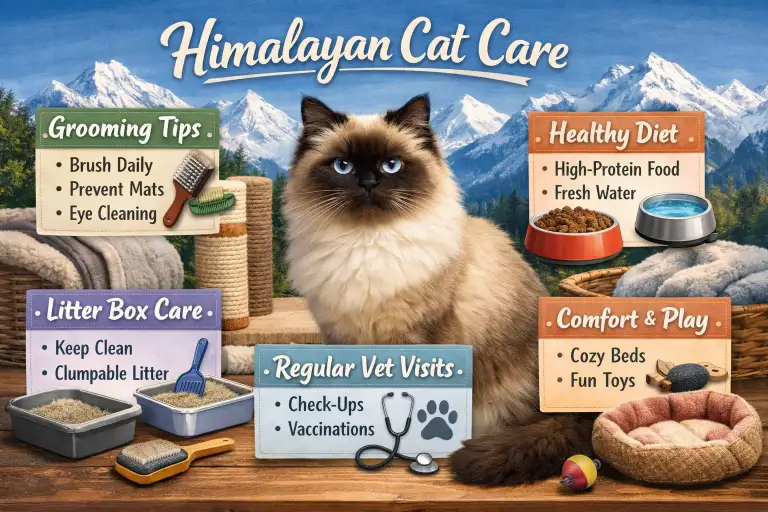
Himalayan cats are known for their long, silky coats, blue eyes, and sweet, calm personalities. They are a cross between Persians and Siamese, which gives them their unique look and gentle temperament. Understanding the breed is important because their physical traits create special care needs that are different from other cats.
Recommended Dog Care Products
Based on your dog’s age, these products may help with comfort, health, grooming, and daily care.

Purina Pro Plan Veterinary Supplements
Daily probiotics for dogs to support digestive and gut health.
View on Amazon ↗
Earth Rated Poop Bags for Dogs
Leak-proof, extra thick waste bag refill rolls with lavender scent.
View on Amazon ↗
Greenies Pill Pockets for Dogs
Large dog treats for capsule medication, peanut butter flavor.
View on Amazon ↗
HONEY CARE All-Absorb Dog Wrap
Small male dog wraps, 50 count, useful for daily care support.
View on Amazon ↗
Seresto Flea & Tick Collar
Flea and tick treatment and prevention for dogs over 18 lbs.
View on Amazon ↗
Milk-Bone MaroSnacks
Small dog treats with real bone marrow in a 40 oz canister.
View on Amazon ↗
Vital Essentials Dog Treats
Freeze dried beef liver dog treats, grain free and single ingredient.
View on Amazon ↗
Stain & Odor Eliminator
Enzyme cleaner for pet stains, carpet messes, and strong odors.
View on Amazon ↗
Pur Luv Chicken Jerky Treats
Dog treats made with real chicken breast, high protein and chew-friendly.
View on Amazon ↗
Milk-Bone Flavor Snacks
Mini crunchy dog biscuits in a 36 oz canister for small rewards.
View on Amazon ↗As an Amazon Associate, we may earn from qualifying purchases.
These cats are usually quiet and enjoy being indoors. They like to be close to their owners and often enjoy lounging in warm, comfortable spots. However, their long hair can mat easily, and their flat faces can cause eye drainage and breathing issues if not cared for properly.
Before bringing a Himalayan home, prepare for daily grooming and regular health monitoring. Their care is more time-intensive than a short-haired cat, but it can be very rewarding. Owners who stick to a routine often have very happy, healthy cats.
Himalayans are ideal for calm households. They usually do well with children who understand gentle play, and they can adapt to multi-cat homes if introductions are managed carefully. Knowing what makes them special helps you prevent stress, health issues, and behavioral problems.
Daily & Weekly Care Routine
Himalayans need both daily and weekly attention to stay healthy and comfortable. Daily brushing prevents tangles and mats, which can be painful for the cat. Focus on the undercoat and behind the ears, where mats form first. Grooming should be gentle, especially for kittens who are just getting used to being brushed.
Eye care is important because Himalayan cats often have tear stains. Use a soft, damp cloth or a vet-recommended wipe to clean around the eyes daily. This prevents buildup and keeps the face clean. Feeding and hydration should also be checked daily. Offer fresh water and a balanced diet suited for their age and activity level.
Litter box maintenance is another daily task. Scoop waste at least once a day, and wash the box weekly with mild soap. A clean litter box encourages good habits and reduces stress. Playtime and mental stimulation are essential every day. Short interactive sessions using toys or gentle games help keep the cat active and happy.
Weekly tasks include a more thorough grooming session, nail trimming, and checking the ears and teeth. Bathing may be needed occasionally, especially if the coat becomes greasy. Keeping a consistent routine helps your Himalayan feel safe and cared for.
Daily vs Weekly Care Checklist
| Task | Daily | Weekly |
|---|---|---|
| Brushing | ✓ | Deep brush |
| Eye cleaning | ✓ | |
| Litter box scoop | ✓ | Full wash |
| Nail trimming | ✓ | |
| Full grooming check | ✓ | |
| Play / enrichment | ✓ |
Health & Wellness Essentials
Himalayan cats are prone to certain health issues because of their flat faces and long coats. Common problems include respiratory difficulties, eye infections, dental issues, and hairballs. Regular checkups with a veterinarian help catch these problems early.
Recommended Dog Care Products
Based on your dog’s age, these products may help with comfort, health, grooming, and daily care.
Purina Pro Plan Veterinary Supplements
Daily probiotics for dogs to support digestive and gut health.
View on Amazon ↗
Earth Rated Poop Bags for Dogs
Leak-proof, extra thick waste bag refill rolls with lavender scent.
View on Amazon ↗
Greenies Pill Pockets for Dogs
Large dog treats for capsule medication, peanut butter flavor.
View on Amazon ↗
HONEY CARE All-Absorb Dog Wrap
Small male dog wraps, 50 count, useful for daily care support.
View on Amazon ↗
Seresto Flea & Tick Collar
Flea and tick treatment and prevention for dogs over 18 lbs.
View on Amazon ↗
Milk-Bone MaroSnacks
Small dog treats with real bone marrow in a 40 oz canister.
View on Amazon ↗
Vital Essentials Dog Treats
Freeze dried beef liver dog treats, grain free and single ingredient.
View on Amazon ↗
Stain & Odor Eliminator
Enzyme cleaner for pet stains, carpet messes, and strong odors.
View on Amazon ↗
Pur Luv Chicken Jerky Treats
Dog treats made with real chicken breast, high protein and chew-friendly.
View on Amazon ↗
Milk-Bone Flavor Snacks
Mini crunchy dog biscuits in a 36 oz canister for small rewards.
View on Amazon ↗As an Amazon Associate, we may earn from qualifying purchases.
Watch your cat for warning signs like frequent sneezing, eye redness, coughing, or vomiting. These can indicate infections or blockages. Dental health is often overlooked; brushing their teeth a few times a week or providing dental treats can prevent serious issues. Vaccines and regular vet visits are essential to protect against common feline diseases.
Maintaining a healthy weight is also important. Obesity can worsen respiratory problems and joint stress. Feed appropriate portions and encourage daily play. Grooming helps prevent hairballs, but if your cat is vomiting frequently or seems lethargic, contact your vet.
Stress can also affect health. Keep a calm environment, provide hiding spots, and maintain a predictable routine. Multi-cat households may need extra attention to avoid fights and anxiety.
Common Health Issues Table
| Health Issue | Key Signs | Action Needed |
|---|---|---|
| Eye infections | Redness, discharge | Vet same day |
| Respiratory trouble | Wheezing, open mouth breathing | Urgent vet |
| Hairballs | Frequent vomiting | Grooming + vet advice |
| Dental disease | Bad breath, drooling | Vet dental check |
| Obesity | Weight gain, inactivity | Adjust diet + exercise |
Life Stage Considerations
Caring for a Himalayan cat changes as they grow. Kittens need gentle grooming and socialization. Introduce brushing gradually to build trust. They also need kitten-specific food for proper growth and frequent veterinary checkups for vaccines and overall health.
Adult Himalayans require consistent grooming, a balanced diet, and regular play for exercise. Continue eye cleaning and monitor for any health changes. They may also benefit from additional enrichment, like climbing spaces or interactive toys.
Senior Himalayans often need more frequent health checks. Their coat may thin, and they might require more grooming to prevent mats. Senior cats may also need softer food or supplements for joint health. Monitor their activity and behavior for signs of discomfort or illness.
Life Stage Care Comparison Table
| Care Aspect | Kitten | Adult | Senior |
|---|---|---|---|
| Feeding | Growth diet | Balanced diet | Senior diet |
| Grooming | Gentle introduction | Routine brushing | More frequent brushing |
| Vet checkups | Frequent | Regular | More frequent + screenings |
| Play & Enrichment | Short, gentle | Daily interactive | Adapted for mobility |
Behavior, Environment & Training Tips
Himalayans are calm and affectionate but still need mental and physical stimulation. They enjoy interactive play and climbing opportunities. Scratching posts, puzzle feeders, and cat trees help prevent boredom.
Indoor cats need a safe environment. Windows with secure screens, cozy hiding spots, and quiet areas reduce stress. Outdoor access is risky for Himalayans because of their flat faces and long coats, so supervised or enclosed spaces are recommended.
Recommended Dog Care Products
Based on your dog’s age, these products may help with comfort, health, grooming, and daily care.
Purina Pro Plan Veterinary Supplements
Daily probiotics for dogs to support digestive and gut health.
View on Amazon ↗
Earth Rated Poop Bags for Dogs
Leak-proof, extra thick waste bag refill rolls with lavender scent.
View on Amazon ↗
Greenies Pill Pockets for Dogs
Large dog treats for capsule medication, peanut butter flavor.
View on Amazon ↗
HONEY CARE All-Absorb Dog Wrap
Small male dog wraps, 50 count, useful for daily care support.
View on Amazon ↗
Seresto Flea & Tick Collar
Flea and tick treatment and prevention for dogs over 18 lbs.
View on Amazon ↗
Milk-Bone MaroSnacks
Small dog treats with real bone marrow in a 40 oz canister.
View on Amazon ↗
Vital Essentials Dog Treats
Freeze dried beef liver dog treats, grain free and single ingredient.
View on Amazon ↗
Stain & Odor Eliminator
Enzyme cleaner for pet stains, carpet messes, and strong odors.
View on Amazon ↗
Pur Luv Chicken Jerky Treats
Dog treats made with real chicken breast, high protein and chew-friendly.
View on Amazon ↗
Milk-Bone Flavor Snacks
Mini crunchy dog biscuits in a 36 oz canister for small rewards.
View on Amazon ↗As an Amazon Associate, we may earn from qualifying purchases.
Behavior issues are often signs of unmet needs. Excessive vocalization, scratching, or hiding can indicate boredom, stress, or health problems. Multi-cat households require careful introductions and separate resources like litter boxes and feeding stations.
Training is usually simple. Use positive reinforcement with treats or praise for good behavior. Avoid punishment; it can increase stress. Maintaining a predictable routine makes Himalayans feel secure and happy.
Environment & Behavior Table
| Aspect | Recommendation |
|---|---|
| Play & enrichment | 15–20 min daily interactive play |
| Scratching | Provide multiple posts or pads |
| Indoor safety | Secure windows, hiding spots, quiet areas |
| Multi-cat home | Separate litter boxes & feeding stations |
| Training | Positive reinforcement only |
For more information on Himalayan cat health and care routines, check out The American Association of Feline Practitioners (AAFP) guidelines.

Ata Ur Rehman is the founder of Pet Age in Human Years Calculator, an educational platform that provides age conversion charts and lifespan guides for dogs, cats, birds, and other companion animals. His work focuses on helping pet owners understand how animal ages translate into human years using commonly accepted age conversion formulas and published lifespan averages.
The website compiles breed and species lifespan data from kennel clubs, breed organizations, and general animal lifespan studies to present simple and easy-to-understand guides for pet owners worldwide.
This website was created to centralize animal age conversion charts into one easy reference platform for pet owners.