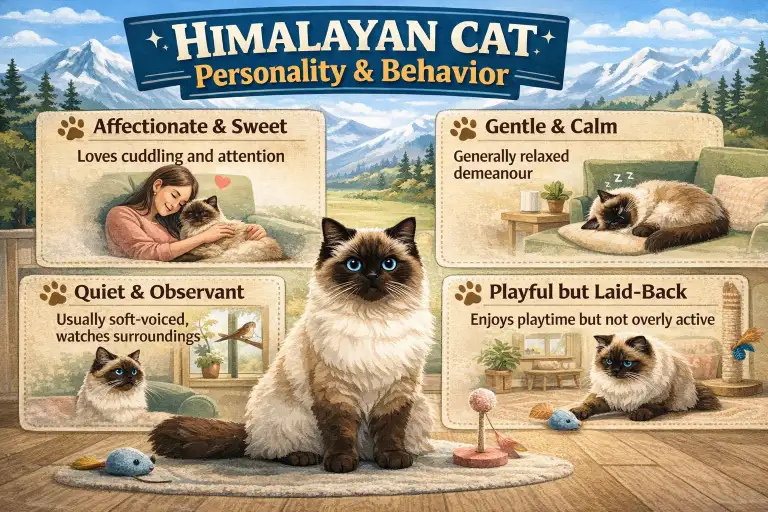
Himalayan cats are known for being calm and gentle. They usually enjoy quiet homes and soft play. Most Himalayans like to relax in cozy spots and will follow you slowly rather than run and jump all day. They are not as hyper as some other breeds, but they still enjoy moments of fun and attention.
Recommended Dog Care Products
Based on your dog’s age, these products may help with comfort, health, grooming, and daily care.

Purina Pro Plan Veterinary Supplements
Daily probiotics for dogs to support digestive and gut health.
View on Amazon ↗
Earth Rated Poop Bags for Dogs
Leak-proof, extra thick waste bag refill rolls with lavender scent.
View on Amazon ↗
Greenies Pill Pockets for Dogs
Large dog treats for capsule medication, peanut butter flavor.
View on Amazon ↗
HONEY CARE All-Absorb Dog Wrap
Small male dog wraps, 50 count, useful for daily care support.
View on Amazon ↗
Seresto Flea & Tick Collar
Flea and tick treatment and prevention for dogs over 18 lbs.
View on Amazon ↗
Milk-Bone MaroSnacks
Small dog treats with real bone marrow in a 40 oz canister.
View on Amazon ↗
Vital Essentials Dog Treats
Freeze dried beef liver dog treats, grain free and single ingredient.
View on Amazon ↗
Stain & Odor Eliminator
Enzyme cleaner for pet stains, carpet messes, and strong odors.
View on Amazon ↗
Pur Luv Chicken Jerky Treats
Dog treats made with real chicken breast, high protein and chew-friendly.
View on Amazon ↗
Milk-Bone Flavor Snacks
Mini crunchy dog biscuits in a 36 oz canister for small rewards.
View on Amazon ↗As an Amazon Associate, we may earn from qualifying purchases.
A Himalayan’s personality is a mix of sweet friendliness and peaceful independence. They often choose when they want to interact and when they want alone time. This does not mean they don’t love you — it just means they feel safe and confident in their space.
These cats are usually patient and mild‑mannered. Many owners notice they are good around calm children and adults who respect their pace. They do not typically demand attention loudly, but they show their love gently with slow blinks, sitting near you, or soft purring.
Every Himalayan is unique. Some may be more playful, others more quiet, and some may want more cuddles than others. What matters most is watching how your cat shows comfort and trust in daily life.
Himalayan Personality Traits Summary
| Trait | Typical Behavior | What It Means |
|---|---|---|
| Affection | Gentle cuddles, lap preference | Loves quiet, close connection |
| Energy Level | Low to medium | Enjoys calm play, not hyperactive |
| Vocality | Soft meows | Communicates quietly |
| Playfulness | Short, focused play sessions | Prefers calm engagement |
How Himalayans Communicate: Vocal & Body Language
Himalayan cats talk to us with more than just meows. They use their eyes, ears, tail, and body position to tell you how they feel. Their meows are often soft and quiet. You might notice that they only speak when they really want something or are curious about something new.
One of the easiest signs of comfort in a Himalayan is slow blinking. If your cat looks at you and slowly closes its eyes, it is showing trust and affection. You can blink back to let your cat know you feel safe too. A relaxed tail that curves gently means your cat is calm and happy. A tail that is low or tucked close to the body can mean your cat feels unsure or shy.
Their ears are important too. Forward ears usually mean interest and attention. If their ears are flat or pulled back, your cat may be feeling stressed or overstimulated. Watching these small changes helps you understand your Himalayan’s mood without guessing.
Communication Signals Quick Reference
| Signal | What You See | What It Often Means |
|---|---|---|
| Slow blink | Eyes half‑closed slowly | Trust and calm |
| Soft meow | Low vocal sound | Friendly greeting or gentle request |
| Forward ears | Ears upright | Interest or focus |
| Tail low/tucked | Tail close to body | Shyness or uncertainty |
Social Behavior: Humans, Other Cats & Pets
Himalayans are usually warm with the people they know. They often form close bonds with their main family members. They may follow you from room to room, sit nearby while you read, or rest at your feet while you watch TV. They usually enjoy gentle pets on the head and cheeks but may pull back if touched too much.
Recommended Dog Care Products
Based on your dog’s age, these products may help with comfort, health, grooming, and daily care.
Purina Pro Plan Veterinary Supplements
Daily probiotics for dogs to support digestive and gut health.
View on Amazon ↗
Earth Rated Poop Bags for Dogs
Leak-proof, extra thick waste bag refill rolls with lavender scent.
View on Amazon ↗
Greenies Pill Pockets for Dogs
Large dog treats for capsule medication, peanut butter flavor.
View on Amazon ↗
HONEY CARE All-Absorb Dog Wrap
Small male dog wraps, 50 count, useful for daily care support.
View on Amazon ↗
Seresto Flea & Tick Collar
Flea and tick treatment and prevention for dogs over 18 lbs.
View on Amazon ↗
Milk-Bone MaroSnacks
Small dog treats with real bone marrow in a 40 oz canister.
View on Amazon ↗
Vital Essentials Dog Treats
Freeze dried beef liver dog treats, grain free and single ingredient.
View on Amazon ↗
Stain & Odor Eliminator
Enzyme cleaner for pet stains, carpet messes, and strong odors.
View on Amazon ↗
Pur Luv Chicken Jerky Treats
Dog treats made with real chicken breast, high protein and chew-friendly.
View on Amazon ↗
Milk-Bone Flavor Snacks
Mini crunchy dog biscuits in a 36 oz canister for small rewards.
View on Amazon ↗As an Amazon Associate, we may earn from qualifying purchases.
Around strangers, Himalayans tend to be polite but cautious. They may watch new people quietly from a safe spot before deciding if they want to come closer. This is normal and not a sign of fear — more a sign that they take time to feel safe.
With other cats, many Himalayans get along well, especially if introductions are slow and calm. They may enjoy gentle play and taking naps together. Some prefer just living beside another cat without rough play. With dogs, Himalayans often do best with calm, respectful pups. Fast‑moving or loud animals might make them nervous at first.
Watching how your Himalayan interacts helps you know what they enjoy. Some cats like lots of company, others like quiet friendship. Both are normal for this breed.
Play, Routine, & Natural Instincts
Himalayan cats enjoy play, but their style is usually calm and thoughtful. Instead of sprinting around, they might stalk a toy slowly, pounce gently, and then take a break. Short play sessions with toys like feathers or soft balls can keep them mentally happy. They often enjoy play that feels like gentle hunting.
Routine is important to many Himalayans. They like regular feeding times, quiet spaces for rest, and familiar spots to watch the day go by. A sudden change in routine might make them cautious or shy for a bit. Keeping a consistent flow helps them feel secure.
Himalayans may also show natural instincts like watching birds from a window or quietly pawing at toys. These behaviors are normal and healthy; they help your cat stay engaged with its world. You can encourage this by giving them safe spaces to perch and toys they can explore slowly.
Common Behavior Questions Owners Ask
Here are answers to common questions many Himalayan owners have. These help explain behaviors you might wonder about.
Common FAQs with Short Answers
| Question | Quick Answer |
|---|---|
| Are Himalayans lap cats? | Many are, but some prefer sitting nearby rather than on your lap. |
| Why is my Himalayan so quiet? | They often use soft sounds or body language instead of loud meowing. |
| Do Himalayans like change? | They prefer routine and calm environments but can adapt slowly. |
| Will my Himalayan get along with other pets? | Usually yes, if the introduction is slow and gentle. |
| Why does my Himalayan stare at things? | Cats watch movement or study changes; it’s normal curiosity. |
If you want to learn more about Himalayan history or breed traits, check out this resource: https://www.cfa.org/himalayan

Ata Ur Rehman is the founder of Pet Age in Human Years Calculator, an educational platform that provides age conversion charts and lifespan guides for dogs, cats, birds, and other companion animals. His work focuses on helping pet owners understand how animal ages translate into human years using commonly accepted age conversion formulas and published lifespan averages.
Recommended Dog Care Products
Based on your dog’s age, these products may help with comfort, health, grooming, and daily care.
Purina Pro Plan Veterinary Supplements
Daily probiotics for dogs to support digestive and gut health.
View on Amazon ↗
Earth Rated Poop Bags for Dogs
Leak-proof, extra thick waste bag refill rolls with lavender scent.
View on Amazon ↗
Greenies Pill Pockets for Dogs
Large dog treats for capsule medication, peanut butter flavor.
View on Amazon ↗
HONEY CARE All-Absorb Dog Wrap
Small male dog wraps, 50 count, useful for daily care support.
View on Amazon ↗
Seresto Flea & Tick Collar
Flea and tick treatment and prevention for dogs over 18 lbs.
View on Amazon ↗
Milk-Bone MaroSnacks
Small dog treats with real bone marrow in a 40 oz canister.
View on Amazon ↗
Vital Essentials Dog Treats
Freeze dried beef liver dog treats, grain free and single ingredient.
View on Amazon ↗
Stain & Odor Eliminator
Enzyme cleaner for pet stains, carpet messes, and strong odors.
View on Amazon ↗
Pur Luv Chicken Jerky Treats
Dog treats made with real chicken breast, high protein and chew-friendly.
View on Amazon ↗
Milk-Bone Flavor Snacks
Mini crunchy dog biscuits in a 36 oz canister for small rewards.
View on Amazon ↗As an Amazon Associate, we may earn from qualifying purchases.
The website compiles breed and species lifespan data from kennel clubs, breed organizations, and general animal lifespan studies to present simple and easy-to-understand guides for pet owners worldwide.
This website was created to centralize animal age conversion charts into one easy reference platform for pet owners.