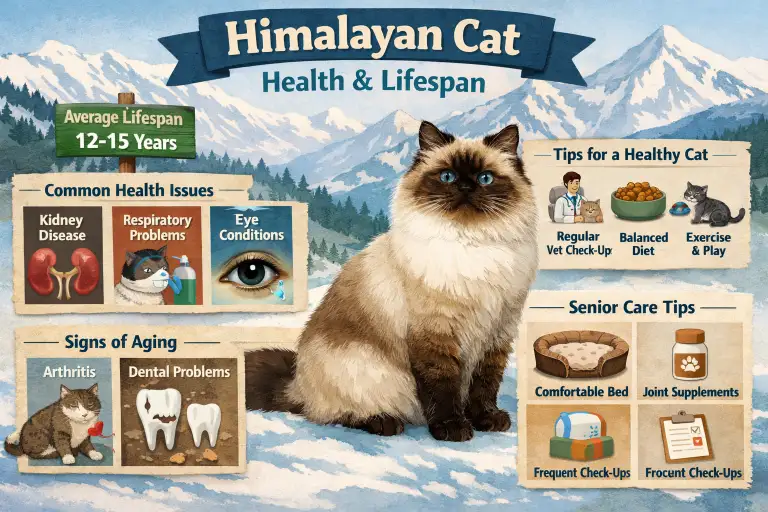
Himalayan cats are a gentle and loving breed with a soft, long coat and a calm personality. One question many owners ask is, “How long will my Himalayan live?” On average, a healthy Himalayan cat can live 12 to 16 years. Some live a bit longer with good care, and a few live a little shorter depending on their lifestyle and health.
Recommended Dog Care Products
Based on your dog’s age, these products may help with comfort, health, grooming, and daily care.

Purina Pro Plan Veterinary Supplements
Daily probiotics for dogs to support digestive and gut health.
View on Amazon ↗
Earth Rated Poop Bags for Dogs
Leak-proof, extra thick waste bag refill rolls with lavender scent.
View on Amazon ↗
Greenies Pill Pockets for Dogs
Large dog treats for capsule medication, peanut butter flavor.
View on Amazon ↗
HONEY CARE All-Absorb Dog Wrap
Small male dog wraps, 50 count, useful for daily care support.
View on Amazon ↗
Seresto Flea & Tick Collar
Flea and tick treatment and prevention for dogs over 18 lbs.
View on Amazon ↗
Milk-Bone MaroSnacks
Small dog treats with real bone marrow in a 40 oz canister.
View on Amazon ↗
Vital Essentials Dog Treats
Freeze dried beef liver dog treats, grain free and single ingredient.
View on Amazon ↗
Stain & Odor Eliminator
Enzyme cleaner for pet stains, carpet messes, and strong odors.
View on Amazon ↗
Pur Luv Chicken Jerky Treats
Dog treats made with real chicken breast, high protein and chew-friendly.
View on Amazon ↗
Milk-Bone Flavor Snacks
Mini crunchy dog biscuits in a 36 oz canister for small rewards.
View on Amazon ↗As an Amazon Associate, we may earn from qualifying purchases.
Indoor cats often live longer than outdoor cats. Indoor Himalayan cats are usually safer from accidents, fights with other animals, and infectious diseases. Outdoor cats can face more risks, which may shorten their lifespan. Keeping your Himalayan mostly inside can help them live a longer, safer life.
Every cat is unique, so the exact number of years your Himalayan lives can vary. Genes from parents, the food they eat, how much exercise they get, and how often they see a vet all affect how long they live. Paying attention to these things helps owners give their cat the best chance at a full life.
Below is a simple table to show typical lifespan ranges and what affects them:
Himalayan Lifespan Comparison
| Cat Lifestyle | Typical Lifespan | Notes |
|---|---|---|
| Indoor only | 12–16 years | Fewer dangers, more consistent care |
| Indoor with outdoor access | 10–14 years | More activity but more risks |
| Mostly outdoor | 8–12 years | Greater exposure to accidents and disease |
Top Health Concerns in Himalayan Cats
Himalayan cats are known for their sweet nature and beautiful looks, but they can be more likely to have certain health issues than some other cats. Knowing these concerns helps you watch for signs and take good care of your pet. These are common in Himalayans, but not every cat will have them.
One common issue is breathing difficulty. Because Himalayans have a flat face (brachycephalic), their noses and airways are shaped differently. This can make it harder for them to breathe easily, especially in hot weather or during play. Watch for heavy breathing or noisy breathing.
Eye problems also show up more often in Himalayans. Their eyes can tear more and may get irritated. Some cats have blocked tear ducts, which makes fur around the eyes stain or get damp. Regular gentle cleaning helps keep eyes comfortable.
Another concern is dental disease. Himalayans can develop plaque and gum problems if teeth are not cleaned regularly. Weight gain is also common, especially if they do not get much exercise. Obesity can lead to other issues like joint stress and diabetes.
Common Health Issues in Himalayan Cats
Recommended Dog Care Products
Based on your dog’s age, these products may help with comfort, health, grooming, and daily care.
Purina Pro Plan Veterinary Supplements
Daily probiotics for dogs to support digestive and gut health.
View on Amazon ↗
Earth Rated Poop Bags for Dogs
Leak-proof, extra thick waste bag refill rolls with lavender scent.
View on Amazon ↗
Greenies Pill Pockets for Dogs
Large dog treats for capsule medication, peanut butter flavor.
View on Amazon ↗
HONEY CARE All-Absorb Dog Wrap
Small male dog wraps, 50 count, useful for daily care support.
View on Amazon ↗
Seresto Flea & Tick Collar
Flea and tick treatment and prevention for dogs over 18 lbs.
View on Amazon ↗
Milk-Bone MaroSnacks
Small dog treats with real bone marrow in a 40 oz canister.
View on Amazon ↗
Vital Essentials Dog Treats
Freeze dried beef liver dog treats, grain free and single ingredient.
View on Amazon ↗
Stain & Odor Eliminator
Enzyme cleaner for pet stains, carpet messes, and strong odors.
View on Amazon ↗
Pur Luv Chicken Jerky Treats
Dog treats made with real chicken breast, high protein and chew-friendly.
View on Amazon ↗
Milk-Bone Flavor Snacks
Mini crunchy dog biscuits in a 36 oz canister for small rewards.
View on Amazon ↗As an Amazon Associate, we may earn from qualifying purchases.
| Health Issue | What It Is | What to Watch For |
|---|---|---|
| Breathing challenges | Narrowed airways due to facial shape | Loud breathing, trouble during heat |
| Eye irritation | Excess tearing and irritation | Wet fur, redness, discharge |
| Dental disease | Plaque and gum inflammation | Bad breath, difficulty eating |
| Obesity | Excess body weight | Weight gain, less movement |
Preventive Care: Supporting a Healthy Himalayan
Taking steps to prevent health problems can help your Himalayan stay healthier and live longer. One of the most important habits is routine vet checkups. Your vet can spot small issues early, before they become big problems. Aim for at least one checkup a year, and more often as your cat gets older.
Good grooming is another key part of preventive care. Himalayan cats have long, thick fur that can mat and tangle if not brushed. Daily brushing helps reduce mats, keeps skin healthy, and lowers hairballs. Cleaning around the eyes with a soft cloth can also keep tear stains from building up.
Feeding a balanced diet helps maintain a healthy weight. Talk with your vet about the best food type and amount for your cat’s age and activity. Too many calories and not enough play time can lead to weight gain. Try fun toys and short play sessions to keep your Himalayan active.
Preventive Care Checklist for Himalayan Cats
| Care Task | How Often | Why It Matters |
|---|---|---|
| Vet checkup | 1–2 times/year | Early detection of issues |
| Brushing coat | Daily | Reduces mats, promotes skin health |
| Eye cleaning | Daily | Reduces irritation and tear staining |
| Dental care | Weekly brushing or dental chews | Helps prevent gum disease |
| Play/exercise | Daily | Maintains healthy weight |
Recognizing Early Warning Signs
Being familiar with common warning signs helps you know when something may be wrong with your Himalayan. These signs do not diagnose a problem, but they help you decide when to contact your veterinarian. Small changes in behavior or habits can be important.
Watch for changes in eating or drinking. If your cat starts eating much more or much less than usual, this could be a sign of a health change. Drinking more water than normal might mean the body is trying to stay hydrated because of a hidden issue.
Another sign to watch is changes in the litter box. Straining, frequent trips, or accidents outside the box may point to urinary or digestive problems. Also pay attention to breathing — heavy, fast, or noisy breaths that happen often deserve a closer look.
Other signs to notice include changes in activity or mood. A normally playful cat that begins hiding or sleeps much more than usual might be uncomfortable. Fur that looks dull, clumps falling out, or bad smell from mouth are other things to watch.
FAQs About Himalayan Health & Longevity
Why does my Himalayan breathe loudly?
Some Himalayans have narrow airways due to their facial shape. This can make breathing noisier than in other cats. If the breathing seems to get worse during heat or activity, let your vet know.
How often should I groom my Himalayan?
Daily brushing helps keep the long coat free of mats and reduces hairballs. Gentle eye cleaning also helps reduce tear stains.
Recommended Dog Care Products
Based on your dog’s age, these products may help with comfort, health, grooming, and daily care.
Purina Pro Plan Veterinary Supplements
Daily probiotics for dogs to support digestive and gut health.
View on Amazon ↗
Earth Rated Poop Bags for Dogs
Leak-proof, extra thick waste bag refill rolls with lavender scent.
View on Amazon ↗
Greenies Pill Pockets for Dogs
Large dog treats for capsule medication, peanut butter flavor.
View on Amazon ↗
HONEY CARE All-Absorb Dog Wrap
Small male dog wraps, 50 count, useful for daily care support.
View on Amazon ↗
Seresto Flea & Tick Collar
Flea and tick treatment and prevention for dogs over 18 lbs.
View on Amazon ↗
Milk-Bone MaroSnacks
Small dog treats with real bone marrow in a 40 oz canister.
View on Amazon ↗
Vital Essentials Dog Treats
Freeze dried beef liver dog treats, grain free and single ingredient.
View on Amazon ↗
Stain & Odor Eliminator
Enzyme cleaner for pet stains, carpet messes, and strong odors.
View on Amazon ↗
Pur Luv Chicken Jerky Treats
Dog treats made with real chicken breast, high protein and chew-friendly.
View on Amazon ↗
Milk-Bone Flavor Snacks
Mini crunchy dog biscuits in a 36 oz canister for small rewards.
View on Amazon ↗As an Amazon Associate, we may earn from qualifying purchases.
Can indoor Himalayans go outside safely?
Supervised outdoor time on a leash or in a secure area can be safe. Free roaming outdoors has more risks like traffic, fights, and disease.
When should my Himalayan see the vet more often?
As your cat gets older (around 7–8 years), more frequent checkups can help catch age‑related changes early.
Is weight gain normal for Himalayans?
Himalayans can gain weight easily if they are not active. Keeping play sessions regular and feeding the right portion helps manage weight.
How do I know if my cat needs immediate care?
Sudden trouble breathing, not eating, vomiting often, or changes in bathroom habits are examples where you should contact your veterinarian right away.
For more detailed breed health information and general cat care guidance, you can visit the Cat Friendly Home guidelines at https://catfriendly.com.

Ata Ur Rehman is the founder of Pet Age in Human Years Calculator, an educational platform that provides age conversion charts and lifespan guides for dogs, cats, birds, and other companion animals. His work focuses on helping pet owners understand how animal ages translate into human years using commonly accepted age conversion formulas and published lifespan averages.
The website compiles breed and species lifespan data from kennel clubs, breed organizations, and general animal lifespan studies to present simple and easy-to-understand guides for pet owners worldwide.
This website was created to centralize animal age conversion charts into one easy reference platform for pet owners.